Search results
 35-352A
Class 20/0 Disc Headcode & Tablet Catcher D8102 BR Green (Roundel)
 'OO' Gauge
 Released: 29/02/24
 DCC Ready (PluX22)
 Era 5
Era 5The British Railways Board's (BRB) 1955 modernisation plan called for a change to alternative forms of traction and manufacturers were asked to produce trial or initial designs for evaluation. English Electric adapted an existing design based on an export model for a 1,000bhp diesel and 20 were built as a pilot scheme for assessment.
The first batch was built in 1957 and the diesels were assigned to work from Devon's Road depot, East London. The design was a success from the start and by 1962 a total of 127 had been built. Following assessment of all the Type 1 diesels, BRB placed a further order increasing the total to 228 by 1968 and the design became the BR standard for 1,000bhp diesel locomotives. With the introduction of TOPS the locomotives were designated Class 20 and renumbered 20001 to 20228. The locomotives were principally designed for freight work but also saw service on summer passenger trains where train heating was not required. The Class 20s worked over the Eastern, London Midland and Scottish regions as well as into Wales and were commonly associated with coal traffic. The only drawback the Class had was its single end cab, unlike modern designs that have a cab at each end. BR resolved this problem by regularly operating the Class 20s as pairs, nose to nose, and with the combined power of 2,000bhp they were able to haul the heavier block freight trains.
BR's decision to switch to Type 5 and in particular Class 60 diesels in the late 1980s started a gradual withdrawal of the fleet, with just 28 left by 1994. A tribute to the design is that after 45 years the Class is still in service with DRS on mainline duties following refurbishment, the resulting locomotives being designated Class 20/3s. At least 28 of the class are now preserved.

Our Price:
£191.20
£191.20
35-352ASFClass 20/0 Disc Headcode & Tablet Catcher D8102 BR Green (Roundel) With DCC Sound Fitted
'OO' GaugeReleased: 29/02/24DCC FittedDCC SoundEra 5SOUNDS
F0 - Directional Lights - On / Off (plus Light Switch Sound)
F1 - On - Warm Engine Start / On (with F8 On) - Cold Engine Start
F2 - Brake
F3 - Single Horn (Speed Related)
F4 - Two Tone Horn (Speed Related)
F5 - On - Light Train Mode / Off - Heavy Train Mode
F6 - Engine Idle / Coasting
F7 - Speed Lock
F8 - Cold Start
F9 - Flange Squeal (Speed Related)
F10 - Guard's Whistle
F11 - Buffer Up
F12 - Coupling
F13 - Cab End High Intensity Light (If Fitted)
F14 - On - Night Mode Directional Lights / Off - Day Mode Directional lights (If Fitted)
F15 - Detonators
F16 - Priming Pump
F17 - Wagon Snatching & Buffering
F18 - On - Driver's Door Open / Off - Driver's Door Closed
F19 - Fade All Sounds
F20 - Nose End Directional Lights Off
F21 - Cab End Directional Lights Off
F22 - Cab Light On (Only when Stationary)
F23 - Windscreen Wipers
F24 - Compressor
F25 - Spirax Valves
F26 - Shunt Mode
F27 - Volume Down
F28 - Volume Up
Analogue Users: Please note that normal load running sounds and any other automatic or randomised sounds will also operate when this model is used on analogue control (DC) straight from the box!

Our Price:
£276.20
£276.20
 374-818A
BR Mk1 FO First Open BR (WR) Chocolate & Cream
'N' GaugeReleased: 29/02/24Era 5The British Railways Mk1 was the designation given to BR’s first standard design of main line coaching stock, and one of its most successful. Built from 1951 until the early 1960s to augment and replace the array of ‘Big Four’ and earlier ‘pre-grouping’ designs inherited from the LMS, LNER, GWR and SR, BR took the best features from several of these types to produce the new steel-bodied design. As a result, the Mk1 was stronger and safer than any of the inherited types that came before it.
Vehicles providing standard accommodation, with first- or second-class seating, or a composite mix of the two, were built in their thousands, along with many specialist types each with their own dedicated purpose. Numerous different catering vehicles were built, offering as little as a counter service right through to a full restaurant dining experience, whilst vehicles which incorporated an area for the Guard were combined with passenger accommodation and varying spaces for the conveyance of luggage, newspapers and parcels. Sleeping cars were also included, along with various general merchandise and specialised Post Office vans – some of which were equipped with apparatus to allow mail to be collected and set down on the move. Such was their success that following withdrawal from BR service, Mk1 coaches have become the mainstay of preservation operations and hundreds of vehicles remain in service today with heritage railways, whilst several still run on the main line in charter formations.

Our Price:
£43.15
£43.15
374-820BR Mk1 FO First Open BR InterCity Charter (Executive)
'N' GaugeReleased: 29/02/24Era 8The British Railways Mk1 was the designation given to BR’s first standard design of main line coaching stock, and one of its most successful. Built from 1951 until the early 1960s to augment and replace the array of ‘Big Four’ and earlier ‘pre-grouping’ designs inherited from the LMS, LNER, GWR and SR, BR took the best features from several of these types to produce the new steel-bodied design. As a result, the Mk1 was stronger and safer than any of the inherited types that came before it.
Vehicles providing standard accommodation, with first- or second-class seating, or a composite mix of the two, were built in their thousands, along with many specialist types each with their own dedicated purpose. Numerous different catering vehicles were built, offering as little as a counter service right through to a full restaurant dining experience, whilst vehicles which incorporated an area for the Guard were combined with passenger accommodation and varying spaces for the conveyance of luggage, newspapers and parcels. Sleeping cars were also included, along with various general merchandise and specialised Post Office vans – some of which were equipped with apparatus to allow mail to be collected and set down on the move. Such was their success that following withdrawal from BR service, Mk1 coaches have become the mainstay of preservation operations and hundreds of vehicles remain in service today with heritage railways, whilst several still run on the main line in charter formations.

Our Price:
£43.15
£43.15
374-820ABR Mk1 FO First Open BR InterCity Charter (Executive)
'N' GaugeReleased: 29/02/24Era 8The British Railways Mk1 was the designation given to BR’s first standard design of main line coaching stock, and one of its most successful. Built from 1951 until the early 1960s to augment and replace the array of ‘Big Four’ and earlier ‘pre-grouping’ designs inherited from the LMS, LNER, GWR and SR, BR took the best features from several of these types to produce the new steel-bodied design. As a result, the Mk1 was stronger and safer than any of the inherited types that came before it.
Vehicles providing standard accommodation, with first- or second-class seating, or a composite mix of the two, were built in their thousands, along with many specialist types each with their own dedicated purpose. Numerous different catering vehicles were built, offering as little as a counter service right through to a full restaurant dining experience, whilst vehicles which incorporated an area for the Guard were combined with passenger accommodation and varying spaces for the conveyance of luggage, newspapers and parcels. Sleeping cars were also included, along with various general merchandise and specialised Post Office vans – some of which were equipped with apparatus to allow mail to be collected and set down on the move. Such was their success that following withdrawal from BR service, Mk1 coaches have become the mainstay of preservation operations and hundreds of vehicles remain in service today with heritage railways, whilst several still run on the main line in charter formations.

Our Price:
£43.15
£43.15
377-731ABR SPA Open Wagon Network Rail Yellow [W]
'N' GaugeReleased: 15/03/24Era 9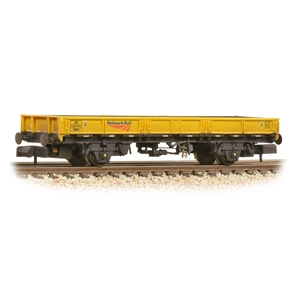
Our Price:
£26.95
£26.95
377-730BBR ZAA 'Pike' Open Wagon BR Engineers Grey & Yellow [W]
'N' GaugeReleased: 15/03/24Era 8
Our Price:
£26.95
£26.95
372-910LMS 10000 LMS Black & Silver
'N' GaugeReleased: 15/03/24DCC Ready (Next18)Era 3The LMS ‘Twins’ – Nos. 10000 and 10001 – were the very first mainline diesel locomotives built in the UK and now, this pioneering pair is available in N scale for the first time thanks to Graham Farish.
This model of No. 10000 depicts the first of the ‘Twins’ which entered service with the LMS just days before Nationalisation in December 1947, and so carries ‘LMS’ in large chrome letters on the bodyside – the locomotive would carry these during its early years of BR-ownership and was so adorned until 1951. In this original condition, No. 10000 operated on the Midland Region hauling trains both alone and as a pair with its twin, providing additional haulage power and rang

Our Price:
£157.20
£157.20
372-910SFLMS 10000 LMS Black & Silver With DCC Sound Fitted
'N' GaugeReleased: 15/03/24DCC FittedDCC SoundEra 3The LMS ‘Twins’ Nos. 10000 and 10001 were the first mainline diesel locomotives built in Great Britain. A joint venture between the London, Midland & Scottish Railway (LMS) and English Electric, the pair were first conceived in 1946. The body and chassis design was undertaken by the LMS’s Chief Mechanical Engineer H. G. Ivatt, and English Electric provided the engine, electric systems and machinery. Construction of No. 10000 began at Derby Works in 1947 and the locomotive was outshopped in December of that year, days before Nationalisation of Britain’s railways.
Both locomotives entered traffic in an eye-catching black and silver livery, with large chrome numbers fitted at each end of the bodysides, below the cab windows. The letters LMS were also applied in chrome to No. 10000, however No. 10001 did not enter service until mid-1948, with British Railways completing its construction, and so it entered traffic with neither LMS nor BR markings.
The locomotives worked both singularly and as a pair on the Midland Main Line and West Coast Main Line, hauling named expresses and lower key services, and venturing north of the border into Scotland. Interconnecting doors were fitted within the noses of each engine, allowing crew and personnel to move between the two in motion, but this feature was seldom used.
In 1953 the Twins were sent to the Southern Region, being fitted with an additional pair of marker lights and lamp brackets beforehand which made them compatible with the SR’s practice of using headcodes to denote both train types and routes. During a two year period on the Southern Region the Twins worked alongside the Southern’s own diesel prototypes before returning to the Midland Region in 1955.
As prototypes, changes and modifications were made to the locomotives during the years and this included the fitting of water scoops to allow water for the steam heat boiler to be collected from troughs located between the rails ‘on the move’. Ironically, in common with many early diesels, the performance of the steam heat boilers was woeful, and in colder months the pair were often relegated to freight workings where steam heat provision was not required.
By the late-1950s new, production series diesel locomotives were arriving en-masse and whilst their time in service had been highly educational and helped to shape the BR diesel fleet, the writing was on the wall for this pair on non-standard prototypes. No. 10000 was officially withdrawn in December 1963, whilst No. 10001 lasted to March 1966, kept going with components salvaged from its Twin. Sadly, neither was saved and both were subsequently scrapped, but their legacy carried on in the Class 40s, 50s and 56s which all used versions of the English Electric 16SVT engine and today, works is ongoing to build a replica of No. 10000.

Our Price:
£242.20
£242.20
372-911LMS/BR 10001 Black & Silver
'N' GaugeReleased: 15/03/24DCC Ready (Next18)Era 4The LMS ‘Twins’ Nos. 10000 and 10001 were the first mainline diesel locomotives built in Great Britain. A joint venture between the London, Midland & Scottish Railway (LMS) and English Electric, the pair were first conceived in 1946. The body and chassis design was undertaken by the LMS’s Chief Mechanical Engineer H. G. Ivatt, and English Electric provided the engine, electric systems and machinery. Construction of No. 10000 began at Derby Works in 1947 and the locomotive was outshopped in December of that year, days before Nationalisation of Britain’s railways.
Both locomotives entered traffic in an eye-catching black and silver livery, with large chrome numbers fitted at each end of the bodysides, below the cab windows. The letters LMS were also applied in chrome to No. 10000, however No. 10001 did not enter service until mid-1948, with British Railways completing its construction, and so it entered traffic with neither LMS nor BR markings.
The locomotives worked both singularly and as a pair on the Midland Main Line and West Coast Main Line, hauling named expresses and lower key services, and venturing north of the border into Scotland. Interconnecting doors were fitted within the noses of each engine, allowing crew and personnel to move between the two in motion, but this feature was seldom used.
In 1953 the Twins were sent to the Southern Region, being fitted with an additional pair of marker lights and lamp brackets beforehand which made them compatible with the SR’s practice of using headcodes to denote both train types and routes. During a two year period on the Southern Region the Twins worked alongside the Southern’s own diesel prototypes before returning to the Midland Region in 1955.
As prototypes, changes and modifications were made to the locomotives during the years and this included the fitting of water scoops to allow water for the steam heat boiler to be collected from troughs located between the rails ‘on the move’. Ironically, in common with many early diesels, the performance of the steam heat boilers was woeful, and in colder months the pair were often relegated to freight workings where steam heat provision was not required.
By the late-1950s new, production series diesel locomotives were arriving en-masse and whilst their time in service had been highly educational and helped to shape the BR diesel fleet, the writing was on the wall for this pair on non-standard prototypes. No. 10000 was officially withdrawn in December 1963, whilst No. 10001 lasted to March 1966, kept going with components salvaged from its Twin. Sadly, neither was saved and both were subsequently scrapped, but their legacy carried on in the Class 40s, 50s and 56s which all used versions of the English Electric 16SVT engine and today, works is ongoing to build a replica of No. 10000.

Our Price:
£157.20
£157.20