
Search results
 R40393
BR, Mk3 Trailer Standard Open, 42285
 'OO' Gauge
 Released: 08/07/24
 Era 7
Era 7
Our Price:
£40.49
£40.49
R40386BR, Mk3 Trailer First, 41138
'OO' GaugeReleased: 08/07/24Era 7
Our Price:
£40.49
£40.49
R40387BR, Mk3 Trailer First, 41137
'OO' GaugeReleased: 08/07/24Era 7
Our Price:
£40.49
£40.49
R40388BR, Mk3 Trailer Guard Standard, 44005
'OO' GaugeReleased: 08/07/24Era 7
Our Price:
£40.49
£40.49
R40391BR, Mk3 Trailer Standard Open, 42283
'OO' GaugeReleased: 08/07/24Era 7 R60238
BR, Loriot Y Machinery Truck with British Railways Coles Crane
'OO' GaugeReleased: 08/07/24Era 4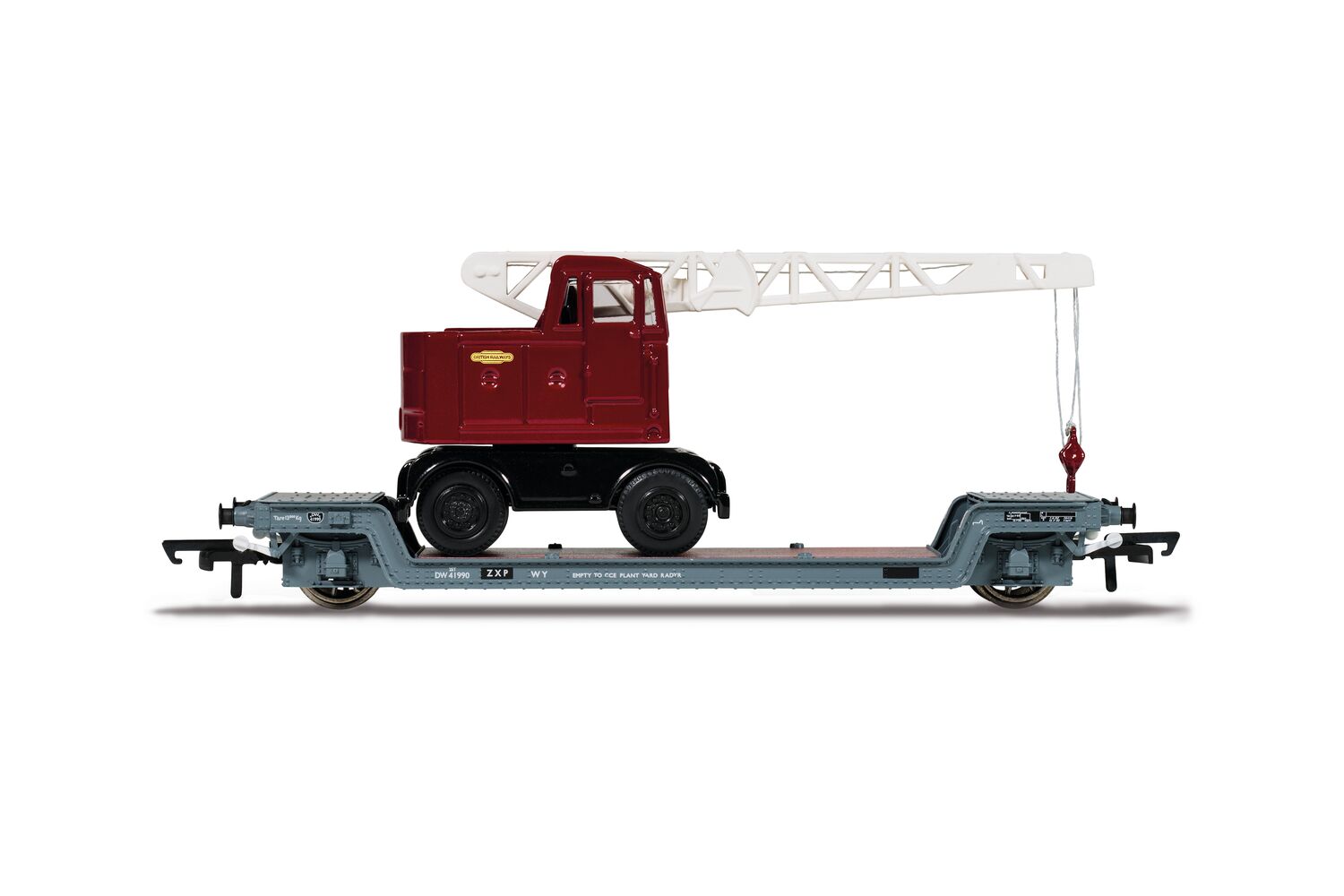
Our Price:
£58.49
£58.49
 374-916SF
LMS 10000 BR Lined Green (Late Crest) With DCC Sound Fitted
'N' GaugeExpected:
Unknown DCC FittedDCC SoundEra 5
SOUNDS
F0 - Directional Lights - On/Off
F1 - Sound - On/Off
F2 - Brake
F3 - Single-Tone Horn
F4 - Horn (Playable)
F5 - Light Engine
F6 - Engine Idle
F7 - Speed Lock
F8 - Cold Engine Start (Turn on before F1)
F9 - Flange Squeal (Speed Related)
F10 - Dispatch Whistle with Driver’s Response
F11 - Buffering Up
F12 - Coupling Up
F13 - Compressor
F14 - Spirax Valve
F15 - Cooler Group Fan
F16 - Primer Pump
F17 - Automatic Wagon Buffering
F18 - On - Cab Door Open / Off - Cab Door Shut
F19 - Fade All Sounds
F20 - Directional Lights Off No. 1 End (Fan End)
F21 - Directional Lights Off No. 2 End (Non-Fan End)
F22 - Alternative Passenger/Freight Headlight Modes
F23 - Cab Light (Leading End Only)
F24 - Station Ambience
F25 - Detonators (Speed Dependant)
F26 - Shunt Mode (Half Speed, No Inertia)
F27 - Volume Down
F28 - Volume Up
Analogue Users: Please note that normal load running sounds and any other automatic or randomised sounds will also operate when this model is used on analogue control (DC) straight from the box!

Our Price:
£242.20
£242.20
372-917SFLMS 10001 BR Lined Green (Late Crest) With DCC Sound Fitted
'N' GaugeReleased: 11/07/24DCC FittedDCC SoundEra 5SOUNDS
F0 - Directional Lights - On/Off
F1 - Sound - On/Off
F2 - Brake
F3 - Single-Tone Horn
F4 - Horn (Playable)
F5 - Light Engine
F6 - Engine Idle
F7 - Speed Lock
F8 - Cold Engine Start (Turn on before F1)
F9 - Flange Squeal (Speed Related)
F10 - Dispatch Whistle with Driver’s Response
F11 - Buffering Up
F12 - Coupling Up
F13 - Compressor
F14 - Spirax Valve
F15 - Cooler Group Fan
F16 - Primer Pump
F17 - Automatic Wagon Buffering
F18 - On - Cab Door Open / Off - Cab Door Shut
F19 - Fade All Sounds
F20 - Directional Lights Off No. 1 End (Fan End)
F21 - Directional Lights Off No. 2 End (Non-Fan End)
F22 - Alternative Passenger/Freight Headlight Modes
F23 - Cab Light (Leading End Only)
F24 - Station Ambience
F25 - Detonators (Speed Dependant)
F26 - Shunt Mode (Half Speed, No Inertia)
F27 - Volume Down
F28 - Volume Up
Analogue Users: Please note that normal load running sounds and any other automatic or randomised sounds will also operate when this model is used on analogue control (DC) straight from the box!

Our Price:
£242.20
£242.20
372-918SFLMS 10001 BR Green (Small Yellow Panels) With DCC Sound Fitted
'N' GaugeReleased: 11/07/24DCC FittedDCC SoundEra 5SOUNDS
F0 - Directional Lights - On/Off
F1 - Sound - On/Off
F2 - Brake
F3 - Single-Tone Horn
F4 - Horn (Playable)
F5 - Light Engine
F6 - Engine Idle
F7 - Speed Lock
F8 - Cold Engine Start (Turn on before F1)
F9 - Flange Squeal (Speed Related)
F10 - Dispatch Whistle with Driver’s Response
F11 - Buffering Up
F12 - Coupling Up
F13 - Compressor
F14 - Spirax Valve
F15 - Cooler Group Fan
F16 - Primer Pump
F17 - Automatic Wagon Buffering
F18 - On - Cab Door Open / Off - Cab Door Shut
F19 - Fade All Sounds
F20 - Directional Lights Off No. 1 End (Fan End)
F21 - Directional Lights Off No. 2 End (Non-Fan End)
F22 - Alternative Passenger/Freight Headlight Modes
F23 - Cab Light (Leading End Only)
F24 - Station Ambience
F25 - Detonators (Speed Dependant)
F26 - Shunt Mode (Half Speed, No Inertia)
F27 - Volume Down
F28 - Volume Up
Analogue Users: Please note that normal load running sounds and any other automatic or randomised sounds will also operate when this model is used on analogue control (DC) straight from the box!

Our Price:
£242.20
£242.20
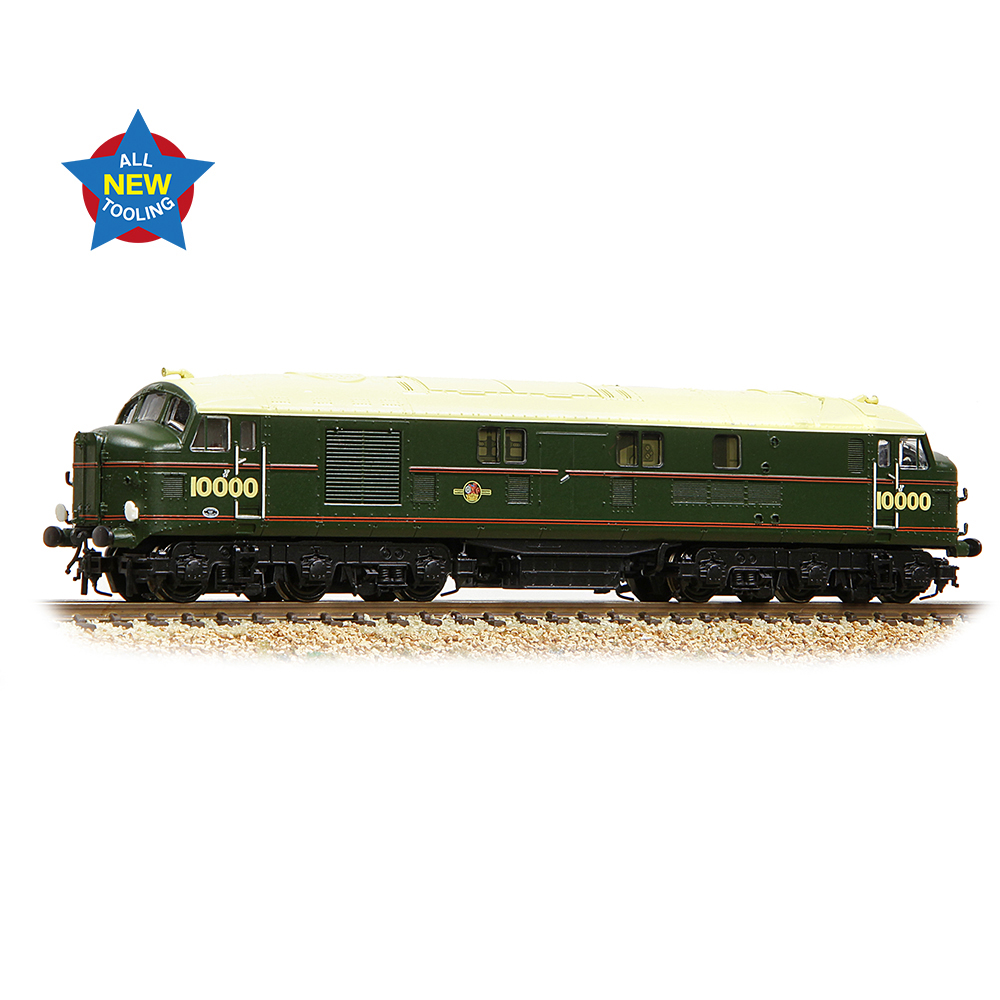
372-916LMS 10000 BR Lined Green (Late Crest)
'N' GaugeReleased: 11/07/24DCC Ready (Next18)Era 5LMS 10000 & 10001 CLASS HISTORY
The LMS ‘Twins’ Nos. 10000 and 10001 were the first mainline diesel locomotives built in Great Britain. A joint venture between the London, Midland & Scottish Railway (LMS) and English Electric, the pair were first conceived in 1946. The body and chassis design was undertaken by the LMS’s Chief Mechanical Engineer H. G. Ivatt, and English Electric provided the engine, electric systems and machinery. Construction of No. 10000 began at Derby Works in 1947 and the locomotive was outshopped in December of that year, days before Nationalisation of Britain’s railways.
Both locomotives entered traffic in an eye-catching black and silver livery, with large chrome numbers fitted at each end of the bodysides, below the cab windows. The letters LMS were also applied in chrome to No. 10000, however No. 10001 did not enter service until mid-1948, with British Railways completing its construction, and so it entered traffic with neither LMS nor BR markings.
The locomotives worked both singularly and as a pair on the Midland Main Line and West Coast Main Line, hauling named expresses and lower key services, and venturing north of the border into Scotland. Interconnecting doors were fitted within the noses of each engine, allowing crew and personnel to move between the two in motion, but this feature was seldom used.
In 1953 the Twins were sent to the Southern Region, being fitted with an additional pair of marker lights and lamp brackets beforehand which made them compatible with the SR’s practice of using headcodes to denote both train types and routes. During a two year period on the Southern Region the Twins worked alongside the Southern’s own diesel prototypes before returning to the Midland Region in 1955.
As prototypes, changes and modifications were made to the locomotives during the years and this included the fitting of water scoops to allow water for the steam heat boiler to be collected from troughs located between the rails ‘on the move’. Ironically, in common with many early diesels, the performance of the steam heat boilers was woeful, and in colder months the pair were often relegated to freight workings where steam heat provision was not required.
By the late-1950s new, production series diesel locomotives were arriving en-masse and whilst their time in service had been highly educational and helped to shape the BR diesel fleet, the writing was on the wall for this pair on non-standard prototypes. No. 10000 was officially withdrawn in December 1963, whilst No. 10001 lasted to March 1966, kept going with components salvaged from its Twin. Sadly, neither was saved and both were subsequently scrapped, but their legacy carried on in the Class 40s, 50s and 56s which all used versions of the English Electric 16SVT engine and today, works is ongoing to build a replica of No. 10000.
Our Price:
£157.20
£157.20