Search results
 R40472
BR - Collett Corridor Brake Third Class LH - 4936 - Coach
 'OO' Gauge
 Released: 01/12/25
 Era 4
Era 4Although introduced onto the GWR by Collett from 1925, many of these modern-for-their-time coaches lasted in service until the 1960s, with many examples passing into departmental use. Some retained their chocolate and cream livery after nationalisation of Britain’s railways in 1948 and others were painted in the new owner’s crimson and cream.
These wooden-framed, but steel-panelled ‘bow-ended’ coaches were also ‘handed’ in a throw-back to the days they were introduced, when coach sets were marshalled with the compartments to the south (sunny) side and the corridors alongside London Paddington’s Platform 1 for ease of loading/unloading. For example, a left-hand brake coach would have its corridor on the opposite side to a right-hand brake.

Our Price:
£55.79
£55.79
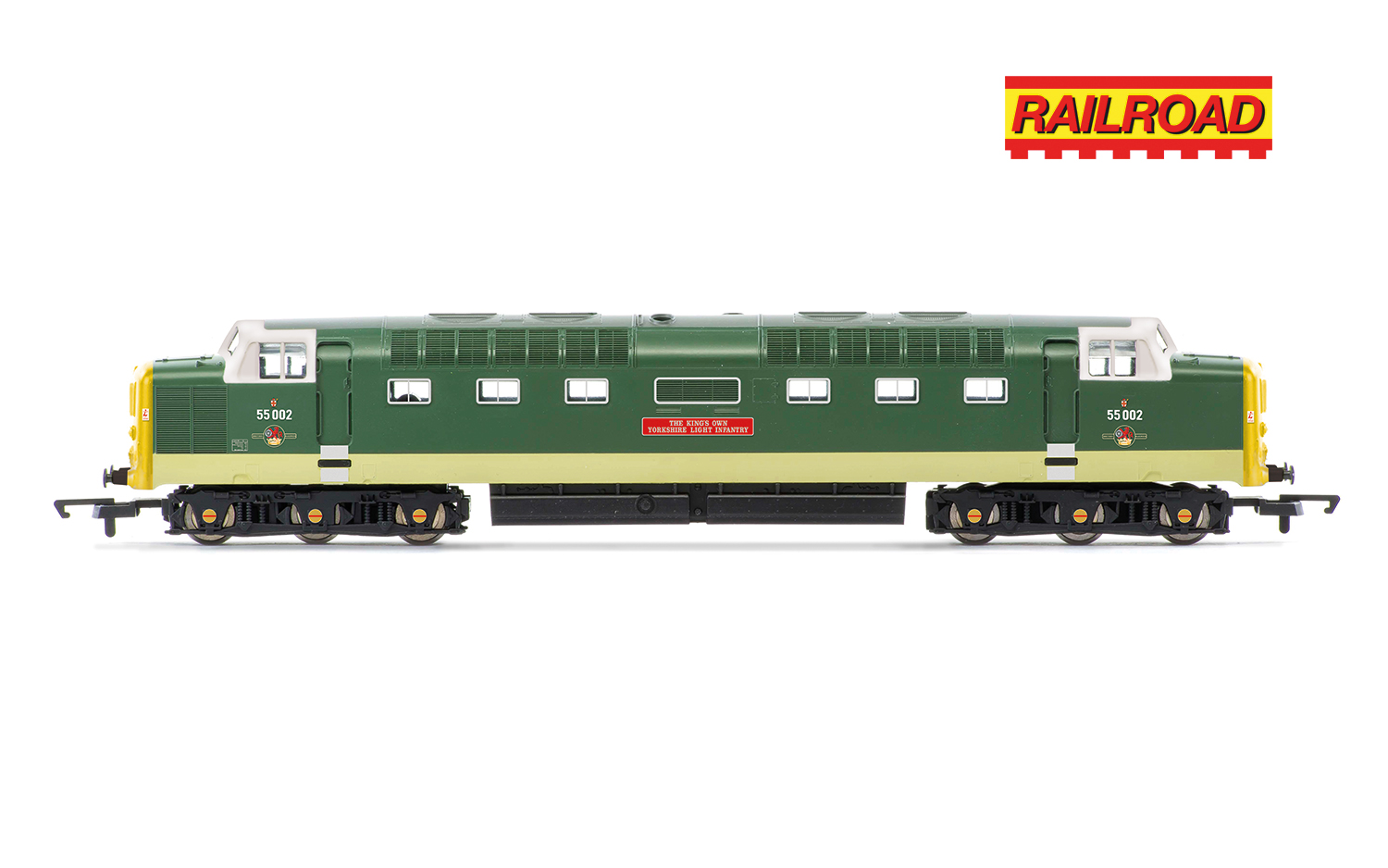
R40438RailRoad: Class 55 (Deltic) - BR - 55002 'The Kings own Yorkshire Light Infantry'
'OO' GaugeReleased: 10/12/25 DCC Ready (8 Pin)Era 6
The production ‘Deltics’ were a powerful Type 5 locomotive, designed for high-speed express passenger services on the East Coast Main Line. When introduced in 1961, these were the most powerful diesel locomotives in the world. Powered by two big Napier diesel engines, these locomotives – later known as Class 55s – were capable of speeds of up to 117mph (188km/h) and all were given names in the best tradition of East Coast express locomotives.
Known affectionately as ‘KOYLI’ by enthusiasts, 55002 is finished in a two-tone green livery, reminiscent of the early 1960s, but with full yellow ends and the classic white cab window surrounds.
Our Price:
£67.49
£67.49
R30438TXSRailRoad: Class 55 (Deltic) - BR - 55002 'The Kings own Yorkshire Light Infantry' (DCC Sound Fitted)
'OO' GaugeReleased: 10/12/25DCC FittedDCC SoundEra 6The production ‘Deltics’ were a powerful Type 5 locomotive, designed for high-speed express passenger services on the East Coast Main Line. When introduced in 1961, these were the most powerful diesel locomotives in the world. Powered by two big Napier diesel engines, these locomotives – later known as Class 55s – were capable of speeds of up to 117mph (188km/h) and all were given names in the best tradition of East Coast express locomotives.
Known affectionately as ‘KOYLI’ by enthusiasts, 55002 is finished in a two-tone green livery, reminiscent of the early 1960s, but with full yellow ends and the classic white cab window surrounds.

Our Price:
£116.99
£116.99
R40473BR - Collett Corridor Brake Third RH - 4937 - Coach
'OO' GaugeReleased: 01/12/25Era 4Although introduced onto the GWR by Collett from 1925, many of these modern-for-their-time coaches lasted in service until the 1960s, with many examples passing into departmental use. Some retained their chocolate and cream livery after nationalisation of Britain’s railways in 1948 and others were painted in the new owner’s crimson and cream.
These wooden-framed, but steel-panelled ‘bow-ended’ coaches were also ‘handed’ in a throw-back to the days they were introduced, when coach sets were marshalled with the compartments to the south (sunny) side and the corridors alongside London Paddington’s Platform 1 for ease of loading/unloading. For example, a left-hand brake coach would have its corridor on the opposite side to a right-hand brake.

Our Price:
£55.79
£55.79
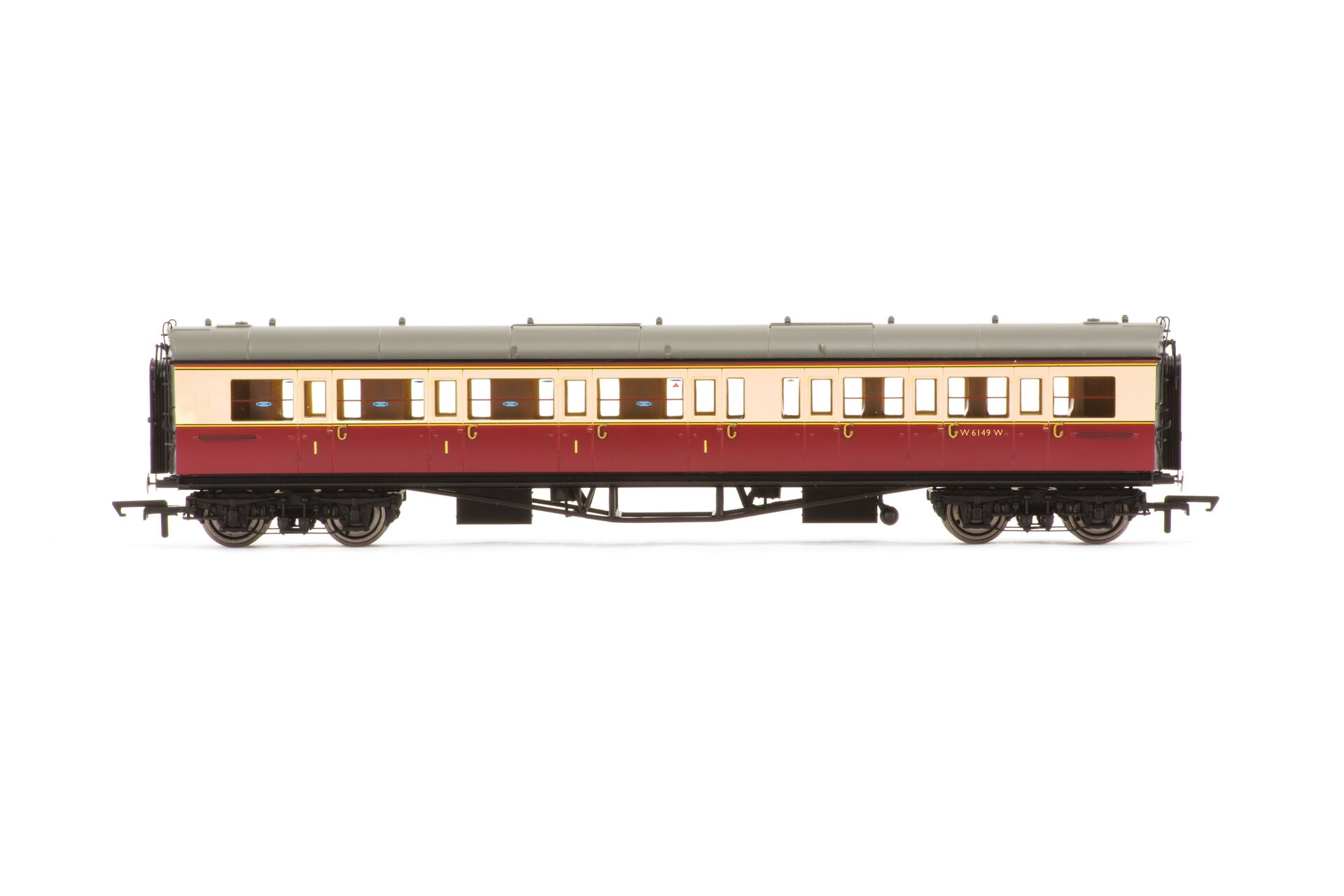
R40474BR - Collett Corridor Composite LH - 6149 - Coach
'OO' GaugeReleased: 01/12/25Era 4Although introduced onto the GWR by Collett from 1925, many of these modern-for-their-time coaches lasted in service until the 1960s, with many examples passing into departmental use. Some retained their chocolate and cream livery after nationalisation of Britain’s railways in 1948 and others were painted in the new owner’s crimson and cream.
These wooden-framed, but steel-panelled ‘bow-ended’ coaches were also ‘handed’ in a throw-back to the days they were introduced, when coach sets were marshalled with the compartments to the south (sunny) side and the corridors alongside London Paddington’s Platform 1 for ease of loading/unloading. For example, a left-hand brake coach would have its corridor on the opposite side to a right-hand brake.
Our Price:
£55.79
£55.79
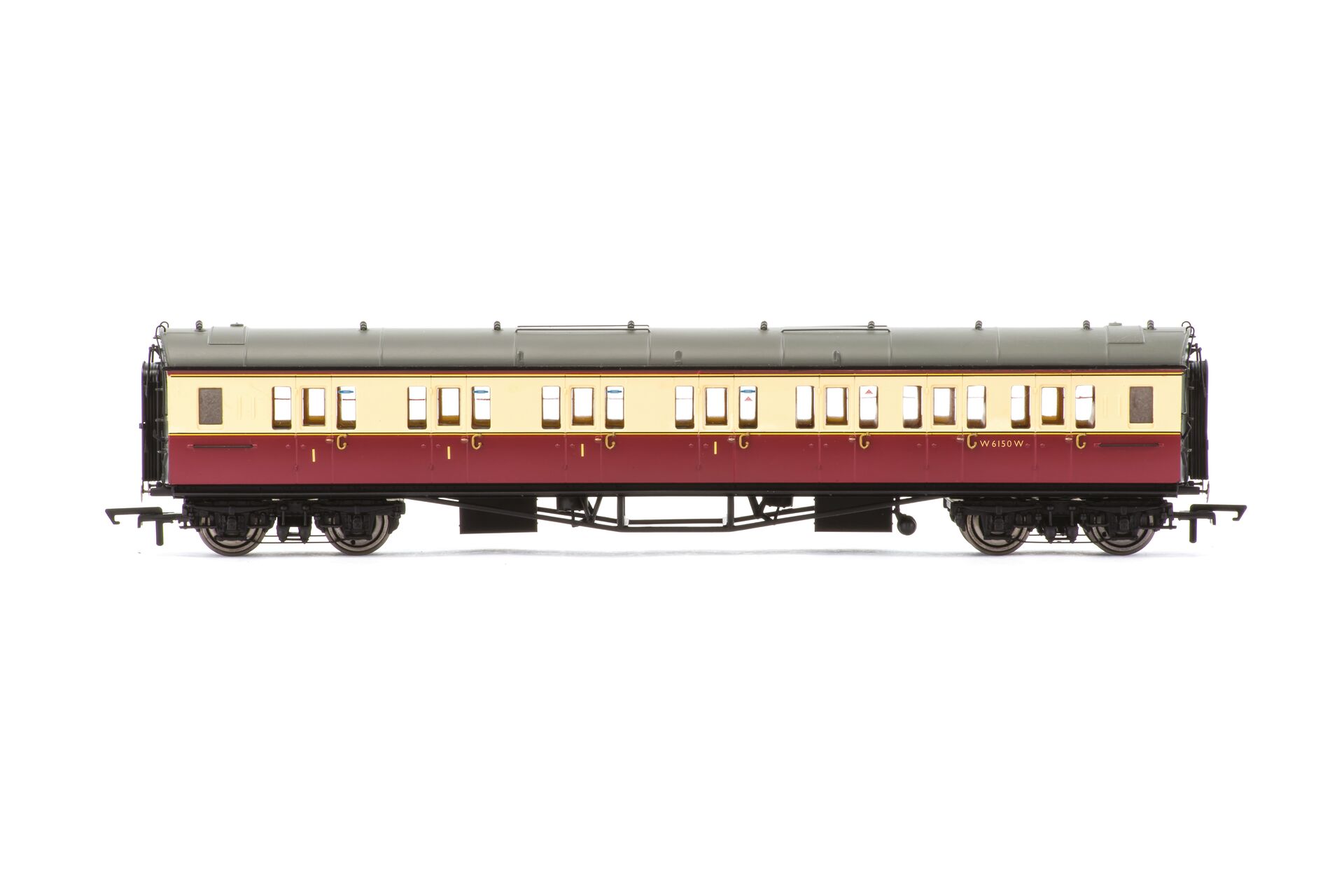
R40475BR - Collett Corridor Composite RH - 6150 - Coach
'OO' GaugeReleased: 01/12/25Era 4Although introduced onto the GWR by Collett from 1925, many of these modern-for-their-time coaches lasted in service until the 1960s, with many examples passing into departmental use. Some retained their chocolate and cream livery after nationalisation of Britain’s railways in 1948 and others were painted in the new owner’s crimson and cream.
These wooden-framed, but steel-panelled ‘bow-ended’ coaches were also ‘handed’ in a throw-back to the days they were introduced, when coach sets were marshalled with the compartments to the south (sunny) side and the corridors alongside London Paddington’s Platform 1 for ease of loading/unloading. For example, a left-hand brake coach would have its corridor on the opposite side to a right-hand brake.
Our Price:
£55.79
£55.79
R40476BR - Collett Corridor - Third Class - 4551 - Coach
'OO' GaugeReleased: 01/12/25Era 4Although introduced onto the GWR by Collett from 1925, many of these modern-for-their-time coaches lasted in service until the 1960s, with many examples passing into departmental use. Some retained their chocolate and cream livery after nationalisation of Britain’s railways in 1948 and others were painted in the new owner’s crimson and cream.
These wooden-framed, but steel-panelled ‘bow-ended’ coaches were also ‘handed’ in a throw-back to the days they were introduced, when coach sets were marshalled with the compartments to the south (sunny) side and the corridors alongside London Paddington’s Platform 1 for ease of loading/unloading. For example, a left-hand brake coach would have its corridor on the opposite side to a right-hand brake.

Our Price:
£55.79
£55.79
R30405GWR - Saint Class - 2975 'Lord Palmer'
'OO' GaugeReleased: 16/12/25DCC Ready (21 Pin)Era 3Entering service in March 1905 as the unnamed No. 175, the locomotive was given the name Viscount Churchill in 1907 and numbered 2975 in December 1912. In February 1924, the locomotive was renamed Sir Ernest Palmer, but when Baronet Palmer gained peerage in June 1933, it was renamed Lord Palmer in the October.
The locomotive was extensively damaged in an accident while hauling a goods train at Appleford in December 1942 and was finally withdrawn on 30th November 1944 from Bristol Bath Road shed after a creditable 39 years and nine months of service.

Our Price:
£211.49
£211.49
R40471BR - Kitchen and Buttery Car & Composite Restaurant - 7834 'Jolly Tar' - Coach Twin Pack
'OO' GaugeReleased: 16/12/25Era 4In 1949, two pairs of carriages were put into service on BR Southern Region to provide catering facilities with a difference. The idea came from Oliver Bulleid, the former Southern Railway’s Chief Mechanical Engineer, who had a track record of thinking ‘outside the box’ with his unusual air-smoothed ‘Pacifics’, double-deck carriages and cabbed ‘Leader’ locomotives.
Each pair consisted of a Composite Dining Car and a ‘Tavern Coach’. These were allocated to the ‘Atlantic Coast Express’ and provided thirsty commuters with a pub-on-wheels for their homeward journey.
Internally, each ‘tavern’ was decorated to mimic an olde English pub, with tiled floor, whitewashed walls, ‘oak’ beams and high-backed settles, all illuminated by ‘lanterns’. Externally, the paintwork was divided horizontally, in carmine and cream, but the lower section was lined out to represent brickwork.
The upper section had ‘half-timber’ relief and a painted pub sign, while the small windows had old-style leaded panes.
The dining cars were unpopular and were quickly re-fitted in 1950, at which point the mock brickwork on the ‘taverns’ was repainted in plain carmine. They lasted in service in their pairs until late 1959 but were repainted in unlined BR(SR) green in 1957. Similar pairs of ‘Tavern Cars’ operated on other BR regions.

Our Price:
£125.99
£125.99
R30435TXSRailRoad: BR - Class 37 - '37093' Police Livery (DCC Sound Fitted)
'OO' GaugeReleased: 16/12/25Era 8Recognised for its memorable role in a television advert – flagging down a speeding HST power car, this highly detailed model of Class 37 No. 37093 comes presented in its unique ‘Police’ promotional livery.
Complete with a roof-mounted working blue light and DCC sound-fitted with Class 37 and effects, functions, and an authentic police siren straight out of the box.

Our Price:
£134.99
£134.99