
Search results
 R40485
RailRoad: BR Intercity - 41003 - Mk3 FO Coach
 'OO' Gauge
 Released: 16/12/25
 Era 8
Era 8
Our Price:
£31.49
£31.49
R40486RailRoad: BR Intercity - 40001 - Mk3 TRUB Coach
'OO' GaugeReleased: 16/12/25Era 8
Our Price:
£31.49
£31.49
R40487RailRoad: BR intercity - W44008 - Mk3 TGS Coach
'OO' GaugeReleased: 16/12/25Era 8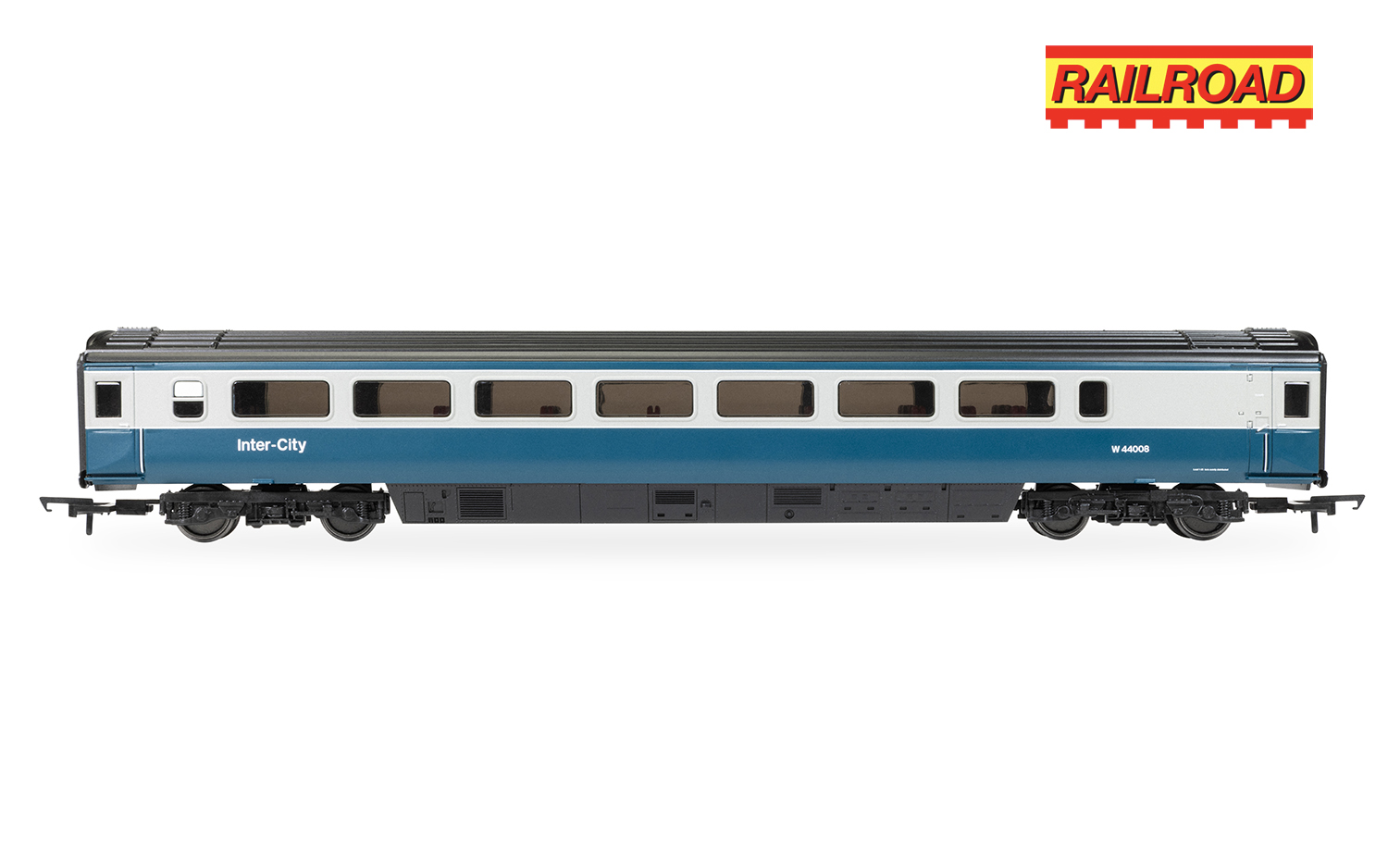
Our Price:
£31.49
£31.49
R30404GWR - Saint Class - 2999 'Lady of Legend'
'OO' GaugeReleased: 18/12/25 DCC Ready (21 Pin)Era 3/11
As none of the original ‘Saint’ Class survived into preservation, the last being withdrawn in 1953, the Great Western Society purchased GWR ‘Hall’ Class No. 4942 Maindy Hall from Barry scrapyard in 1974 with the intention of rebuilding it as a ‘Saint’. The ‘Hall’ was a direct development of the ‘Saint’, No. 2925 Saint Martin being used as its prototype in 1924 by Charles B. Collett, Churchward’s successor as Chief Mechanical Engineer at the GWR. Work on the conversion finally got underway in 1995 and, in April 2019, No. 2999 Lady of Legend made its first moves in steam at Didcot Railway Centre.

Our Price:
£211.49
£211.49
 35-822
Class 31/1 Refurbished 31188 BR Engineers Grey & Yellow
'OO' GaugeReleased: 19/12/25DCC Ready (PluX22)Era 8The Brush Type Twos – Class 30s and Class 31s – by Bachmann Branchline are back and better than ever, now featuring a Bach-Up Stay Alive System fitted as standard and all-wheel electrical pickup assuring the smooth and powerful performance you’ve come to expect from Bachmann Branchline models.
Depicting a Refurbished Class 31/1, this locomotive has had its Mirrlees engine replaced with an English Electric 12SVT and the Branchline model faithfully recreates this, with the correct roof exhaust ports and 12SVT engine block detail visible through the bodyside windows.
With high fidelity mouldings, numerous separately fitted parts and countless tooling variations to capture the minutiae of the real locomotives throughout their lives, our new Class 30 is brought to life with an exquisite livery application using true-to-prototype colours, fonts and logos. Along with an unprecedented array of lighting features, our Dual Fitted speaker system is fitted to all models.

Our Price:
£182.70
£182.70
35-82SFClass 31/1 Refurbished 31188 BR Engineers Grey & Yellow With DCC Sound Fitted
'OO' GaugeReleased: 19/12/25DCC FittedDCC SoundEra 8The Brush Type Twos – Class 30s and Class 31s – by Bachmann Branchline are back and better than ever, now featuring a Bach-Up Stay Alive System fitted as standard and all-wheel electrical pickup assuring the smooth and powerful performance you’ve come to expect from Bachmann Branchline models.
Depicting a Refurbished Class 31/1, this locomotive has had its Mirrlees engine replaced with an English Electric 12SVT and the Branchline model faithfully recreates this, with the correct roof exhaust ports and 12SVT engine block detail visible through the bodyside windows.
With high fidelity mouldings, numerous separately fitted parts and countless tooling variations to capture the minutiae of the real locomotives throughout their lives, our new Class 30 is brought to life with an exquisite livery application using true-to-prototype colours, fonts and logos. Along with an unprecedented array of lighting features, our Dual Fitted speaker system is fitted to all models – bringing to life this SOUND FITTED model

Our Price:
£276.20
£276.20
50-004Class 66/8 66847 'Terry Baker' Colas Rail Freight
'OO' GaugeReleased: 19/12/25DCC Ready (PluX22)Era 9The Class 66 Diesel Locomotive revolutionised the British rail freight landscape when the first examples arrived in 1998, and more than a quarter of a century later, the type remains at the forefront of freight operations the length and breadth of the country. Now, we are delighted to present the all-new Bachmann Branchline OO Scale Class 66 which has been designed from the rails up, capturing this modern icon like never before.

Our Price:
£195.45
£195.45
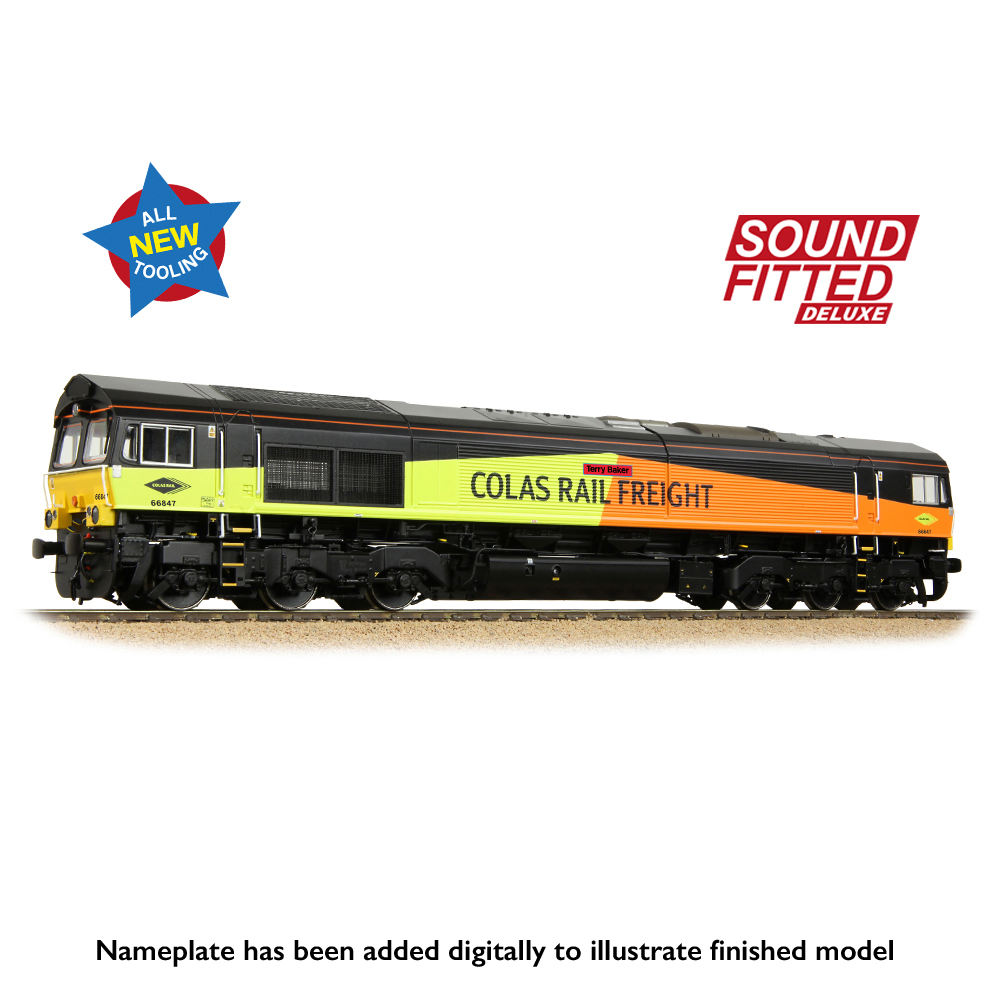
50-004SFXClass 66/8 66847 'Terry Baker' Colas Rail Freight With DCC Sound Deluxe
'OO' GaugeReleased: 19/12/25DCC FittedDCC SoundEra 9The Class 66 Diesel Locomotive revolutionised the British rail freight landscape when the first examples arrived in 1998, and more than a quarter of a century later, the type remains at the forefront of freight operations the length and breadth of the country. Now, we are delighted to present the all-new Bachmann Branchline OO Scale Class 66 which has been designed from the rails up, capturing this modern icon like never before.
Our Price:
£314.45
£314.45
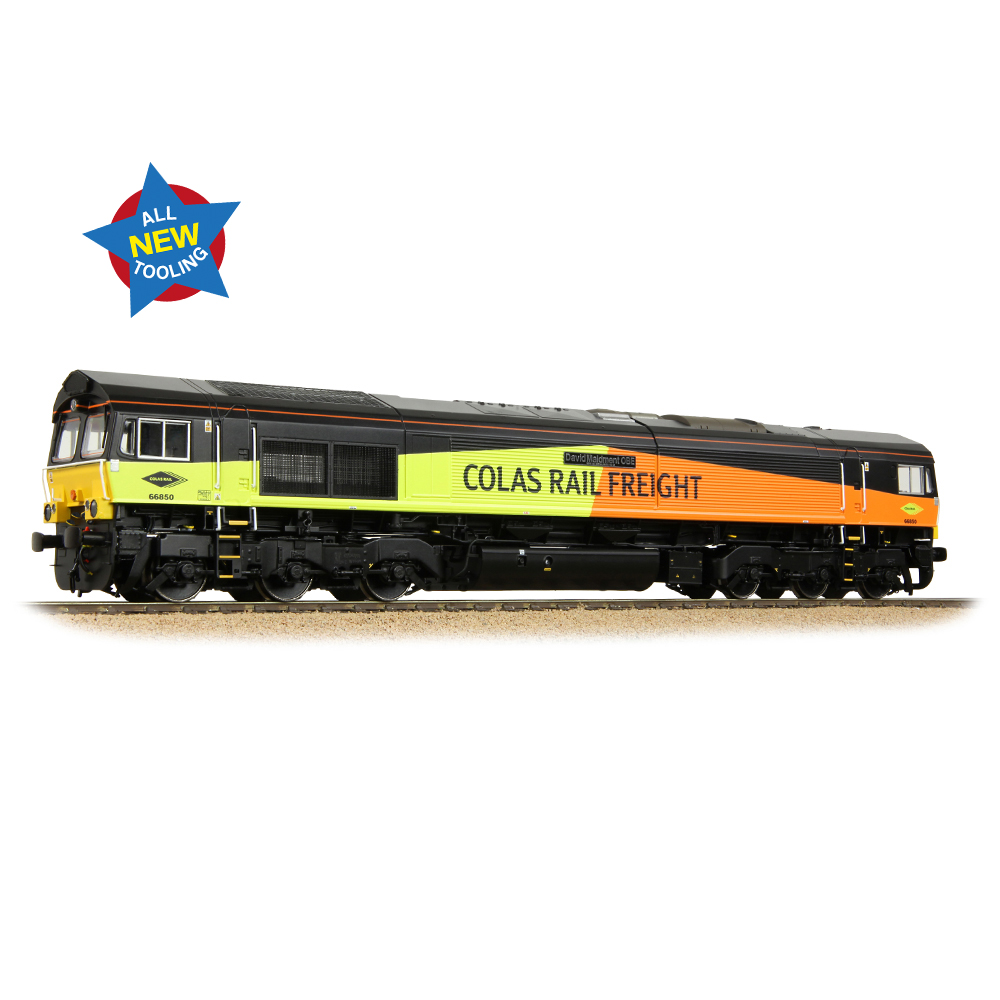
50-004AClass 66/8 66850 'David Maidment OBE' Colas Rail Freight
'OO' GaugeReleased: 19/12/25DCC Ready (PluX22)Era 9The Class 66 Diesel Locomotive revolutionised the British rail freight landscape when the first examples arrived in 1998, and more than a quarter of a century later, the type remains at the forefront of freight operations the length and breadth of the country. Now, we are delighted to present the all-new Bachmann Branchline OO Scale Class 66 which has been designed from the rails up, capturing this modern icon like never before.
Our Price:
£195.45
£195.45
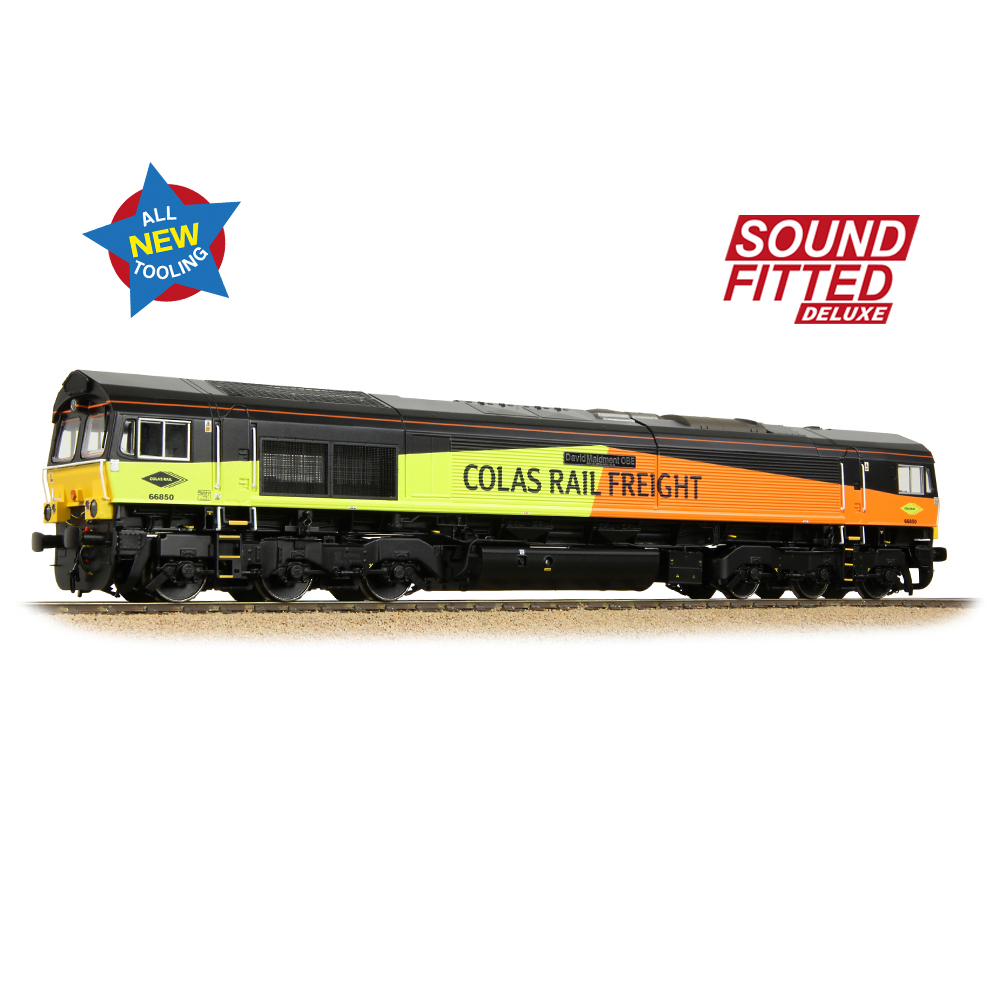
40-004ASFXClass 66/8 66850 'David Maidment OBE' Colas Rail Freight DCC Sound Deluxe
'OO' GaugeReleased: 19/12/25DCC FittedDCC SoundEra 9The Class 66 Diesel Locomotive revolutionised the British rail freight landscape when the first examples arrived in 1998, and more than a quarter of a century later, the type remains at the forefront of freight operations the length and breadth of the country. Now, we are delighted to present the all-new Bachmann Branchline OO Scale Class 66 which has been designed from the rails up, capturing this modern icon like never before.
Our Price:
£314.45
£314.45