Search results
 50-010SFX
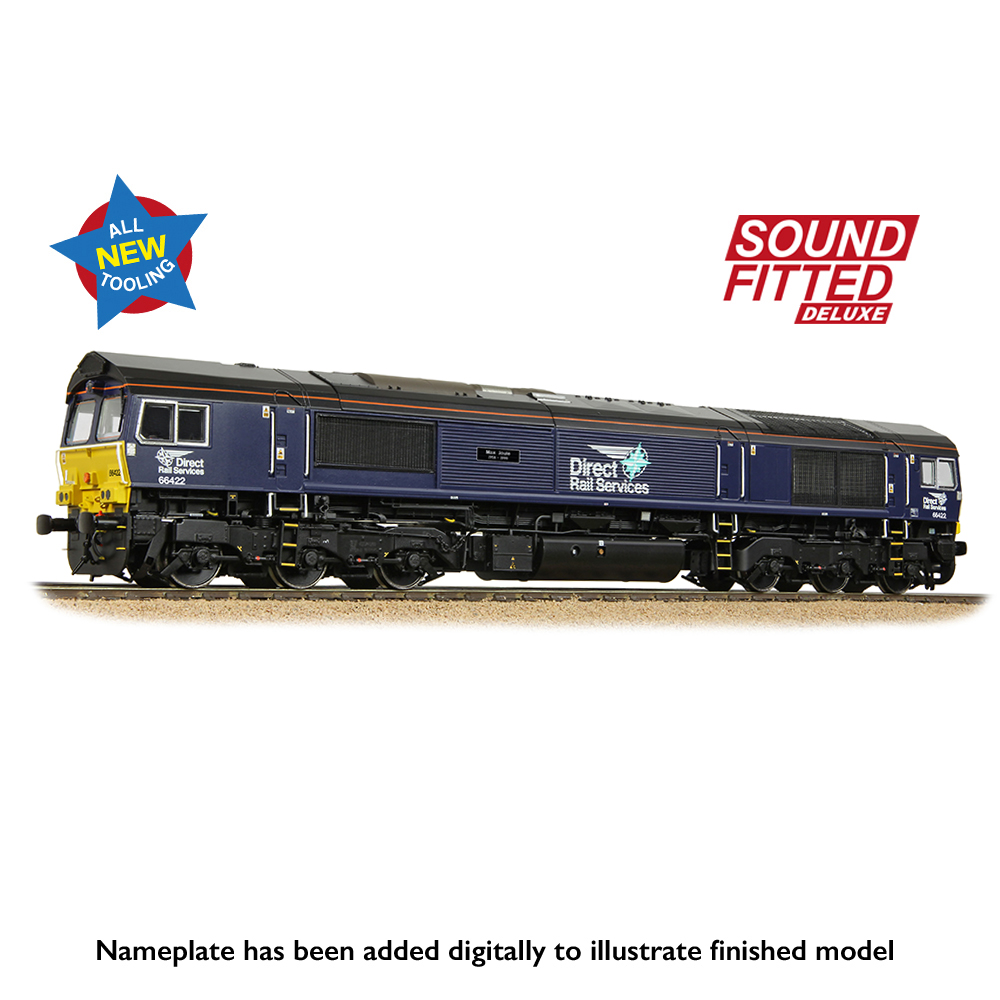
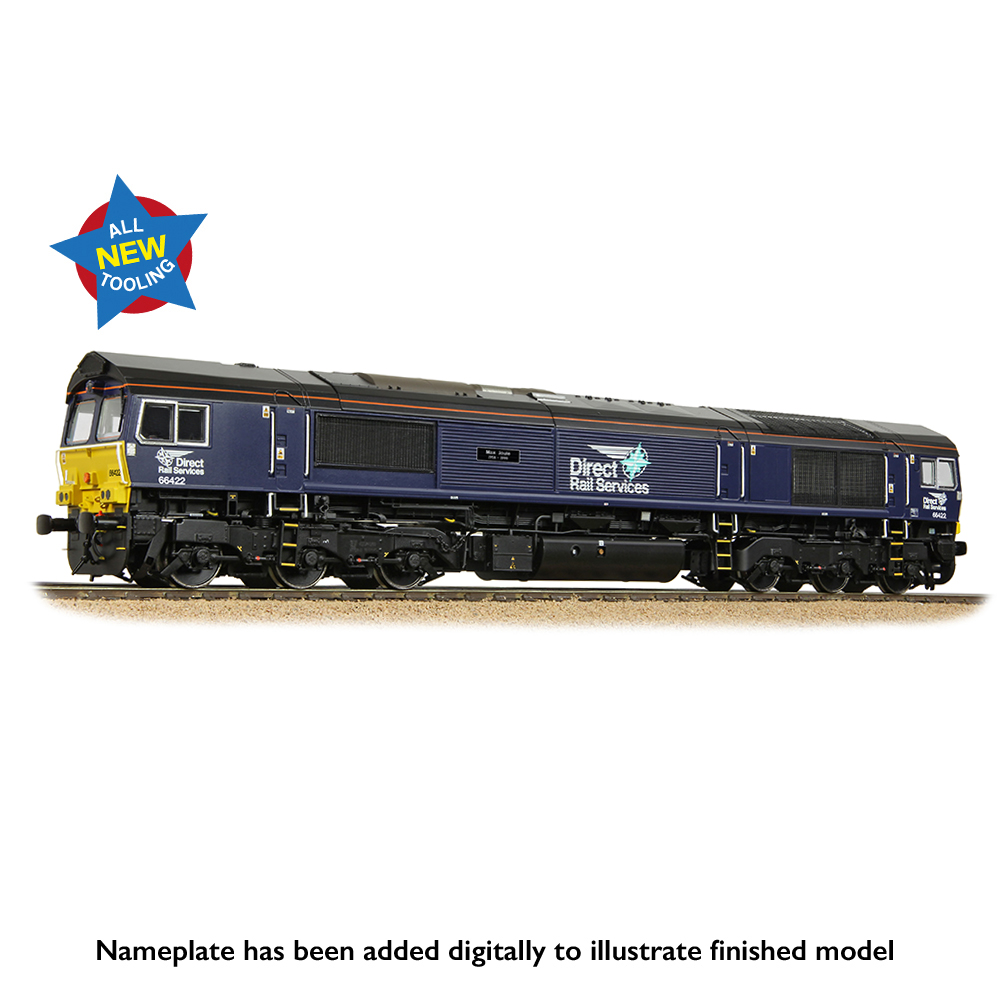
Class 66/4 66422 'Max Joule 1958-1999' DRS Compass (Small Logo) With DCC Sound Deluxe
 'OO' Gauge
 Released: 24/12/25
 DCC FittedDCC Sound
 Era 9
Era 9When it comes to technology, the specification doesn’t get any better than this SOUND FITTED DELUXE Class 66 which includes a full lighting suite with directional lights that can be switched between day and night modes, stabling mode, cab lights and machine room lights. The pre-fitted ESU Loksound V5DCC Sound Decoder plays authentic sounds through the Dual Fitted XL speaker system, and operational interruptions – like sound cut outs, stalling and light flicker – are a thing of the past thanks to our Bach-Up Stay Alive System. The Auto-Release Couplings fitted at either end of this Class 66 are the icing on the cake, providing hands-free, remote uncoupling, all automated and controlled by the press of a button.
Our Price:
£314.45
£314.45
50-010Class 66/4 66422 'Max Joule 1958-1999' DRS Compass (Small Logo)
'OO' GaugeReleased: 24/12/25DCC Ready (PluX22)Era 9The Class 66 Diesel Locomotive revolutionised the British rail freight landscape when the first examples arrived in 1998, and more than a quarter of a century later, the type remains at the forefront of freight operations the length and breadth of the country. Now, we are delighted to present the all-new Bachmann Branchline OO Scale Class 66 which has been designed from the rails up, capturing this modern icon like never before.
Our Price:
£195.45
£195.45
 372-610
LNER V2 4791 LNER Lined Green (Original)
'N' GaugeReleased: 24/12/25DCC Ready (Next18)Era 3Faced with a growing threat to its freight traffic from road transport, in 1928 the LNER launched its ‘Green Arrow’ express goods services, a new range of fast, fully brake-fitted, long-distance goods, parcels and perishables trains. To haul these services a top link locomotives were required and at first, A1 and A3 Class ‘Pacifics’ were employed along with the LNER’s K3 2-6-0s, although the K3s were not suited to the high speeds required for the ‘Green Arrow’ services. With the Pacifics required for passenger work, in 1935 the LNER announced its intention to develop a new locomotive for long-distance, mixed traffic work and the following year the first of Sir Nigel Gresley’s V2 Class entered traffic.

Our Price:
£186.95
£186.95
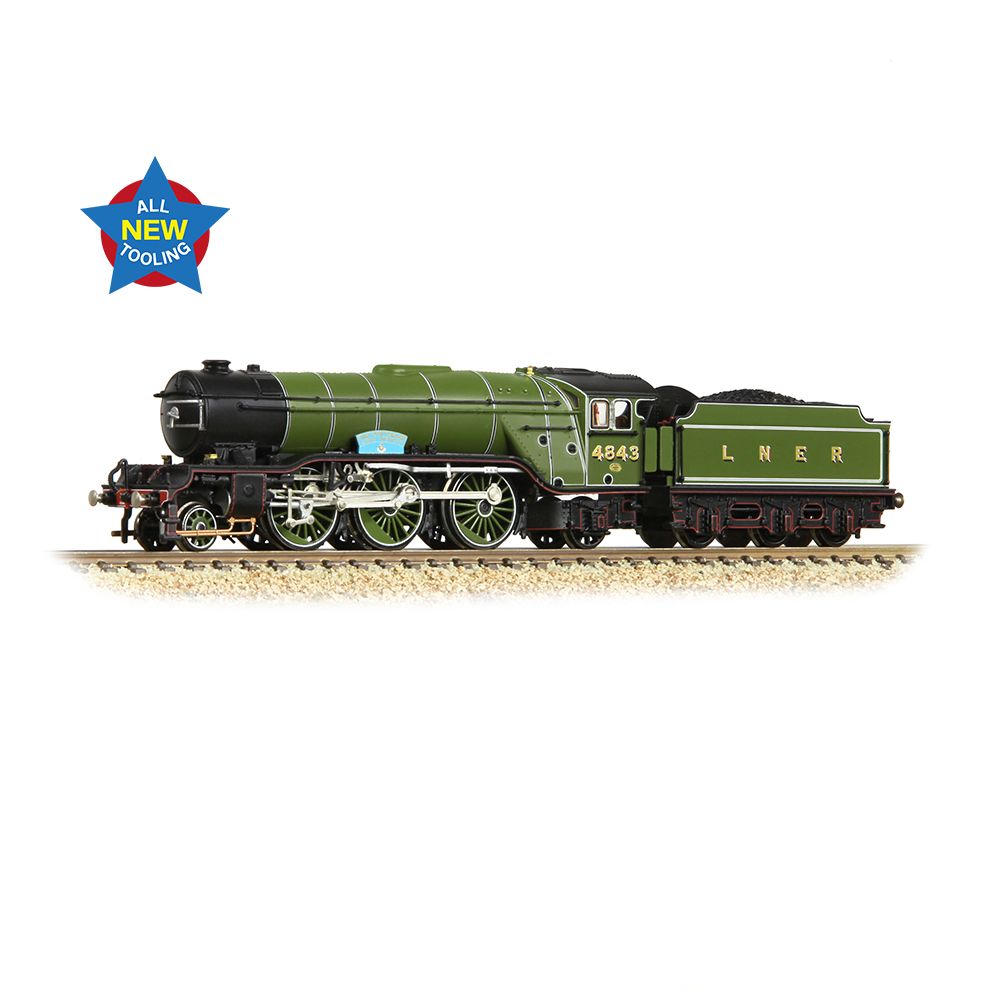
372-611LNER V2 4843 'Kings Own Yorkshire Light Infantry' LNER Lined Green
'N' GaugeReleased: 24/12/25DCC Ready (Next18)Era 3Faced with a growing threat to its freight traffic from road transport, in 1928 the LNER launched its ‘Green Arrow’ express goods services, a new range of fast, fully brake-fitted, long-distance goods, parcels and perishables trains. To haul these services a top link locomotives were required and at first, A1 and A3 Class ‘Pacifics’ were employed along with the LNER’s K3 2-6-0s, although the K3s were not suited to the high speeds required for the ‘Green Arrow’ services. With the Pacifics required for passenger work, in 1935 the LNER announced its intention to develop a new locomotive for long-distance, mixed traffic work and the following year the first of Sir Nigel Gresley’s V2 Class entered traffic.
Our Price:
£186.95
£186.95
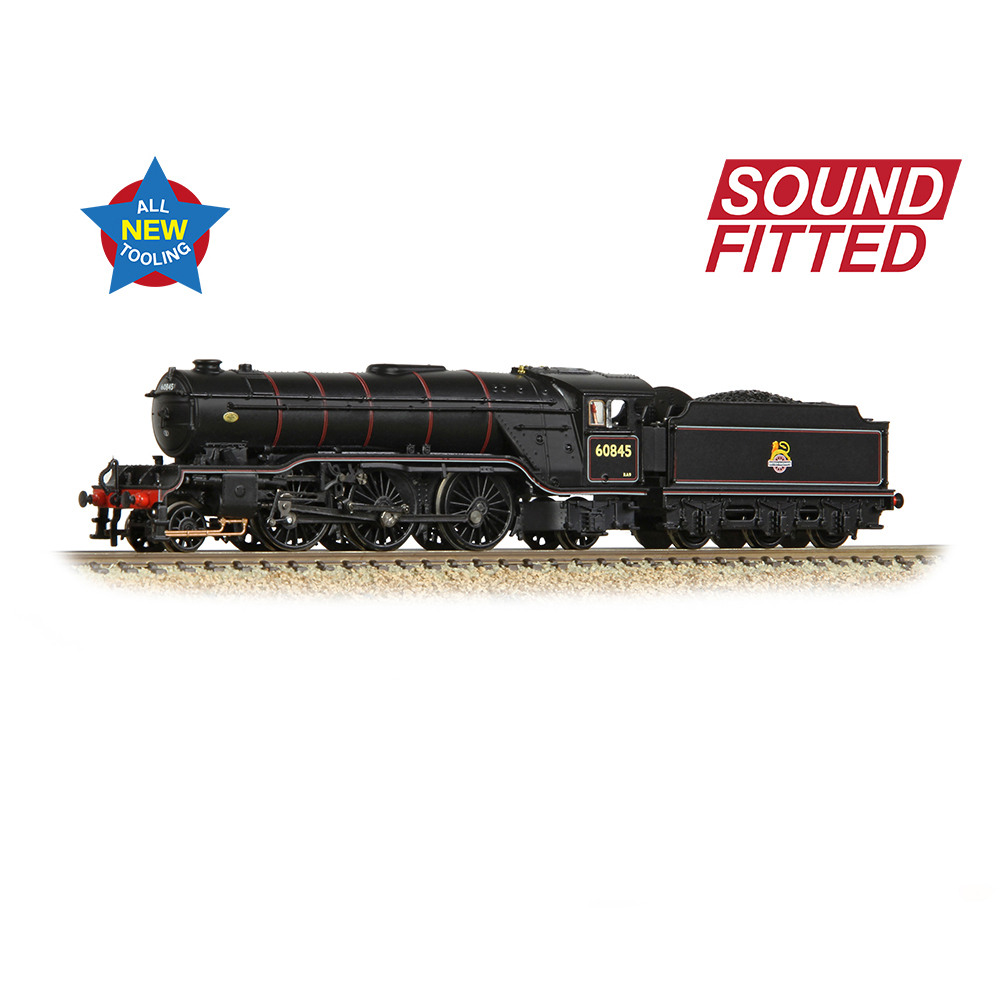
372-612SFLNER V2 60845 BR Lined Black (Early Emblem) With DCC Sound Fitted
'N' GaugeReleased: 24/12/25DCC FittedEra 4Faced with a growing threat to its freight traffic from road transport, in 1928 the LNER launched its ‘Green Arrow’ express goods services, a new range of fast, fully brake-fitted, long-distance goods, parcels and perishables trains. To haul these services a top link locomotives were required and at first, A1 and A3 Class ‘Pacifics’ were employed along with the LNER’s K3 2-6-0s, although the K3s were not suited to the high speeds required for the ‘Green Arrow’ services. With the Pacifics required for passenger work, in 1935 the LNER announced its intention to develop a new locomotive for long-distance, mixed traffic work and the following year the first of Sir Nigel Gresley’s V2 Class entered traffic.
Our Price:
£280.45
£280.45
372-614LNER V2 60847 'St Peter's School' BR Lined Green (Late Crest)
'N' GaugeReleased: 24/12/25DCC Ready (Next18)Era 5Faced with a growing threat to its freight traffic from road transport, in 1928 the LNER launched its ‘Green Arrow’ express goods services, a new range of fast, fully brake-fitted, long-distance goods, parcels and perishables trains. To haul these services a top link locomotives were required and at first, A1 and A3 Class ‘Pacifics’ were employed along with the LNER’s K3 2-6-0s, although the K3s were not suited to the high speeds required for the ‘Green Arrow’ services. With the Pacifics required for passenger work, in 1935 the LNER announced its intention to develop a new locomotive for long-distance, mixed traffic work and the following year the first of Sir Nigel Gresley’s V2 Class entered traffic.

Our Price:
£186.95
£186.95
 R30395SS
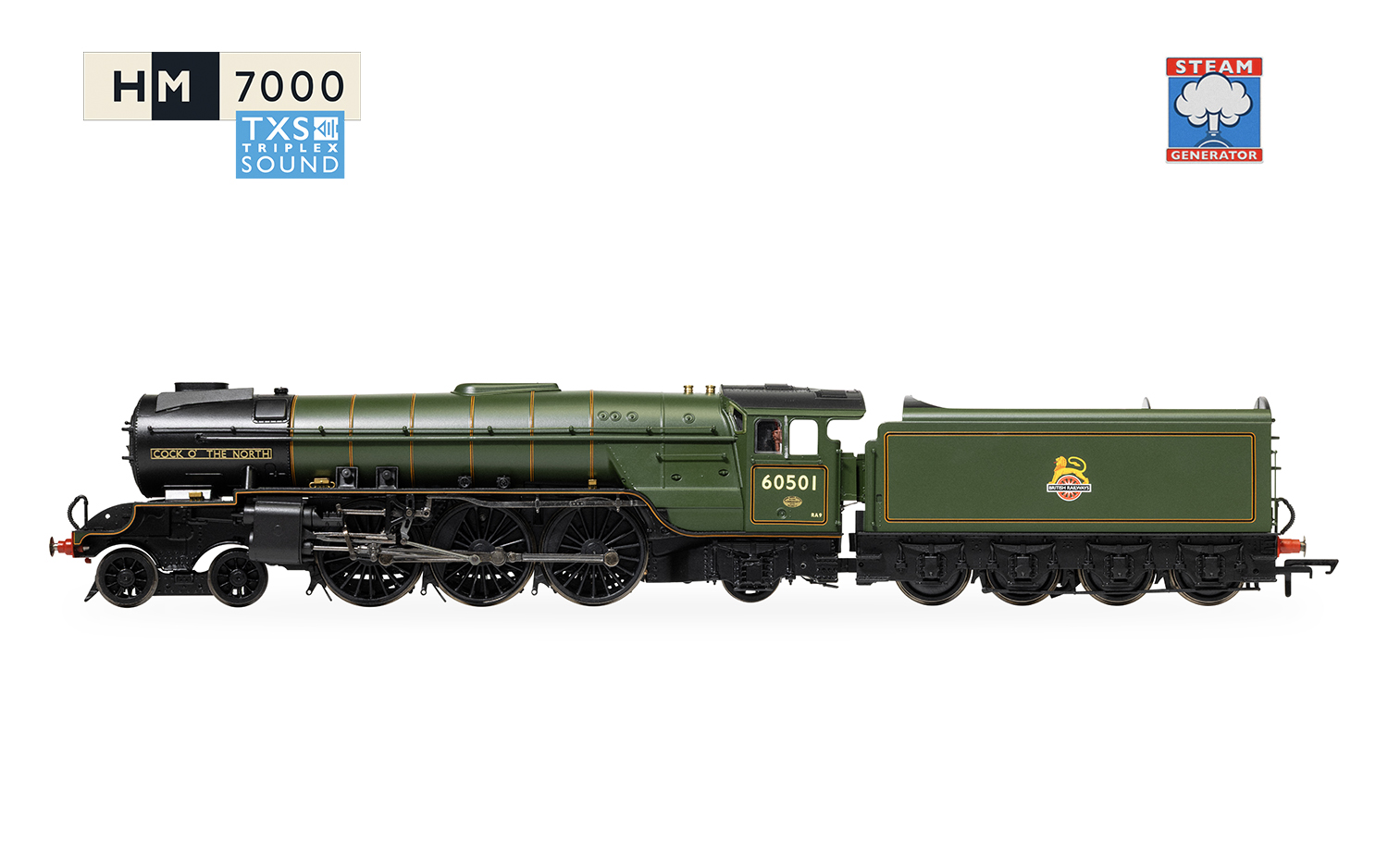
BR (Early) - Thompson A2-2 - 60501 'Cock O the North' (With Steam Generator)
'OO' GaugeReleased: 24/12/25DCC FittedDCC SoundEra 4The London and North Eastern Railway Class A2/2 was a Class of six 4-6-2 steam locomotives rebuilt by Edward Thompson in 1943 and 1944 from his predecessor’s P2 Class of 2-8-2 express passenger locomotives. Withdrawals began in 1959 with 605 ‘Thane of Fife’, followed by ‘Lord President’ and ‘Cock O’ the North in 1960.
Thompson Class A2-2 ‘Cock O the North’ is the latest detailed locomotive to be produced with Hornby’s innovative steam generator functionality where the locomotive creates realistic steam from the chimney of the model created by water vapour. Add this newly tooled design to your model railway today.
This locomotive also comes fitted with sound. It has a series of sounds true to this class of locomotive, and the sounds and steam effects are synced to the model's movement, creating a realistic ‘chugging’. This is all controlled by the pre-installed HM7000 21-pin decoder, which can then be operated by DCC or Bluetooth via the free HM7000 app and powered by a strong 5-pole motor with all-wheel electrical pickup.
For 2025, this model has gone through several tooling updates. These include the addition of a Gen 2 steam generator, which improves steam output and eliminates water clogging, the addition of an optical speed sensor for accurate wheel speed detection, a flickering firebox and a quick-release loco to tender connection.
Our Price:
£328.49
£328.49
R30394BR (Late) - Thompson Class A2-3 - 60521 'Watling Street'
'OO' GaugeReleased: 24/12/25DCC Ready (21 Pin)Era 5Of the 15 newly built A2s, only the first, No. 500, emerged from Doncaster under Edward Thompson while he was Chief Mechanical Engineer. That was in May 1946 and, by the end of the following month, Thompson had retired aged 65.
The remaining 14 were built under his successor, Arthur Peppercorn, between July 1946 and September 1947. They had planned to build 25 in total, but Peppercorn cancelled the remainder while he made modifications to the design.
His new design became the A2 and the Thompson locomotives were designated A2/3s. No. 60521 entered service as No. 521 ‘Watling Street’ at Gateshead in May 1947 and was withdrawn by BR at Tweedmouth in November 1962.

Our Price:
£251.99
£251.99
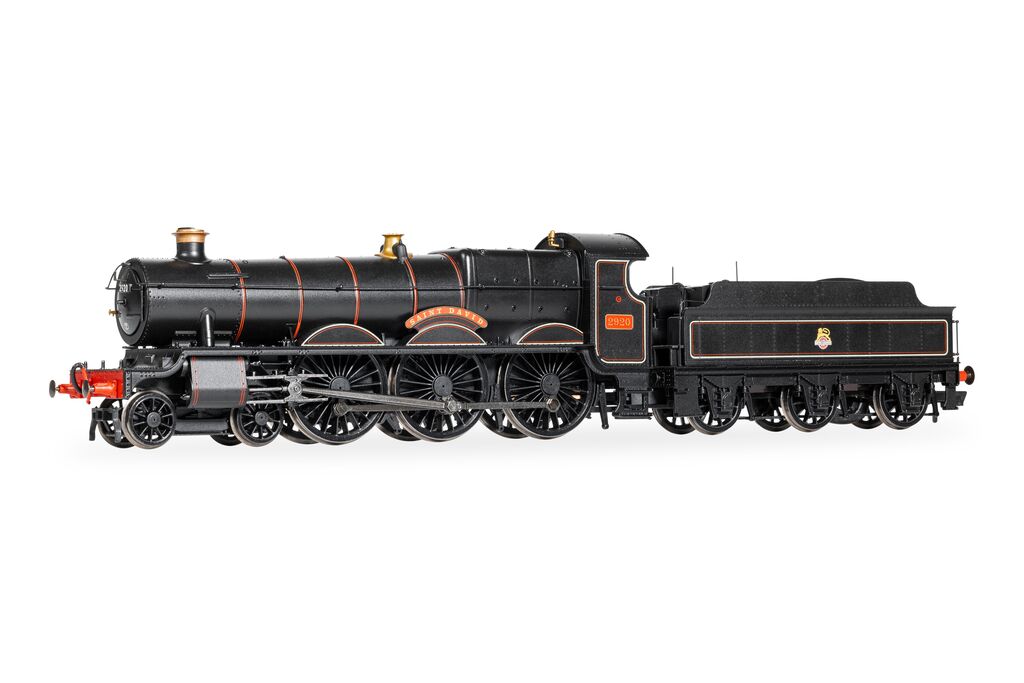
R30403BR - Saint Class - 'Saint David' 2920
'OO' GaugeExpected:
UnknownDCC Ready (21 Pin)Era 4Of the 77 Saint Class members built by GWR between 1902 and 1913, 2920 ‘Saint David’ was one of the 47 that survived beyond nationalisation of Britain’s railways in 1948.
Part of the third batch of 20 to be built in 1907, the locomotive was new to Cardiff Canton shed. It underwent several changes during its career, including the fitting of a superheated boiler in 1909 and outside steam pipes in December 1932.
This model is presented in BR livery, the condition in which it operated through to its withdrawal in October 1953, by which point it was one of the last four still in service.
Our Price:
£211.49
£211.49
R30455SR - Merchant Navy Class - 21C9 'Shaw Savill' (VE Day 80th Anniversary)
'OO' GaugeReleased: 24/12/25DCC Ready (21 Pin)Era 3Built at Eastleigh Works, this locomotive entered traffic in July 1942 as one Oliver Bulleid’s unconventional air-smoothed ‘Pacifics’ and named after Shaw Savill Line of London, a well-known merchant shipping company at the time. Turned out in Southern Railway black with green-shaded ‘Sunshine’ lettering, the locomotive was painted into traditional malachite green after hostilities ended.
Renumbered to 35009 in August 1949 under British Railways following nationalisation the previous year, it was rebuilt in 1957 to a more conventional design and was allocated to Exmouth Junction, from where it was withdrawn in September 1964.

Our Price:
£215.99
£215.99