
Search results
 4D-022-027
DRS COMPASS (NEW DRS LOGO) CLASS 68 '68002' INTREPID
 'OO' Gauge
 Released: 06/08/24
 DCC Ready (21 Pin)
 Era 11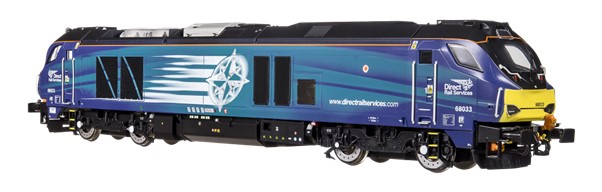
Our Price:
£153.00
£153.00
 R60243
Mainline, YGB 'Seacow', DB980115
'OO' GaugeReleased: 16/08/24Era 9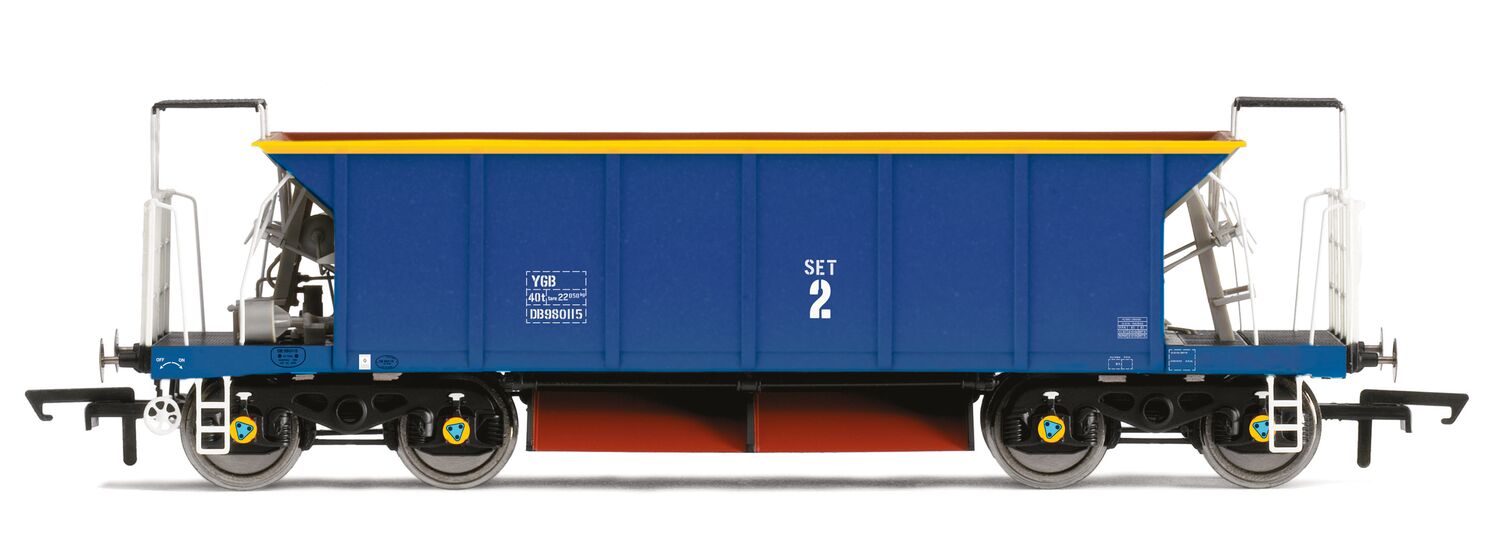
Our Price:
£33.75
£33.75
R60244EWS, YGB 'Seacow', DB980220
'OO' GaugeReleased: 16/08/24Era 9
Our Price:
£33.75
£33.75
R60245BR Civil Engineering, YGH 'Sealion', DB982792
'OO' GaugeReleased: 16/08/24Era 8
Our Price:
£33.75
£33.75
R60246BR, YGH 'Sealion', DB982725
'OO' GaugeReleased: 16/08/24Era 7
Our Price:
£33.75
£33.75
R60247Loadhaul, YGH 'Sealion', DB982587
'OO' GaugeReleased: 16/08/24Era 9
Our Price:
£33.75
£33.75
 39-421C
BR Mk1 POS Post Office Sorting Van Post Office Red (with Net)
'OO' GaugeReleased: 21/08/24Era 5MODEL FEATURES:
Bachmann Branchline OO Scale
Era 5
Pristine Post Office Red livery
Running No. W80301
BR1 Bogies
Shell Roof Ventilators
Mail Exchange Gear (Traductor Arms and Net)
Side Lights (Non-functional)
Accessory Pack
NEM Coupling Pockets
Close Coupling Mechanism
Length 270mm

Our Price:
£65.65
£65.65
39-421DBR Mk1 POS Post Office Sorting Van Post Office Red (with Net)
'OO' GaugeReleased: 21/08/24Era 5MODEL FEATURES:
Bachmann Branchline OO Scale
Era 5
Pristine Post Office Red livery
Running No. W80302
BR1 Bogies
Shell Roof Ventilators
Mail Exchange Gear (Traductor Arms and Net)
Side Lights (Non-functional)
Accessory Pack
NEM Coupling Pockets
Close Coupling Mechanism
Length 270mm

Our Price:
£65.65
£65.65
32-340Class 25/1 25057 BR Blue [W]
'OO' GaugeReleased: 21/08/24DCC Ready (PluX22)Era 7The Class 25 Diesel Locomotive has long been a fixture of the Bachmann Branchline OO scale range, but this all-new model owes nothing to its predecessors. Designed from the rails up, this new family Class 25s from Bachmann Branchline encompasses Class 25/1s, 25/2s and 25/3s, capturing the differences – some small, some anything but – between the three distinct types. Regardless of the particular locomotive being depicted, every model features high fidelity mouldings and numerous separately fitted parts, with the utmost attention to detail paid to the features of the prototype.
Our new Class 25 is brought to life with an exquisite livery application using true-to-prototype colours, fonts and logos.

Our Price:
£178.45
£178.45
32-340SFXClass 25/1 25057 BR Blue [W] With DCC Sound
'OO' GaugeReleased: 21/08/24DCC FittedDCC SoundEra 7The Class 25 Diesel Locomotive has long been a fixture of the Bachmann Branchline OO scale range, but this all-new model owes nothing to its predecessors. Designed from the rails up, this new family Class 25s from Bachmann Branchline encompasses Class 25/1s, 25/2s and 25/3s, capturing the differences – some small, some anything but – between the three distinct types. Regardless of the particular locomotive being depicted, every model features high fidelity mouldings and numerous separately fitted parts, with the utmost attention to detail paid to the features of the prototype.
Our new Class 25 is brought to life with an exquisite livery application using true-to-prototype colours, fonts and logos. Following the precedent set by the Bachmann Branchline Class 47, and subsequently the 37 and 31 to he Class 25 features a full lighting suite and is available in three formats; standard, SOUND FITTED or SOUND FITTED DELUXE as in the case of the example – this award winning specification features our motorised radiator fan system and authentic tinted windscreen!

Our Price:
£297.45
£297.45
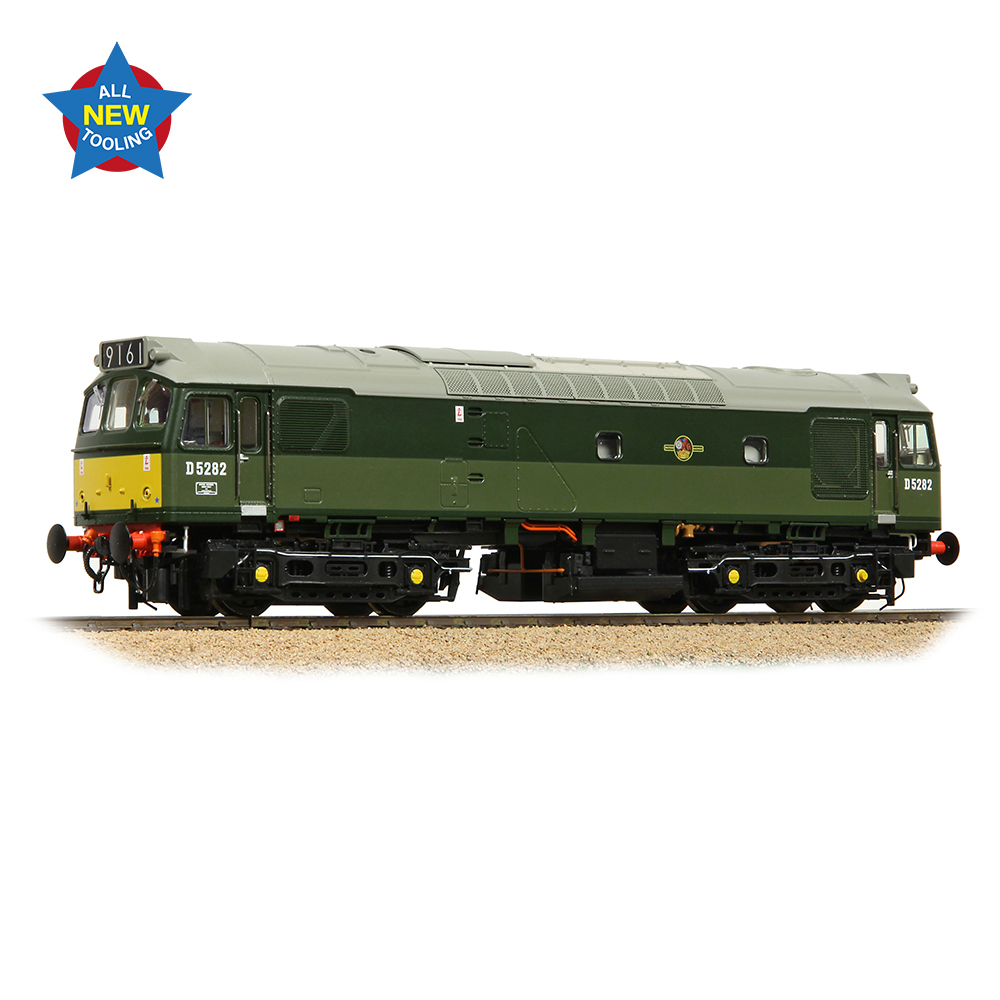
32-341Class 25/2 D5282 BR Two-Tone Green (Small Yellow Panels)
'OO' GaugeReleased: 21/08/24DCC Ready (PluX22)Era 5Following publication of the British Railways Modernization Plan in 1955, the British Rail Class 25 diesels were introduced into service in 1961 and were more powerful than the Class 24 Bo-Bo diesels introduced three years earlier. A total of 325 Class 25 Diesel Locomotives over several sub-types were built, most at BR Derby, but some were constructed at Crewe and Darlington with a further 26 built by Beyer Peacock of Manchester.
As Type 2 locomotives, the Class 25s were often seen working in pairs to increase operational power. The class was, however, a true mixed traffic locomotive, equally at home on either passenger or mixed freight duties. They were well suited to the task of replacing steam traction on duties over a wide area of the British Railways system and were allocated to numerous depots across the Eastern, London Midland, Scottish and Western Regions. Although not allocated to the Southern Region, they were often seen on incoming and through traffic from the other regions. Following closure of numerous lines in the late 1960s and the resultant loss of passenger work, during the 70s & 80s they were more likely to be seen on either freight, newspaper, parcels or specialized duties. with notable examples including the provision of train heating for steam hauled specials in their swansong years. The Class was finally withdrawn from service in 1987, but twenty preserved locomotives survive to the present day.
Our Price:
£169.95
£169.95
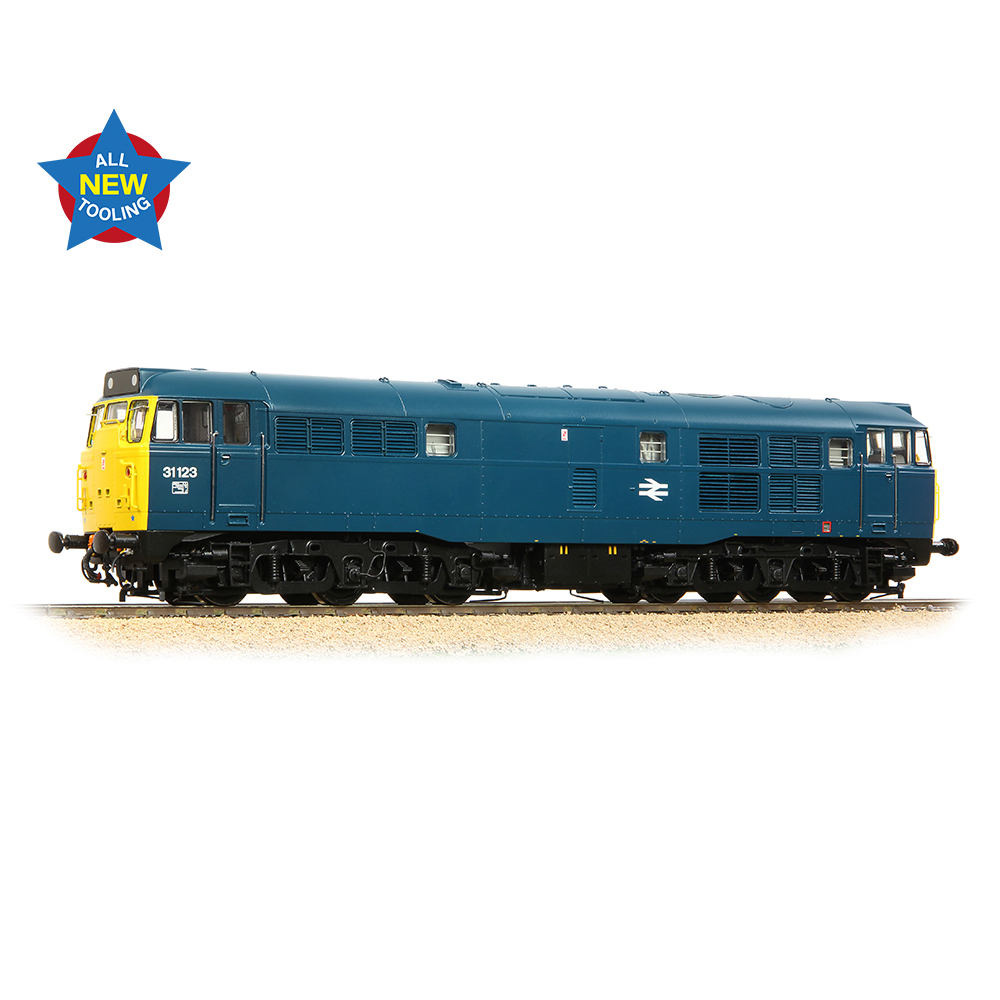
35-805Class 31/1 31123 BR Blue
'OO' GaugeReleased: 21/08/24DCC Ready (PluX22)Era 8BACHMANN BRANCHLINE CLASS 30/31 SPECIFICATION
MECHANISM:
Five pole, twin shaft motor with two flywheels providing drive to both bogies
All axle drive
Electrical pickup from all outer wheels on each bogie
Separate metal bearings fitted to each axle
Diecast metal chassis block and bogie towers
Diecast metal gearboxes, with gearing arranged for prototypical running speeds and haulage capabilities
5mm (OO gauge) wheels to NEM310 & NEM311 standards with authentic profile and detailing
Detachable coupling pockets to NEM362 standards fitted to each bogie
Our Price: £169.95
Bargain Price:
£149.95
£149.95
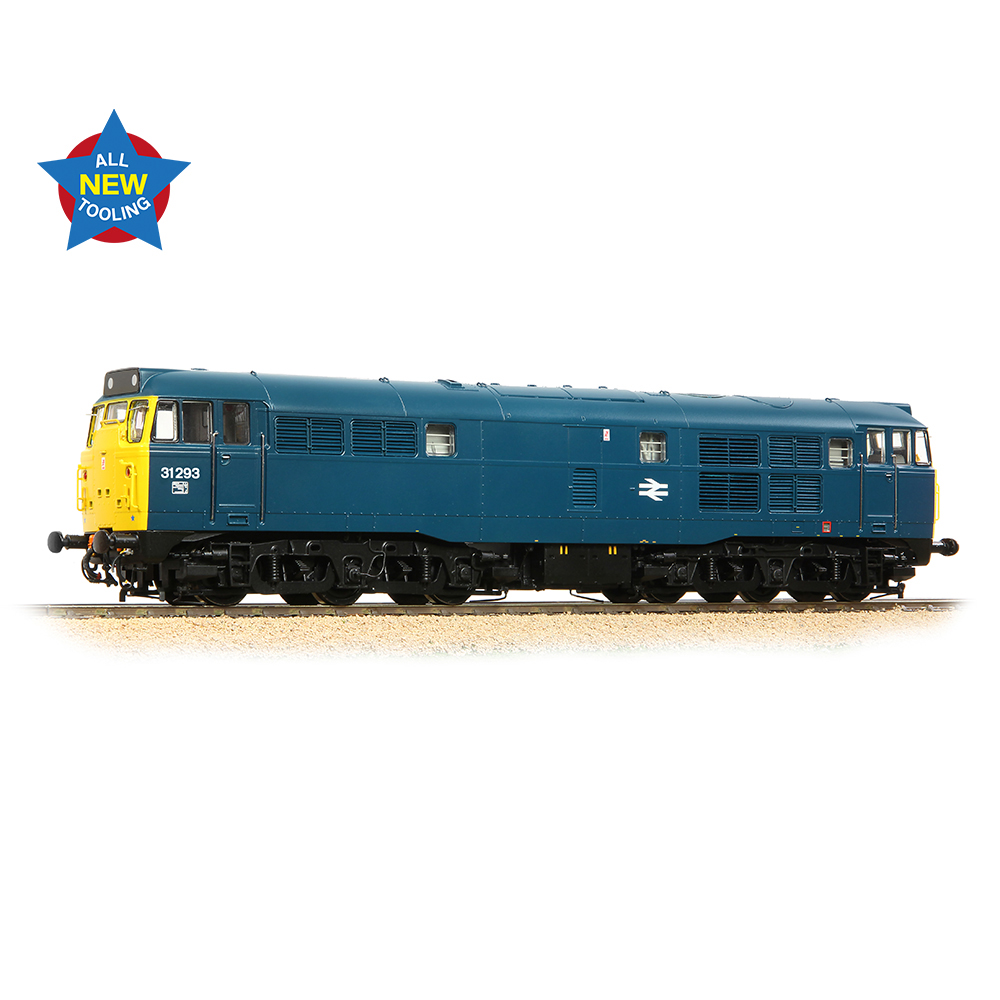
35-805AClass 31/1 31293 BR Blue
'OO' GaugeReleased: 21/08/24DCC Ready (PluX22)Era 8The BR Class 30 and Class 31 Diesel Locomotives, originally known as the Brush Type 2s, were built by Brush Traction from 1957-1962, with a total of 263 locomotives constructed. The first locomotive entered service in November 1957 and the design was one of the Pilot Scheme locomotives ordered by British Railways to replace steam traction. The Class was originally allocated to the Eastern Region, but gradually became common on both the Western and London Midland regions too.
Originally built with Mirrlees engines, these proved unsuccessful and in 1964 an English Electric 12SVT engine was fitted to one example for trails. The trials proved successful and between 1965 and 1969 the entire class was fitted with English Electric engines. Two TOPS classifications were used to distinguish between the two engine types, with the Mirrelees engine locomotives denoted Class 30s, whilst the English Electric examples became Class 31s.
The Class 31/1s were the standard locomotives, distinguished from the first small batch of locos – the 31/0s – which had Red Circle multiple-working control equipment, a non-standard feature that led to them being withdrawn relatively early in the late-1970s. The 31/1s were fitted with Blue Star multiple-working equipment, as found on many other BR classes, and all had steam heating boilers from new, making them ideal for hauling passenger services. The Class 31/1s could be found on a variety of secondary and relief passenger duties as well as parcels and freight traffic. Commonly used in East Anglia, with allocations at Stratford and March depots, they were also found throughout the Eastern Region of BR with Finsbury Park sporting a large allocation, along with the depots at Tinsley, Immingham and Thornaby. Examples were also allocated to Bristol Bath Road and Old Oak Common on the Western Region, where they could be found working passenger trains as far west as Barnstaple and Paignton. In the early 1980s, Healey Mills and Bescot on the Midland Region also gained an allocation as replacements for Class 25s.
During the 1970s some Class 31s were fitted with Electric Train Heating (ETH) and these were reclassified as 31/4s to denote this feature. The 1980s would see BR undertake a programme of refurbishment for much of the fleet, this included the fitting of ETH to more locomotives, but refurbishment was not reserved exclusively for the 31/4s, Class 31/1s were also refurbished without receiving ETH equipment. During refurbishment bufferbeam cowlings were removed along with the bodyside band, headcode boxes were plated over and fitted with two marker lights, and any remaining disc headcodes were removed. Where steam heat boilers remained, these were removed and a concrete block added instead to maintain the weight balance.
As passenger work dried up, many of the 31/4s were displaced and found themselves allocated to the departmental sector. In 1990, to reduce maintenance costs and prevent their ETH-fitted locos being borrowed for passenger work when extra traction was needed, the departmental sector isolated the ETH and removed the jumper cables from some of its 31/4s, resulting in these locos being reclassified as 31/5s. There were also two locomotives classified as 31/6, these had through ETH wiring fitted allowing them to work double-headed with an ETH-fitted loco.
The first withdrawal came in 1975 following accident damage, but most survived until the 1990s when EWS took on 153 examples from BR’s Transrail and Mainline freight divisions, although EWS spent little time running down its inherited fleet. Other operators however kept Class 31s active on the mainline with operations only now dwindling out. The Class has also been popular with the preservation movement, with more than 25 examples now preserved.
Our Price: £169.95
Bargain Price:
£149.95
£149.95
35-805ASFXClass 31/1 31293 BR Blue With DCC Sound
'OO' GaugeReleased: 21/08/24DCC FittedDCC SoundEra 8The Brush Type Twos – Class 30s and Class 31s – are the next Diesel Locomotives to get the Bachmann Branchline treatment, with models of these long-lived prototypes joining the Branchline OO scale range for the first time. Following in the footsteps of their N scale counterparts from Graham Farish, these new OO scale models have all the hallmarks of the Branchline Class 37 & 47 locomotives and more.
Depicting a Class 31/1, this locomotive has had its Mirrlees engine replaced with an English Electric 12SVT and the Branchline model faithfully recreates this, with the correct roof exhaust ports and 12SVT engine block detail visible through the bodyside windows.
With high fidelity mouldings, numerous separately fitted parts and countless tooling variations to capture the minutiae of the real locomotives throughout their lives, our new Class 31 is brought to life with an exquisite livery application using true-to-prototype colours, fonts and logos. Along with an unprecedented array of lighting features, our Dual Fitted speaker system is fitted to all models – bringing to life this SOUND FITTED model. For the ultimate experience, choose one of our SOUND FITTED DELUXE models with their motorised radiator fan, authentic tinted windscreen glazing and, for the first time ever, DCC-uncoupling – thanks to the Bachmann Auto-release Coupling System!

Our Price:
£305.95
£305.95
31-362BClass 03 03056 BR Blue
'OO' GaugeReleased: 28/08/24DCC Ready (Next18)Era 7The Class 03 diesel shunters were introduced between 1957 and 1962 and with 230 built, the type was one of BR's most successful small 0-6-0 diesel-mechanical shunters and was adopted as BR’s standard small shunter. A development of the Class 04 ‘Drewry’ shunter, construction was shared between British Railways' Swindon Works and Doncaster Works and initial allocations for the class covered all regions except Scotland. Shunting was the main employment, with their short wheelbase and light weight making them particularly useful in areas where weight restrictions or tight trackwork existed. Examples were also assigned to station pilot duties and due to the short wheelbase, it was common for them to be coupled to a ‘shunter’s truck’ or ‘runner wagon’ to ensure sufficient length for reliable operation of track circuits.
Weighing in at 30 Tons, some 18 Tons less than the Class 08 diesel shunter, the Class 03’s were fitted with Gardner engines and their distinctive jackshaft drive arrangement gave the locomotives a top speed of 28½ mph. Despite their usefulness, a downturn in shunting requirements meant that withdrawals began in 1968, although the last remained in service on mainland Britain until 1987. Two examples operated on the Isle of Wight, with lowered cab roofs to account for the restricted loading gauge, and these remained in traffic on the island until 1993. One of these Isle of Wight locos, No. 03179, was resurrected by West Anglia Great Northern in 1998 to shunt their Hornsey Depot. Subsequently operated by First Capital Connect, the loco was finally withdrawn in 2008 after which the locomotive was preserved bringing the total number of surviving examples to 56.

Our Price:
£127.45
£127.45
31-364AClass 03 D2095 BR Green (Wasp Stripes)
'OO' GaugeReleased: 28/08/24DCC Ready (Next18)Era 5The Class 03 diesel shunters were introduced between 1957 and 1962 and with 230 built, the type was one of BR's most successful small 0-6-0 diesel-mechanical shunters and was adopted as BR’s standard small shunter. A development of the Class 04 ‘Drewry’ shunter, construction was shared between British Railways' Swindon Works and Doncaster Works and initial allocations for the class covered all regions except Scotland. Shunting was the main employment, with their short wheelbase and light weight making them particularly useful in areas where weight restrictions or tight trackwork existed. Examples were also assigned to station pilot duties and due to the short wheelbase, it was common for them to be coupled to a ‘shunter’s truck’ or ‘runner wagon’ to ensure sufficient length for reliable operation of track circuits.
Weighing in at 30 Tons, some 18 Tons less than the Class 08 diesel shunter, the Class 03’s were fitted with Gardner engines and their distinctive jackshaft drive arrangement gave the locomotives a top speed of 28½ mph. Despite their usefulness, a downturn in shunting requirements meant that withdrawals began in 1968, although the last remained in service on mainland Britain until 1987. Two examples operated on the Isle of Wight, with lowered cab roofs to account for the restricted loading gauge, and these remained in traffic on the island until 1993. One of these Isle of Wight locos, No. 03179, was resurrected by West Anglia Great Northern in 1998 to shunt their Hornsey Depot. Subsequently operated by First Capital Connect, the loco was finally withdrawn in 2008 after which the locomotive was preserved bringing the total number of surviving examples to 56.

Our Price:
£127.45
£127.45
 373-561A
BR 102T TEA Bogie Tank Wagon 'BP' Green
'N' GaugeReleased: 27/08/24Era 8
Our Price:
£47.65
£47.65
373-561BBR 102T TEA Bogie Tank Wagon 'BP' Green
'N' GaugeReleased: 27/08/24Era 8
Our Price:
£47.65
£47.65
373-564BR 102T TEA Bogie Tank Wagon 'Shell/BP' Grey
'N' GaugeReleased: 27/08/24Era 6
Our Price:
£47.65
£47.65
373-564ABR 102T TEA Bogie Tank Wagon 'Shell/BP' Grey
'N' GaugeReleased: 27/08/24Era 6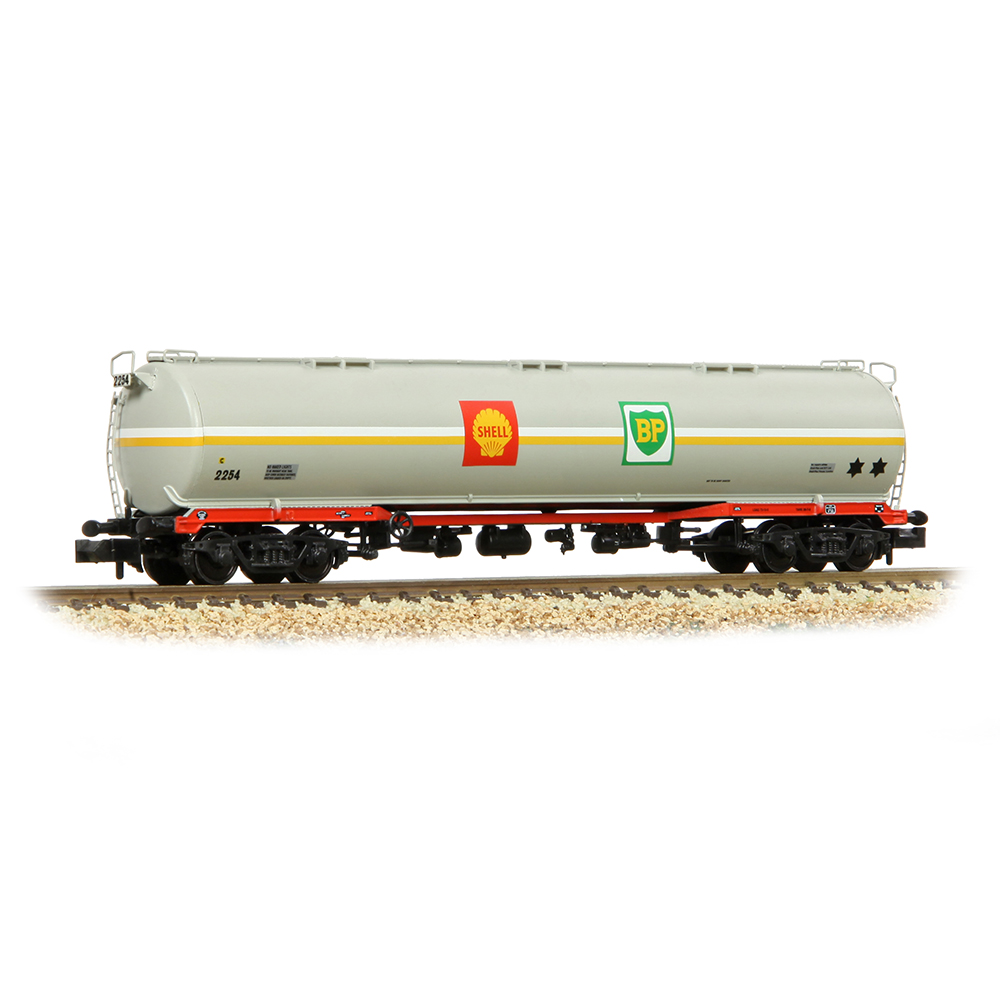
Our Price:
£47.65
£47.65