Search results
 R40475
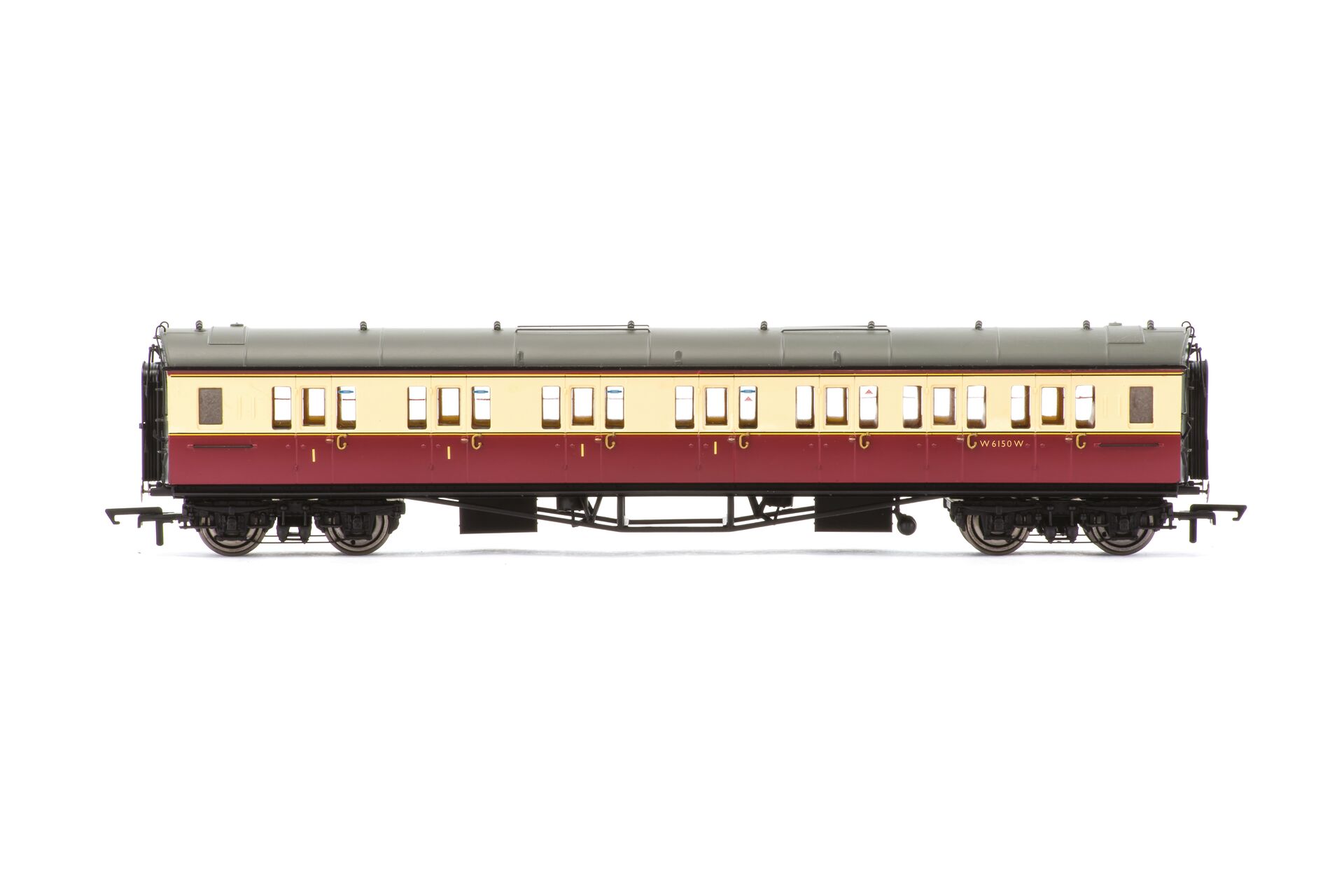
BR - Collett Corridor Composite RH - 6150 - Coach
 'OO' Gauge
 Released: 01/12/25
 Era 4
Era 4Although introduced onto the GWR by Collett from 1925, many of these modern-for-their-time coaches lasted in service until the 1960s, with many examples passing into departmental use. Some retained their chocolate and cream livery after nationalisation of Britain’s railways in 1948 and others were painted in the new owner’s crimson and cream.
These wooden-framed, but steel-panelled ‘bow-ended’ coaches were also ‘handed’ in a throw-back to the days they were introduced, when coach sets were marshalled with the compartments to the south (sunny) side and the corridors alongside London Paddington’s Platform 1 for ease of loading/unloading. For example, a left-hand brake coach would have its corridor on the opposite side to a right-hand brake.
Our Price:
£55.79
£55.79
R40476BR - Collett Corridor - Third Class - 4551 - Coach
'OO' GaugeReleased: 01/12/25Era 4Although introduced onto the GWR by Collett from 1925, many of these modern-for-their-time coaches lasted in service until the 1960s, with many examples passing into departmental use. Some retained their chocolate and cream livery after nationalisation of Britain’s railways in 1948 and others were painted in the new owner’s crimson and cream.
These wooden-framed, but steel-panelled ‘bow-ended’ coaches were also ‘handed’ in a throw-back to the days they were introduced, when coach sets were marshalled with the compartments to the south (sunny) side and the corridors alongside London Paddington’s Platform 1 for ease of loading/unloading. For example, a left-hand brake coach would have its corridor on the opposite side to a right-hand brake.

Our Price:
£55.79
£55.79
R30405GWR - Saint Class - 2975 'Lord Palmer'
'OO' GaugeReleased: 16/12/25 DCC Ready (21 Pin)Era 3
Entering service in March 1905 as the unnamed No. 175, the locomotive was given the name Viscount Churchill in 1907 and numbered 2975 in December 1912. In February 1924, the locomotive was renamed Sir Ernest Palmer, but when Baronet Palmer gained peerage in June 1933, it was renamed Lord Palmer in the October.
The locomotive was extensively damaged in an accident while hauling a goods train at Appleford in December 1942 and was finally withdrawn on 30th November 1944 from Bristol Bath Road shed after a creditable 39 years and nine months of service.

Our Price:
£211.49
£211.49
R40471BR - Kitchen and Buttery Car & Composite Restaurant - 7834 'Jolly Tar' - Coach Twin Pack
'OO' GaugeReleased: 16/12/25Era 4In 1949, two pairs of carriages were put into service on BR Southern Region to provide catering facilities with a difference. The idea came from Oliver Bulleid, the former Southern Railway’s Chief Mechanical Engineer, who had a track record of thinking ‘outside the box’ with his unusual air-smoothed ‘Pacifics’, double-deck carriages and cabbed ‘Leader’ locomotives.
Each pair consisted of a Composite Dining Car and a ‘Tavern Coach’. These were allocated to the ‘Atlantic Coast Express’ and provided thirsty commuters with a pub-on-wheels for their homeward journey.
Internally, each ‘tavern’ was decorated to mimic an olde English pub, with tiled floor, whitewashed walls, ‘oak’ beams and high-backed settles, all illuminated by ‘lanterns’. Externally, the paintwork was divided horizontally, in carmine and cream, but the lower section was lined out to represent brickwork.
The upper section had ‘half-timber’ relief and a painted pub sign, while the small windows had old-style leaded panes.
The dining cars were unpopular and were quickly re-fitted in 1950, at which point the mock brickwork on the ‘taverns’ was repainted in plain carmine. They lasted in service in their pairs until late 1959 but were repainted in unlined BR(SR) green in 1957. Similar pairs of ‘Tavern Cars’ operated on other BR regions.

Our Price:
£125.99
£125.99
R30435TXSRailRoad: BR - Class 37 - '37093' Police Livery (DCC Sound Fitted)
'OO' GaugeReleased: 16/12/25Era 8Recognised for its memorable role in a television advert – flagging down a speeding HST power car, this highly detailed model of Class 37 No. 37093 comes presented in its unique ‘Police’ promotional livery.
Complete with a roof-mounted working blue light and DCC sound-fitted with Class 37 and effects, functions, and an authentic police siren straight out of the box.

Our Price:
£134.99
£134.99
R40485RailRoad: BR Intercity - 41003 - Mk3 FO Coach
'OO' GaugeReleased: 16/12/25Era 8
Our Price:
£31.49
£31.49
R40486RailRoad: BR Intercity - 40001 - Mk3 TRUB Coach
'OO' GaugeReleased: 16/12/25Era 8
Our Price:
£31.49
£31.49
R40487RailRoad: BR intercity - W44008 - Mk3 TGS Coach
'OO' GaugeReleased: 16/12/25Era 8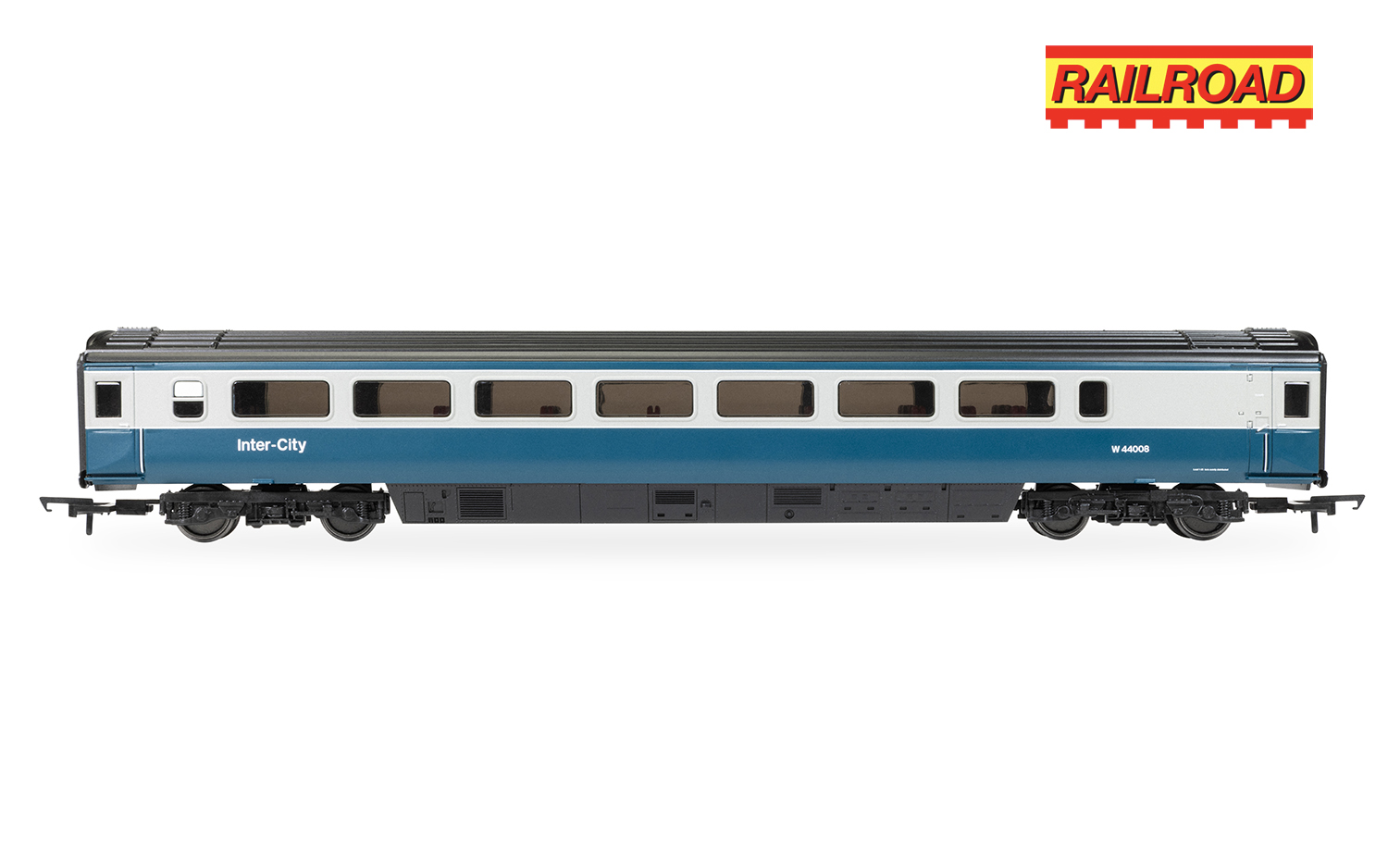
Our Price:
£31.49
£31.49
R30404GWR - Saint Class - 2999 'Lady of Legend'
'OO' GaugeReleased: 18/12/25DCC Ready (21 Pin)Era 3/11As none of the original ‘Saint’ Class survived into preservation, the last being withdrawn in 1953, the Great Western Society purchased GWR ‘Hall’ Class No. 4942 Maindy Hall from Barry scrapyard in 1974 with the intention of rebuilding it as a ‘Saint’. The ‘Hall’ was a direct development of the ‘Saint’, No. 2925 Saint Martin being used as its prototype in 1924 by Charles B. Collett, Churchward’s successor as Chief Mechanical Engineer at the GWR. Work on the conversion finally got underway in 1995 and, in April 2019, No. 2999 Lady of Legend made its first moves in steam at Didcot Railway Centre.

Our Price:
£211.49
£211.49
 35-822
Class 31/1 Refurbished 31188 BR Engineers Grey & Yellow
'OO' GaugeReleased: 19/12/25DCC Ready (PluX22)Era 8The Brush Type Twos – Class 30s and Class 31s – by Bachmann Branchline are back and better than ever, now featuring a Bach-Up Stay Alive System fitted as standard and all-wheel electrical pickup assuring the smooth and powerful performance you’ve come to expect from Bachmann Branchline models.
Depicting a Refurbished Class 31/1, this locomotive has had its Mirrlees engine replaced with an English Electric 12SVT and the Branchline model faithfully recreates this, with the correct roof exhaust ports and 12SVT engine block detail visible through the bodyside windows.
With high fidelity mouldings, numerous separately fitted parts and countless tooling variations to capture the minutiae of the real locomotives throughout their lives, our new Class 30 is brought to life with an exquisite livery application using true-to-prototype colours, fonts and logos. Along with an unprecedented array of lighting features, our Dual Fitted speaker system is fitted to all models.

Our Price:
£182.70
£182.70
35-82SFClass 31/1 Refurbished 31188 BR Engineers Grey & Yellow With DCC Sound Fitted
'OO' GaugeReleased: 19/12/25DCC FittedDCC SoundEra 8The Brush Type Twos – Class 30s and Class 31s – by Bachmann Branchline are back and better than ever, now featuring a Bach-Up Stay Alive System fitted as standard and all-wheel electrical pickup assuring the smooth and powerful performance you’ve come to expect from Bachmann Branchline models.
Depicting a Refurbished Class 31/1, this locomotive has had its Mirrlees engine replaced with an English Electric 12SVT and the Branchline model faithfully recreates this, with the correct roof exhaust ports and 12SVT engine block detail visible through the bodyside windows.
With high fidelity mouldings, numerous separately fitted parts and countless tooling variations to capture the minutiae of the real locomotives throughout their lives, our new Class 30 is brought to life with an exquisite livery application using true-to-prototype colours, fonts and logos. Along with an unprecedented array of lighting features, our Dual Fitted speaker system is fitted to all models – bringing to life this SOUND FITTED model

Our Price:
£276.20
£276.20
50-004Class 66/8 66847 'Terry Baker' Colas Rail Freight
'OO' GaugeReleased: 19/12/25DCC Ready (PluX22)Era 9The Class 66 Diesel Locomotive revolutionised the British rail freight landscape when the first examples arrived in 1998, and more than a quarter of a century later, the type remains at the forefront of freight operations the length and breadth of the country. Now, we are delighted to present the all-new Bachmann Branchline OO Scale Class 66 which has been designed from the rails up, capturing this modern icon like never before.

Our Price:
£195.45
£195.45
50-004SFXClass 66/8 66847 'Terry Baker' Colas Rail Freight With DCC Sound Deluxe
'OO' GaugeReleased: 19/12/25DCC FittedDCC SoundEra 9The Class 66 Diesel Locomotive revolutionised the British rail freight landscape when the first examples arrived in 1998, and more than a quarter of a century later, the type remains at the forefront of freight operations the length and breadth of the country. Now, we are delighted to present the all-new Bachmann Branchline OO Scale Class 66 which has been designed from the rails up, capturing this modern icon like never before.
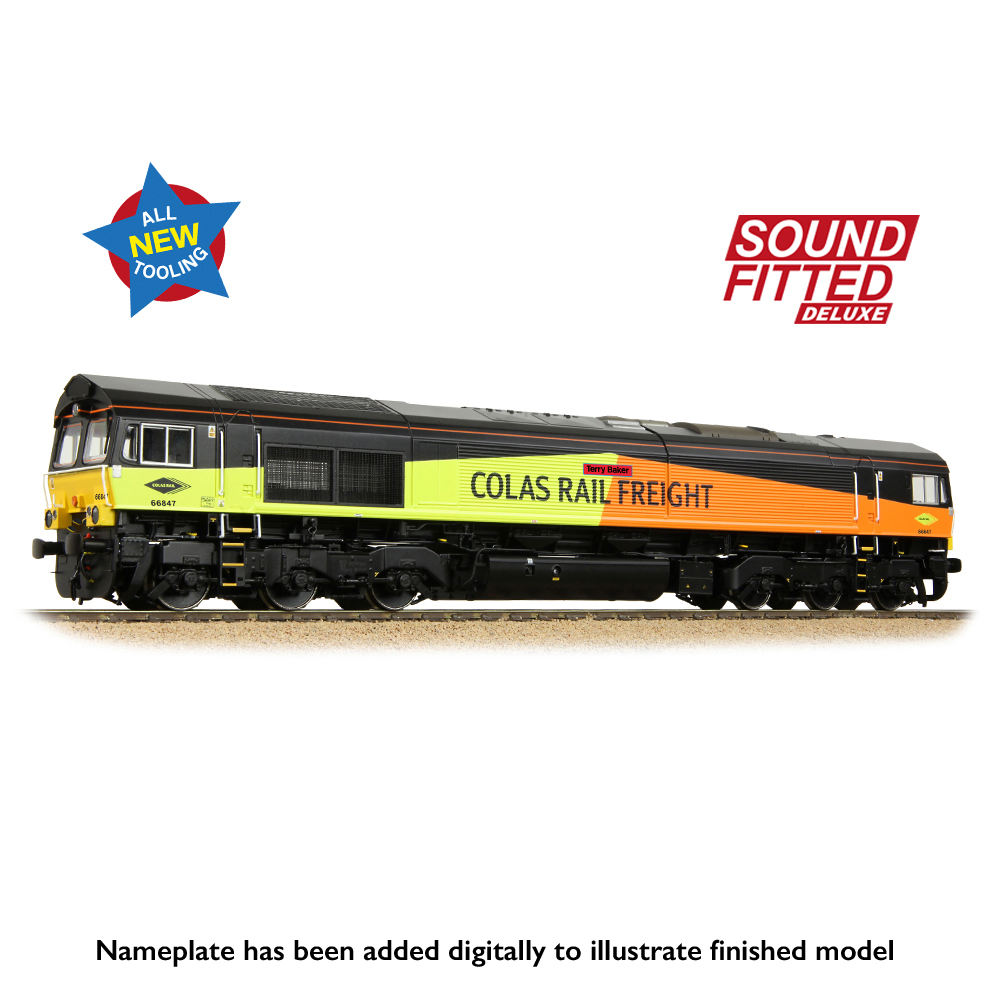
Our Price:
£314.45
£314.45
50-004AClass 66/8 66850 'David Maidment OBE' Colas Rail Freight
'OO' GaugeReleased: 19/12/25DCC Ready (PluX22)Era 9The Class 66 Diesel Locomotive revolutionised the British rail freight landscape when the first examples arrived in 1998, and more than a quarter of a century later, the type remains at the forefront of freight operations the length and breadth of the country. Now, we are delighted to present the all-new Bachmann Branchline OO Scale Class 66 which has been designed from the rails up, capturing this modern icon like never before.
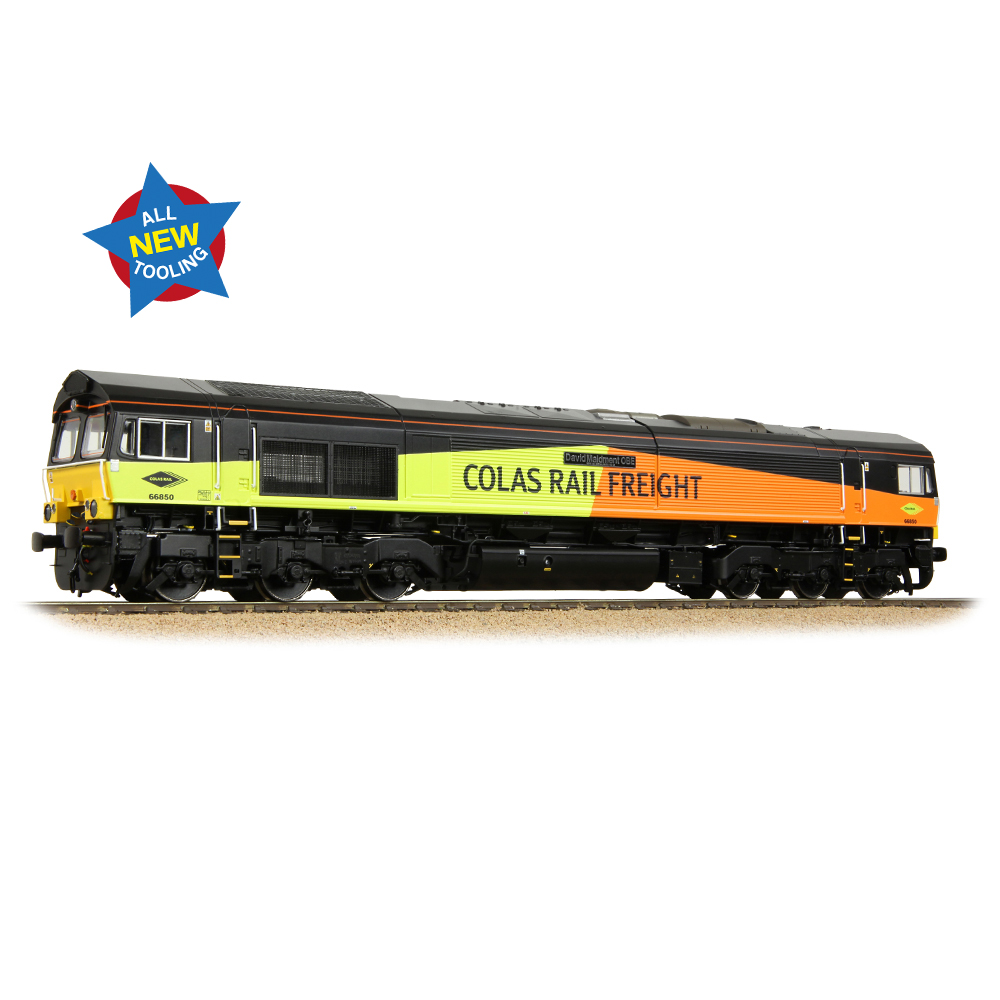
Our Price:
£195.45
£195.45
40-004ASFXClass 66/8 66850 'David Maidment OBE' Colas Rail Freight DCC Sound Deluxe
'OO' GaugeReleased: 19/12/25DCC FittedDCC SoundEra 9The Class 66 Diesel Locomotive revolutionised the British rail freight landscape when the first examples arrived in 1998, and more than a quarter of a century later, the type remains at the forefront of freight operations the length and breadth of the country. Now, we are delighted to present the all-new Bachmann Branchline OO Scale Class 66 which has been designed from the rails up, capturing this modern icon like never before.
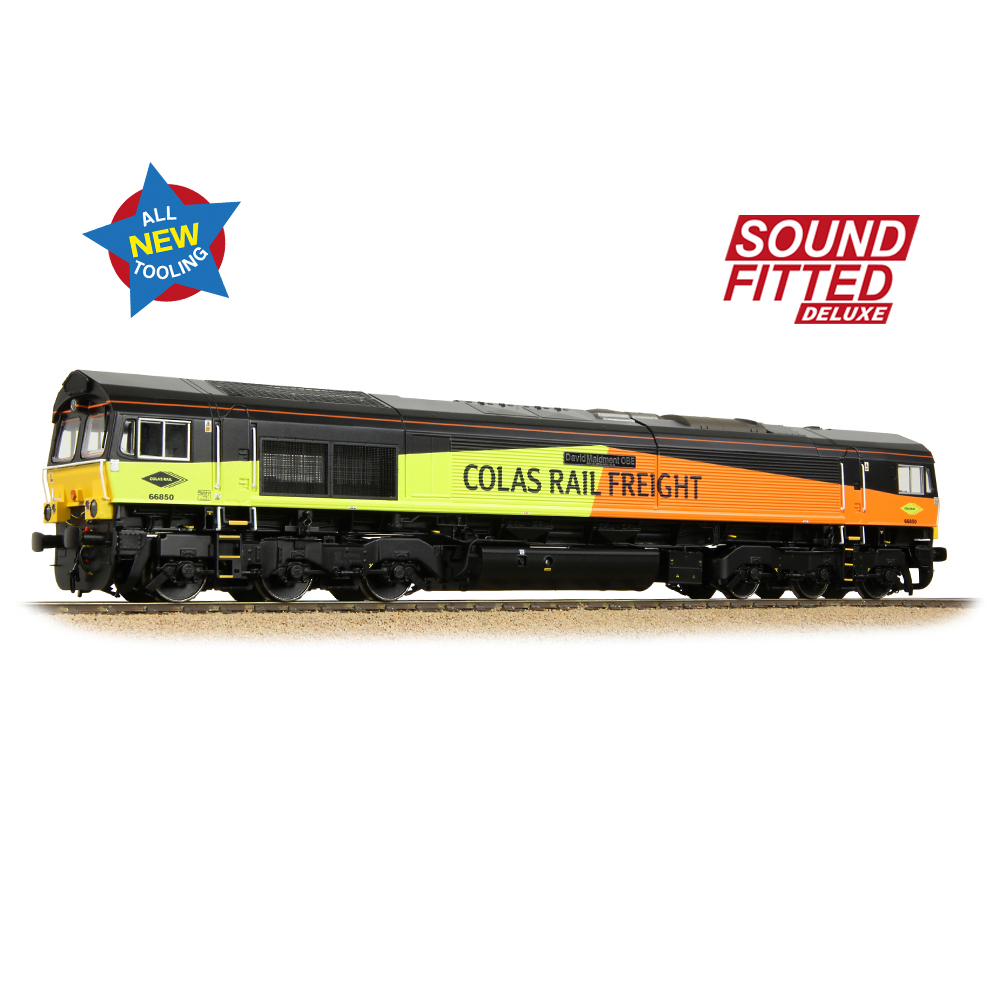
Our Price:
£314.45
£314.45
 371-337
Class 150/2 2-Car DMU 150232 GWR Green (FirstGroup)
'N' GaugeReleased: 24/12/25DCC Ready (6 Pin)Era 9he Class 150 Diesel Multiple Unit (DMU) is an enduring design, first introduced in 1984 much of the fleet remains in service today with operators including GWR FirstGroup. The striking green livery of GWR adorns the Graham Farish Class 150 DMU for the first time and we’ve selected 150/2 No. 150232 as the subject for this sublime N Scale model. The 150/2 sub-class is characterised by the gangway doors fitted to the cab ends, allowing two or more units to work in multiple whilst allowing access from one unit to another.

Our Price:
£212.45
£212.45
371-337SFClass 150/2 2-Car DMU 150232 GWR Green (FirstGroup) With DCC Sound Fitted
'N' GaugeReleased: 24/12/25DCC FittedDCC SoundEra 9he Class 150 Diesel Multiple Unit (DMU) is an enduring design, first introduced in 1984 much of the fleet remains in service today with operators including GWR FirstGroup. The striking green livery of GWR adorns the Graham Farish Class 150 DMU for the first time and we’ve selected 150/2 No. 150232 as the subject for this sublime N Scale model which comes complete with SOUND FITTED. The 150/2 sub-class is characterised by the gangway doors fitted to the cab ends, allowing two or more units to work in multiple whilst allowing access from one unit to another.
Constructed from a highly detailed bodyshell which is adorned with separate components like the cab front handrails, gangway connectors and exhaust, the Graham Farish model replicates the Class 150/2 faithfully. The chassis boasts a suite of parts to depict the engine, drive train, electrical gear and auxiliary equipment, while inside the model, passenger seating is included along with cab detail. The livery application, using authentic colours and accurate typefaces and logos just enhances the model’s good looks, while the powerful and smooth drive mechanism and pre-fitted DCC decoders in this SOUND FITTED model makes the Class 150 DMU the perfect addition to any modern N scale collection.

Our Price:
£305.95
£305.95
39-653ABR Mk2F FO First Open BR InterCity (Swallow)
'OO' GaugeReleased: 24/12/25Era 8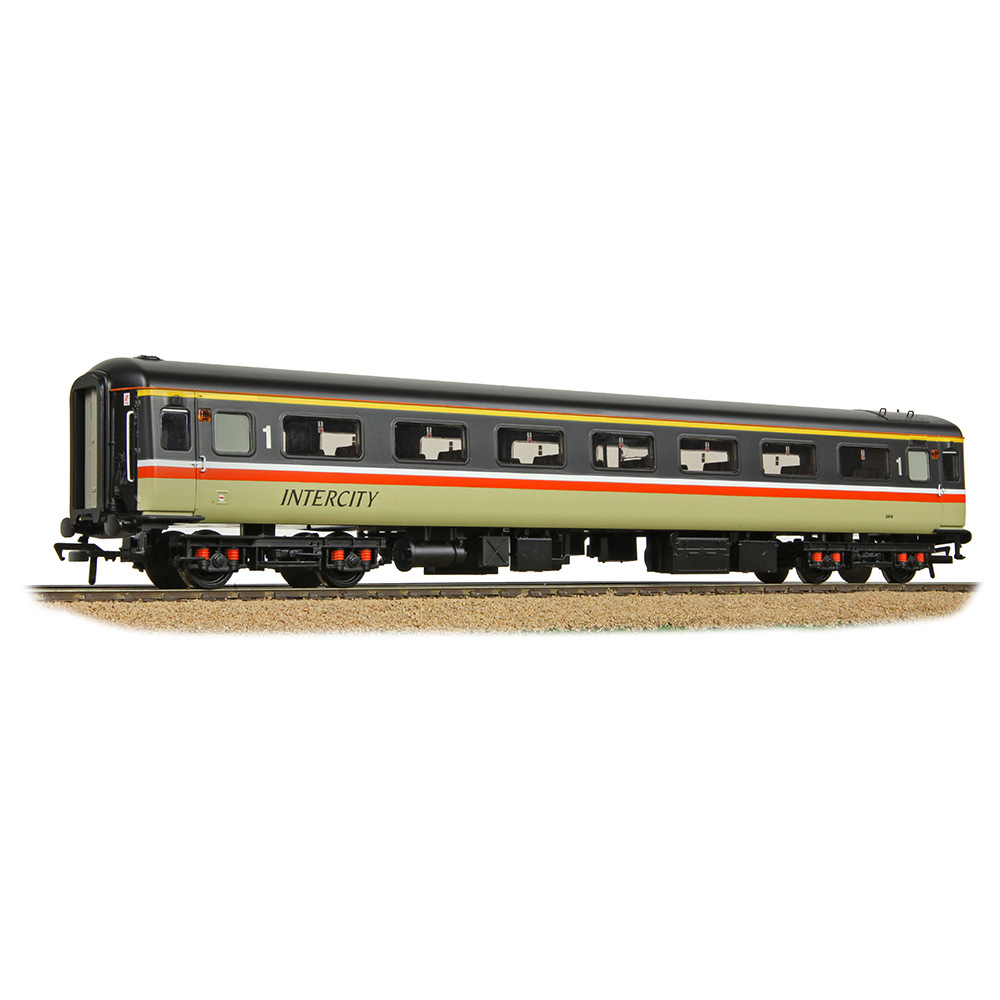
Our Price:
£80.95
£80.95
39-653ADCBR Mk2F FO First Open BR InterCity (Swallow) DCC On Board
'OO' GaugeReleased: 24/12/25DCC FittedEra 8
Our Price:
£98.95
£98.95
39-725ADCBR Mk2F DBSO Driving Brake Second Open BR Blue & Grey (Inter-City) DCC On Board
'OO' GaugeReleased: 24/12/25DCC FittedEra 8
Our Price:
£134.95
£134.95