
Search results
 372-614
LNER V2 60847 'St Peter's School' BR Lined Green (Late Crest)
 'N' Gauge
 Released: 24/12/25
 DCC Ready (Next18)
 Era 5
Era 5Faced with a growing threat to its freight traffic from road transport, in 1928 the LNER launched its ‘Green Arrow’ express goods services, a new range of fast, fully brake-fitted, long-distance goods, parcels and perishables trains. To haul these services a top link locomotives were required and at first, A1 and A3 Class ‘Pacifics’ were employed along with the LNER’s K3 2-6-0s, although the K3s were not suited to the high speeds required for the ‘Green Arrow’ services. With the Pacifics required for passenger work, in 1935 the LNER announced its intention to develop a new locomotive for long-distance, mixed traffic work and the following year the first of Sir Nigel Gresley’s V2 Class entered traffic.

Our Price:
£186.95
£186.95
 R30395SS
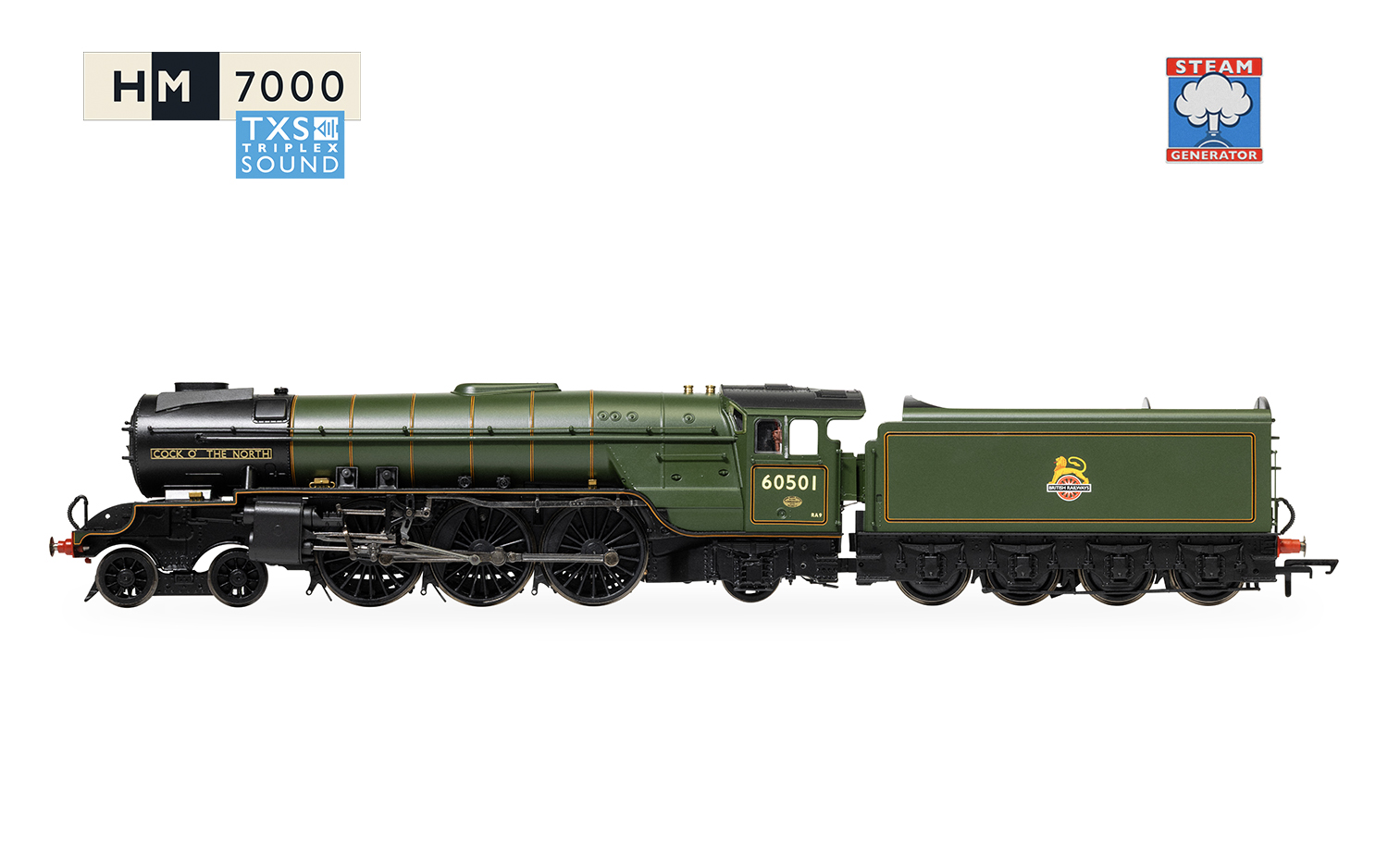
BR (Early) - Thompson A2-2 - 60501 'Cock O the North' (With Steam Generator)
'OO' GaugeReleased: 24/12/25DCC FittedDCC SoundEra 4The London and North Eastern Railway Class A2/2 was a Class of six 4-6-2 steam locomotives rebuilt by Edward Thompson in 1943 and 1944 from his predecessor’s P2 Class of 2-8-2 express passenger locomotives. Withdrawals began in 1959 with 605 ‘Thane of Fife’, followed by ‘Lord President’ and ‘Cock O’ the North in 1960.
Thompson Class A2-2 ‘Cock O the North’ is the latest detailed locomotive to be produced with Hornby’s innovative steam generator functionality where the locomotive creates realistic steam from the chimney of the model created by water vapour. Add this newly tooled design to your model railway today.
This locomotive also comes fitted with sound. It has a series of sounds true to this class of locomotive, and the sounds and steam effects are synced to the model's movement, creating a realistic ‘chugging’. This is all controlled by the pre-installed HM7000 21-pin decoder, which can then be operated by DCC or Bluetooth via the free HM7000 app and powered by a strong 5-pole motor with all-wheel electrical pickup.
For 2025, this model has gone through several tooling updates. These include the addition of a Gen 2 steam generator, which improves steam output and eliminates water clogging, the addition of an optical speed sensor for accurate wheel speed detection, a flickering firebox and a quick-release loco to tender connection.
Our Price:
£328.49
£328.49
R30394BR (Late) - Thompson Class A2-3 - 60521 'Watling Street'
'OO' GaugeReleased: 24/12/25DCC Ready (21 Pin)Era 5Of the 15 newly built A2s, only the first, No. 500, emerged from Doncaster under Edward Thompson while he was Chief Mechanical Engineer. That was in May 1946 and, by the end of the following month, Thompson had retired aged 65.
The remaining 14 were built under his successor, Arthur Peppercorn, between July 1946 and September 1947. They had planned to build 25 in total, but Peppercorn cancelled the remainder while he made modifications to the design.
His new design became the A2 and the Thompson locomotives were designated A2/3s. No. 60521 entered service as No. 521 ‘Watling Street’ at Gateshead in May 1947 and was withdrawn by BR at Tweedmouth in November 1962.

Our Price:
£251.99
£251.99
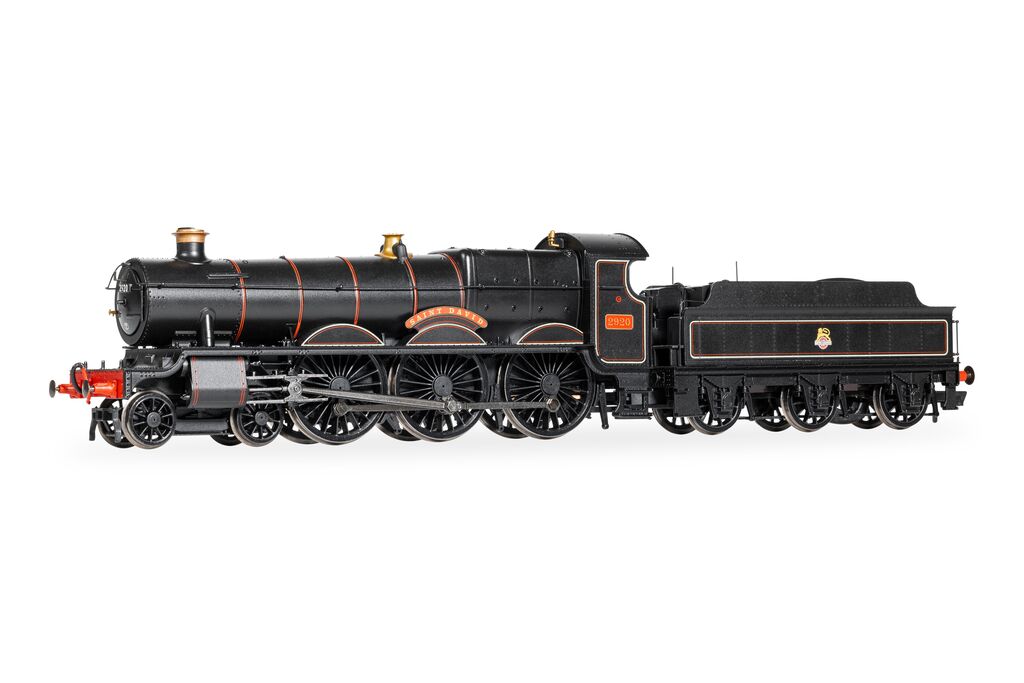
R30403BR - Saint Class - 'Saint David' 2920
'OO' GaugeExpected:
UnknownDCC Ready (21 Pin)Era 4Of the 77 Saint Class members built by GWR between 1902 and 1913, 2920 ‘Saint David’ was one of the 47 that survived beyond nationalisation of Britain’s railways in 1948.
Part of the third batch of 20 to be built in 1907, the locomotive was new to Cardiff Canton shed. It underwent several changes during its career, including the fitting of a superheated boiler in 1909 and outside steam pipes in December 1932.
This model is presented in BR livery, the condition in which it operated through to its withdrawal in October 1953, by which point it was one of the last four still in service.
Our Price:
£211.49
£211.49
R30455SR - Merchant Navy Class - 21C9 'Shaw Savill' (VE Day 80th Anniversary)
'OO' GaugeReleased: 24/12/25DCC Ready (21 Pin)Era 3Built at Eastleigh Works, this locomotive entered traffic in July 1942 as one Oliver Bulleid’s unconventional air-smoothed ‘Pacifics’ and named after Shaw Savill Line of London, a well-known merchant shipping company at the time. Turned out in Southern Railway black with green-shaded ‘Sunshine’ lettering, the locomotive was painted into traditional malachite green after hostilities ended.
Renumbered to 35009 in August 1949 under British Railways following nationalisation the previous year, it was rebuilt in 1957 to a more conventional design and was allocated to Exmouth Junction, from where it was withdrawn in September 1964.

Our Price:
£215.99
£215.99
R30427Northern Rail - Class 153 - '153360'
'OO' GaugeReleased: 27/01/26DCC Ready (21 Pin)Era 10The Northern Rail franchise commenced in December 2004 and inherited its fleet from those of Arriva Trains Northern and First North Western, including a large number of Class 153 single units, of which No. 153360 was one.
Under Northern Rail, the unit saw considerable use in the Carlisle area, including services on the Settle and Carlisle line and the Cumbria coastal line to Barrow-in-Furness.
Arriva Rail North, Northern Rail’s successor from 2016, operated the largest fleet of Class 153 units in the UK. No. 153360 went into storage in late 2021 and was subsequently scrapped.

Our Price:
£152.99
£152.99
R40477LNER - 'West Riding Limited' - Brake Third & Kitchen Third - Coach pack
'OO' GaugeReleased: 19/02/26Era 3Following the success of the LNER’s newly-introduced ‘Coronation’ trains in 1935, a new train was introduced to operate between London King’s Cross and Leeds and Bradford in 1937.
A new set of carriages was built that was identical to the ‘Coronation’ with four twin articulated coaches, though not the streamlined beavertail observation car, and named the ‘West Riding Limited’. Carriages were in pairs, sharing a bogie between the two, thus reducing friction and improving ride quality.
The train first ran on 27th September 1937 and achieved an average speed of 63.3mph (101.9km/h) between King’s Cross and Bradford. It was hauled by Gresley's ‘A4’ No. 4492 ‘Dominion of New Zealand’, which had emerged from Doncaster Works only three months earlier.

Our Price:
£134.99
£134.99
R40478LNER - 'West Riding Limited' - Double Open First - Coach pack
'OO' GaugeReleased: 19/02/26Era 3Following the success of the LNER’s newly-introduced ‘Coronation’ trains in 1935, a new train was introduced to operate between London King’s Cross and Leeds and Bradford in 1937.
A new set of carriages was built that was identical to the ‘Coronation’ with four twin articulated coaches, though not the streamlined beavertail observation car, named the ‘West Riding Limited’. Carriages were in pairs, sharing a bogie between the two, thus reducing friction and improving ride quality.
The train first ran on 27th September 1937 and achieved an average speed of 63.3mph (101.9km/h) between King’s Cross and Bradford. It was hauled by Gresley's ‘A4’ No. 4492 ‘Dominion of New Zealand’, which had emerged from Doncaster Works only three months earlier.

Our Price:
£134.99
£134.99
R40479LNER - 'West Riding Limited' - Open Third & Kitchen Third - Coach pack
'OO' GaugeReleased: 19/02/26Era 3Following the success of the LNER’s newly-introduced ‘Coronation’ trains in 1935, a new train was introduced to operate between London King’s Cross, Leeds and Bradford in 1937.
A new set of carriages was built that was identical to the ‘Coronation’ with four twin articulated coaches, though not the streamlined beavertail observation car, and was named the ‘West Riding Limited’. Carriages were in pairs, sharing a bogie between the two, thus reducing friction and improving ride quality.
The train first ran on 27th September 1937 and achieved an average speed of 63.3mph (101.9km/h) between King’s Cross and Bradford. It was hauled by Gresley's ‘A4’ No. 4492 ‘Dominion of New Zealand’, which had emerged from Doncaster Works only three months earlier.

Our Price:
£134.99
£134.99
R40480LNER - 'West Riding Limited' - Open Third & Brake Third - Coach pack
'OO' GaugeReleased: 19/02/26Era 3Following the success of the LNER’s newly-introduced ‘Coronation’ trains in 1935, a new train was introduced to operate between London King’s Cross and Leeds and Bradford in 1937.
A new set of carriages was built that was identical to the ‘Coronation’ with four twin articulated coaches, though not the streamlined beavertail observation car, named the ‘West Riding Limited’. Carriages were in pairs, sharing a bogie between the two, thus reducing friction and improving ride quality.
The train first ran on 27th September 1937 and achieved an average speed of 63.3mph (101.9km/h) between King’s Cross and Bradford. It was hauled by Gresley's ‘A4’ No. 4492 ‘Dominion of New Zealand’, which had emerged from Doncaster Works only three months earlier.

Our Price:
£134.99
£134.99
R40481LNER - 'Coronation' Observation Car 1729 (The One:One Collection)
'OO' GaugeReleased: 19/02/26Era 3The LNER built two ‘beaver tail’ observation cars for its ‘Coronation’ service that operated between London and Edinburgh on the East Coast Main Line.
Both have survived, finding further use in converted form in Scotland, though Car 1729 has been painstakingly restored to its original profile with a streamlined tail that mirrored the shape of the ‘A4’ Class ‘Pacific’ on the front of the train.
Passengers paid an additional fee to enjoy the comforts of the observation car in which refreshments were served by the steward at passenger’s individual armchairs. The ‘beaver tail’ was only added to the train during summer months.

Our Price:
£73.79
£73.79
 955002
LNER Dynamometer Car No.902502
'N' GaugeReleased: 19/02/26Era 3
Our Price:
£84.95
£84.95
955003BR Dynamometer Car No.E902502
'N' GaugeReleased: 19/02/26Era 4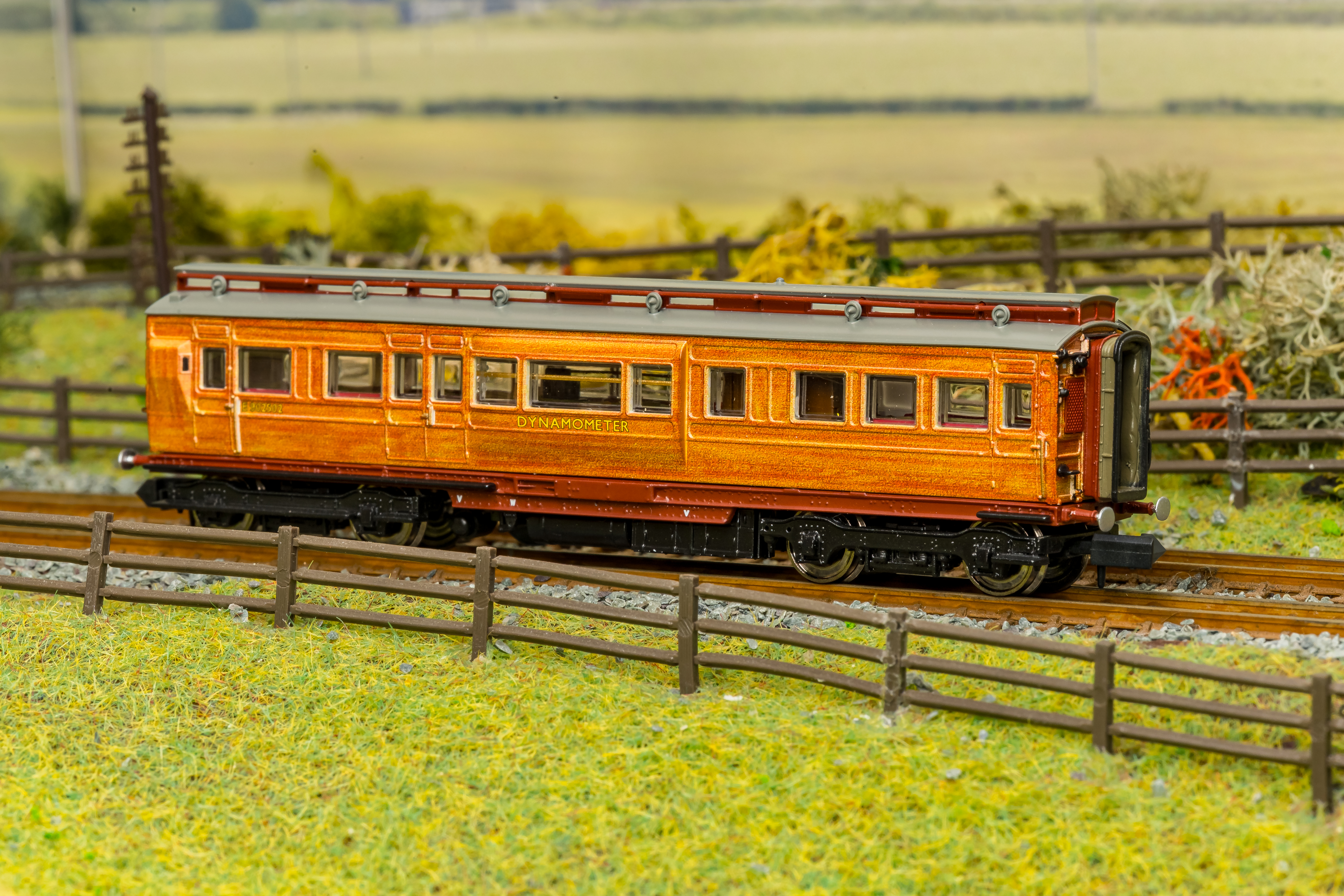
Our Price:
£84.95
£84.95
 E87108
Plasser 12T YOB Diesel-Hydraulic Crane DRP81515 BR Departmental Yellow
'OO' GaugeReleased: 24/02/26Era 7The Plasser 12 Ton General Purpose Diesel-Hydraulic Crane returns to the EFE Rail range. These self-propelled cranes were given the TOPS code ‘YOB’ following their introduction in the mid-1970s. Used countrywide primarily at track relaying work sites, the cranes would be transported to site within engineering trains, but being self-propelled they were able to move around site and even perform light shunting during engineering possessions. Their compact nature allowed the YOBs to be used whilst an adjacent line remained open to traffic, thanks to them having no tail swing when the crane was in operation.
Our Price:
£89.95
£89.95
 GM4210202
GBRFClass 59 003 'Yeoman Highlander' GBRf (DCC-Sound/Smoke)
'OO' GaugeReleased: 28/01/26DCC FittedEra 10The Class 59 is a Co-Co formation diesel locomotive and the first US produced, privately-owned locomotive to operate regularly in the UK. The ordering of the first Class 59 was a result of quarry company Foster Yeomans dissatisfaction with the performance of the BR Class 56. The first 4 locomotives built by General Motors Electromotive Division were delivered to Foster Yeoman during 1986 and 59005 in 1989.
Proving very successful; one locomotive set a new UK haulage record for a single locomotive of 4639 tonnes. Foster Yeomans rivals ARC, Amey Roadstone Corporation, also ordered four modified Class 59s, the 59/1, as did National Power, who ordered six 59/2’s. GM invested in this initial UK success by extensively modifying the Class 59 internally to produce the Class 66, also hugely successful, within both the UK and continental Europe. Other than 59003, which after return from loan to HHPI in Germany is operated by GBRf, the Class 59 fleet is operated today by DB Schenker and Mendip Rail.

Our Price:
£280.45
£280.45
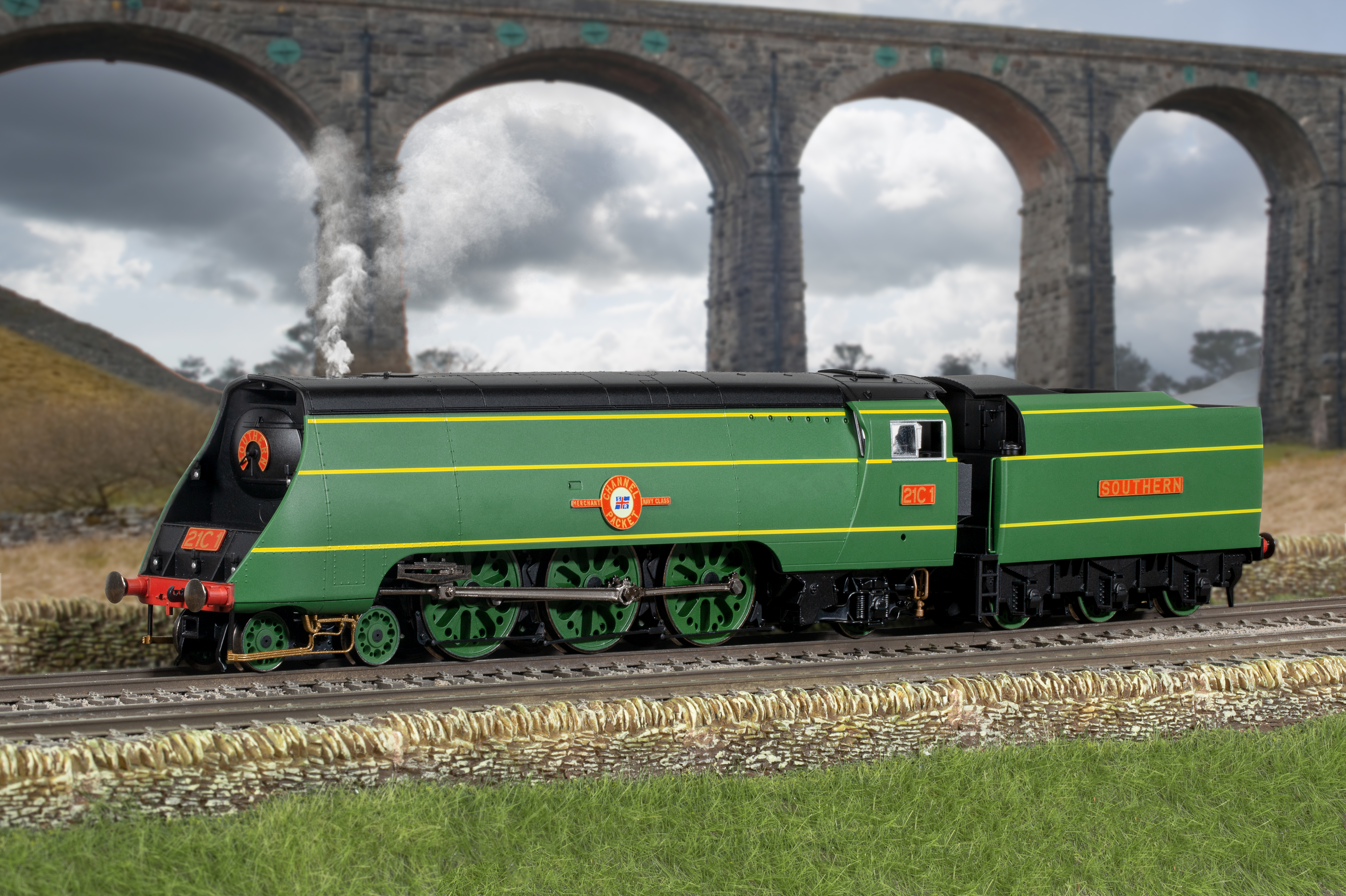
R30399SSSR - Merchant Navy Class - 21C1 'Channel Packet' (With Steam Generator & Sound)
'OO' GaugeReleased: 27/02/26DCC FittedDCC SoundEra 3Locomotive 21C1 'Channel Packet' was the first of the Merchant Navy class, entering service in 1941 at Salisbury and then Exmouth Junction from 1942. Renumbered '35001' under British Railways in 1948, 'Channel Packet' was allocated to Stewarts Lane from 1957 until rebuilding in 1959.
This model features DCC sound and steam functionality to recreate the first of Bulleid’s powerful and iconic Merchant Navy locomotives in the most authentic way.
Our Price:
£328.49
£328.49
 37-807A
LMS 12T Planked Ventilated Van 'Express Dairy Company' Blue
'OO' GaugeReleased: 25/03/26Era 3
Our Price:
£22.45
£22.45
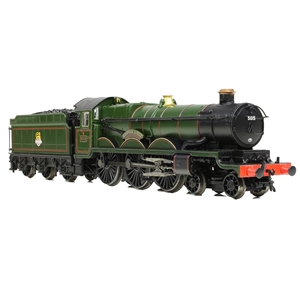
372-031AGWR 4073 'Castle' 5015 'Kingswear Castle' BR Lined Green Early Emblem
'N' GaugeReleased: 25/03/26DCC Ready (Next18)Era 4he first of the GWR 4073 ‘Castle’ Class locomotives was built in 1923 to the design of then- Chief Mechanical Engineer Charles Collett. The type was intended for express passenger trains and used the 4-6-0 wheel arrangement so favoured by the GWR and built on the success of the earlier Star Class which first entered traffic in 1907 albeit with a new, larger boiler making it more powerful and capable of handling the longest expresses.
Over a period of 27 years a total of 155 Castles were built by the GWR’s Swindon Works, joined between 1925 and 1940 by 16 more that were converted from older locomotives, mostly Stars. All 171 locomotives were named, usually after Castles in the west, but those rebuilt from Stars generally retained their original names although during their careers some Castles carried other names, including those of noble Earls and some named after RAF aircraft used during World War Two.
Our Price:
£152.95
£152.95
372-031ASFGWR 4073 'Castle' 5015 'Kingswear Castle' BR Lined Green Early Emblem With DCC Sound
'N' GaugeReleased: 25/03/26DCC FittedDCC SoundEra 4The first of the GWR 4073 ‘Castle’ Class locomotives was built in 1923 to the design of then- Chief Mechanical Engineer Charles Collett. The type was intended for express passenger trains and used the 4-6-0 wheel arrangement so favoured by the GWR and built on the success of the earlier Star Class which first entered traffic in 1907 albeit with a new, larger boiler making it more powerful and capable of handling the longest expresses.
Over a period of 27 years a total of 155 Castles were built by the GWR’s Swindon Works, joined between 1925 and 1940 by 16 more that were converted from older locomotives, mostly Stars. All 171 locomotives were named, usually after Castles in the west, but those rebuilt from Stars generally retained their original names although during their careers some Castles carried other names, including those of noble Earls and some named after RAF aircraft used during World War Two.

Our Price:
£246.45
£246.45
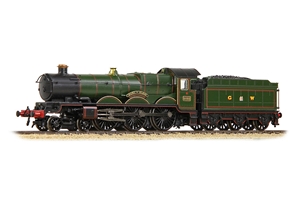
372-034GWR 4073 'Castle' 5055 'Earl of Eldon' GWR Lined Green (GW Crest)
'N' GaugeReleased: 25/03/26DCC Ready (Next18)Era 3The Graham Farish Castle Class locomotive is a worthy replica of one of the Great Western Railway’s (GWR) finest steam locomotive designs, with its elegant appearance only amplified by the beautiful lined green livery that was synonymous with the GWR, and later British Railway’s Western Region. This N scale model combines the Castle’s good looks with an exquisite paint finish to produce a masterpiece in miniature fit for any Western-inspired collection.
Our Price:
£152.95
£152.95