Search results
 39-654
BR Mk2F FO First Open Virgin Trains (Original)
 'OO' Gauge
 Released: 20/09/21
 Era 9
Era 9British Rail's second generation of Standard Coach design is known as the Mark 2. Design and construction followed on from the universal and ubiquitous Mk1 family of coaching stock, with the prototype example built in 1963. Series production continued until 1975 at Derby Carriage Works. They were of steel construction, and of a more monocoque design than the Mk1, which added to their safety and integrity in event of collision or mishap.
As passenger expectations and railway operations had moved on since the vast Mk1 range was conceived, and because there was still much life left in the Mk1s by the mid-sixties, a much reduced number of vehicle types were built. The basic Mk2 types included First and Second class accommodation, with corridors and compartments only available to First Class passengers, all Second Class coaches were conceived as open saloons. First and Second class Brake coaches were built, but no full brakes, catering cars, restaurants, buffets or sleeping cars were included, Mark 1 coaches fulfilling these needs until Mark 3s came along in the late seventies.
The Mark 2 family underwent a number of tweaks and improvements during the 12 years construction period. The principal visual differences included air braking from Mk2A, removal of the central bodyside doors and vestibule (Mk2B), introduction of wrap-around corner doors and provision of one WC at each end in lieu of two at one end (Mk2B), air conditioning - so no opening windows in the saloon area (Mk2D), no side corridor First Class compartment vehicles (from Mk2E onwards), varying style and colours of end gangway doors.

Our Price:
£62.95
£62.95
39-654DCBR Mk2F FO First Open Virgin Trains (Original)
'OO' GaugeReleased: 20/09/21Era 9MODEL FEATURES: • Accessory Pack • NEM Coupling Pockets • Close Coupling Mechanism • Length 270mm • Interior Lighting • Door Interlock Lighting (when used on DCC) • Constantly lit or Flashing Tail Lamps (optional – two types) • DCC-control of all lighting via the integrated DCC decoder • Lighting can be controlled by easy-access switches when used on analogue

Our Price:
£84.45
£84.45
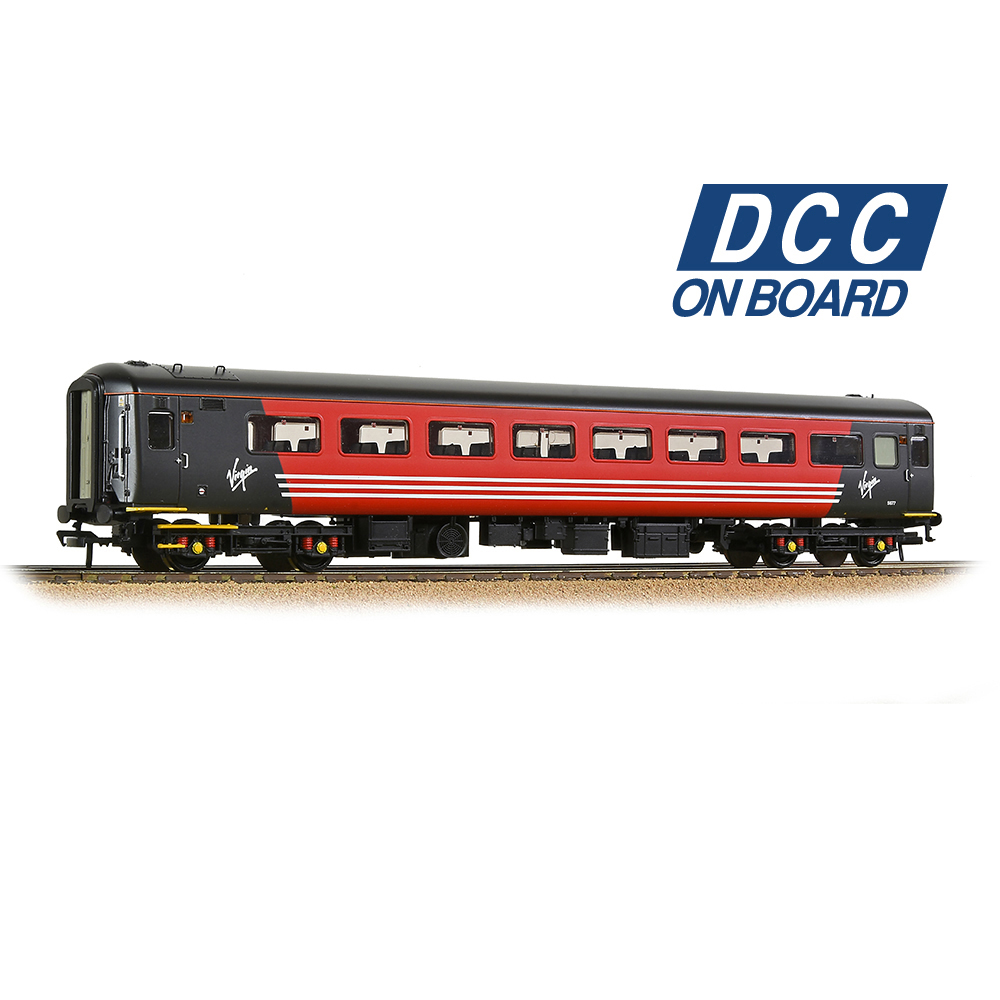
39-679DCBR Mk2F TSO Tourist Second Open Virgin Trains (Original)
'OO' GaugeReleased: 20/09/21Era 9MODEL FEATURES:
• Accessory Pack
• NEM Coupling Pockets
• Close Coupling Mechanism
• Length 270mm
• Interior Lighting
• Door Interlock Lighting (when used on DCC)
• Constantly lit or Flashing Tail Lamps (optional – two types)
• DCC-control of all lighting via the integrated DCC decoder
• Lighting can be controlled by easy-access switches when used on analogue
Our Price:
£85.45
£85.45
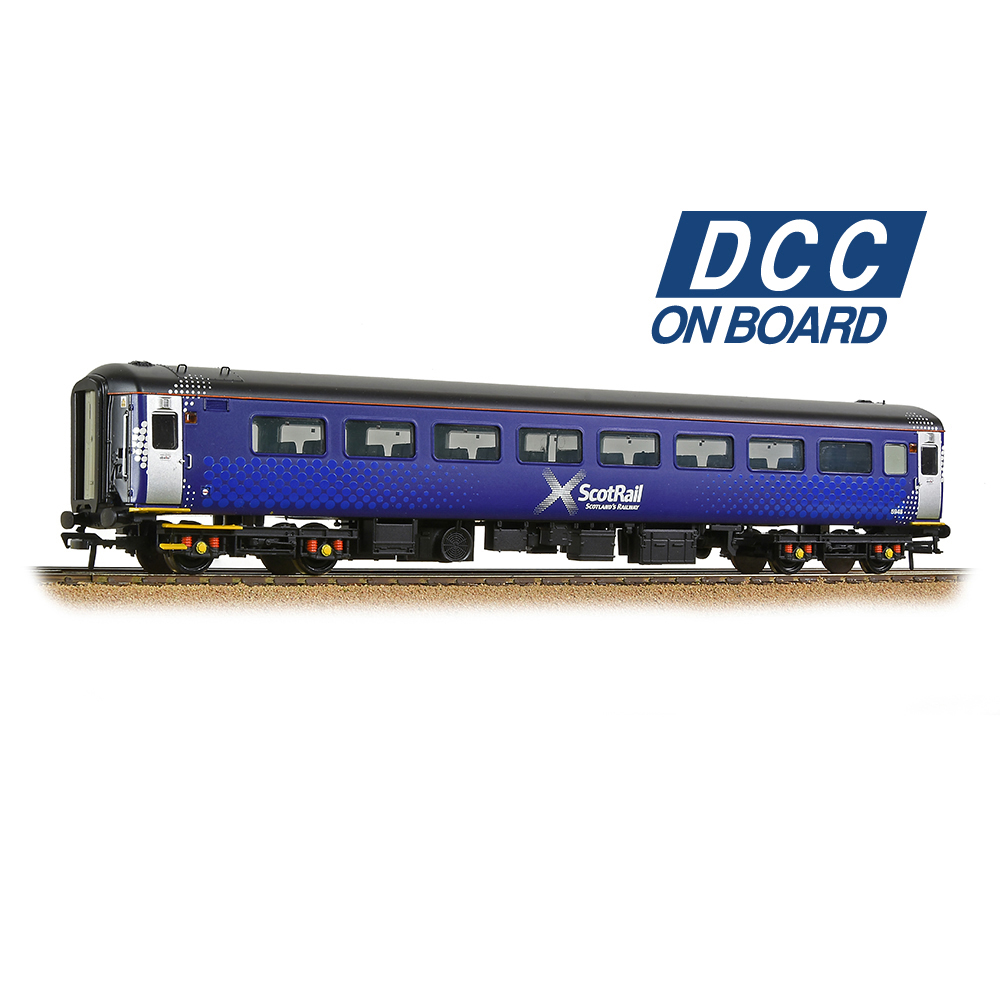
39-680DCBR Mk2F TSO Tourist Second Open ScotRail Saltire
'OO' GaugeReleased: 20/09/21Era 9MODEL FEATURES:
• Accessory Pack
• NEM Coupling Pockets
• Close Coupling Mechanism
• Length 270mm
• Interior Lighting
• Door Interlock Lighting (when used on DCC)
• Constantly lit or Flashing Tail Lamps (optional – two types)
• DCC-control of all lighting via the integrated DCC decoder
• Lighting can be controlled by easy-access switches when used on analogue
Our Price:
£85.45
£85.45
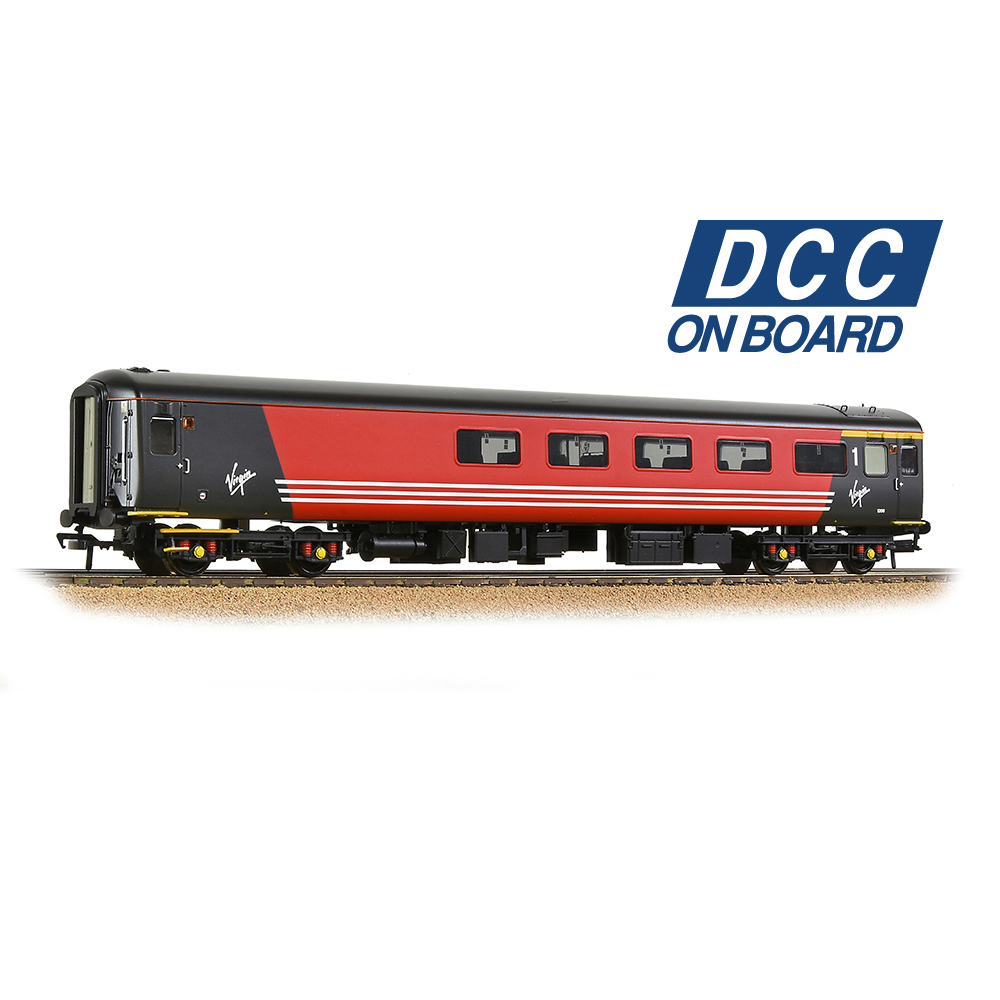
39-687DCBR Mk2F RFB Restaurant First Buffet Virgin Trains (Original)
'OO' GaugeReleased: 20/09/21Era 9MODEL FEATURES:
• Accessory Pack
• NEM Coupling Pockets
• Close Coupling Mechanism
• Length 270mm
• Interior Lighting
• Door Interlock Lighting (when used on DCC)
• Constantly lit or Flashing Tail Lamps (optional – two types)
• DCC-control of all lighting via the integrated DCC decoder
• Lighting can be controlled by easy-access switches when used on analogue
Our Price:
£84.45
£84.45
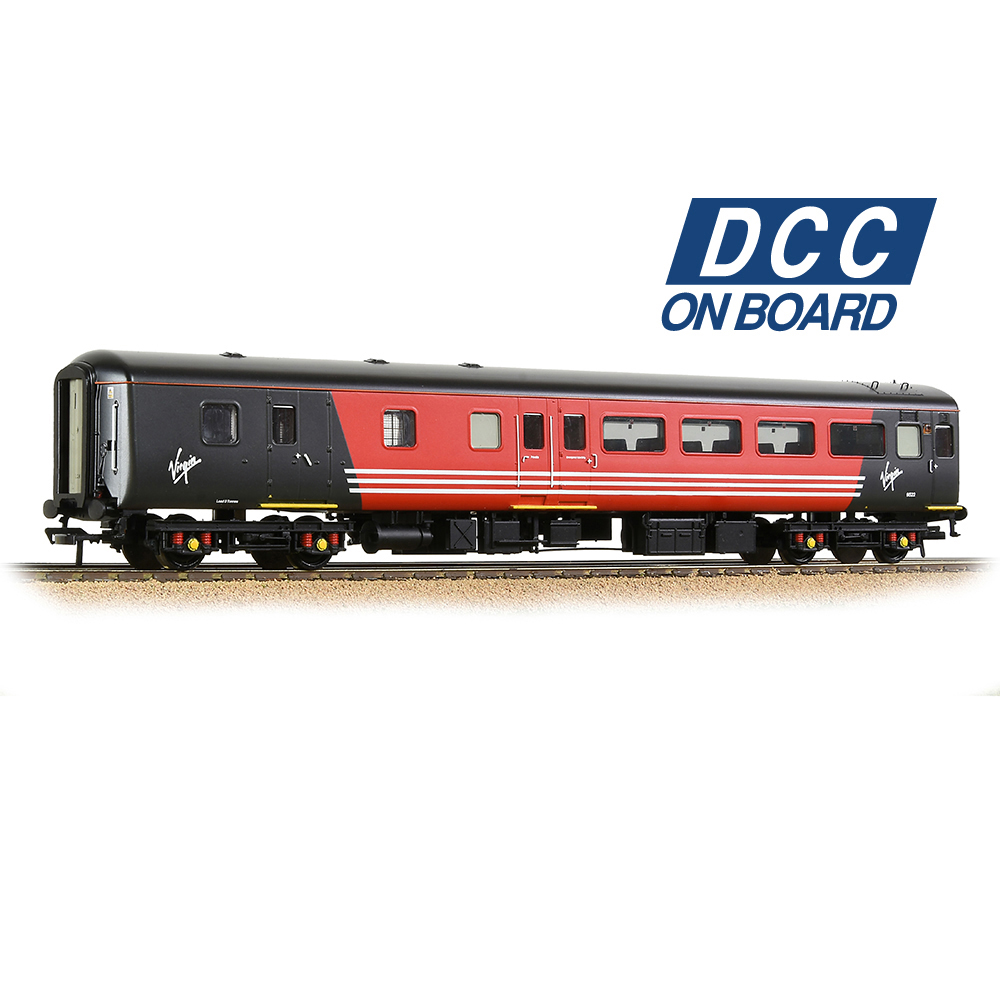
39-703DCBR Mk2F BSO Brake Second Open Virgin Trains (Original)
'OO' GaugeReleased: 20/09/21Era 9MODEL FEATURES: • Accessory Pack • NEM Coupling Pockets • Close Coupling Mechanism • Length 270mm • Interior Lighting • Door Interlock Lighting (when used on DCC) • Constantly lit or Flashing Tail Lamps (optional – two types) • DCC-control of all lighting via the integrated DCC decoder • Lighting can be controlled by easy-access switches when used on analogue
Our Price:
£85.45
£85.45
39-687BR Mk2F RFB Restaurant First Buffet Virgin Trains (Original)
'OO' GaugeReleased: 20/09/21Era 9British Rail's second generation of Standard Coach design is known as the Mark 2. Design and construction followed on from the universal and ubiquitous Mk1 family of coaching stock, with the prototype example built in 1963. Series production continued until 1975 at Derby Carriage Works. They were of steel construction, and of a more monocoque design than the Mk1, which added to their safety and integrity in event of collision or mishap.
As passenger expectations and railway operations had moved on since the vast Mk1 range was conceived, and because there was still much life left in the Mk1s by the mid-sixties, a much reduced number of vehicle types were built. The basic Mk2 types included First and Second class accommodation, with corridors and compartments only available to First Class passengers, all Second Class coaches were conceived as open saloons. First and Second class Brake coaches were built, but no full brakes, catering cars, restaurants, buffets or sleeping cars were included, Mark 1 coaches fulfilling these needs until Mark 3s came along in the late seventies.
The Mark 2 family underwent a number of tweaks and improvements during the 12 years construction period. The principal visual differences included air braking from Mk2A, removal of the central bodyside doors and vestibule (Mk2B), introduction of wrap-around corner doors and provision of one WC at each end in lieu of two at one end (Mk2B), air conditioning - so no opening windows in the saloon area (Mk2D), no side corridor First Class compartment vehicles (from Mk2E onwards), varying style and colours of end gangway doors.

Our Price:
£62.95
£62.95
39-702BR MK2F BSO Brake Second Open BR InterCity (Swallow)
'OO' GaugeReleased: 20/09/21Era 8British Rail's second generation of Standard Coach design is known as the Mark 2. Design and construction followed on from the universal and ubiquitous Mk1 family of coaching stock, with the prototype example built in 1963. Series production continued until 1975 at Derby Carriage Works. They were of steel construction, and of a more monocoque design than the Mk1, which added to their safety and integrity in event of collision or mishap.
As passenger expectations and railway operations had moved on since the vast Mk1 range was conceived, and because there was still much life left in the Mk1s by the mid-sixties, a much reduced number of vehicle types were built. The basic Mk2 types included First and Second class accommodation, with corridors and compartments only available to First Class passengers, all Second Class coaches were conceived as open saloons. First and Second class Brake coaches were built, but no full brakes, catering cars, restaurants, buffets or sleeping cars were included, Mark 1 coaches fulfilling these needs until Mark 3s came along in the late seventies.
The Mark 2 family underwent a number of tweaks and improvements during the 12 years construction period. The principal visual differences included air braking from Mk2A, removal of the central bodyside doors and vestibule (Mk2B), introduction of wrap-around corner doors and provision of one WC at each end in lieu of two at one end (Mk2B), air conditioning - so no opening windows in the saloon area (Mk2D), no side corridor First Class compartment vehicles (from Mk2E onwards), varying style and colours of end gangway doors.

Our Price:
£62.95
£62.95
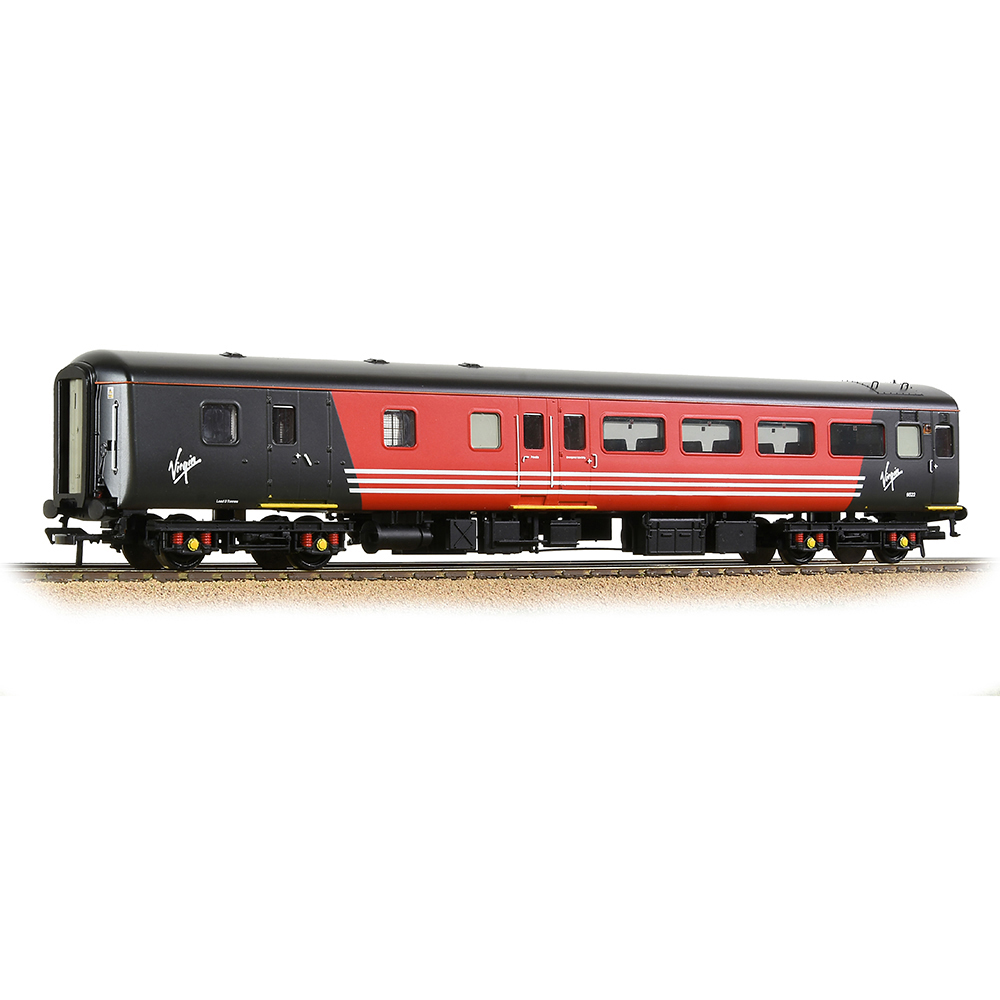
39-703BR Mk2F BSO Brake Second Open Virgin Trains (Original)
'OO' GaugeReleased: 20/09/21Era 9British Rail's second generation of Standard Coach design is known as the Mark 2. Design and construction followed on from the universal and ubiquitous Mk1 family of coaching stock, with the prototype example built in 1963. Series production continued until 1975 at Derby Carriage Works. They were of steel construction, and of a more monocoque design than the Mk1, which added to their safety and integrity in event of collision or mishap.
As passenger expectations and railway operations had moved on since the vast Mk1 range was conceived, and because there was still much life left in the Mk1s by the mid-sixties, a much reduced number of vehicle types were built. The basic Mk2 types included First and Second class accommodation, with corridors and compartments only available to First Class passengers, all Second Class coaches were conceived as open saloons. First and Second class Brake coaches were built, but no full brakes, catering cars, restaurants, buffets or sleeping cars were included, Mark 1 coaches fulfilling these needs until Mark 3s came along in the late seventies.
The Mark 2 family underwent a number of tweaks and improvements during the 12 years construction period. The principal visual differences included air braking from Mk2A, removal of the central bodyside doors and vestibule (Mk2B), introduction of wrap-around corner doors and provision of one WC at each end in lieu of two at one end (Mk2B), air conditioning - so no opening windows in the saloon area (Mk2D), no side corridor First Class compartment vehicles (from Mk2E onwards), varying style and colours of end gangway doors.
Our Price:
£62.95
£62.95
39-679BR Mk2F TSO Tourist Second Open Virgin Trains (Original)
'OO' GaugeReleased: 20/09/21Era 9British Rail's second generation of Standard Coach design is known as the Mark 2. Design and construction followed on from the universal and ubiquitous Mk1 family of coaching stock, with the prototype example built in 1963. Series production continued until 1975 at Derby Carriage Works. They were of steel construction, and of a more monocoque design than the Mk1, which added to their safety and integrity in event of collision or mishap.
As passenger expectations and railway operations had moved on since the vast Mk1 range was conceived, and because there was still much life left in the Mk1s by the mid-sixties, a much reduced number of vehicle types were built. The basic Mk2 types included First and Second class accommodation, with corridors and compartments only available to First Class passengers, all Second Class coaches were conceived as open saloons. First and Second class Brake coaches were built, but no full brakes, catering cars, restaurants, buffets or sleeping cars were included, Mark 1 coaches fulfilling these needs until Mark 3s came along in the late seventies.
The Mark 2 family underwent a number of tweaks and improvements during the 12 years construction period. The principal visual differences included air braking from Mk2A, removal of the central bodyside doors and vestibule (Mk2B), introduction of wrap-around corner doors and provision of one WC at each end in lieu of two at one end (Mk2B), air conditioning - so no opening windows in the saloon area (Mk2D), no side corridor First Class compartment vehicles (from Mk2E onwards), varying style and colours of end gangway doors.

Our Price:
£62.95
£62.95
39-680BR Mk2F TSO Tourist Second Open ScotRail Saltire
'OO' GaugeReleased: 20/09/21Era 9British Rail's second generation of Standard Coach design is known as the Mark 2. Design and construction followed on from the universal and ubiquitous Mk1 family of coaching stock, with the prototype example built in 1963. Series production continued until 1975 at Derby Carriage Works. They were of steel construction, and of a more monocoque design than the Mk1, which added to their safety and integrity in event of collision or mishap.
As passenger expectations and railway operations had moved on since the vast Mk1 range was conceived, and because there was still much life left in the Mk1s by the mid-sixties, a much reduced number of vehicle types were built. The basic Mk2 types included First and Second class accommodation, with corridors and compartments only available to First Class passengers, all Second Class coaches were conceived as open saloons. First and Second class Brake coaches were built, but no full brakes, catering cars, restaurants, buffets or sleeping cars were included, Mark 1 coaches fulfilling these needs until Mark 3s came along in the late seventies.
The Mark 2 family underwent a number of tweaks and improvements during the 12 years construction period. The principal visual differences included air braking from Mk2A, removal of the central bodyside doors and vestibule (Mk2B), introduction of wrap-around corner doors and provision of one WC at each end in lieu of two at one end (Mk2B), air conditioning - so no opening windows in the saloon area (Mk2D), no side corridor First Class compartment vehicles (from Mk2E onwards), varying style and colours of end gangway doors.

Our Price:
£62.95
£62.95
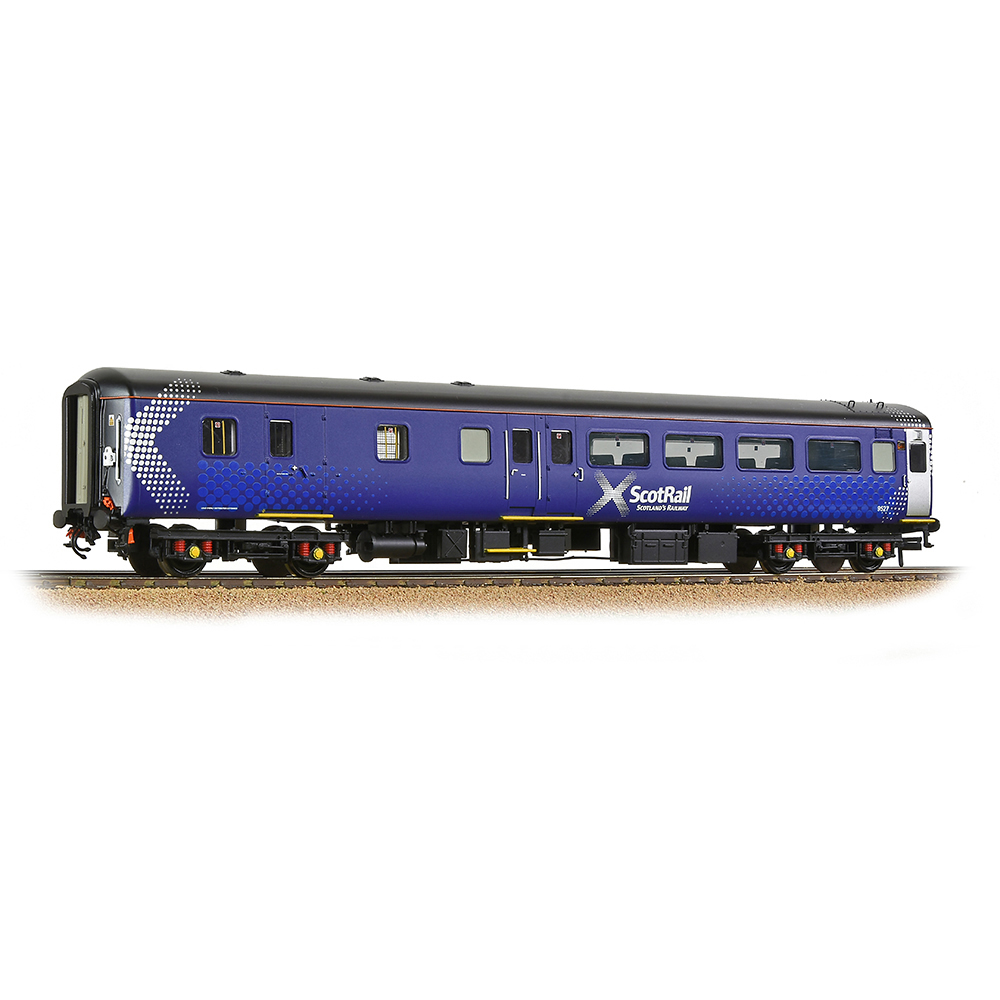
39-704BR Mk2F BSO Brake Second Open ScotRail Saltire
'OO' GaugeReleased: 20/09/21Era 9British Rail's second generation of Standard Coach design is known as the Mark 2. Design and construction followed on from the universal and ubiquitous Mk1 family of coaching stock, with the prototype example built in 1963. Series production continued until 1975 at Derby Carriage Works. They were of steel construction, and of a more monocoque design than the Mk1, which added to their safety and integrity in event of collision or mishap.
As passenger expectations and railway operations had moved on since the vast Mk1 range was conceived, and because there was still much life left in the Mk1s by the mid-sixties, a much reduced number of vehicle types were built. The basic Mk2 types included First and Second class accommodation, with corridors and compartments only available to First Class passengers, all Second Class coaches were conceived as open saloons. First and Second class Brake coaches were built, but no full brakes, catering cars, restaurants, buffets or sleeping cars were included, Mark 1 coaches fulfilling these needs until Mark 3s came along in the late seventies.
The Mark 2 family underwent a number of tweaks and improvements during the 12 years construction period. The principal visual differences included air braking from Mk2A, removal of the central bodyside doors and vestibule (Mk2B), introduction of wrap-around corner doors and provision of one WC at each end in lieu of two at one end (Mk2B), air conditioning - so no opening windows in the saloon area (Mk2D), no side corridor First Class compartment vehicles (from Mk2E onwards), varying style and colours of end gangway doors.
Our Price:
£62.95
£62.95
39-704DCBR Mk2F BSO Brake Second Open ScotRail Saltire
'OO' GaugeReleased: 20/09/21Era 9MODEL FEATURES: • Accessory Pack • NEM Coupling Pockets • Close Coupling Mechanism • Length 270mm • Interior Lighting • Door Interlock Lighting (when used on DCC) • Constantly lit or Flashing Tail Lamps (optional – two types) • DCC-control of all lighting via the integrated DCC decoder • Lighting can be controlled by easy-access switches when used on analogue

Our Price:
£85.45
£85.45
 377-093
7 Plank Wagon End Door 'Tredegar' Grey
'N' GaugeReleased: 27/09/21Era 3
Our Price:
£20.65
£20.65
377-0947 Plank Wagon End Door 'Whitwick' Grey
'N' GaugeReleased: 27/09/21Era 3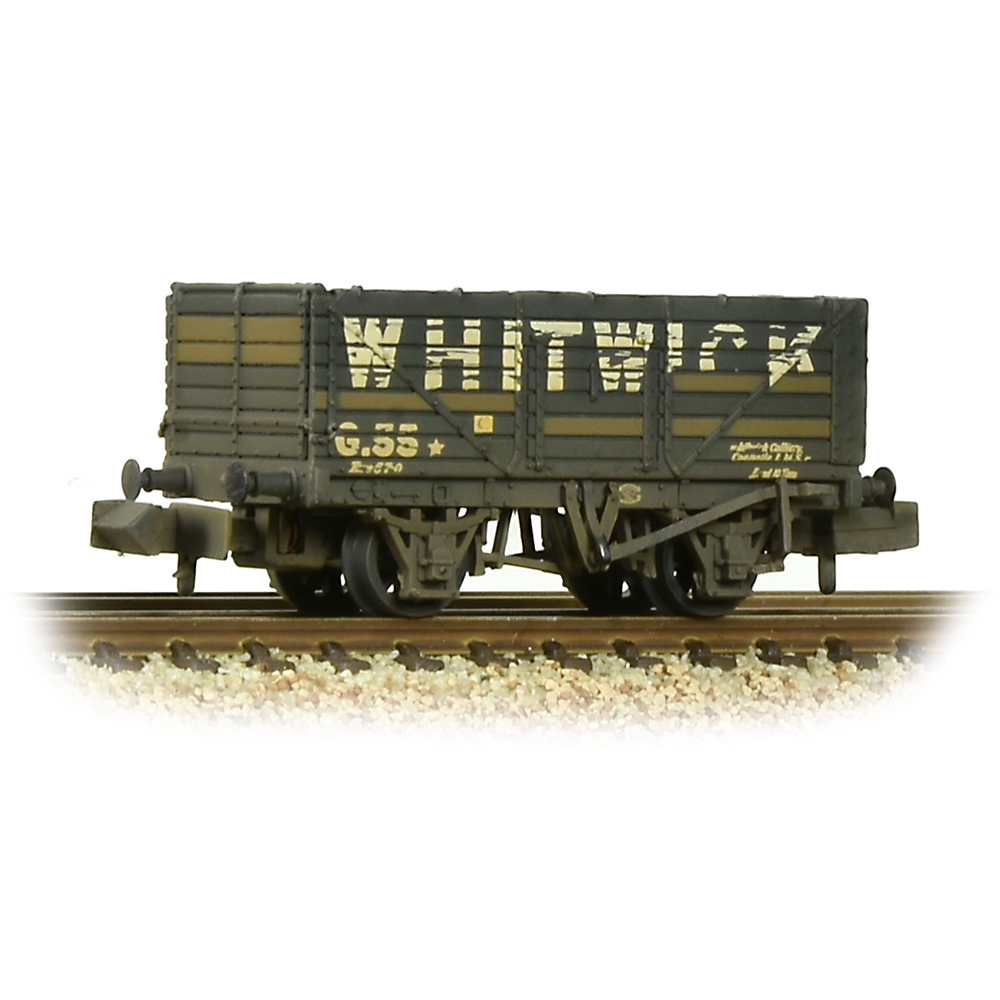
Our Price:
£20.65
£20.65
 R30027
Cappagh, Class 60, Co-Co, 60028
'OO' GaugeReleased: 22/10/21 DCC Ready (8 Pin)Era 11
Built between 1989 and 1993, 100 BR Class 60 locomotives were built by Brush Traction in Loughborough. After teething troubles, the first two locomotives entered service in October 1990. After privatisation, the whole fleet transferred to EWS ownership, which was acquired by DB Schenker, a wholly owned subsidiary of the German railway company, in June 2007.
4 Locomotives, 60028, 60029, 60046 and 60055 were sold by DB Cargo UK to DCRail in 2019 with the 'Super Sixty' upgrade. 60028 was turned out in a blue livery, with large CAPPAGH logo. Under BR No. 60028 was named 'John Flamsteed' after the first Astronomer Royal John Flamsteed who made the first observations of Uranus (although he mistakenly catalogued it as a star) and laid the foundation stone for the Royal Greenwich Observatory.

Our Price:
£187.19
£187.19
32-93Class 150/1 2-Car DMU 150133 BR GMPTE (Regional Railways)
'OO' GaugeReleased: 11/11/21DCC Ready (21 Pin)Era 8CLASS 150 DMU HISTORY
The British Rail Class 150 ‘Sprinter’ is a class of diesel multiple unit passenger train built by BREL York from 1984 to 1987. A total of 137 units were produced in three main subclasses, replacing many of the earlier, first generation ‘heritage’ DMUs. The first subclass, the 150/0, comprised a pair of prototype units.
The second batch which comprised fifty units was classified 150/1s and numbered in the range 150101-150. Like the prototype units, they did not have front-end corridor connectors which are fitted to allow passengers to move between units when working in multiple. Originally based at Derby Etches Park depot, these units were introduced in 1986, mainly concentrated around Birmingham and Manchester, and in later years restricted mainly to commuter services. Today the entire fleet is concentrated on the Northern franchise, mainly working around Manchester to places like Buxton, Sheffield, Liverpool, Southport and Carnforth.
The final batch of 85 two car units were built with front-end corridor connectors. These units were classified as Class 150/2s and numbered in the range 150201-285. The Class 150/2s were used on longer-distance services and have operated in Scotland, Wales, the West of England and the North.

Our Price:
£250.70
£250.70
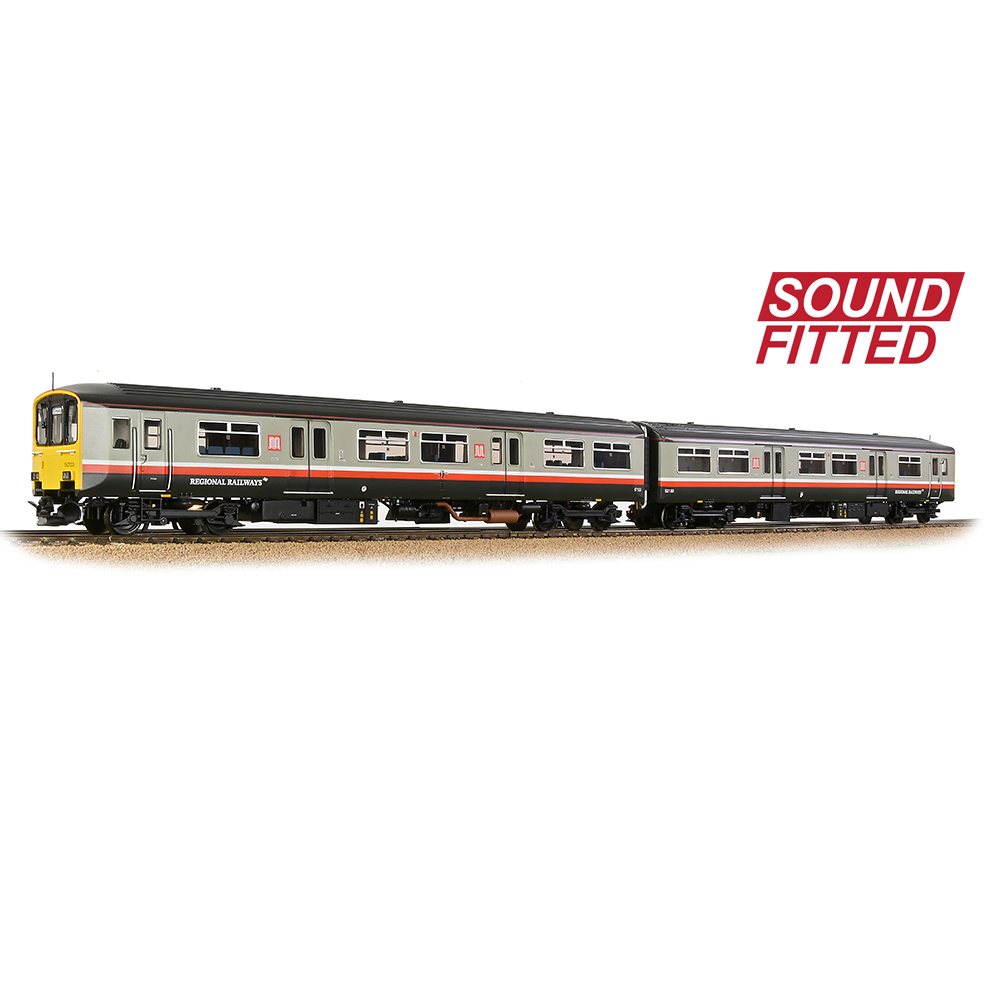
32-930SFClass 150/1 2-Car DMU 150133 BR GMPTE (Regional Railways) DCC Sound Fitted
'OO' GaugeReleased: 11/11/21DCC FittedDCC SoundEra 8SOUNDS
F0 - Lights - On/Off (plus Light Switch Sound)
F1 - On - Warm Engine Start / On, Off - Failed Engine Start / On, Off, On - Cold Engine Start
F2* - Brake
F3 - Horn (Playable)
F4** - Double Toot Horn
F5 - Heavy Load
F6 - Coasting (Manual notch Down if F21 On)
F7 - Maximum Revs (Manual notch Up if F21 On)
F8*** - On - Coupling Up / Off - Uncoupling
F9 - Flange Squeal (Speed Related)
F10 - On - Carriage Doors Open / Off - Carriage Doors Shut
F11 - Spirax Valve
F12 - On - Guard’s Whistle / Off - Driver’s Response Buzzer & Horn
F13 - Compressed Air Let Off
F14 - Uncoupling Cycle
F15 - Air Build Up
F16 - Carriage Heating
F17**** - AWS
F18 - On - Sound Fades Out / Off - Sound Fades In
F19 - Mute (Latch) / Volume Cycles 6 Levels (Trigger)
F20 - Station Announcement
F21 - Manual Notching Logic On/Off (control with F6 & F7)
F22 - Sanding Valve
F23 - Fire Bell Test
* Alterative Brake sounds can be selected via CV changes
**Alternative Horn characteristics can be selected via CV changes
*** Alternative coupling sounds can be selected via CV changes
**** Alternative AWS sound can be selected via CV change
Analogue Users: Please note that normal load running sounds and any other automatic or randomised sounds will also operate when this model is used on analogue control (DC) straight from the box!
Our Price:
£335.70
£335.70
32-942Class 150/2 2-Car DMU 150247 BR Provincial (Sprinter)
'OO' GaugeReleased: 11/11/21DCC Ready (21 Pin)Era 8CLASS 150 DMU HISTORY
The British Rail Class 150 ‘Sprinter’ is a class of diesel multiple unit passenger train built by BREL York from 1984 to 1987. A total of 137 units were produced in three main subclasses, replacing many of the earlier, first generation ‘heritage’ DMUs. The first subclass, the 150/0, comprised a pair of prototype units.
The second batch which comprised fifty units was classified 150/1s and numbered in the range 150101-150. Like the prototype units, they did not have front-end corridor connectors which are fitted to allow passengers to move between units when working in multiple. Originally based at Derby Etches Park depot, these units were introduced in 1986, mainly concentrated around Birmingham and Manchester, and in later years restricted mainly to commuter services. Today the entire fleet is concentrated on the Northern franchise, mainly working around Manchester to places like Buxton, Sheffield, Liverpool, Southport and Carnforth.
The final batch of 85 two car units were built with front-end corridor connectors. These units were classified as Class 150/2s and numbered in the range 150201-285. The Class 150/2s were used on longer-distance services and have operated in Scotland, Wales, the West of England and the North.

Our Price:
£250.70
£250.70
37-50924T Ore Hopper LMS Bauxite
'OO' GaugeReleased: 24/11/21Era 3
Our Price:
£25.15
£25.15