
Search results

Your search found 1479 results.

Filter your search results using the options below:

Manufacturer
Gauge
Category
Digital features
 
Era
 
Number of items to display per page: 5 | 10 | 20 | Show All
371-011
Class 08 08417 Network Rail Yellow
'N' Gauge
Released: 22/06/22
DCC Ready (Next18)
Era 9
CLASS 08 HISTORY The first diesel shunters were pioneered by the LMS which began trialling designs during the 1930s. It soon became apparent that this form of traction offered many advantages over the steam locomotive – the former being ‘ready to use’ as and when required, whereas steam locos had to be kept at the ready even when not required immediately – with the obvious staffing and fuel costs associated with doing so. By the time of Nationalisation in 1948, the LMS had built various shunters and the 12033 series was adopted by BR as the basis for a new standard design of diesel-electric shunting locomotive. As a stop gap whilst the Class 08 was being developed, BR constructed further 12033 series locomotives and these would later be designated as Class 11s. Production of the 08s began in 1952 with the first example, No. 13000, entering traffic in 1953. Construction continued until 1962 and during the ten year period, 996 locomotives were built making the Class 08 the most numerous of all British locomotive classes. In addition, construction of the near-identical Class 09s (26 examples) and Class 10s (171) took the total well above a thousand – the former differed in having higher gearing whilst the latter had different engines and transmission. Built ‘in-house’ at BR’s Crewe, Darlington, Derby, Doncaster and Horwich Works, the 08s were allocated across the BR regions, with many being based at major stations and terminals where stock was marshalled and positioned ready for service, where trains were divided or merged, and of course at many freight facilities. Although they had a top speed of just 15 mph, what the 08s lacked in speed they more than made up for with tractive effort which was more than double that of the 03s and 04s. Although the first example was withdrawn in 1967, just four had gone prior to the introduction of TOPS and despite an ever-decreasing need for shunting locomotives, around a quarter of the Class remained in traffic at the start of the 21st century. Upon Privatisation of British Rail in 1994, EWS inherited many of the survivors, with others going to passenger operators for use as depot shunters. More than a decade later EWS was still operating over 40 of the shunters, with many more in store. Even today, Class 08s can still be found earning their keep at numerous depots, freight facilities and railway workshops. Meanwhile, ever since the first withdrawals Class 08s have been popular machines with heritage railways and today, more than 70 have found a new lease of life in preservation – often carrying out similar tasks to those for which they were designed some seven decades ago.
Our Price:
£123.20
371-011SF
Class 08 08417 Network Rail Yellow With DCC Sound
'N' Gauge
Released: 22/06/22
DCC Fitted
DCC Sound
Era 9
SOUNDS F1 - Engine Start-up / Shut-down F2 - Brake F3 - Single Horn (Speed Related) F4 - Double Horn F5 - Cold Start / Light Load F6 - Engine Idle / Coasting F7 - Speed Lock F8 - Exhauster (Vacuum Train Brakes) F9 - Flange Squeal (Speed Related) F10 - Guard’s Whistle F11 - Buffer Clash F12 - Coupling F13 - Compressor F14 - Sanders F15 - Handbrake F16 – Fuel Transfer Pump F17 - Wagon Snatching & Buffering F18 - On - Cab Door Open / Off - Cab Door Closed F19 - Fade All Sounds F20 - 'Draw Up’ F21 - ‘Squeeze Up’ F22 - 'I’m Going Under’ F23 - Window Wipers F24 - Station Ambience F25 - Spirax Valves F26 - Shunting Mode F27 - Volume Down F28 - Volume Up Analogue Users: Directional lights and basic Prime Mover (engine) sounds, which vary with speed, plus any other automated sounds, can be enjoyed when using this model on analogue control (DC) straight from the box!
Our Price:
£208.20
371-012
Class 08 08919 Rail Express Systems
'N' Gauge
Released: 22/06/22
DCC Ready (Next18)
Era 9
CLASS 08 HISTORY The first diesel shunters were pioneered by the LMS which began trialling designs during the 1930s. It soon became apparent that this form of traction offered many advantages over the steam locomotive – the former being ‘ready to use’ as and when required, whereas steam locos had to be kept at the ready even when not required immediately – with the obvious staffing and fuel costs associated with doing so. By the time of Nationalisation in 1948, the LMS had built various shunters and the 12033 series was adopted by BR as the basis for a new standard design of diesel-electric shunting locomotive. As a stop gap whilst the Class 08 was being developed, BR constructed further 12033 series locomotives and these would later be designated as Class 11s. Production of the 08s began in 1952 with the first example, No. 13000, entering traffic in 1953. Construction continued until 1962 and during the ten year period, 996 locomotives were built making the Class 08 the most numerous of all British locomotive classes. In addition, construction of the near-identical Class 09s (26 examples) and Class 10s (171) took the total well above a thousand – the former differed in having higher gearing whilst the latter had different engines and transmission. Built ‘in-house’ at BR’s Crewe, Darlington, Derby, Doncaster and Horwich Works, the 08s were allocated across the BR regions, with many being based at major stations and terminals where stock was marshalled and positioned ready for service, where trains were divided or merged, and of course at many freight facilities. Although they had a top speed of just 15 mph, what the 08s lacked in speed they more than made up for with tractive effort which was more than double that of the 03s and 04s. Although the first example was withdrawn in 1967, just four had gone prior to the introduction of TOPS and despite an ever-decreasing need for shunting locomotives, around a quarter of the Class remained in traffic at the start of the 21st century. Upon Privatisation of British Rail in 1994, EWS inherited many of the survivors, with others going to passenger operators for use as depot shunters. More than a decade later EWS was still operating over 40 of the shunters, with many more in store. Even today, Class 08s can still be found earning their keep at numerous depots, freight facilities and railway workshops. Meanwhile, ever since the first withdrawals Class 08s have been popular machines with heritage railways and today, more than 70 have found a new lease of life in preservation – often carrying out similar tasks to those for which they were designed some seven decades ago.
Our Price:
£123.20
371-012SF
Class 08 08919 Rail Express Systems With DCC Sound
'N' Gauge
Released: 22/06/22
DCC Fitted
DCC Sound
Era 9
SOUNDS F1 - Engine Start-up / Shut-down F2 - Brake F3 - Single Horn (Speed Related) F4 - Double Horn F5 - Cold Start / Light Load F6 - Engine Idle / Coasting F7 - Speed Lock F8 - Exhauster (Vacuum Train Brakes) F9 - Flange Squeal (Speed Related) F10 - Guard’s Whistle F11 - Buffer Clash F12 - Coupling F13 - Compressor F14 - Sanders F15 - Handbrake F16 – Fuel Transfer Pump F17 - Wagon Snatching & Buffering F18 - On - Cab Door Open / Off - Cab Door Closed F19 - Fade All Sounds F20 - 'Draw Up’ F21 - ‘Squeeze Up’ F22 - 'I’m Going Under’ F23 - Window Wipers F24 - Station Ambience F25 - Spirax Valves F26 - Shunting Mode F27 - Volume Down F28 - Volume Up Analogue Users: Directional lights and basic Prime Mover (engine) sounds, which vary with speed, plus any other automated sounds, can be enjoyed when using this model on analogue control (DC) straight from the box!
Our Price:
£208.95
371-013
Class 08 13287 BR Green (Early Emblem)
'N' Gauge
Released: 22/06/22
DCC Ready (Next18)
Era 4
CLASS 08 HISTORY The first diesel shunters were pioneered by the LMS which began trialling designs during the 1930s. It soon became apparent that this form of traction offered many advantages over the steam locomotive – the former being ‘ready to use’ as and when required, whereas steam locos had to be kept at the ready even when not required immediately – with the obvious staffing and fuel costs associated with doing so. By the time of Nationalisation in 1948, the LMS had built various shunters and the 12033 series was adopted by BR as the basis for a new standard design of diesel-electric shunting locomotive. As a stop gap whilst the Class 08 was being developed, BR constructed further 12033 series locomotives and these would later be designated as Class 11s. Production of the 08s began in 1952 with the first example, No. 13000, entering traffic in 1953. Construction continued until 1962 and during the ten year period, 996 locomotives were built making the Class 08 the most numerous of all British locomotive classes. In addition, construction of the near-identical Class 09s (26 examples) and Class 10s (171) took the total well above a thousand – the former differed in having higher gearing whilst the latter had different engines and transmission. Built ‘in-house’ at BR’s Crewe, Darlington, Derby, Doncaster and Horwich Works, the 08s were allocated across the BR regions, with many being based at major stations and terminals where stock was marshalled and positioned ready for service, where trains were divided or merged, and of course at many freight facilities. Although they had a top speed of just 15 mph, what the 08s lacked in speed they more than made up for with tractive effort which was more than double that of the 03s and 04s. Although the first example was withdrawn in 1967, just four had gone prior to the introduction of TOPS and despite an ever-decreasing need for shunting locomotives, around a quarter of the Class remained in traffic at the start of the 21st century. Upon Privatisation of British Rail in 1994, EWS inherited many of the survivors, with others going to passenger operators for use as depot shunters. More than a decade later EWS was still operating over 40 of the shunters, with many more in store. Even today, Class 08s can still be found earning their keep at numerous depots, freight facilities and railway workshops. Meanwhile, ever since the first withdrawals Class 08s have been popular machines with heritage railways and today, more than 70 have found a new lease of life in preservation – often carrying out similar tasks to those for which they were designed some seven decades ago.
Our Price:
£123.20
371-015D
Class 08 08818 BR Blue [W]
'N' Gauge
Released: 22/06/22
DCC Ready (Next18)
Era 7/8
CLASS 08 HISTORY The first diesel shunters were pioneered by the LMS which began trialling designs during the 1930s. It soon became apparent that this form of traction offered many advantages over the steam locomotive – the former being ‘ready to use’ as and when required, whereas steam locos had to be kept at the ready even when not required immediately – with the obvious staffing and fuel costs associated with doing so. By the time of Nationalisation in 1948, the LMS had built various shunters and the 12033 series was adopted by BR as the basis for a new standard design of diesel-electric shunting locomotive. As a stop gap whilst the Class 08 was being developed, BR constructed further 12033 series locomotives and these would later be designated as Class 11s. Production of the 08s began in 1952 with the first example, No. 13000, entering traffic in 1953. Construction continued until 1962 and during the ten year period, 996 locomotives were built making the Class 08 the most numerous of all British locomotive classes. In addition, construction of the near-identical Class 09s (26 examples) and Class 10s (171) took the total well above a thousand – the former differed in having higher gearing whilst the latter had different engines and transmission. Built ‘in-house’ at BR’s Crewe, Darlington, Derby, Doncaster and Horwich Works, the 08s were allocated across the BR regions, with many being based at major stations and terminals where stock was marshalled and positioned ready for service, where trains were divided or merged, and of course at many freight facilities. Although they had a top speed of just 15 mph, what the 08s lacked in speed they more than made up for with tractive effort which was more than double that of the 03s and 04s. Although the first example was withdrawn in 1967, just four had gone prior to the introduction of TOPS and despite an ever-decreasing need for shunting locomotives, around a quarter of the Class remained in traffic at the start of the 21st century. Upon Privatisation of British Rail in 1994, EWS inherited many of the survivors, with others going to passenger operators for use as depot shunters. More than a decade later EWS was still operating over 40 of the shunters, with many more in store. Even today, Class 08s can still be found earning their keep at numerous depots, freight facilities and railway workshops. Meanwhile, ever since the first withdrawals Class 08s have been popular machines with heritage railways and today, more than 70 have found a new lease of life in preservation – often carrying out similar tasks to those for which they were designed some seven decades ago.
Our Price:
£131.70
372-850
Class 769 4-Car BiMU 769008 Transport for Wales
'N' Gauge
Released: 22/06/22
DCC Ready (Next18)
Era 9
CLASS 769 HISTORY The Class 769 is a type of bi-mode or tri-mode multiple unit train capable of operating on electrified lines via 25kV overhead wires and/or 750V DC third rail, or on non-electrified lines via a diesel engine. They have been converted from surplus dual-voltage Class 319 units by Brush Traction and are to be used by Transport for Wales, Northern and Great Western Railway. The Class 769 units have primarily been designed to run on routes with multiple power supplies, such as the Rhymney Valley line in Wales which has overhead wires and non-electrified stretches and the units can change between EMU and DMU model whilst the train is in motion. Rolling stock company Porterbrook first conceptualised the Class 769 in 2016 when, in partnership with Northern, they began work on converting Class 319/4 units to provide a solution to a shortage of diesel units and deferrals of electrification projects on the network. These units were chosen for the conversion as they had recently undergone upgrades to install new passenger information systems and accessible toilets, as well as having suitable space for a new diesel power pack and alternator to power the existing electric traction systems. The first conversions were completed in 2018 and testing was undertaken at the Great Central Railway in Leicestershire, with the first unit delivered to Northern in 2018, although the first to enter service was a Transport for Wales unit in November 2020.
Our Price:
£297.45
372-877
Class 319 4-Car EMU 319362 Northern Rail
'N' Gauge
Released: 22/06/22
DCC Ready (Next18)
Era 9
CLASS 319 HISTORY The British Rail Class 319 is a dual-voltage electric multiple unit train capable of operating on 25kV 50Hz AC from overhead wires or 750V DC from a third rail. They were built by British Rail Engineering Limited's York carriage works for use on north-south cross-London services. Built in two batches in 1987–88 and 1990 for BR's Network SouthEast sector, the units were primarily used on the then-new Thameslink service operating from Bedford to Brighton and various other destinations south of London. The majority of the fleet remained in use on the Thameslink network after its reshaping and privatisation in 1997, with a few units moving to Southern. Some of the fleet was also used on various other services operating out of London Victoria, including flagship expresses to Brighton. Since delivery of new Class 700 rolling stock for Thameslink services commenced in 2015, Class 319 units have been redeployed for use in the Northwest of England on newly electrified lines as well as being converted to self-powered trains for use away from the electricity supply.
Our Price:
£297.45
377-526D
BR 20T Brake Van BR Grey (Early)
'N' Gauge
Released: 22/06/22
Era 4
Our Price:
£26.95
377-529A
BR 20T Brake Van BR Engineers Grey & Yellow [W]
'N' Gauge
Released: 22/06/22
Era 8
Our Price:
£28.75
377-530
BR 20T Brake Van BR Bauxite (TOPS) 'Air Piped' [W]
'N' Gauge
Released: 22/06/22
Era 7
Our Price:
£28.75
38-021A
CEA Covered Hopper Loadhaul [W]
'OO' Gauge
Released: 22/06/22
Era 8
Our Price:
£34.15
38-049
MTA Open Wagon Ex-Loadhaul (EWS) [W, WL]
'OO' Gauge
Released: 22/06/22
Era 9
Our Price:
£34.15
38-052A
MTA Open Wagon EWS [WL]
'OO' Gauge
Released: 22/06/22
Era 9
Our Price:
£34.15
38-272A
BR 22T 'Presflo' Cement Wagon BR Bauxite (TOPS) 'Rugby Cement'
'OO' Gauge
Released: 22/06/22
Era 7
Our Price:
£44.95
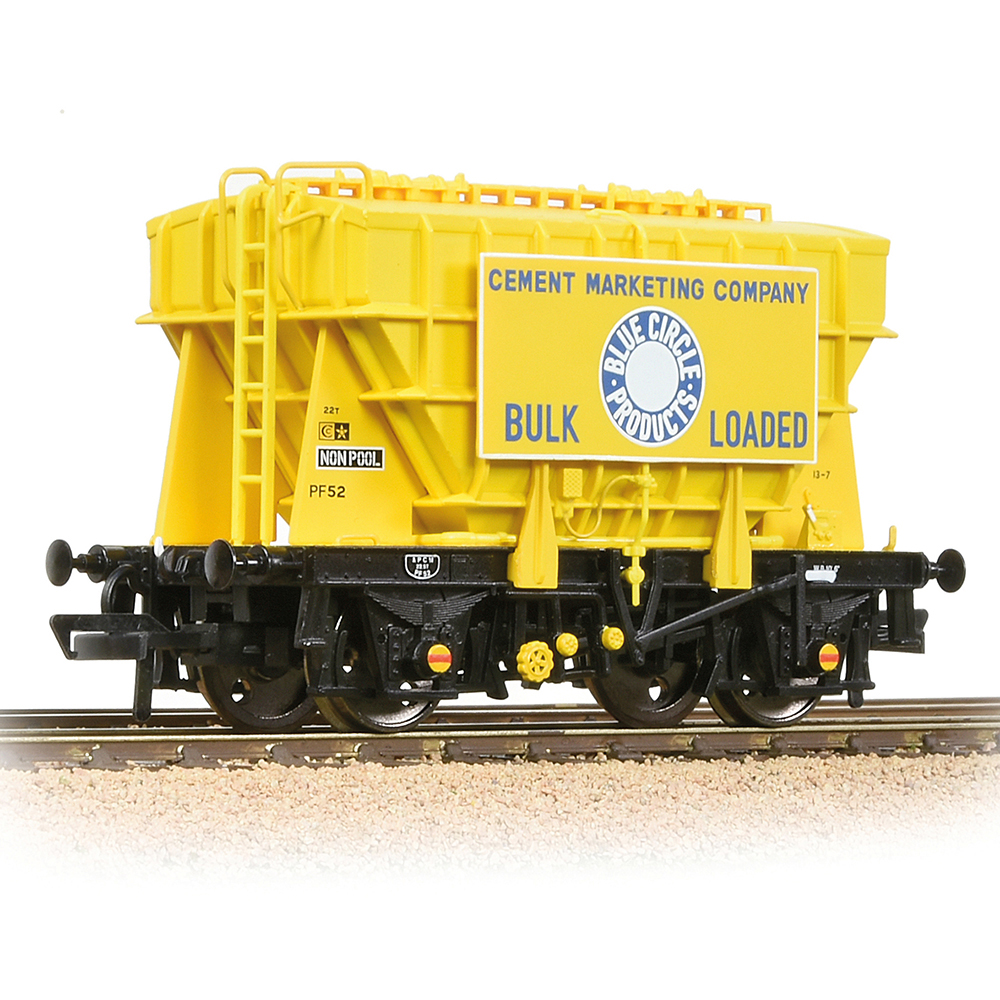
38-273
BR 22T 'Presflo' Cement Wagon 'Blue Circle Cement' Yellow
'OO' Gauge
Released: 22/06/22
Era 5
Our Price:
£44.95
38-874
BR 12T 'Vanwide' Ventilated Van BR Bauxite (TOPS) [W]
'OO' Gauge
Released: 22/06/22
Era 7
Our Price:
£35.95
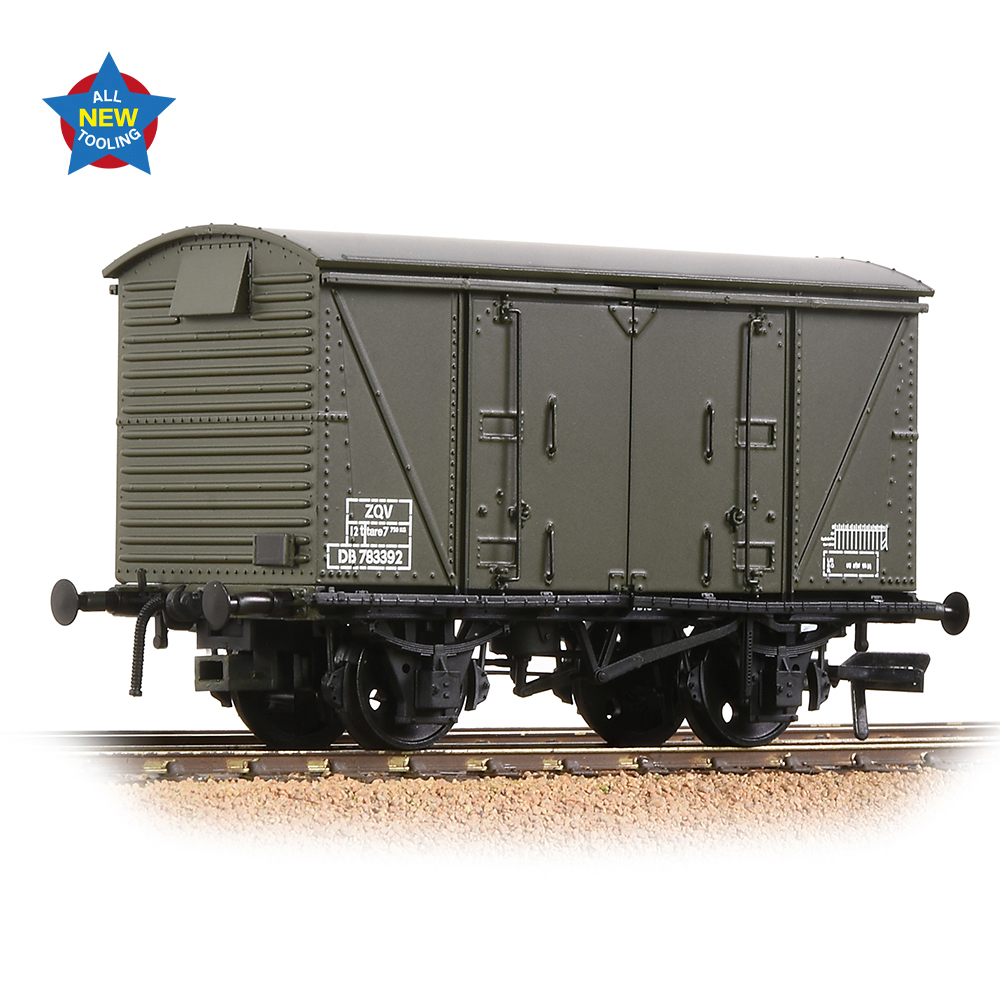
38-875
BR 12T 'Vanwide' Ventilated Van BR Departmental Olive Green
'OO' Gauge
Released: 22/06/22
Era 7
Our Price:
£35.95
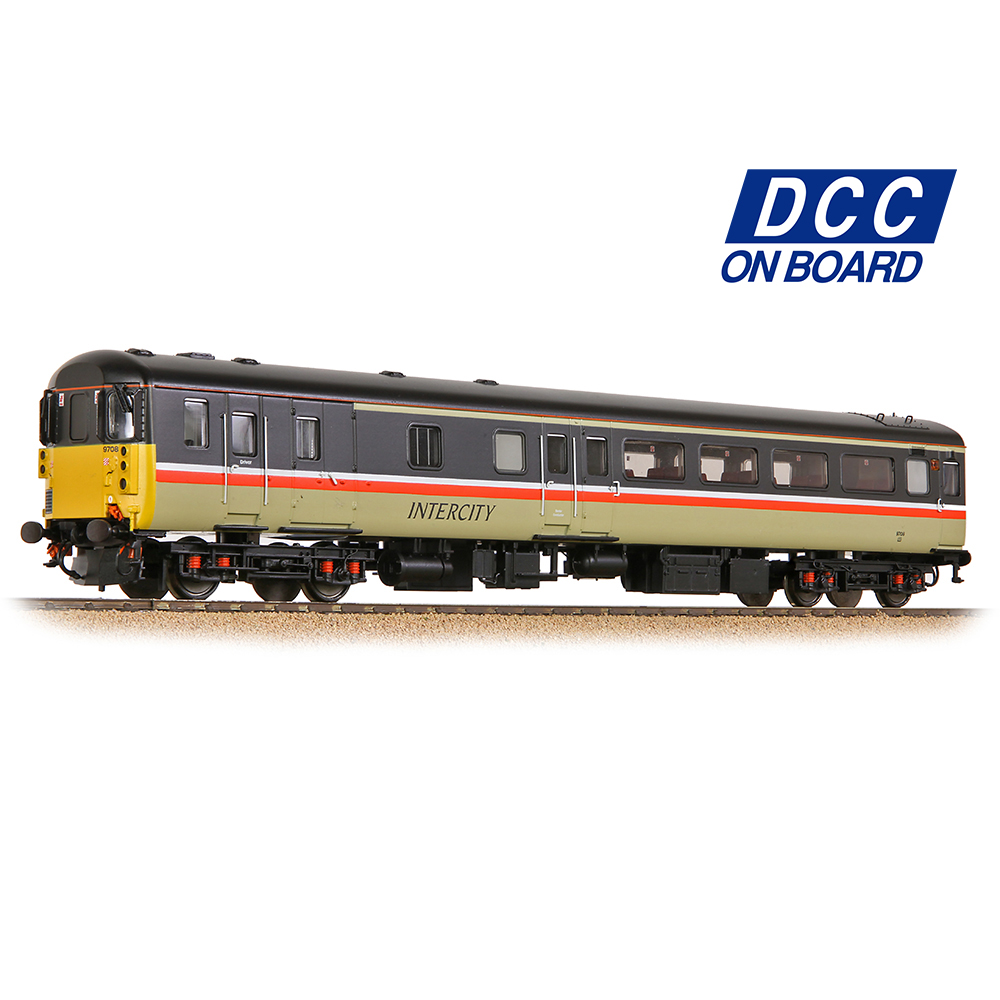
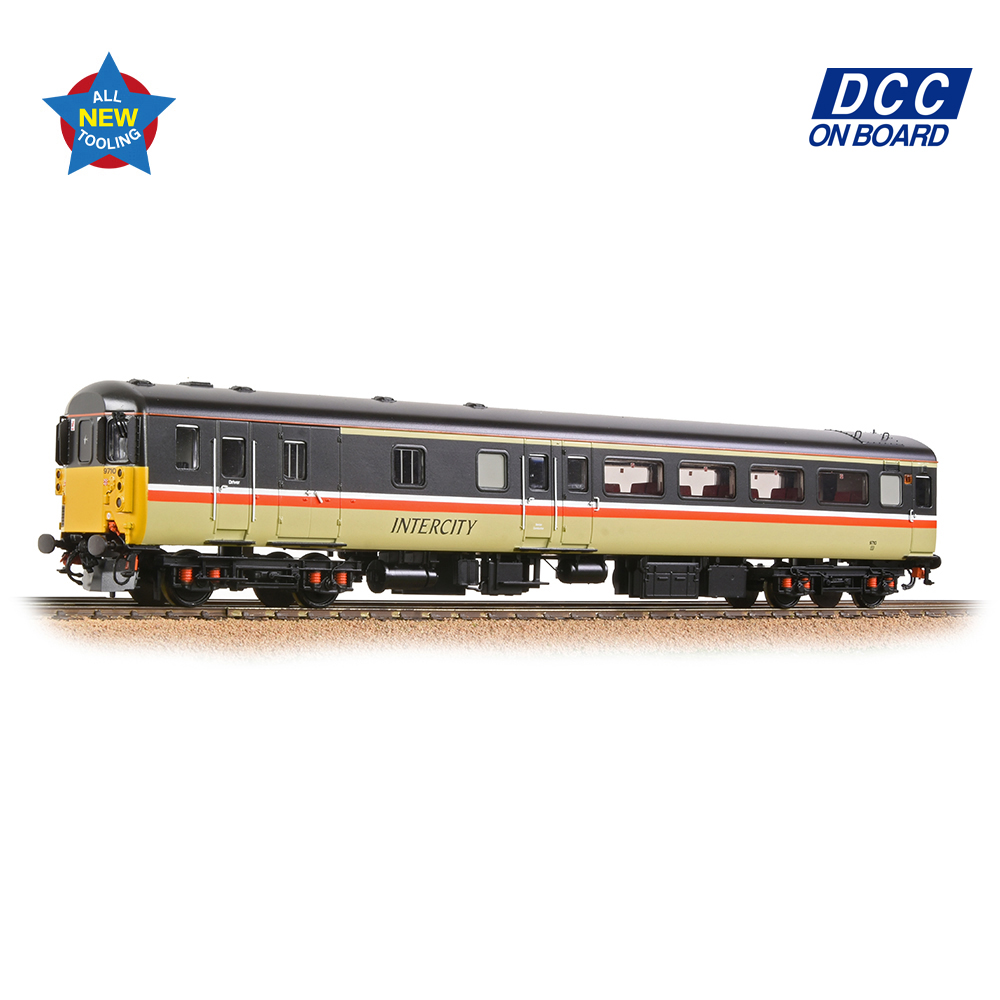
39-735DC
BR Mk2F DBSO (Refurb.) Driving Brake Sec. Open BR InterCity (Swallow)
'OO' Gauge
Released: 22/06/22
DCC Fitted
Era 8
MODEL FEATURES: Bachmann Branchline OO Scale Era 8 Pristine InterCity (Swallow) livery Running No. 9710 Accessory Pack including Obstacle Deflectors NEM Coupling Pockets Close Coupling Mechanism Length 270mm Directional Lighting Interior Lighting Door Interlock Lighting (when used on DCC) DCC-control of all lighting via the integrated DCC decoder
Our Price:
£134.95
371-065
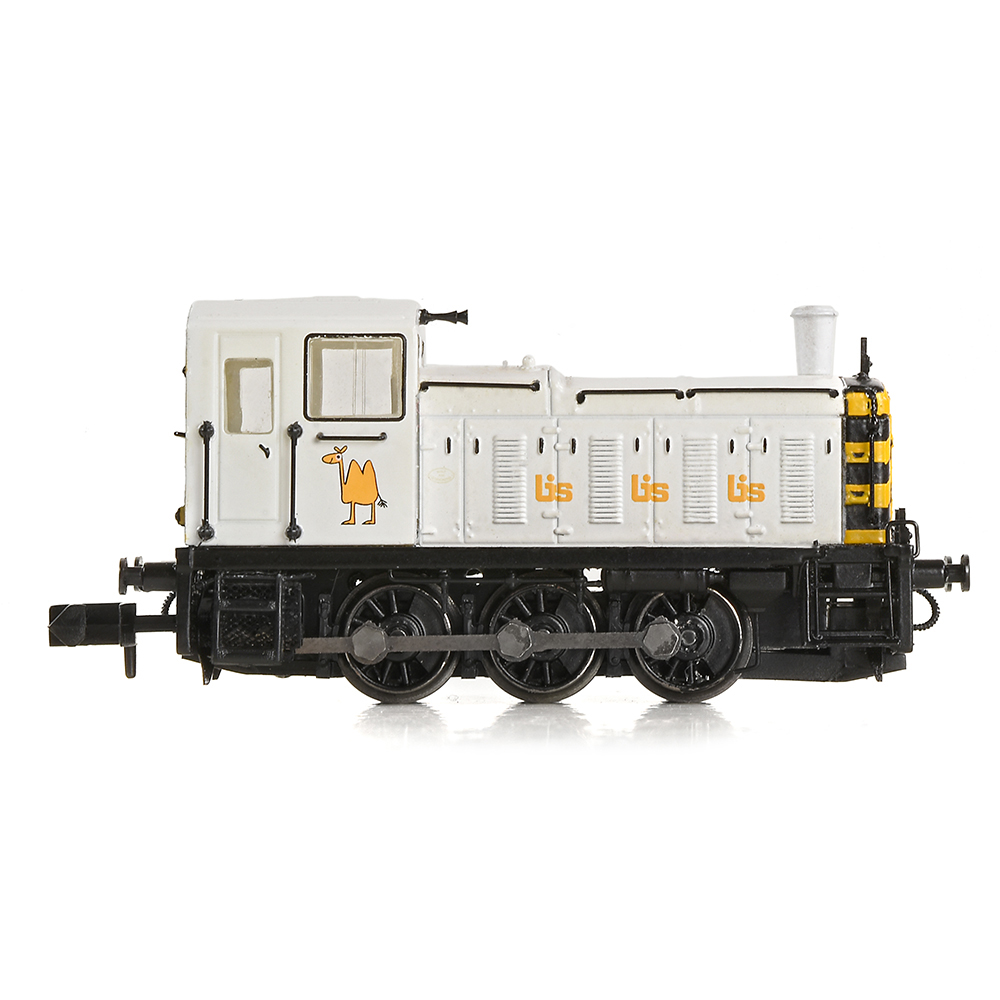
Class 03 Ex-D2054 British Industrial Sand White
'N' Gauge
Released: 27/06/22
DCC Ready (6 Pin)
Era 7
CLASS 03 HISTORY The Class 03 diesel shunters were introduced between 1957 and 1962 and with 230 built, the type was one of BR's most successful small 0-6-0 diesel-mechanical shunters and was adopted as BR’s standard small shunter. A development of the Class 04 ‘Drewry’ shunter, construction was shared between British Railways' Swindon Works and Doncaster Works and initial allocations for the class covered all regions except Scotland. Shunting was the main employment, with their short wheelbase and light weight making them particularly useful in areas where weight restrictions or tight trackwork existed. Examples were also assigned to station pilot duties and due to the short wheelbase, it was common for them to be coupled to a ‘shunter’s truck’ or ‘runner wagon’ to ensure sufficient length for reliable operation of track circuits. Weighing in at 30 Tons, some 18 Tons less than the Class 08 diesel shunter, the Class 03’s were fitted with Gardner engines and their distinctive jackshaft drive arrangement gave the locomotives a top speed of 28½ mph. Despite their usefulness, a downturn in shunting requirements meant that withdrawals began in 1968, although the last remained in service on mainland Britain until 1987. Two examples operated on the Isle of Wight, with lowered cab roofs to account for the restricted loading gauge, and these remained in traffic on the island until 1993. One of these Isle of Wight locos, No. 03179, was resurrected by West Anglia Great Northern in 1998 to shunt their Hornsey Depot. Subsequently operated by First Capital Connect, the loco was finally withdrawn in 2008 after which the locomotive was preserved bringing the total number of surviving examples to 56.
Our Price:
£118.95