
Search results
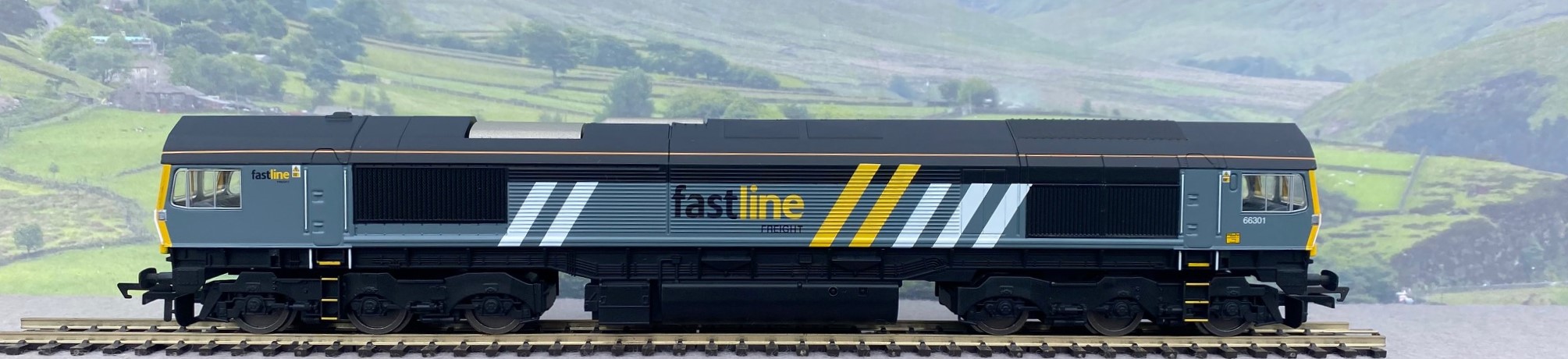
 R30167
FASTLINE CLASS 66 '66301'
 'OO' Gauge
 Released: 13/03/23
 DCC Ready (8 Pin)
 Era 9
Era 9TIER ONE EXCLUSIVE.
Our Price:
£87.29
£87.29
 31-496SF
Class 158 2-Car DMU 158761 BR Provincial (Express) With DCC Sound Fitted
'OO' GaugeReleased: 14/03/23DCC FittedDCC SoundEra 8F0 - Directional Lights - On / Off
F1 - On - Warm Start / F13 - On, then F1 - On - Warm Start with Compressor Speed-up / F5 - On, then F1 - On - Cold Start / F5 - On, then F13 - On, then F1 - On - Cold Start with Compressor Speed-up
F2 - Brake (Non-Latching)
F3 - Single Horn
F4 - Two-Tone Horn
F5 - Light Engine
F6 - Engine Idle / Coasting
F7 - Flange Squeal
F8 - On - Doors Opening (F1 On) / Off - Doors Closing (F1 On)
F9 - Passenger Compartment Lights - On / Off
F10 - Guard's Whistle
F11 - On - Driver's Buzzer / Off - Guard's Response
F12 - On - Driver's Twin Buzzer / Off - Guard's Response
F13 - Engine Speed Up
F14 - On - Directional Lights Day Mode / Off - Directional Lights Night Mode
F15 - Cab Lights (Trailing End) - On / Off
F16 - Air Conditioning Fan
F17 - Windscreen Wipers
F18 - On - Doors Opening (F1 Off) / Off - Doors Closing (F1 Off)
F19 - Fade All Sounds
F20 - Directional Lights Off (Car A, 57xxx)
F21 - Directional Lights Off (Car B, 52xxx)
F22 - Station Ambience
F23 - Remote Telephone Test
F24 - Detonators
F25 - AWS
F26 - No User Access
F27 - Volume Down
F28 - Volume Up
Analogue Users: Please note that basic prime mover sounds will operate and will vary according to use when this model is used on analogue control (DC) straight from the box! Directional lights and passenger compartment lights will also illuminate when power is applied.

Our Price:
£386.95
£386.95
32-259ASFWD Austerity 90074 BR Black (Late Crest) [W] With DCC Sound Fitted
'OO' GaugeReleased: 14/03/23DCC FittedDCC SoundEra 5F1 - Sound On / Sound Off
F2 - Brake (Non-Latching)
F3 - Cylinder Drain Cocks
F4 - Whistle (Playable)
F5 - Normal Load / Heavy Load
F6 - On - Firebox Door Opening / Off - Firebox Door Closing
F7 - Injectors
F8 - Fixed Length Whistle
F9 - Flange Squeal (Speed Related)
F10 - Shovelling Coal (F6 must be On to activate this function)
F11 - Blower
F12 - Hand Brake (locomotive will not move with the Hand Brake applied)
F13 - Water Tank Filling
F14 - Coupling/un-Coupling Clank
F15 - Safety Valve
F16 - Guard’s Whistle & Driver’s Response Toot
F17 - Coasting
F18 - Sound Fades Out / Sound Fades In
F19 - Shunt Mode (Reduces Speed)
F20 - Acceleration/Deceleration inertia off
F21 - Volume Control (LATCH = Volume On/Off) or (TRIGGER = cycles 6 Volume Levels)
F22 - Rail Join Clatter
F23 - AWS
Analogue Users: Normal-load running sounds, acceleration steam chuff sounds and any other automatic and randomised sounds can be enjoyed when using this model on analogue control (DC) straight from the box - these sounds will play automatically when power is applied!

Our Price:
£278.95
£278.95
32-259ASFWD Austerity 90074 BR Black (Late Crest) [W] With DCC Sound Fitted
'OO' GaugeReleased: 14/03/23DCC FittedDCC SoundEra 5F1 - Sound On / Sound Off
F2 - Brake (Non-Latching)
F3 - Cylinder Drain Cocks
F4 - Whistle (Playable)
F5 - Normal Load / Heavy Load
F6 - On - Firebox Door Opening / Off - Firebox Door Closing
F7 - Injectors
F8 - Fixed Length Whistle
F9 - Flange Squeal (Speed Related)
F10 - Shovelling Coal (F6 must be On to activate this function)
F11 - Blower
F12 - Hand Brake (locomotive will not move with the Hand Brake applied)
F13 - Water Tank Filling
F14 - Coupling/un-Coupling Clank
F15 - Safety Valve
F16 - Guard’s Whistle & Driver’s Response Toot
F17 - Coasting
F18 - Sound Fades Out / Sound Fades In
F19 - Shunt Mode (Reduces Speed)
F20 - Acceleration/Deceleration inertia off
F21 - Volume Control (LATCH = Volume On/Off) or (TRIGGER = cycles 6 Volume Levels)
F22 - Rail Join Clatter
F23 - AWS
Analogue Users: Normal-load running sounds, acceleration steam chuff sounds and any other automatic and randomised sounds can be enjoyed when using this model on analogue control (DC) straight from the box - these sounds will play automatically when power is applied!

Our Price:
£278.95
£278.95
 373-650B
14T Tank Wagon 'National Benzole' Silver 757
'N' GaugeReleased: 14/03/23Era 3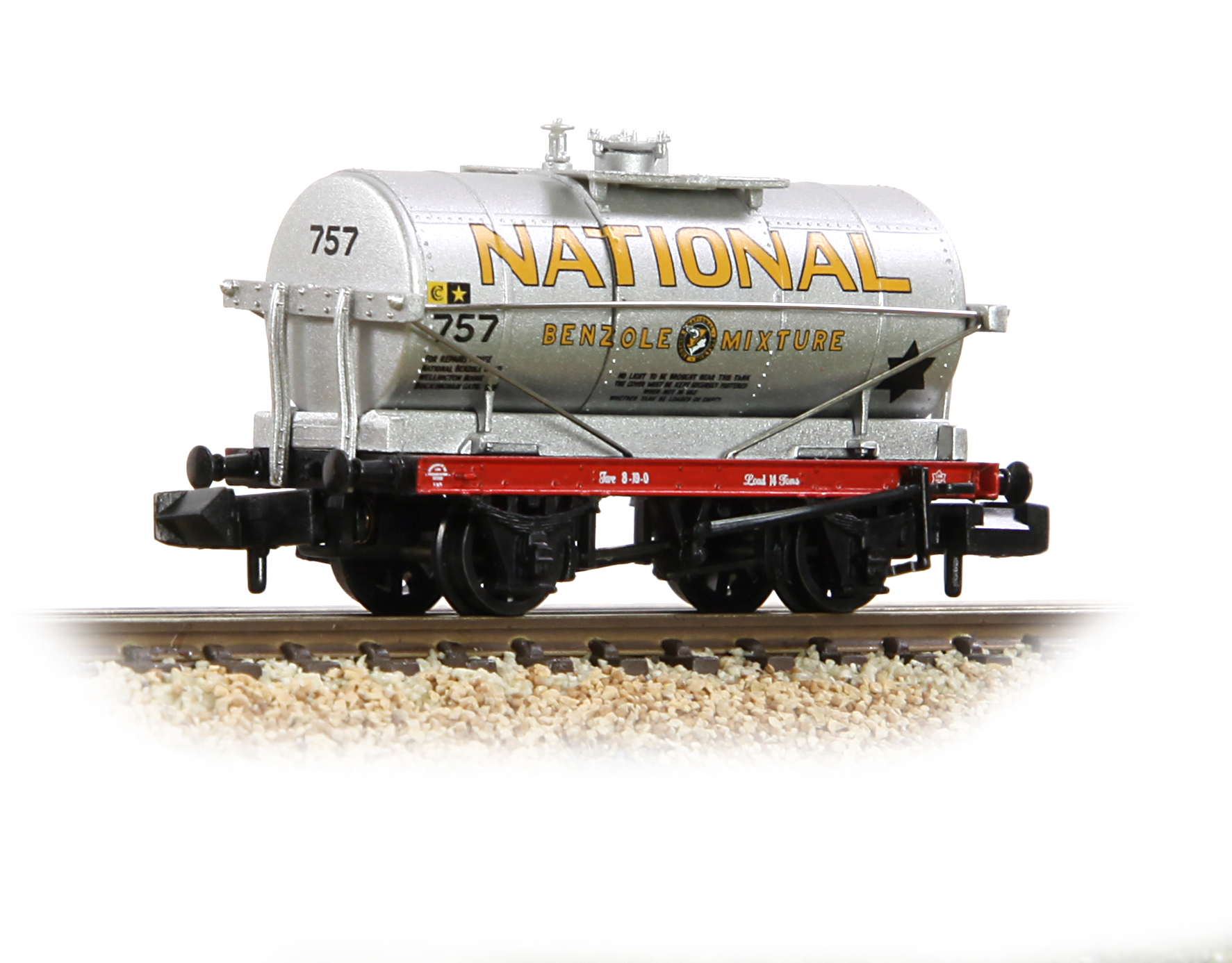
Our Price:
£23.35
£23.35
373-650C14T Tank Wagon 'National Benzole' Silver 752
'N' GaugeReleased: 14/03/23Era 3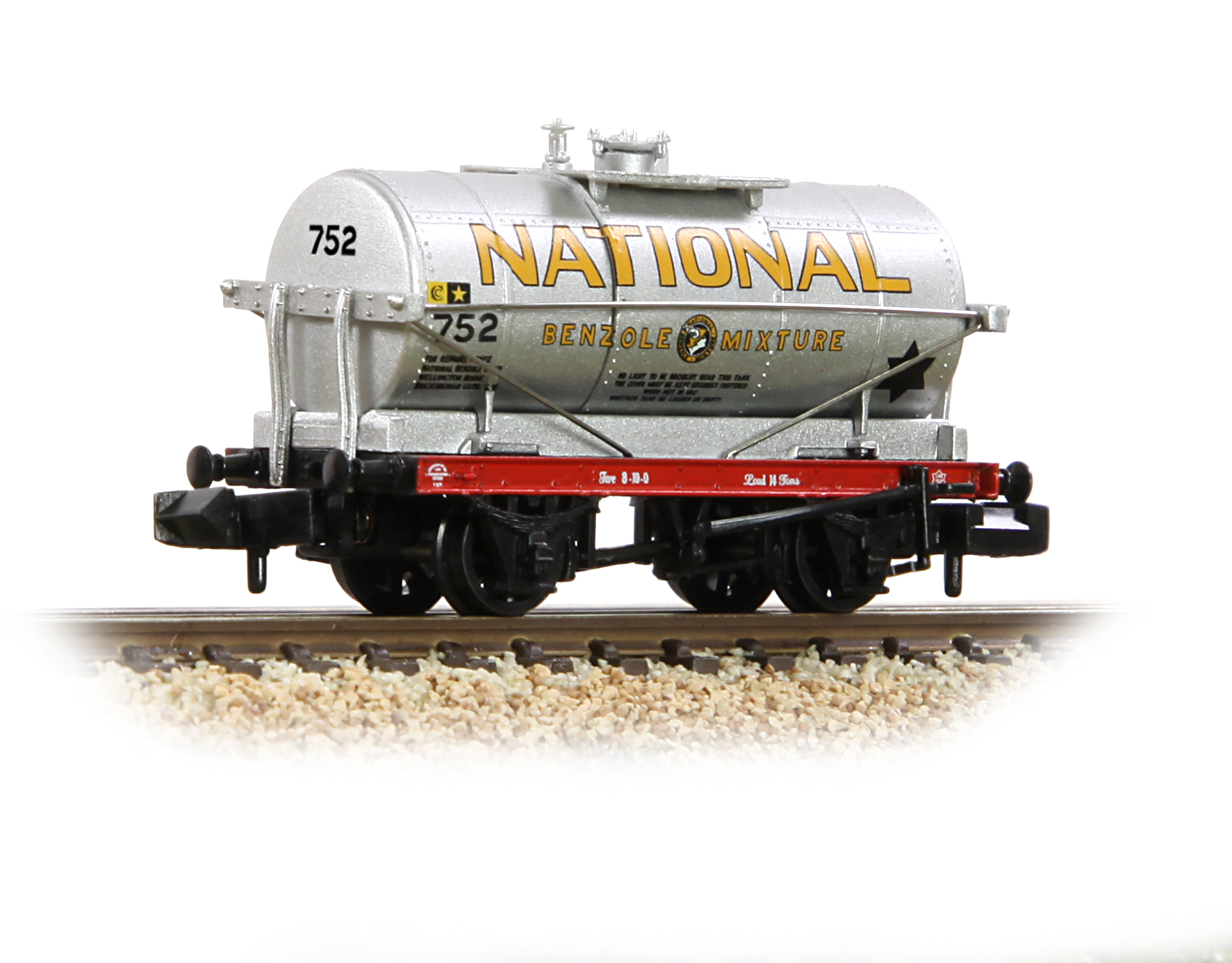
Our Price:
£23.35
£23.35
373-65814T Tank Wagon 'Fina' Silver 138
'N' GaugeReleased: 14/03/23Era 3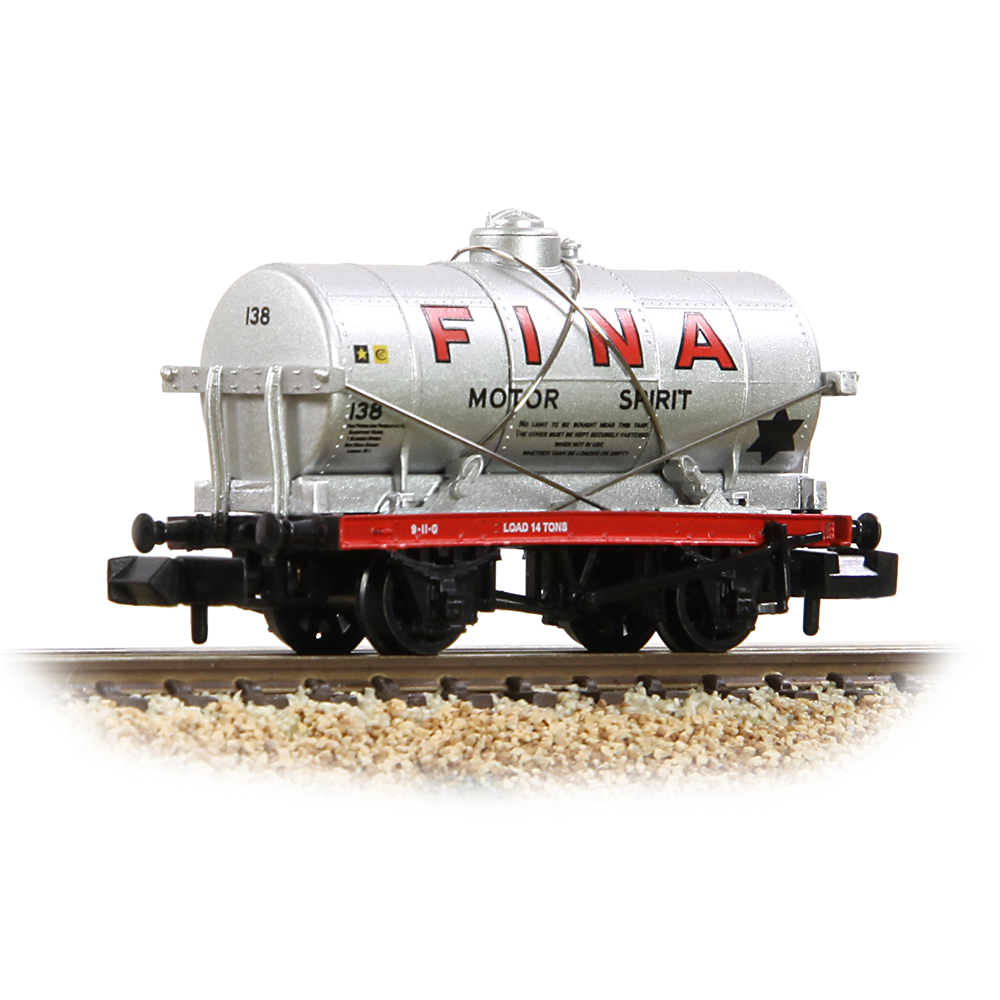
Our Price:
£23.35
£23.35
373-658A14T Tank Wagon 'Fina' Silver 136
'N' GaugeReleased: 14/03/23Era 3
Our Price:
£23.35
£23.35
373-65914T Tank Wagon 'Crossfield Chemicals' Green 127
'N' GaugeReleased: 14/03/23Era 3
Our Price:
£23.35
£23.35
373-659A14T Tank Wagon 'Crossfield Chemicals' Green 129
'N' GaugeReleased: 14/03/23Era 3
Our Price:
£23.35
£23.35
373-66014T Tank Wagon 'Shell/BP' Black 3973
'N' GaugeReleased: 14/03/23Era 3
Our Price:
£23.35
£23.35
373-660A14T Tank Wagon 'Shell/BP' Black 3977
'N' GaugeReleased: 14/03/23Era 3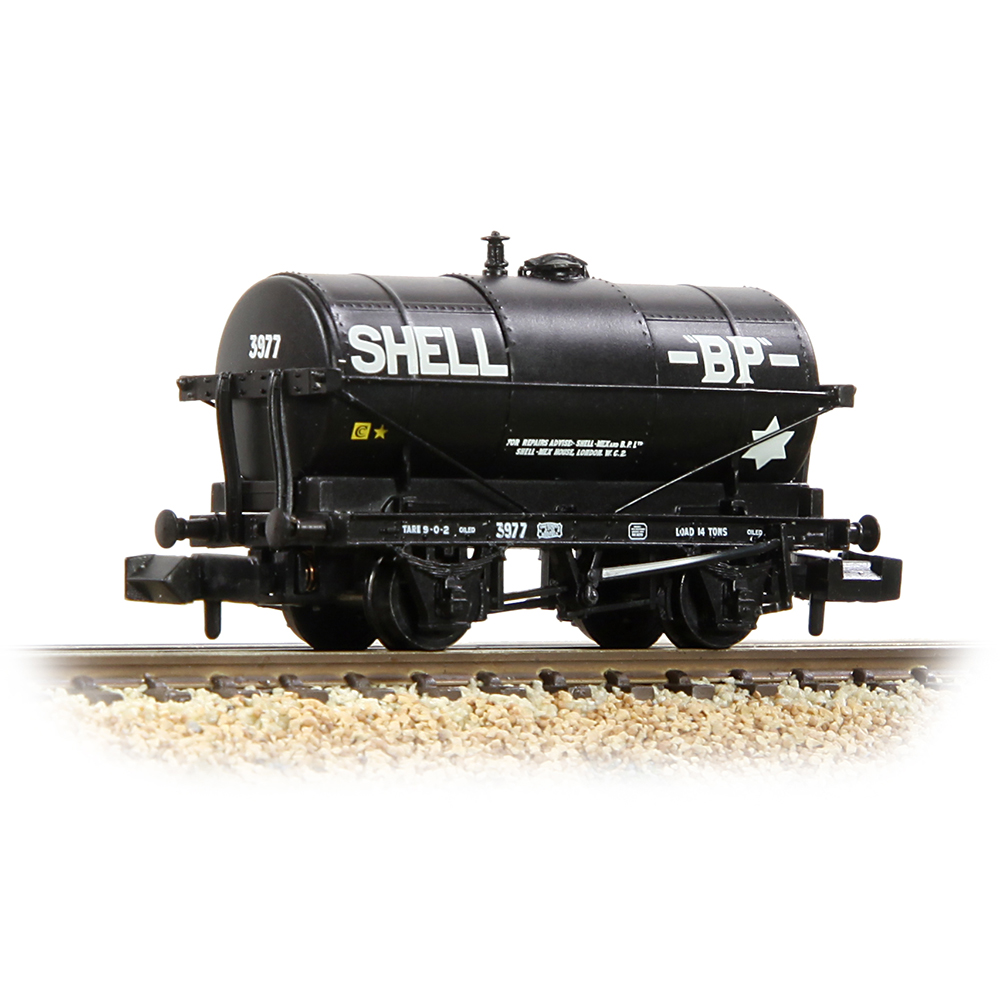
Our Price:
£23.35
£23.35
373-682A14T Tank Wagon 'ICI' Maroon 309
'N' GaugeReleased: 14/03/23Era 3
Our Price:
£23.35
£23.35
373-682B14T Tank Wagon 'ICI' Maroon 314
'N' GaugeReleased: 14/03/23Era 3
Our Price:
£23.35
£23.35
 393-100
RNAD Enclosed-End Brake Van RNAD Grey
'OO-9' GaugeReleased: 14/03/23Era 7Royal Navy Armaments Depots (RNAD) were strategic sites located around the UK for the storage and supply of armaments to the Royal Navy and other British and Commonwealth Armed Forces. Usually comprising several underground ‘magazines’, they were usually rail served by the national network and many had internal narrow gauge railway systems in order to aid movements between the standard gauge facility, magazines and workshops. The railways were equipped with their own fleets of locomotives and rolling stock designed specifically for the task in hand. Although some of the railways operated as recently as the early-21st century, as closures occurred stock became redundant however a significant number of items have subsequently entered preservation gaining a new lease of life. This Enclosed-End Brake Van depicts one of the vans used at a RNAD site where it would have provided braking force to the unfitted trains of wagons.

Our Price:
£26.95
£26.95
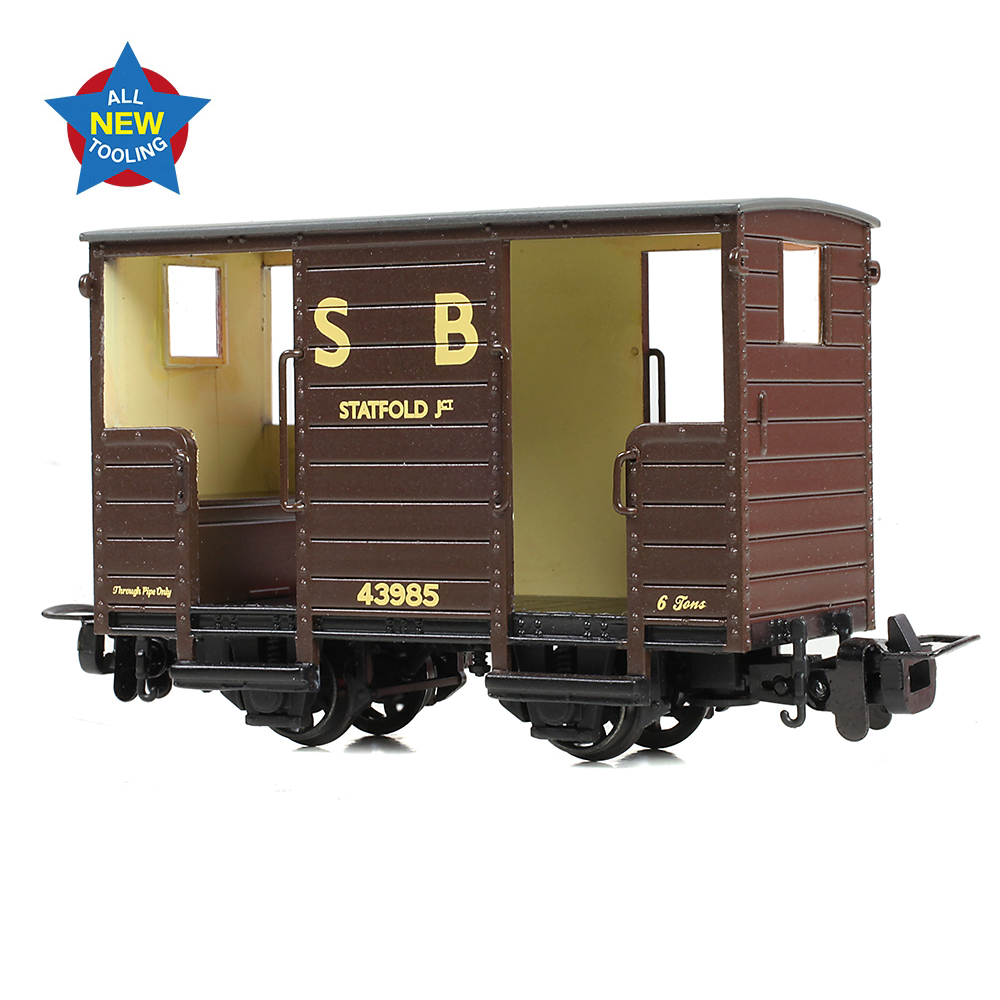
393-101RNAD Open-End Brake Van Statfold Barn Railway Brown
'OO-9' GaugeReleased: 14/03/23Era 9Royal Navy Armaments Depots (RNAD) were strategic sites located around the UK for the storage and supply of armaments to the Royal Navy and other British and Commonwealth Armed Forces. Usually comprising several underground ‘magazines’, they were usually rail served by the national network and many had internal narrow gauge railway systems in order to aid movements between the standard gauge facility, magazines and workshops. The railways were equipped with their own fleets of locomotives and rolling stock designed specifically for the task in hand. Although some of the railways operated as recently as the early-21st century, as closures occurred stock became redundant however a significant number of items have subsequently entered preservation gaining a new lease of life. This Open-End Brake Van is one such example and now, residing at the Statfold Barn Railway, carries a GWR-inspired livery and markings for Statfold Jct..
Our Price:
£26.95
£26.95
393-125RNAD Van RNAD Grey
'OO-9' GaugeReleased: 14/03/23Era 7Royal Navy Armaments Depots (RNAD) were strategic sites located around the UK for the storage and supply of armaments to the Royal Navy and other British and Commonwealth Armed Forces. Usually comprising several underground ‘magazines’, they were usually rail served by the national network and many had internal narrow gauge railway systems in order to aid movements between the standard gauge facility, magazines and workshops. The railways were equipped with their own fleets of locomotives and rolling stock designed specifically for the task in hand. Although some of the railways operated as recently as the early-21st century, as closures occurred stock became redundant however a significant number of items have subsequently entered preservation gaining a new lease of life. This Van features roof hatches allowing large munitions to be loaded directly into the van from above via a crane and our model is finished in RNAD Grey, depicting a wagon in use at an RNAD site.

Our Price:
£26.95
£26.95
393-127RNAD Van Statfold Barn Railway White 'MICA B'
'OO-9' GaugeReleased: 14/03/23Era 9Royal Navy Armaments Depots (RNAD) were strategic sites located around the UK for the storage and supply of armaments to the Royal Navy and other British and Commonwealth Armed Forces. Usually comprising several underground ‘magazines’, they were usually rail served by the national network and many had internal narrow gauge railway systems in order to aid movements between the standard gauge facility, magazines and workshops. The railways were equipped with their own fleets of locomotives and rolling stock designed specifically for the task in hand. Although some of the railways operated as recently as the early-21st century, as closures occurred stock became redundant however a significant number of items have subsequently entered preservation gaining a new lease of life. This RNAD Van is one such example and now, residing at the Statfold Barn Railway, has had its roof loading doors removed and carries a GWR-inspired livery and the telegraph code ‘Mica B’.

Our Price:
£26.95
£26.95
393-150RNAD Rebuilt Open Wagon Statfold Barn Railway Grey
'OO-9' GaugeReleased: 14/03/23Era 9Royal Navy Armaments Depots (RNAD) were strategic sites located around the UK for the storage and supply of armaments to the Royal Navy and other British and Commonwealth Armed Forces. Usually comprising several underground ‘magazines’, they were usually rail served by the national network and many had internal narrow gauge railway systems in order to aid movements between the standard gauge facility, magazines and workshops. The railways were equipped with their own fleets of locomotives and rolling stock designed specifically for the task in hand. Although some of the railways operated as recently as the early-21st century, as closures occurred stock became redundant however a significant number of items have subsequently entered preservation gaining a new lease of life. This Rebuilt Open Wagon is one such example and now, residing at the Statfold Barn Railway, carries a GWR-inspired livery and is marked ‘Loco’.

Our Price:
£26.95
£26.95
393-151RNAD Rebuilt Open Wagon Welsh Highland Railway Red
'OO-9' GaugeReleased: 14/03/23Era 9Royal Navy Armaments Depots (RNAD) were strategic sites located around the UK for the storage and supply of armaments to the Royal Navy and other British and Commonwealth Armed Forces. Usually comprising several underground ‘magazines’, they were usually rail served by the national network and many had internal narrow gauge railway systems in order to aid movements between the standard gauge facility, magazines and workshops. The railways were equipped with their own fleets of locomotives and rolling stock designed specifically for the task in hand. Although some of the railways operated as recently as the early-21st century, as closures occurred stock became redundant however a significant number of items have subsequently entered preservation gaining a new lease of life. This Rebuilt Open Wagon is one such example that once operated at RNAD Fauld but now can be found on the Welsh Highland Railway carrying the railway’s Red livery.

Our Price:
£26.95
£26.95