
Search results
 373-660
14T Tank Wagon 'Shell/BP' Black 3973
 'N' Gauge
 Released: 14/03/23
 Era 3
Era 3
Our Price:
£23.35
£23.35
373-660A14T Tank Wagon 'Shell/BP' Black 3977
'N' GaugeReleased: 14/03/23Era 3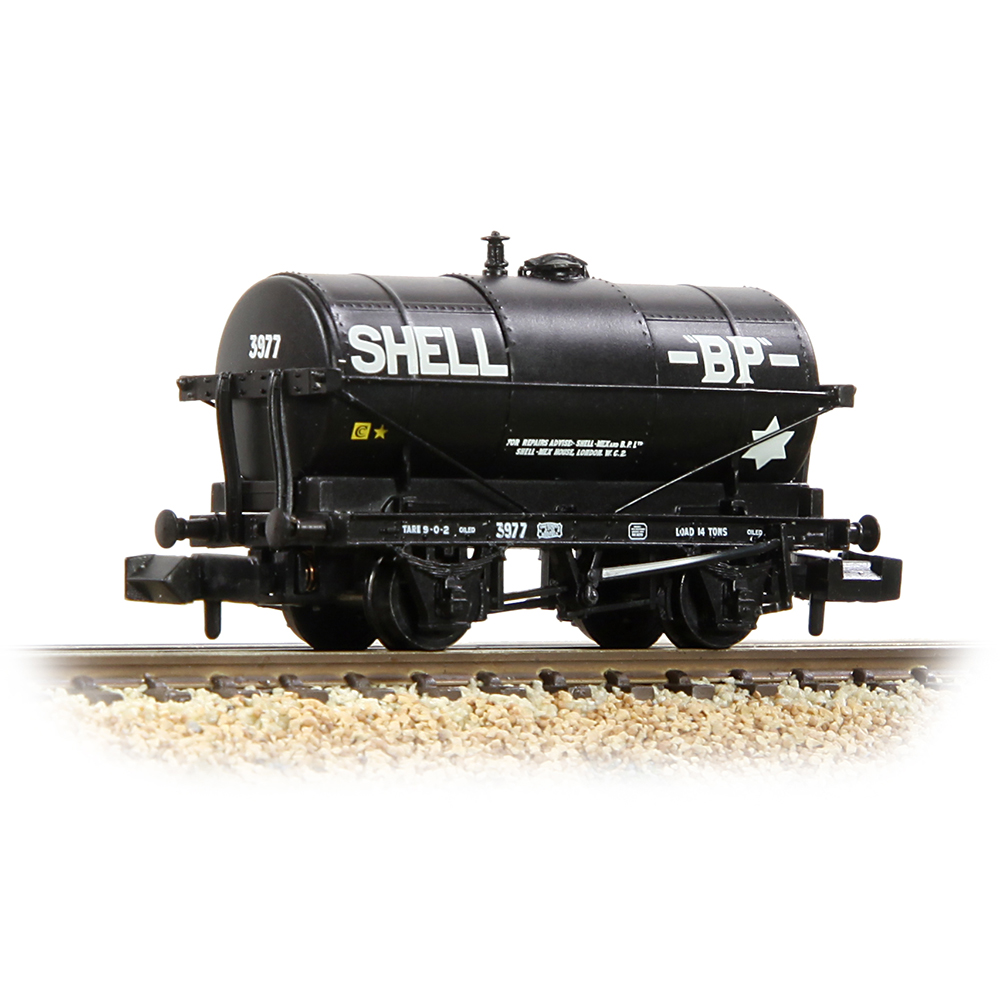
Our Price:
£23.35
£23.35
373-682A14T Tank Wagon 'ICI' Maroon 309
'N' GaugeReleased: 14/03/23Era 3
Our Price:
£23.35
£23.35
373-682B14T Tank Wagon 'ICI' Maroon 314
'N' GaugeReleased: 14/03/23Era 3
Our Price:
£23.35
£23.35
 393-100
RNAD Enclosed-End Brake Van RNAD Grey
'OO-9' GaugeReleased: 14/03/23Era 7Royal Navy Armaments Depots (RNAD) were strategic sites located around the UK for the storage and supply of armaments to the Royal Navy and other British and Commonwealth Armed Forces. Usually comprising several underground ‘magazines’, they were usually rail served by the national network and many had internal narrow gauge railway systems in order to aid movements between the standard gauge facility, magazines and workshops. The railways were equipped with their own fleets of locomotives and rolling stock designed specifically for the task in hand. Although some of the railways operated as recently as the early-21st century, as closures occurred stock became redundant however a significant number of items have subsequently entered preservation gaining a new lease of life. This Enclosed-End Brake Van depicts one of the vans used at a RNAD site where it would have provided braking force to the unfitted trains of wagons.

Our Price:
£26.95
£26.95
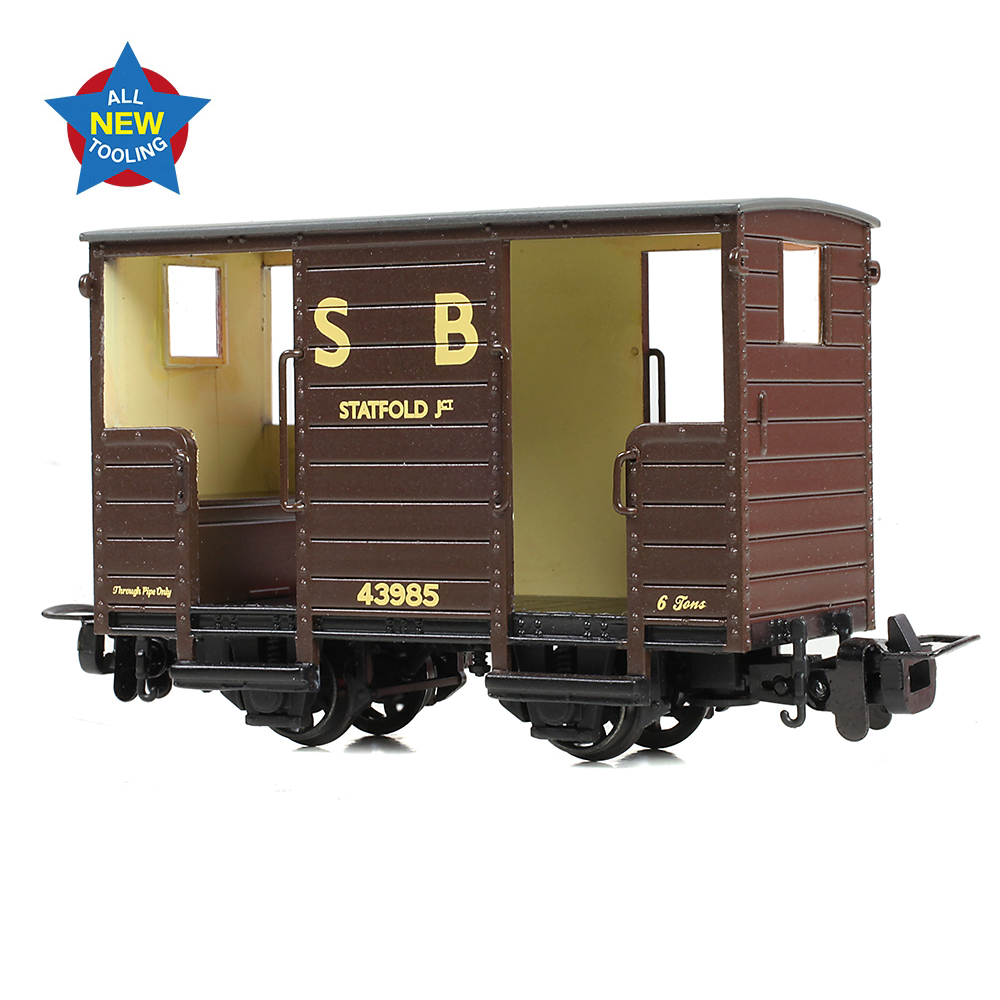
393-101RNAD Open-End Brake Van Statfold Barn Railway Brown
'OO-9' GaugeReleased: 14/03/23Era 9Royal Navy Armaments Depots (RNAD) were strategic sites located around the UK for the storage and supply of armaments to the Royal Navy and other British and Commonwealth Armed Forces. Usually comprising several underground ‘magazines’, they were usually rail served by the national network and many had internal narrow gauge railway systems in order to aid movements between the standard gauge facility, magazines and workshops. The railways were equipped with their own fleets of locomotives and rolling stock designed specifically for the task in hand. Although some of the railways operated as recently as the early-21st century, as closures occurred stock became redundant however a significant number of items have subsequently entered preservation gaining a new lease of life. This Open-End Brake Van is one such example and now, residing at the Statfold Barn Railway, carries a GWR-inspired livery and markings for Statfold Jct..
Our Price:
£26.95
£26.95
393-125RNAD Van RNAD Grey
'OO-9' GaugeReleased: 14/03/23Era 7Royal Navy Armaments Depots (RNAD) were strategic sites located around the UK for the storage and supply of armaments to the Royal Navy and other British and Commonwealth Armed Forces. Usually comprising several underground ‘magazines’, they were usually rail served by the national network and many had internal narrow gauge railway systems in order to aid movements between the standard gauge facility, magazines and workshops. The railways were equipped with their own fleets of locomotives and rolling stock designed specifically for the task in hand. Although some of the railways operated as recently as the early-21st century, as closures occurred stock became redundant however a significant number of items have subsequently entered preservation gaining a new lease of life. This Van features roof hatches allowing large munitions to be loaded directly into the van from above via a crane and our model is finished in RNAD Grey, depicting a wagon in use at an RNAD site.

Our Price:
£26.95
£26.95
393-127RNAD Van Statfold Barn Railway White 'MICA B'
'OO-9' GaugeReleased: 14/03/23Era 9Royal Navy Armaments Depots (RNAD) were strategic sites located around the UK for the storage and supply of armaments to the Royal Navy and other British and Commonwealth Armed Forces. Usually comprising several underground ‘magazines’, they were usually rail served by the national network and many had internal narrow gauge railway systems in order to aid movements between the standard gauge facility, magazines and workshops. The railways were equipped with their own fleets of locomotives and rolling stock designed specifically for the task in hand. Although some of the railways operated as recently as the early-21st century, as closures occurred stock became redundant however a significant number of items have subsequently entered preservation gaining a new lease of life. This RNAD Van is one such example and now, residing at the Statfold Barn Railway, has had its roof loading doors removed and carries a GWR-inspired livery and the telegraph code ‘Mica B’.

Our Price:
£26.95
£26.95
393-150RNAD Rebuilt Open Wagon Statfold Barn Railway Grey
'OO-9' GaugeReleased: 14/03/23Era 9Royal Navy Armaments Depots (RNAD) were strategic sites located around the UK for the storage and supply of armaments to the Royal Navy and other British and Commonwealth Armed Forces. Usually comprising several underground ‘magazines’, they were usually rail served by the national network and many had internal narrow gauge railway systems in order to aid movements between the standard gauge facility, magazines and workshops. The railways were equipped with their own fleets of locomotives and rolling stock designed specifically for the task in hand. Although some of the railways operated as recently as the early-21st century, as closures occurred stock became redundant however a significant number of items have subsequently entered preservation gaining a new lease of life. This Rebuilt Open Wagon is one such example and now, residing at the Statfold Barn Railway, carries a GWR-inspired livery and is marked ‘Loco’.

Our Price:
£26.95
£26.95
393-151RNAD Rebuilt Open Wagon Welsh Highland Railway Red
'OO-9' GaugeReleased: 14/03/23Era 9Royal Navy Armaments Depots (RNAD) were strategic sites located around the UK for the storage and supply of armaments to the Royal Navy and other British and Commonwealth Armed Forces. Usually comprising several underground ‘magazines’, they were usually rail served by the national network and many had internal narrow gauge railway systems in order to aid movements between the standard gauge facility, magazines and workshops. The railways were equipped with their own fleets of locomotives and rolling stock designed specifically for the task in hand. Although some of the railways operated as recently as the early-21st century, as closures occurred stock became redundant however a significant number of items have subsequently entered preservation gaining a new lease of life. This Rebuilt Open Wagon is one such example that once operated at RNAD Fauld but now can be found on the Welsh Highland Railway carrying the railway’s Red livery.

Our Price:
£26.95
£26.95
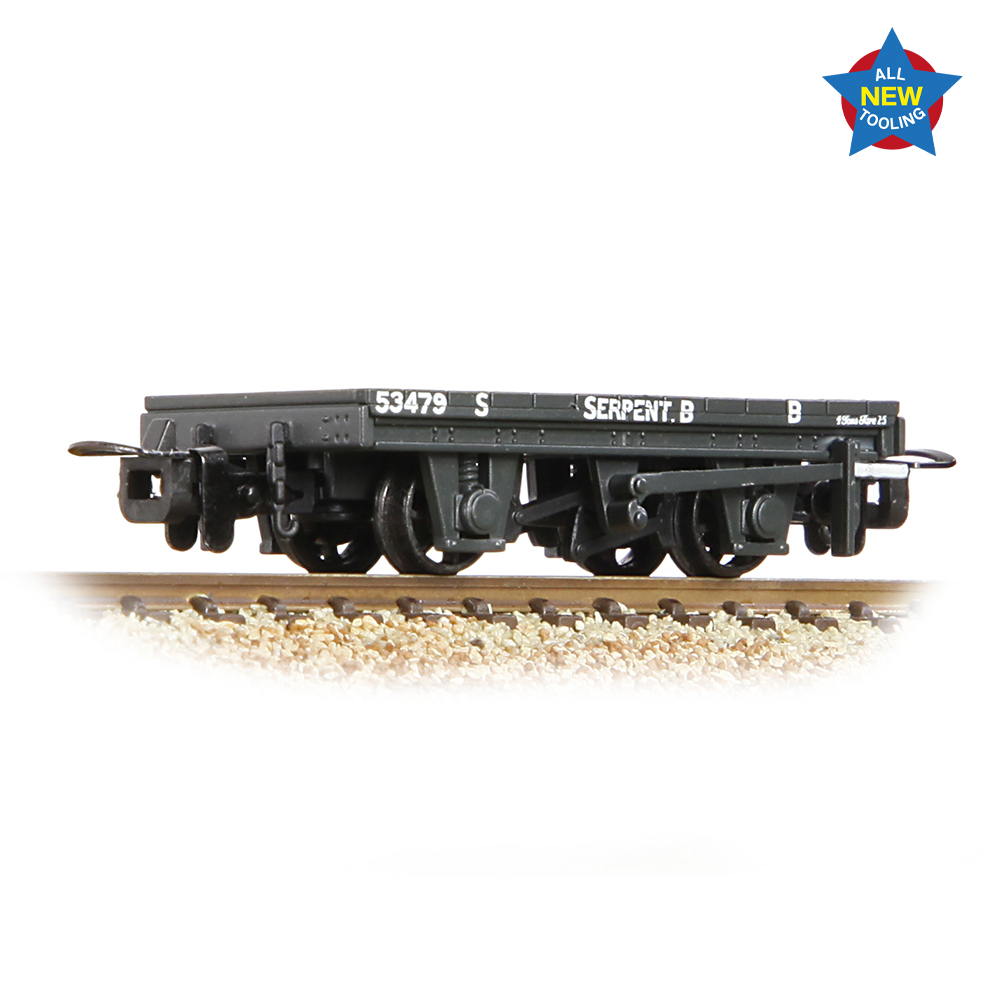
393-176RNAD Flat Wagon Statfold Barn Railway Grey 'Serpent B'
'OO-9' GaugeReleased: 14/03/23Era 9Royal Navy Armaments Depots (RNAD) were strategic sites located around the UK for the storage and supply of armaments to the Royal Navy and other British and Commonwealth Armed Forces. Usually comprising several underground ‘magazines’, they were usually rail served by the national network and many had internal narrow gauge railway systems in order to aid movements between the standard gauge facility, magazines and workshops. The railways were equipped with their own fleets of locomotives and rolling stock designed specifically for the task in hand. Although some of the railways operated as recently as the early-21st century, as closures occurred stock became redundant however a significant number of items have subsequently entered preservation gaining a new lease of life. This Flat Wagon is one such example and now, residing at the Statfold Barn Railway, carries a GWR-inspired livery and the telegraph code ‘Serpent B’.
Our Price:
£26.95
£26.95
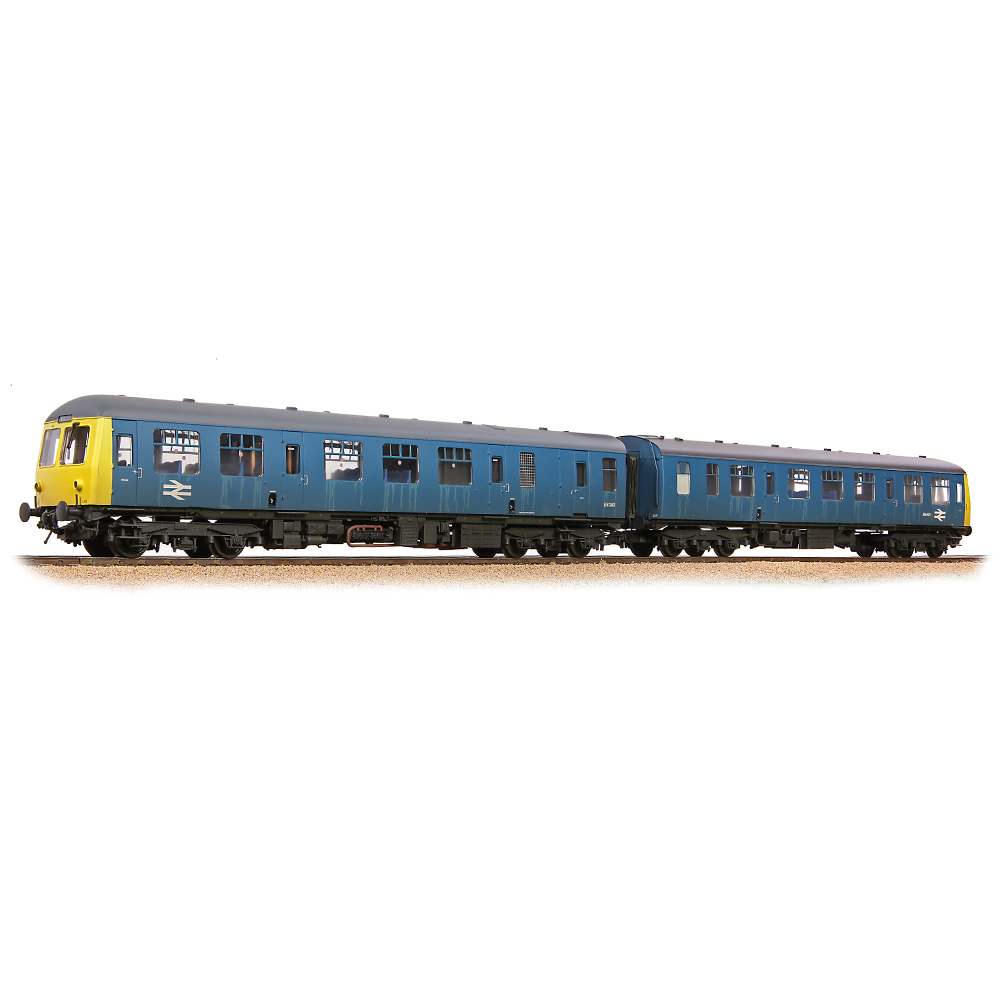
 31-325A
Class 105 2-Car DMU BR Blue [W]
'OO' GaugeReleased: 16/03/23 DCC Ready (8 Pin)Era 7/8
The British Rail Class 105 Diesel Multiple Units were built by Cravens Ltd. of Sheffield between 1956 and 1959. A total of 302 vehicles were built – each of which shared the same body profile as BR Mark 1 coaching stock – and these were formed into two- and three-car units. Although these Cravens units were used principally on Eastern Region services around Hull, Lincolnshire, East Anglia and local services to/from London King's Cross, the Class was delivered to no fewer than four different regions when first built, with examples also going to the London Midland, North Eastern and Scottish Regions – this variety was unprecedented amongst First Generation DMUs. The majority were two-car sets, with only the Midland Region receiving any quantity of 3-car units. Their looks and similarities to the Mk1, along with other quirks of the type, made for a characterful unit that became popular with enthusiasts.
As traffic requirements changed and transfers occurred, several of the Class that were first assigned to work on the former Midland and Great Northern Joint Railway lines were moved to work in and out of London King's Cross. As lines closed, the Cravens units were dispersed further and examples could be found across the UK, notably at Tyseley depot in Birmingham. The electrification of the lines from London King's Cross and the introduction of the Class 313 EMUs in 1976 saw many Cravens units transferred away to other cities and regions. Although several First Generation DMUs were selected for Refurbishment programmes during the late-1970s, the 105s were not among them and so withdrawals began as newer units were introduced.
Norwich was the last depot to operate the Cravens units, with one unit being returned to green livery, and gaining a somewhat celebrity status towards the end of its service life. The final vehicles were withdrawn from passenger service in 1988, however a small number had already been repurposed for parcels traffic and the final such examples survived until 1989, whilst others found a short reprieve in route learning or Sandite use – but these too had gone by May 1990. The presence of Asbestos deterred most preservations and so ultimately most of the 105s were scrapped, however one two-car set survives at the East Lancashire Railway and has recently returned to traffic after a 20 year refurbishment, whilst a third vehicle survives at the Llangollen Railway.
Our Price:
£242.20
£242.20
31-326BClass 105 2-Car DMU BR Green (Speed Whiskers)
'OO' GaugeReleased: 16/03/23DCC Ready (8 Pin)Era 5The British Rail Class 105 Diesel Multiple Units were built by Cravens Ltd. of Sheffield between 1956 and 1959. A total of 302 vehicles were built – each of which shared the same body profile as BR Mark 1 coaching stock – and these were formed into two- and three-car units. Although these Cravens units were used principally on Eastern Region services around Hull, Lincolnshire, East Anglia and local services to/from London King's Cross, the Class was delivered to no fewer than four different regions when first built, with examples also going to the London Midland, North Eastern and Scottish Regions – this variety was unprecedented amongst First Generation DMUs. The majority were two-car sets, with only the Midland Region receiving any quantity of 3-car units. Their looks and similarities to the Mk1, along with other quirks of the type, made for a characterful unit that became popular with enthusiasts.
As traffic requirements changed and transfers occurred, several of the Class that were first assigned to work on the former Midland and Great Northern Joint Railway lines were moved to work in and out of London King's Cross. As lines closed, the Cravens units were dispersed further and examples could be found across the UK, notably at Tyseley depot in Birmingham. The electrification of the lines from London King's Cross and the introduction of the Class 313 EMUs in 1976 saw many Cravens units transferred away to other cities and regions. Although several First Generation DMUs were selected for Refurbishment programmes during the late-1970s, the 105s were not among them and so withdrawals began as newer units were introduced.
Norwich was the last depot to operate the Cravens units, with one unit being returned to green livery, and gaining a somewhat celebrity status towards the end of its service life. The final vehicles were withdrawn from passenger service in 1988, however a small number had already been repurposed for parcels traffic and the final such examples survived until 1989, whilst others found a short reprieve in route learning or Sandite use – but these too had gone by May 1990. The presence of Asbestos deterred most preservations and so ultimately most of the 105s were scrapped, however one two-car set survives at the East Lancashire Railway and has recently returned to traffic after a 20 year refurbishment, whilst a third vehicle survives at the Llangollen Railway.

Our Price:
£229.45
£229.45
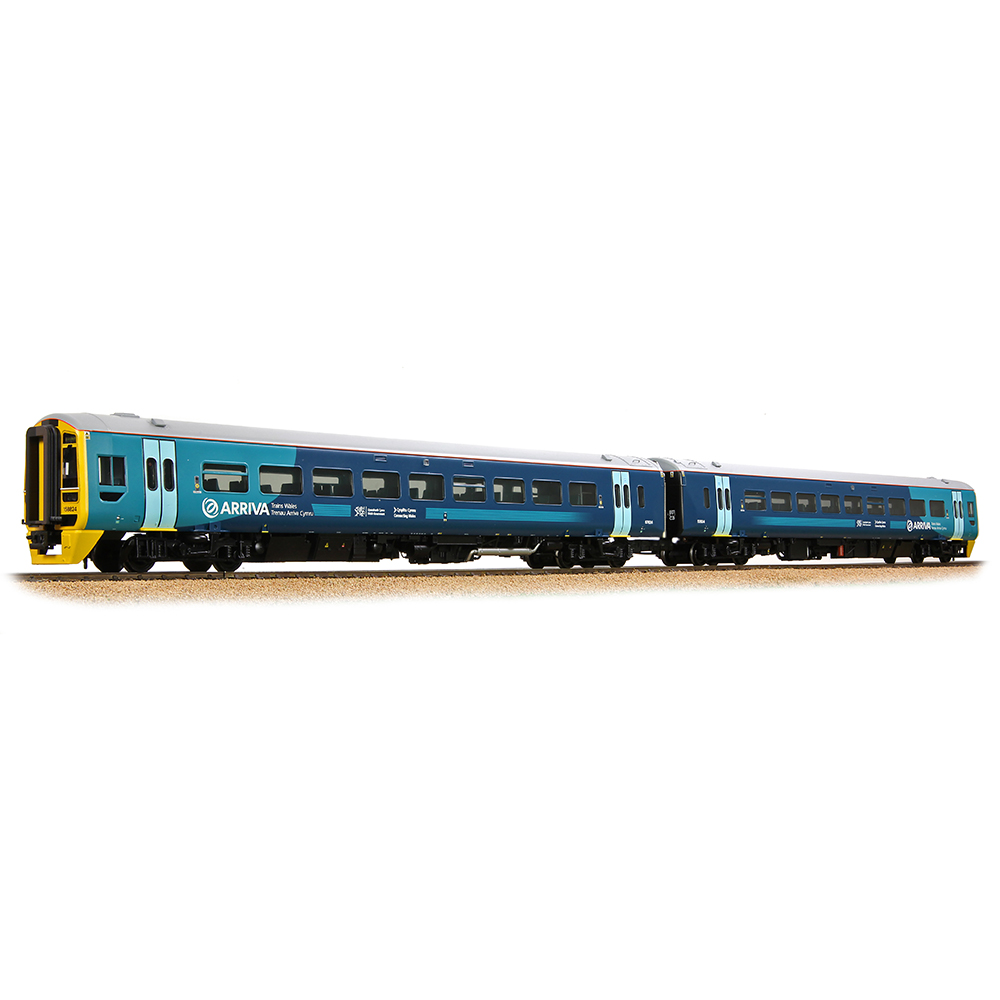
31-511AClass 158 2-Car DMU Arriva Trains Wales (Revised)
'OO' GaugeReleased: 16/03/23DCC Ready (PluX22)Era 9The British Rail Class 158 Express Sprinter is a Diesel Multiple Unit (DMU), built specifically for British Rail's Provincial Services sector between 1989 and 1992 by British Rail Engineering Limited (BREL) at Derby Litchurch Lane Works and outshopped in Regional Railways Provincial livery. They were built to replace many locomotive-hauled passenger trains, thereby reducing cost of operation, and to allow cascading of existing Sprinter units to replace elderly 'heritage' DMUs. The majority of the 182-strong fleet of Class 158 units were built as two-car sets, with 17 three-car units constructed specifically for use on Trans-Pennine services. Similar three-car units were built for use by Network SouthEast but these were converted to Class 159 specification before introduced into service, with toilet retention tanks and other modifications to operate over the third-rail network.
All the Class 158s remain in service today, with operators including ScotRail, Northern, Great Western (GWR), East Midlands Trains (now EMR), and Transport for Wales (formerly Arriva). Former operators include Central Trains. The Class has worked extensively across the UK network, even into East Anglia as far as Stansted Airport and Norwich. Some 158s have been converted to additional Class 159s and now operate for South Western alongside their original classmates.
Our Price:
£280.45
£280.45
31-511ASFClass 158 2-Car DMU Arriva Trains Wales (Revised) With DCC Sound
'OO' GaugeReleased: 16/03/23DCC FittedDCC SoundEra 9SOUNDS
F0 - Directional Lights - On / Off
F1 - On - Warm Start / F13 - On, then F1 - On - Warm Start with Compressor Speed-up / F5 - On, then F1 - On - Cold Start / F5 - On, then F13 - On, then F1 - On - Cold Start with Compressor Speed-up
F2 - Brake (Non-Latching)
F3 - Single Horn
F4 - Two-Tone Horn
F5 - Light Engine
F6 - Engine Idle / Coasting
F7 - Flange Squeal
F8 - On - Doors Opening (F1 On) / Off - Doors Closing (F1 On)
F9 - Passenger Compartment Lights - On / Off
F10 - Guard's Whistle
F11 - On - Driver's Buzzer / Off - Guard's Response
F12 - On - Driver's Twin Buzzer / Off - Guard's Response
F13 - Engine Speed Up
F14 - On - Directional Lights Day Mode / Off - Directional Lights Night Mode
F15 - Cab Lights (Trailing End) - On / Off
F16 - Air Conditioning Fan
F17 - Windscreen Wipers
F18 - On - Doors Opening (F1 Off) / Off - Doors Closing (F1 Off)
F19 - Fade All Sounds
F20 - Directional Lights Off (Car A, 57xxx)
F21 - Directional Lights Off (Car B, 52xxx)
F22 - Station Ambience
F23 - Remote Telephone Test
F24 - Detonators
F25 - AWS
F26 - No User Access
F27 - Volume Down
F28 - Volume Up
Analogue Users: Please note that basic prime mover sounds will operate and will vary according to use when this model is used on analogue control (DC) straight from the box! Directional lights and passenger compartment lights will also illuminate when power is applied.

Our Price:
£365.45
£365.45
371-364SFClass 60 Graham Farish 50th Anniversary Collectors Pack SOUND FITTED
'N' GaugeReleased: 16/03/23DCC FittedDCC SoundEra 9Following the celebrations of 50 years of N scale models by Graham Farish, which culminated in the naming of Class 60 locomotive No. 60002 ‘Graham Farish’ by GB Railfreight, we are delighted to present this 50th Anniversary Collectors Pack as part of the Autumn 2022 British Railway Announcements.
Presented in a bespoke wooden case, every pack includes:
N scale Class 60 No. 60002 ‘Graham Farish’ in GBRf livery
Commemorative Nameplate
Enamel Pin Badge
£35 Bachmann Collectors Club Voucher (redeemable by current members against their next Club purchase or by new members towards their initial membership fee)
Certificate of Authenticity
F0 - Directional Lights
F1 - On - Warm Engine Start / On, Off - Failed Engine Start / On, Off, On - Cold Engine Start
F2 - Brake
F3 - Single Horn (Speed Related)
F4 - Two Tone Horn
F5 - Light Engine / Heavy Train Mode
F6 - Engine Idle / Coasting
F7 - Speed Lock
F8 - Engine Speed-up
F9 - Flange Squeal (Speed Related)
F10 - Guard’s Whistle (When Stationary) / Speed Related Detonators (When Moving)
F11 - Parking Brake (Functional)
F12 - Coupling
F13 - Compressor
F14 - Spirax Valves Venting
F15 - Cooler Group Fan
F16 - Driver's Telephone Test
F17 - Fire Bell
F18 - On - Cab Door Open / Off - Cab Door Closed
F19 - Fade All Sounds
F20 - Directional Lighting Off (No. 1 End)
F21 - Directional Lighting Off (No. 2 End)
F22 - Cab Light (No. 1 End)
F23 - Cab Light (No. 2 End)
F24 - Station Ambience
F25 - On - 'Morning’ / Off - Driver's Response
F26 - Shunting Mode
F27 - Volume Down
F28 - Volume Up
Analogue Users: Directional lights and basic Prime Mover (engine) sounds, which vary with speed, plus any other automated sounds, can be enjoyed when using this model on analogue control (DC) straight from the box!

Our Price:
£276.29
£276.29
 R30031
BR, Class 87, Bo-Bo, 87009 'City of Birmingham'
'OO' GaugeReleased: 20/03/23DCC Ready (21 Pin)Era 7The Class 87 locomotive design resulted from a requirement for a more powerful mixed traffic electrical locomotive by British Rail, needed to cope with the route gradients of the West Coast Main Line between Weaver Junction and Glasgow.
Electrification had been newly authorised over this section in 1970 and was scheduled for completion by May 1974, leaving little time to design a completely new locomotive from scratch and so British Rail decided to base the new class on the existing Class 86 locomotives. The British Railways Board placed an order for thirty four locomotives, later to be increased to thirty six, with British Rail Engineering Ltd at Crewe, GEC Traction providing the electrical equipment. Designed from the outset to work in pairs, as well as in parallel with the Class 86 fleet, the Class 87 was broadly similar to the Class 86 in terms of layout and styling, but mechanically it was a very different.
Immediately identifiable by its new twin windscreen cab, multiple-unit control cables and a redesigned BP9 bogie with Flexicoil suspension, the new locomotives were assembled during 1973-74 and were geared for 110mph running on the WCML, being able to haul 450 ton passenger trains, or 750 ton freight trains single handed. With a power rating of 5000hp, they were to be the most powerful locomotives to run under British Rail until the late 1980s. The first locomotive, 87001, entered traffic in June 1973, the remainder of the fleet being deployed in the general West Coast pool as they entered service, operating Euston to Preston services as the WCML's electrification spread north.
On April 22, 1974 the new West Coast 'Electric Scot' service was introduced, marking a major launch for the class and journey times from London-Glasgow were cut to just five hours. When British Railways reversed its locomotive naming policy in 1977, the class were given the generic title of 'Royal Scot' and named from a selection of famous steam hauled predecessors.
Sectorisation of the railways in the late 1980s/early 1990s meant rail freight operations were wound down and the fleet were engaged solely on passenger services. Following complete privatisation in the mid-1990s, Porterbrook leasing took over ownership of the fleet, but the introduction of the Pendolino trains led to the Class 87s being withdrawn from the core InterCity routes and complete withdrawal began in 2003, with 87016 being the first to be dismantled in November 2004. The last mainstream locomotive hauled service took place on June 10, 2005 and Porterbrook began to look at how best to employ the locomotives, spells with DRS, Cotswold Rail and First GBRf ensuing.
The fleet, not being fitted with On Train Monitoring and Recording (OTMR) could not operate beyond January 1, 2008 and were finally withdrawn from service, some going to Bulgaria between 2008 and 2012. No. 87009 entered traffic in November 1973 named 'City of Birmingham'. In 2012, 87009 was exported to Bulmarket, Bulgaria.

Our Price:
£196.19
£196.19
R30030BR, Class 87, Bo-Bo, 87006 'City of Glasgow'
'OO' GaugeReleased: 20/03/23DCC Ready (21 Pin)Era 8The Class 87 locomotive design resulted from a requirement for a more powerful mixed traffic electrical locomotive by British Rail, needed to cope with the route gradients of the West Coast Main Line between Weaver Junction and Glasgow. Electrification had been newly authorised over this section in 1970 and was scheduled for completion by May 1974, leaving little time to design a completely new locomotive from scratch and so British Rail decided to base the new class on the existing Class 86 locomotives. The British Railways Board placed an order for thirty four locomotives, later to be increased to thirty six, with British Rail Engineering Ltd at Crewe, GEC Traction providing the electrical equipment.
Designed from the outset to work in pairs, as well as in parallel with the Class 86 fleet, the Class 87 was broadly similar to the Class 86 in terms of layout and styling, but mechanically it was a very different. Immediately identifiable by its new twin windscreen cab, multiple-unit control cables and a redesigned BP9 bogie with Flexicoil suspension, the new locomotives were assembled during 1973-74 and were geared for 110mph running on the WCML, being able to haul 450 ton passenger trains, or 750 ton freight trains single handed.
With a power rating of 5000hp, they were to be the most powerful locomotives to run under British Rail until the late 1980s. The first locomotive, 87001, entered traffic in June 1973, the remainder of the fleet being deployed in the general West Coast pool as they entered service, operating Euston to Preston services as the WCML's electrification spread north.
On April 22, 1974 the new West Coast 'Electric Scot' service was introduced, marking a major launch for the class and journey times from London-Glasgow were cut to just five hours. When British Railways reversed its locomotive naming policy in 1977, the class were given the generic title of 'Royal Scot' and named from a selection of famous steam hauled predecessors. Sectorisation of the railways in the late 1980s/early 1990s meant rail freight operations were wound down and the fleet were engaged solely on passenger services. Following complete privatisation in the mid-1990s, Porterbrook leasing took over ownership of the fleet, but the introduction of the Pendolino trains led to the Class 87s being withdrawn from the core InterCity routes and complete withdrawal began in 2003, with 87016 being the first to be dismantled in November 2004.
The last mainstream locomotive hauled service took place on June 10, 2005 and Porterbrook began to look at how best to employ the locomotives, spells with DRS, Cotswold Rail and First GBRf ensuing. The fleet, not being fitted with On Train Monitoring and Recording (OTMR) could not operate beyond January 1, 2008 and were finally withdrawn from service, some going to Bulgaria between 2008 and 2012. No. 87006 entered traffic in November 1973 and was named 'City of Glasgow' between December 1977 and 1987. After this it was briefly named 'Glasgow Garden Festival' until 1989 at which point it returned to being called 'City of Glasgow' until 1997.
In 1984, 87006 and 87012 were selected to trial new liveries in advance of an improved 110mph service on the WCML. 87006 received a version of the large-logo livery, but with dark grey as the base colour rather than Rail Blue, while 87012 received a version of the APT-P livery, which became known as InterCity Executive livery. In 2009 87006 was one of the class to be exported to work for the Bulgarian Railway Company.

Our Price:
£196.19
£196.19
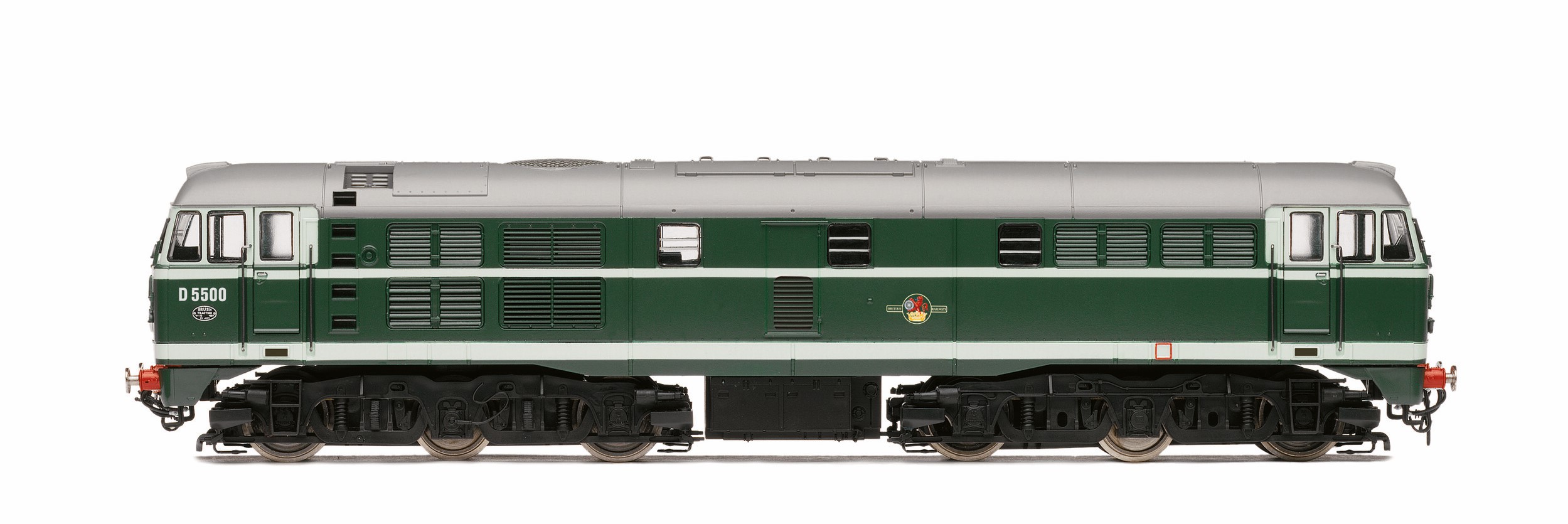
R30120BR, Class 31, A1A-A1A, D5500
'OO' GaugeReleased: 23/03/23DCC Ready (21 Pin)Era 5The first locomotive built under the 1955 British Transport Commission's modernisation plan, D5500 hauled mainline services out of London Liverpool Street. Renumbered to 31018 under the TOPS system in 1974, and withdrawn in 1976; D5500 can now be found within the National Railway Museum.
Our Price:
£196.19
£196.19
R30158BR, Class 31, A1A-A1A, 31139
'OO' GaugeReleased: 28/03/23DCC Ready (21 Pin)Era 8Carrying D5557 as its first number, the locomotive was initially allocated to the Ipswich Engine Shed before moving to a great many others across the country. Given the number 31139 under TOPS, upgraded to Class 31/4 specification in 1984, re-numbered again to 31438.The storied locomotive's final reallocation to Crewe occurred in 1988, with another re-numbering to 31538 in 1993 following modifications, with the locomotive remaining in BR service until 1995. The locomotive was chosen for preservation and is currently located at the Epping Ongar Railway numbered 31438.

Our Price:
£201.59
£201.59