
Search results
 31-578
Windhoff MPV 2-Car Set Network Rail Yellow
 'OO' Gauge
 Released: 29/03/23
 DCC Ready (21 Pin)
 Era 9
Era 9The Windhoff MPV (Multi Purpose Vehicle) is a purpose-built two-car engineering/infrastructure train designed to meet the demands of the modern rail network. Introduced in 1999, the MPVs were introduced to replace the ageing fleet of departmental vehicles, many of which had been adapted or repurposed to meet departmental needs rather than being designed for the role they would eventually serve.

Our Price:
£271.95
£271.95
34-387Thompson Second Corridor BR Maroon
'OO' GaugeReleased: 29/03/23Era 5Entering traffic just after World War Two, the Thompson coaches were the last mainline corridor coaches to be built by the LNER, and indeed examples continued to be outshopped after Nationalisation in 1948. Utilising steel panelling, a departure from the teak panelling traditionally seen on coaches built by the LNER and its predecessors, the Thompson coaches were sleek and modern in appearance. Whilst much of the fleet would remain in service until the final days of steam, many of their hallmarks would also be seen in their successors, the British Railway Mark 1 Standard Coaching Stock.

Our Price:
£62.95
£62.95
34-387AThompson Second Corridor BR Maroon
'OO' GaugeReleased: 29/03/23Era 5Entering traffic just after World War Two, the Thompson coaches were the last mainline corridor coaches to be built by the LNER, and indeed examples continued to be outshopped after Nationalisation in 1948. Utilising steel panelling, a departure from the teak panelling traditionally seen on coaches built by the LNER and its predecessors, the Thompson coaches were sleek and modern in appearance. Whilst much of the fleet would remain in service until the final days of steam, many of their hallmarks would also be seen in their successors, the British Railway Mark 1 Standard Coaching Stock.

Our Price:
£62.95
£62.95
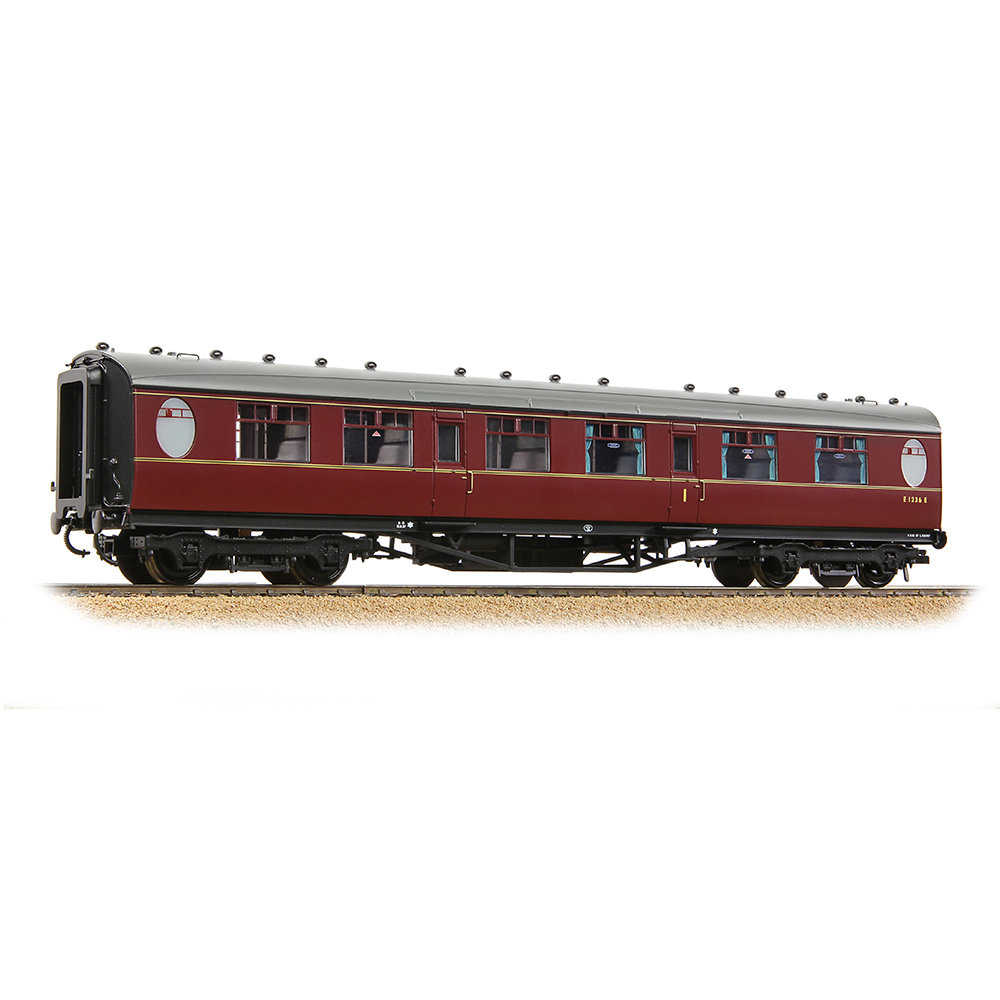
34-412Thompson Composite Corridor BR Maroon
'OO' GaugeReleased: 30/03/23Era 5Entering traffic just after World War Two, the Thompson coaches were the last mainline corridor coaches to be built by the LNER, and indeed examples continued to be outshopped after Nationalisation in 1948. Utilising steel panelling, a departure from the teak panelling traditionally seen on coaches built by the LNER and its predecessors, the Thompson coaches were sleek and modern in appearance. Whilst much of the fleet would remain in service until the final days of steam, many of their hallmarks would also be seen in their successors, the British Railway Mark 1 Standard Coaching Stock.
Our Price:
£62.95
£62.95
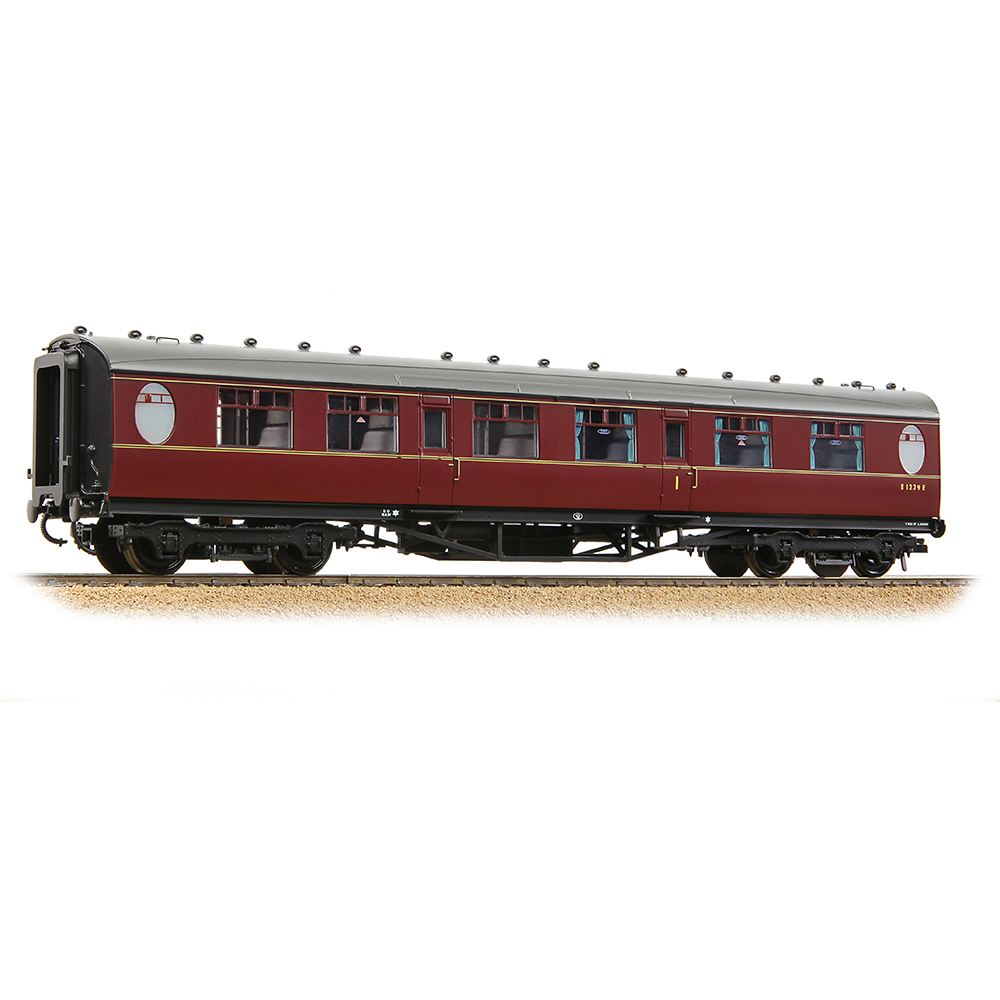
34-412AThompson Composite Corridor BR Maroon
'OO' GaugeReleased: 30/03/23Era 5Entering traffic just after World War Two, the Thompson coaches were the last mainline corridor coaches to be built by the LNER, and indeed examples continued to be outshopped after Nationalisation in 1948. Utilising steel panelling, a departure from the teak panelling traditionally seen on coaches built by the LNER and its predecessors, the Thompson coaches were sleek and modern in appearance. Whilst much of the fleet would remain in service until the final days of steam, many of their hallmarks would also be seen in their successors, the British Railway Mark 1 Standard Coaching Stock.
Our Price:
£62.95
£62.95
34-437Thompson Brake Composite Corridor BR Maroon
'OO' GaugeReleased: 30/03/23Era 5Entering traffic just after World War Two, the Thompson coaches were the last mainline corridor coaches to be built by the LNER, and indeed examples continued to be outshopped after Nationalisation in 1948. Utilising steel panelling, a departure from the teak panelling traditionally seen on coaches built by the LNER and its predecessors, the Thompson coaches were sleek and modern in appearance. Whilst much of the fleet would remain in service until the final days of steam, many of their hallmarks would also be seen in their successors, the British Railway Mark 1 Standard Coaching Stock.

Our Price:
£62.95
£62.95
34-437AThompson Brake Composite Corridor BR Maroon
'OO' GaugeReleased: 30/03/23Era 5Entering traffic just after World War Two, the Thompson coaches were the last mainline corridor coaches to be built by the LNER, and indeed examples continued to be outshopped after Nationalisation in 1948. Utilising steel panelling, a departure from the teak panelling traditionally seen on coaches built by the LNER and its predecessors, the Thompson coaches were sleek and modern in appearance. Whilst much of the fleet would remain in service until the final days of steam, many of their hallmarks would also be seen in their successors, the British Railway Mark 1 Standard Coaching Stock.

Our Price:
£62.95
£62.95
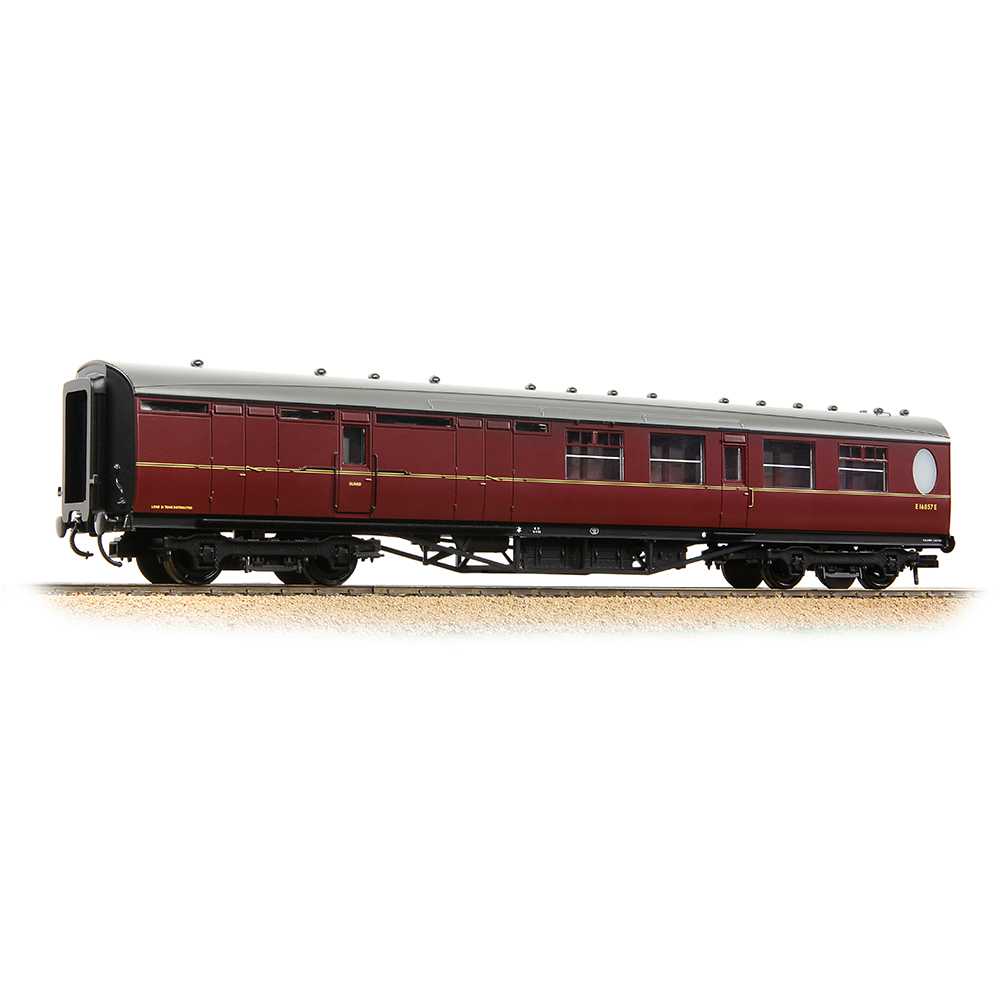
34-462Thompson Brake Second Corridor BR Maroon
'OO' GaugeReleased: 30/03/23Era 5Entering traffic just after World War Two, the Thompson coaches were the last mainline corridor coaches to be built by the LNER, and indeed examples continued to be outshopped after Nationalisation in 1948. Utilising steel panelling, a departure from the teak panelling traditionally seen on coaches built by the LNER and its predecessors, the Thompson coaches were sleek and modern in appearance. Whilst much of the fleet would remain in service until the final days of steam, many of their hallmarks would also be seen in their successors, the British Railway Mark 1 Standard Coaching Stock.
Our Price:
£62.95
£62.95
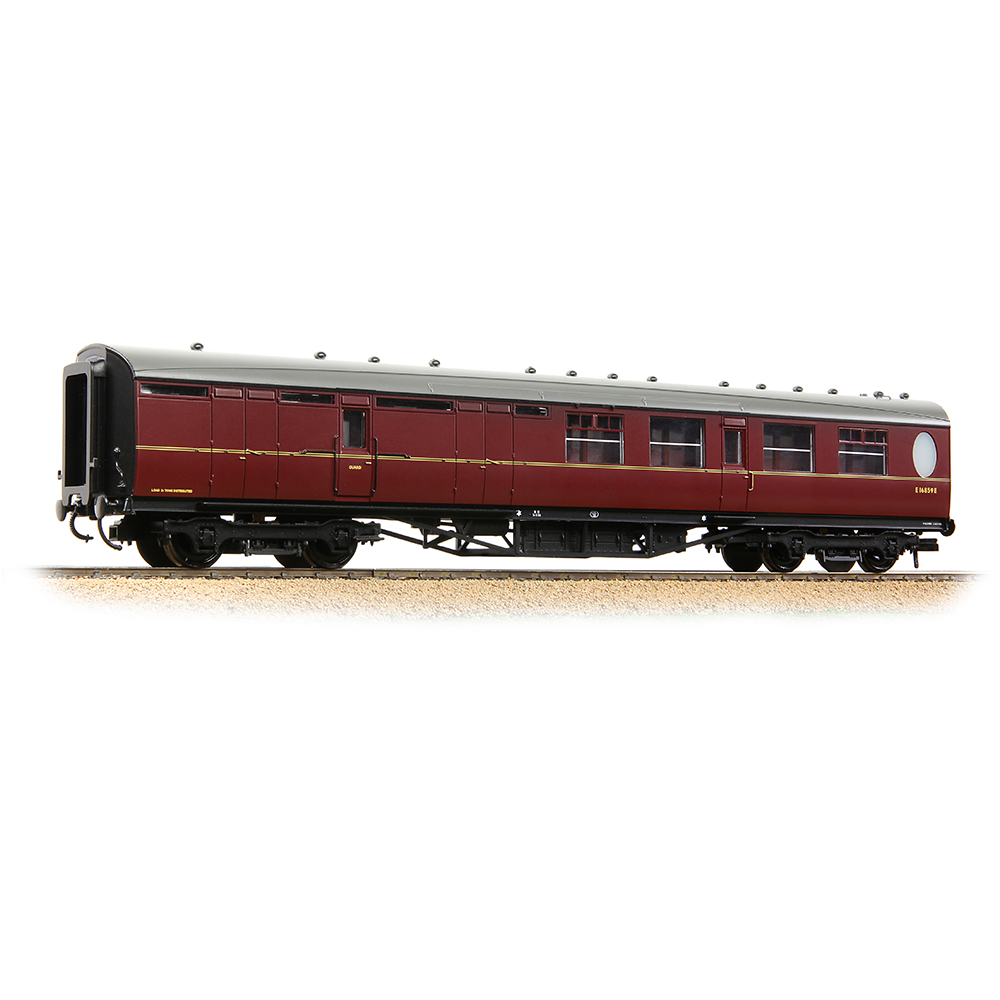
34-462AThompson Brake Second Corridor BR Maroon
'OO' GaugeReleased: 30/03/23Era 5Entering traffic just after World War Two, the Thompson coaches were the last mainline corridor coaches to be built by the LNER, and indeed examples continued to be outshopped after Nationalisation in 1948. Utilising steel panelling, a departure from the teak panelling traditionally seen on coaches built by the LNER and its predecessors, the Thompson coaches were sleek and modern in appearance. Whilst much of the fleet would remain in service until the final days of steam, many of their hallmarks would also be seen in their successors, the British Railway Mark 1 Standard Coaching Stock.
Our Price:
£62.95
£62.95
34-487Thompson First Corridor BR Maroon
'OO' GaugeReleased: 30/03/23Era 5Entering traffic just after World War Two, the Thompson coaches were the last mainline corridor coaches to be built by the LNER, and indeed examples continued to be outshopped after Nationalisation in 1948. Utilising steel panelling, a departure from the teak panelling traditionally seen on coaches built by the LNER and its predecessors, the Thompson coaches were sleek and modern in appearance. Whilst much of the fleet would remain in service until the final days of steam, many of their hallmarks would also be seen in their successors, the British Railway Mark 1 Standard Coaching Stock.

Our Price:
£62.95
£62.95
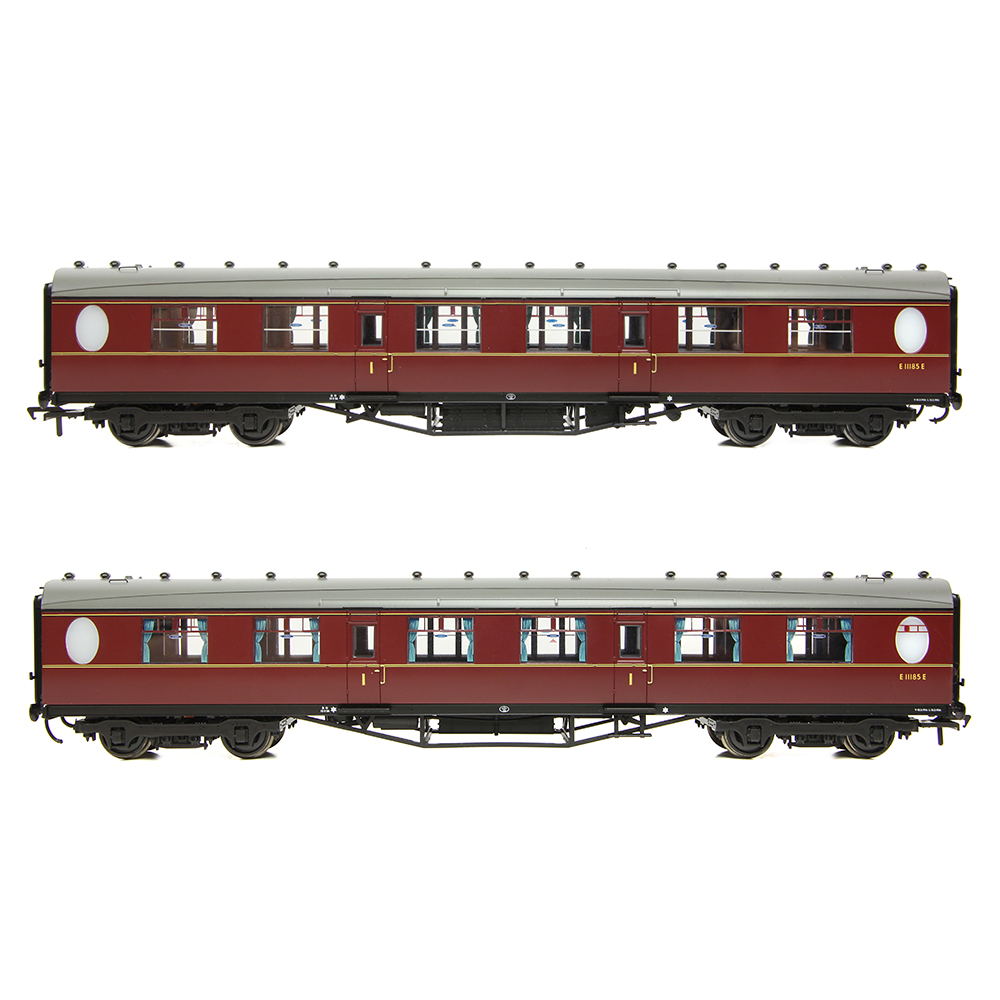
34-487AThompson First Corridor BR Maroon
'OO' GaugeReleased: 30/03/23Era 5Entering traffic just after World War Two, the Thompson coaches were the last mainline corridor coaches to be built by the LNER, and indeed examples continued to be outshopped after Nationalisation in 1948. Utilising steel panelling, a departure from the teak panelling traditionally seen on coaches built by the LNER and its predecessors, the Thompson coaches were sleek and modern in appearance. Whilst much of the fleet would remain in service until the final days of steam, many of their hallmarks would also be seen in their successors, the British Railway Mark 1 Standard Coaching Stock.
Our Price:
£62.95
£62.95
 393-102
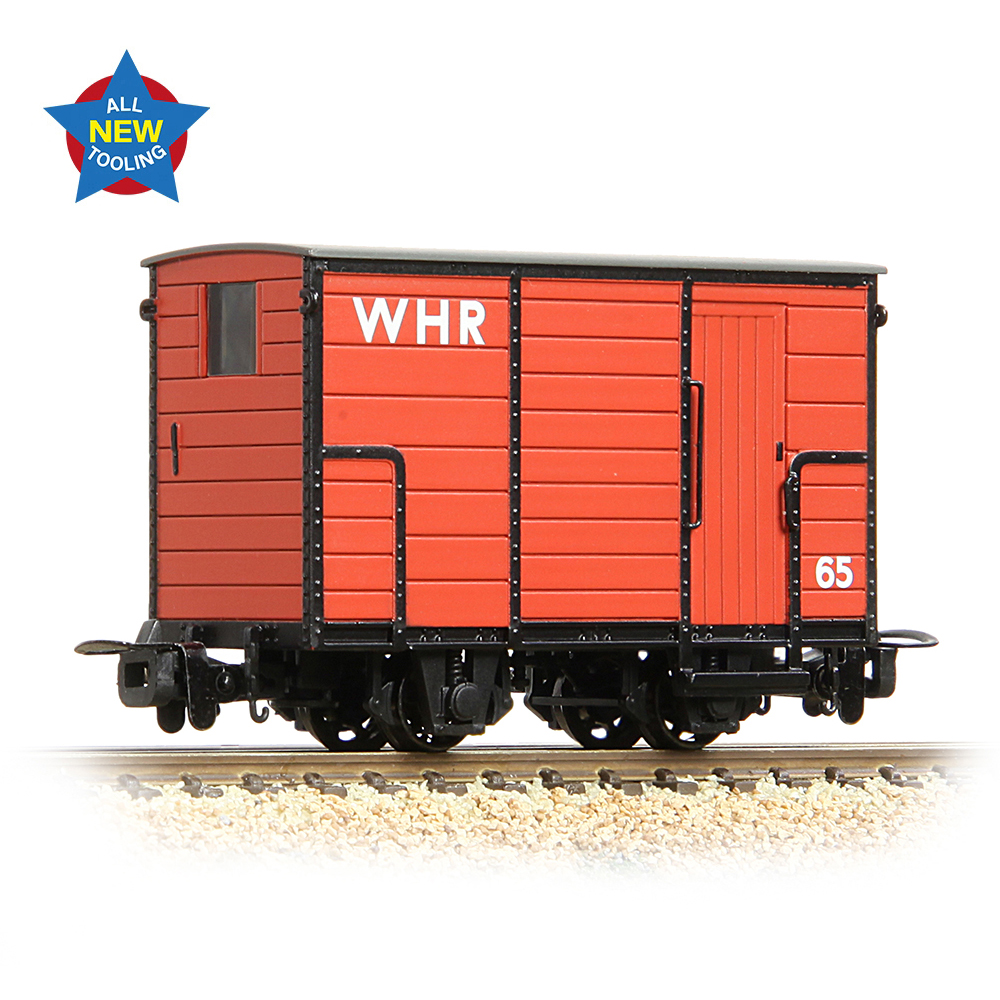
RNAD Enclosed-End Brake Van WHR Red
'OO-9' GaugeReleased: 30/03/23Era 9Royal Navy Armaments Depots (RNAD) were strategic sites located around the UK for the storage and supply of armaments to the Royal Navy and other British and Commonwealth Armed Forces. Usually comprising several underground ‘magazines’, they were usually rail served by the national network and many had internal narrow gauge railway systems in order to aid movements between the standard gauge facility, magazines and workshops. The railways were equipped with their own fleets of locomotives and rolling stock designed specifically for the task in hand. Although some of the railways operated as recently as the early-21st century, as closures occurred stock became redundant however a significant number of items have subsequently entered preservation gaining a new lease of life. This Enclosed-End Brake Van is one such example that once operated at RNAD Trecwn but now can be found on the Welsh Highland Railway carrying the railway’s Red livery.
Our Price:
£26.95
£26.95
393-126RNAD Box Van SR Brown
'OO-9' GaugeReleased: 30/03/23Era 3Royal Navy Armaments Depots (RNAD) were strategic sites located around the UK for the storage and supply of armaments to the Royal Navy and other British and Commonwealth Armed Forces. Usually comprising several underground ‘magazines’, they were usually rail served by the national network and many had internal narrow gauge railway systems in order to aid movements between the standard gauge facility, magazines and workshops. The railways were equipped with their own fleets of locomotives and rolling stock designed specifically for the task in hand. Although some of the railways operated as recently as the early-21st century, as closures occurred stock became redundant however a significant number of items have subsequently entered preservation gaining a new lease of life. This Box Van is decorated in Southern Railway Brown livery, complementing the range of SR-liveried models offered previously by Bachmann Narrow Gauge.

Our Price:
£26.95
£26.95
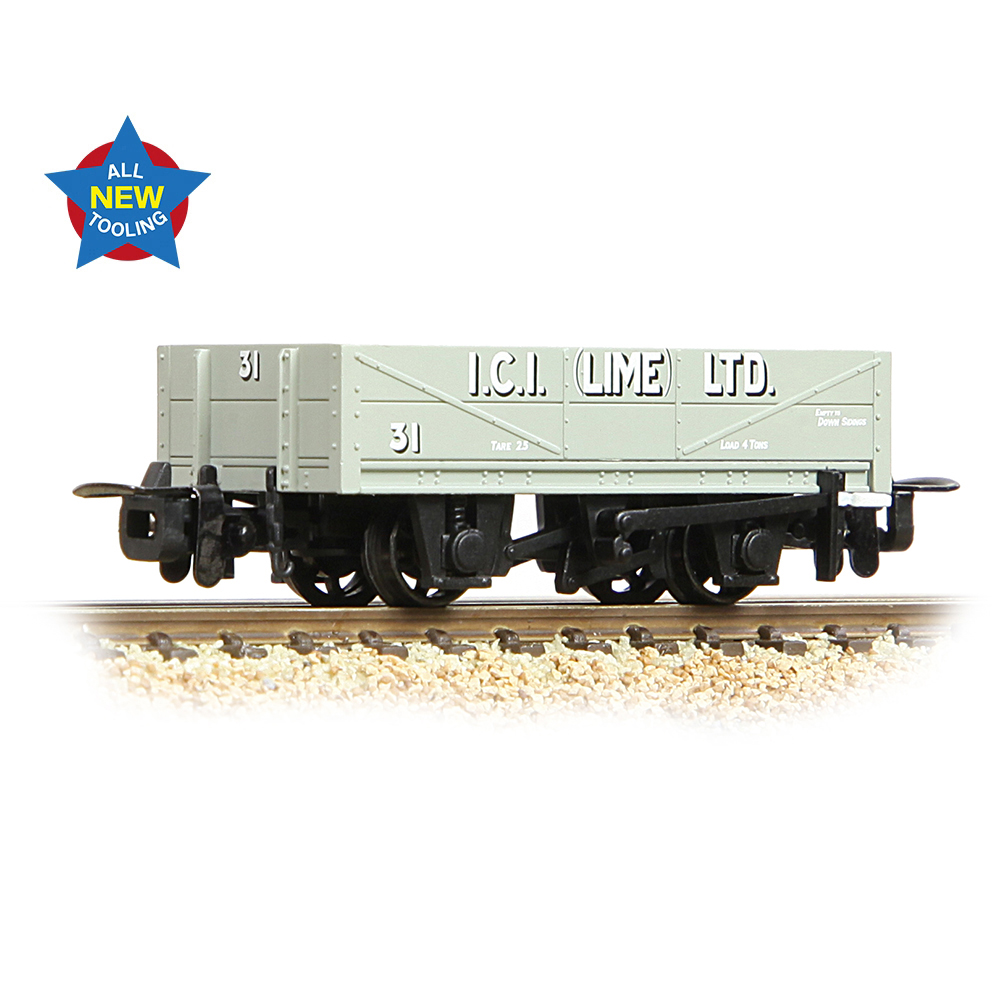
393-152RNAD Rebuilt Open Wagon 'ICI Buxton Lime'
'OO-9' GaugeReleased: 30/03/23Era 3Royal Navy Armaments Depots (RNAD) were strategic sites located around the UK for the storage and supply of armaments to the Royal Navy and other British and Commonwealth Armed Forces. Usually comprising several underground ‘magazines’, they were usually rail served by the national network and many had internal narrow gauge railway systems in order to aid movements between the standard gauge facility, magazines and workshops. The railways were equipped with their own fleets of locomotives and rolling stock designed specifically for the task in hand. Although some of the railways operated as recently as the early-21st century, as closures occurred stock became redundant however a significant number of items have subsequently entered preservation gaining a new lease of life. This Rebuilt Open Wagon is finished in the livery of ICI Buxton Lime, a prominent operator of goods wagons throughout the history of Britain’s railways and the model complements previous Narrow Gauge releases finished in this livery.
Our Price:
£26.95
£26.95
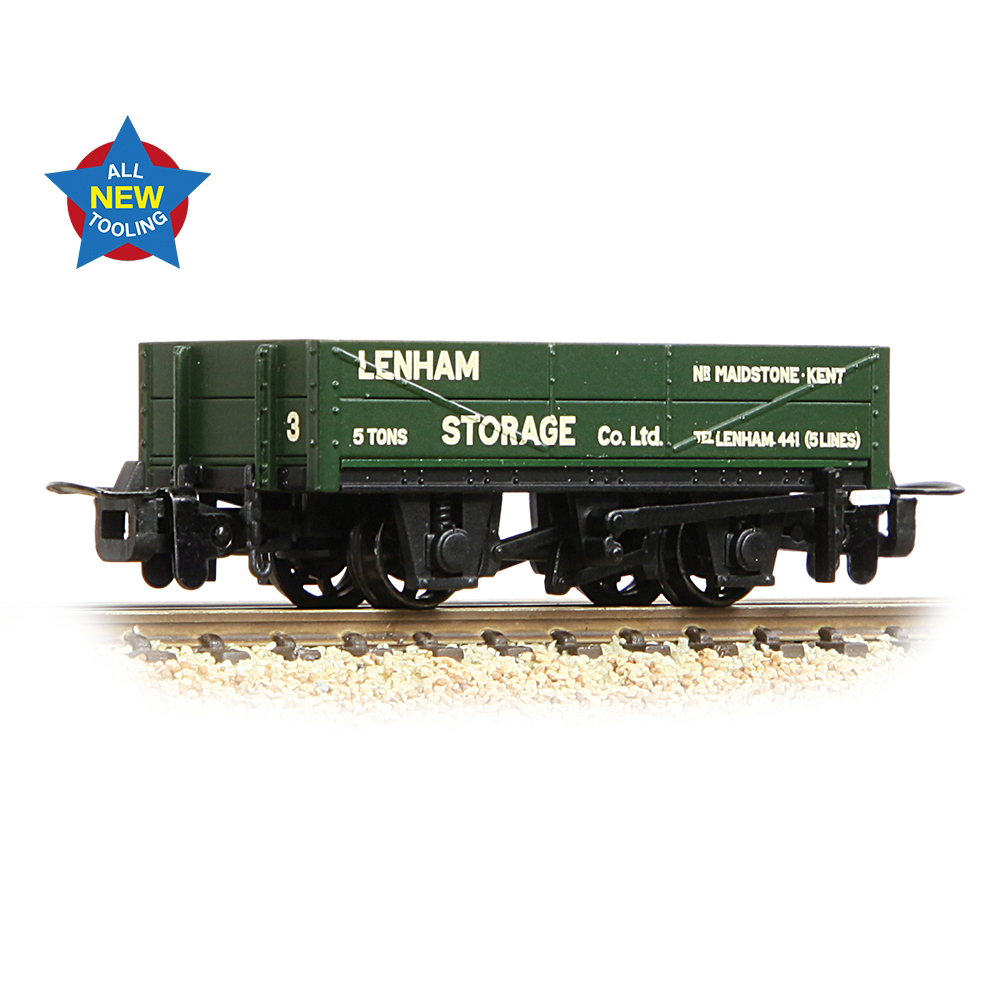
393-153RNAD Rebuilt Open Wagon 'Lenham Storage' Green
'OO' GaugeReleased: 30/03/23Era 9Royal Navy Armaments Depots (RNAD) were strategic sites located around the UK for the storage and supply of armaments to the Royal Navy and other British and Commonwealth Armed Forces. Usually comprising several underground ‘magazines’, they were usually rail served by the national network and many had internal narrow gauge railway systems in order to aid movements between the standard gauge facility, magazines and workshops. The railways were equipped with their own fleets of locomotives and rolling stock designed specifically for the task in hand. Although some of the railways operated as recently as the early-21st century, as closures occurred stock became redundant however a significant number of items have subsequently entered preservation gaining a new lease of life. This Rebuilt Open Wagon is one such example that is now part of the Bredgar & Wormshill Light Railway fleet painted in the livery of local company Lenham Storage.
Our Price:
£26.95
£26.95
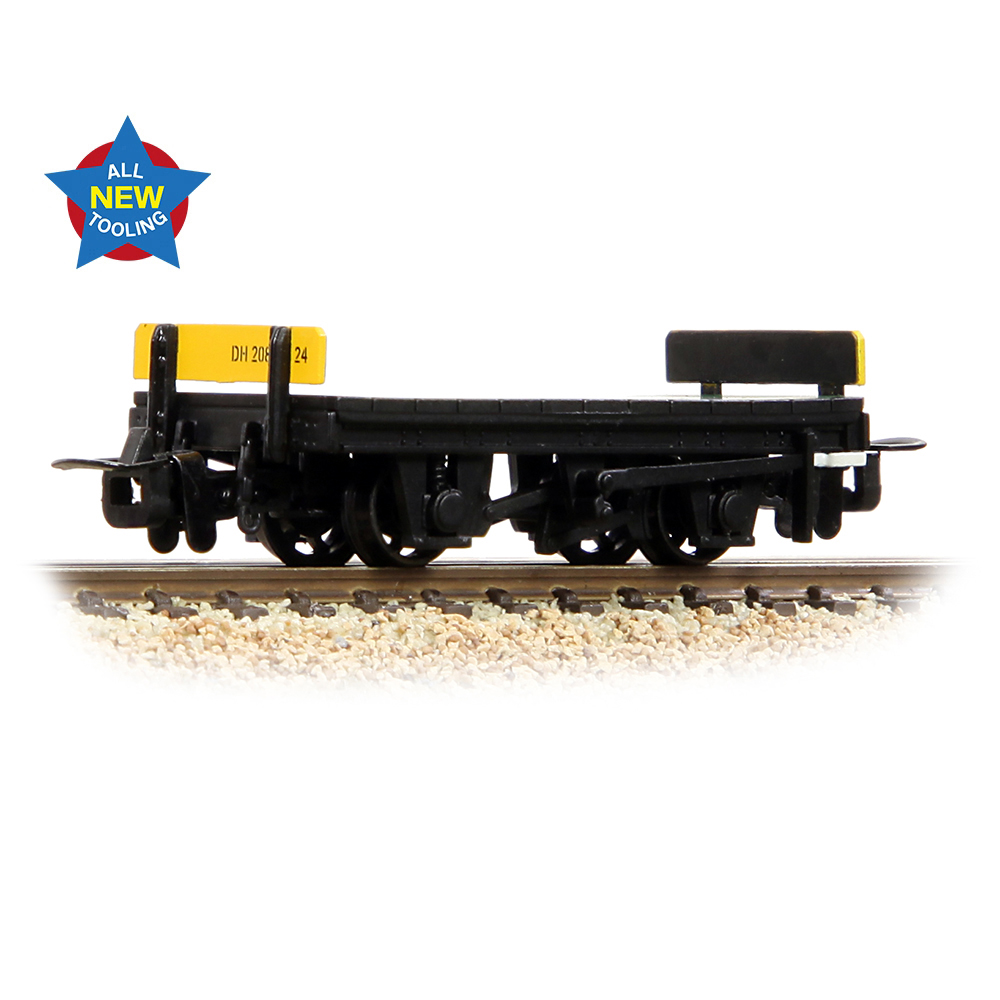
393-177RNAD Flat Wagon RNAD Dean Hill
'OO-9' GaugeReleased: 30/03/23Era 7Royal Navy Armaments Depots (RNAD) were strategic sites located around the UK for the storage and supply of armaments to the Royal Navy and other British and Commonwealth Armed Forces. Usually comprising several underground ‘magazines’, they were usually rail served by the national network and many had internal narrow gauge railway systems in order to aid movements between the standard gauge facility, magazines and workshops. The railways were equipped with their own fleets of locomotives and rolling stock designed specifically for the task in hand. Although some of the railways operated as recently as the early-21st century, as closures occurred stock became redundant however a significant number of items have subsequently entered preservation gaining a new lease of life. This Flat Wagon depicts a wagon in use at RNAD Dean Hill.
Our Price:
£26.95
£26.95
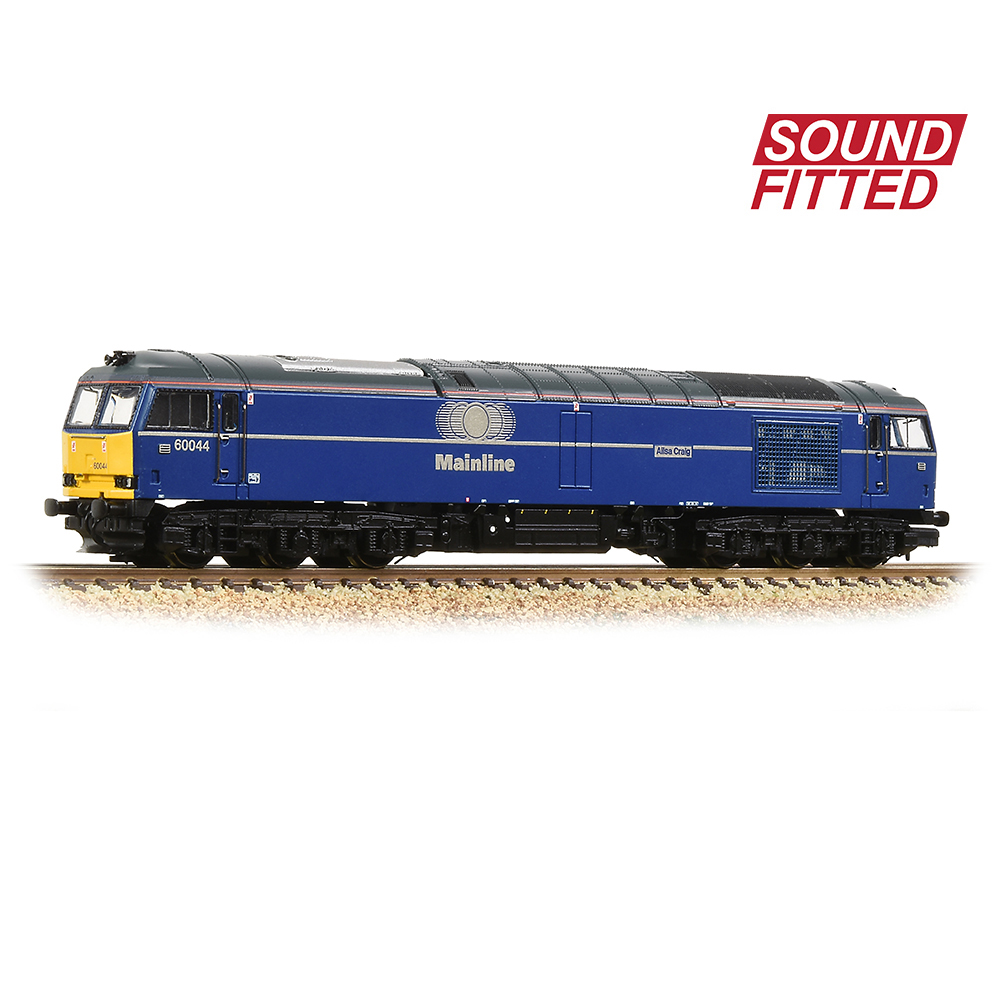
 371-351ASF
Class 60 60044 'Ailsa Craig' Mainline Freight
'N' GaugeReleased: 27/03/23DCC FittedDCC SoundEra 9SOUNDS
F0 - Directional Lights
F1 - On - Warm Engine Start / On, Off - Failed Engine Start / On, Off, On - Cold Engine Start
F2 - Brake
F3 - Single Horn (Speed Related)
F4 - Two Tone Horn
F5 - Light Engine / Heavy Train Mode
F6 - Engine Idle / Coasting
F7 - Speed Lock
F8 - Engine Speed-up
F9 - Flange Squeal (Speed Related)
F10 - Guard’s Whistle (When Stationary) / Speed Related Detonators (When Moving)
F11 - Parking Brake (Functional)
F12 - Coupling
F13 - Compressor
F14 - Spirax Valves Venting
F15 - Cooler Group Fan
F16 - Driver's Telephone Test
F17 - Fire Bell
F18 - On - Cab Door Open / Off - Cab Door Closed
F19 - Fade All Sounds
F20 - Directional Lighting Off (No. 1 End)
F21 - Directional Lighting Off (No. 2 End)
F22 - Cab Light (No. 1 End)
F23 - Cab Light (No. 2 End)
F24 - Station Ambience
F25 - On - 'Morning’ / Off - Driver's Response
F26 - Shunting Mode
F27 - Volume Down
F28 - Volume Up
Analogue Users: Directional lights and basic Prime Mover (engine) sounds, which vary with speed, plus any other automated sounds, can be enjoyed when using this model on analogue control (DC) straight from the box!
Our Price:
£220.95
£220.95
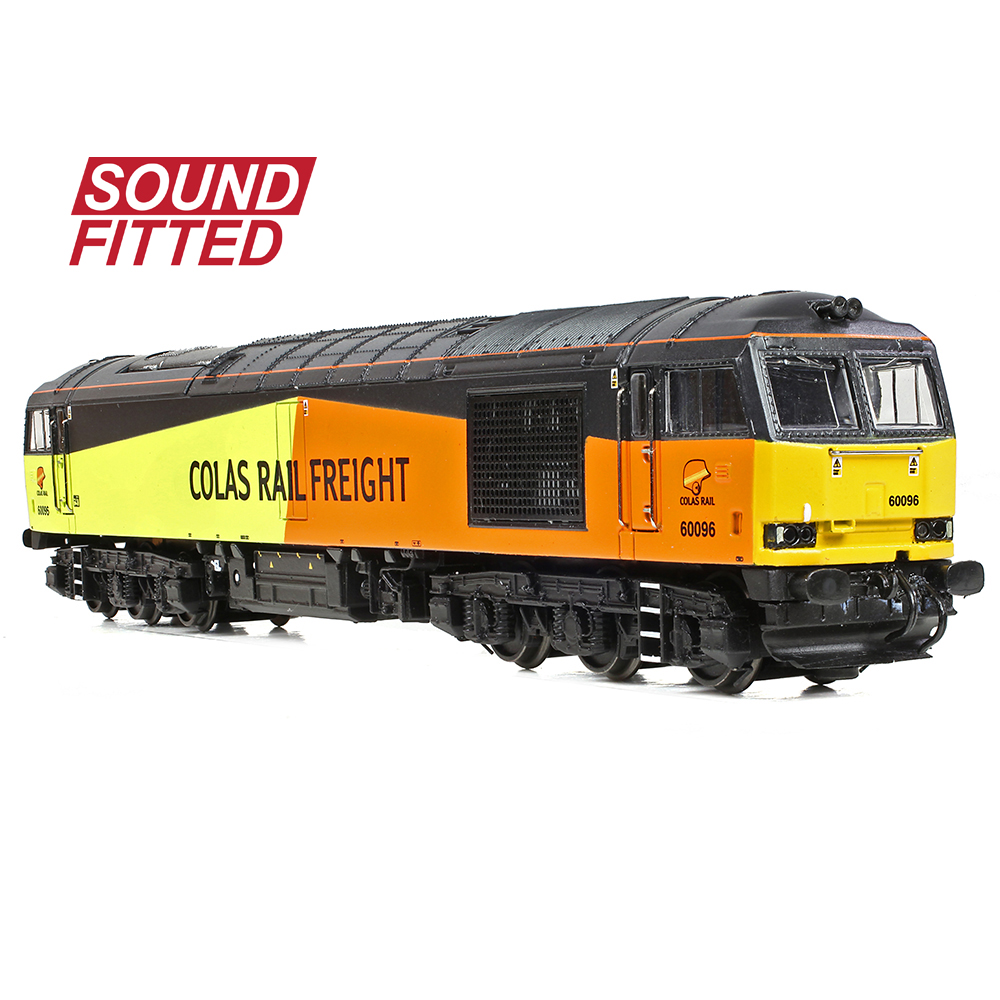
371-358ASFClass 60 60096 Colas Rail Freight
'N' GaugeReleased: 27/03/23DCC FittedDCC SoundEra 9SOUNDS
F0 - Directional Lights
F1 - On - Warm Engine Start / On, Off - Failed Engine Start / On, Off, On - Cold Engine Start
F2 - Brake
F3 - Single Horn (Speed Related)
F4 - Two Tone Horn
F5 - Light Engine / Heavy Train Mode
F6 - Engine Idle / Coasting
F7 - Speed Lock
F8 - Engine Speed-up
F9 - Flange Squeal (Speed Related)
F10 - Guard’s Whistle (When Stationary) / Speed Related Detonators (When Moving)
F11 - Parking Brake (Functional)
F12 - Coupling
F13 - Compressor
F14 - Spirax Valves Venting
F15 - Cooler Group Fan
F16 - Driver's Telephone Test
F17 - Fire Bell
F18 - On - Cab Door Open / Off - Cab Door Closed
F19 - Fade All Sounds
F20 - Directional Lighting Off (No. 1 End)
F21 - Directional Lighting Off (No. 2 End)
F22 - Cab Light (No. 1 End)
F23 - Cab Light (No. 2 End)
F24 - Station Ambience
F25 - On - 'Morning’ / Off - Driver's Response
F26 - Shunting Mode
F27 - Volume Down
F28 - Volume Up
Analogue Users: Directional lights and basic Prime Mover (engine) sounds, which vary with speed, plus any other automated sounds, can be enjoyed when using this model on analogue control (DC) straight from the box!
Our Price:
£220.95
£220.95
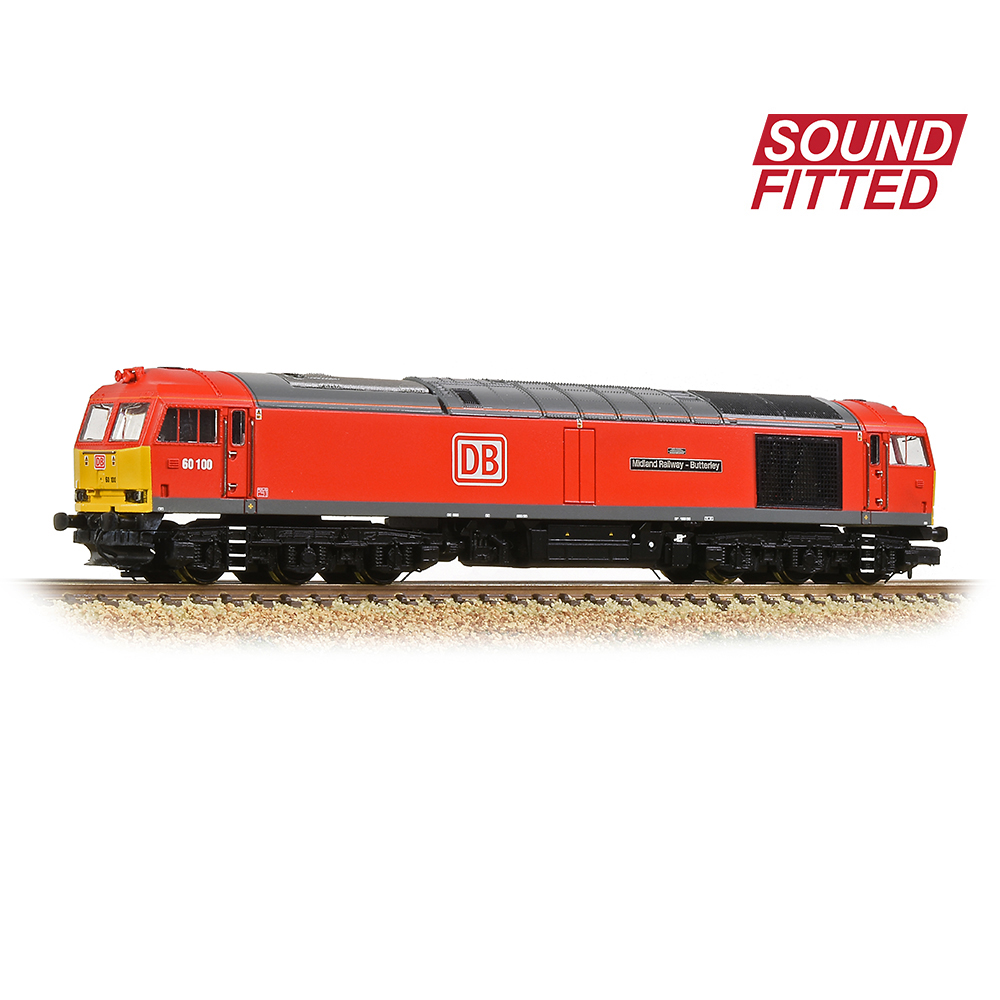
371-359SFClass 60 60100 'Midland Railway - Butterley' DB Cargo
'N' GaugeReleased: 27/03/23DCC FittedDCC SoundEra 9SOUNDS
F0 - Directional Lights
F1 - On - Warm Engine Start / On, Off - Failed Engine Start / On, Off, On - Cold Engine Start
F2 - Brake
F3 - Single Horn (Speed Related)
F4 - Two Tone Horn
F5 - Light Engine / Heavy Train Mode
F6 - Engine Idle / Coasting
F7 - Speed Lock
F8 - Engine Speed-up
F9 - Flange Squeal (Speed Related)
F10 - Guard’s Whistle (When Stationary) / Speed Related Detonators (When Moving)
F11 - Parking Brake (Functional)
F12 - Coupling
F13 - Compressor
F14 - Spirax Valves Venting
F15 - Cooler Group Fan
F16 - Driver's Telephone Test
F17 - Fire Bell
F18 - On - Cab Door Open / Off - Cab Door Closed
F19 - Fade All Sounds
F20 - Directional Lighting Off (No. 1 End)
F21 - Directional Lighting Off (No. 2 End)
F22 - Cab Light (No. 1 End)
F23 - Cab Light (No. 2 End)
F24 - Station Ambience
F25 - On - 'Morning’ / Off - Driver's Response
F26 - Shunting Mode
F27 - Volume Down
F28 - Volume Up
Analogue Users: Directional lights and basic Prime Mover (engine) sounds, which vary with speed, plus any other automated sounds, can be enjoyed when using this model on analogue control (DC) straight from the box!
Our Price:
£220.95
£220.95
371-361SFClass 60 60040 'The Territorial Army Centenary' DB Schenker/Army Red
'N' GaugeReleased: 27/03/23DCC FittedDCC SoundEra 9SOUNDS
F0 - Directional Lights
F1 - On - Warm Engine Start / On, Off - Failed Engine Start / On, Off, On - Cold Engine Start
F2 - Brake
F3 - Single Horn (Speed Related)
F4 - Two Tone Horn
F5 - Light Engine / Heavy Train Mode
F6 - Engine Idle / Coasting
F7 - Speed Lock
F8 - Engine Speed-up
F9 - Flange Squeal (Speed Related)
F10 - Guard’s Whistle (When Stationary) / Speed Related Detonators (When Moving)
F11 - Parking Brake (Functional)
F12 - Coupling
F13 - Compressor
F14 - Spirax Valves Venting
F15 - Cooler Group Fan
F16 - Driver's Telephone Test
F17 - Fire Bell
F18 - On - Cab Door Open / Off - Cab Door Closed
F19 - Fade All Sounds
F20 - Directional Lighting Off (No. 1 End)
F21 - Directional Lighting Off (No. 2 End)
F22 - Cab Light (No. 1 End)
F23 - Cab Light (No. 2 End)
F24 - Station Ambience
F25 - On - 'Morning’ / Off - Driver's Response
F26 - Shunting Mode
F27 - Volume Down
F28 - Volume Up
Analogue Users: Directional lights and basic Prime Mover (engine) sounds, which vary with speed, plus any other automated sounds, can be enjoyed when using this model on analogue control (DC) straight from the box!

Our Price:
£220.95
£220.95