Search results
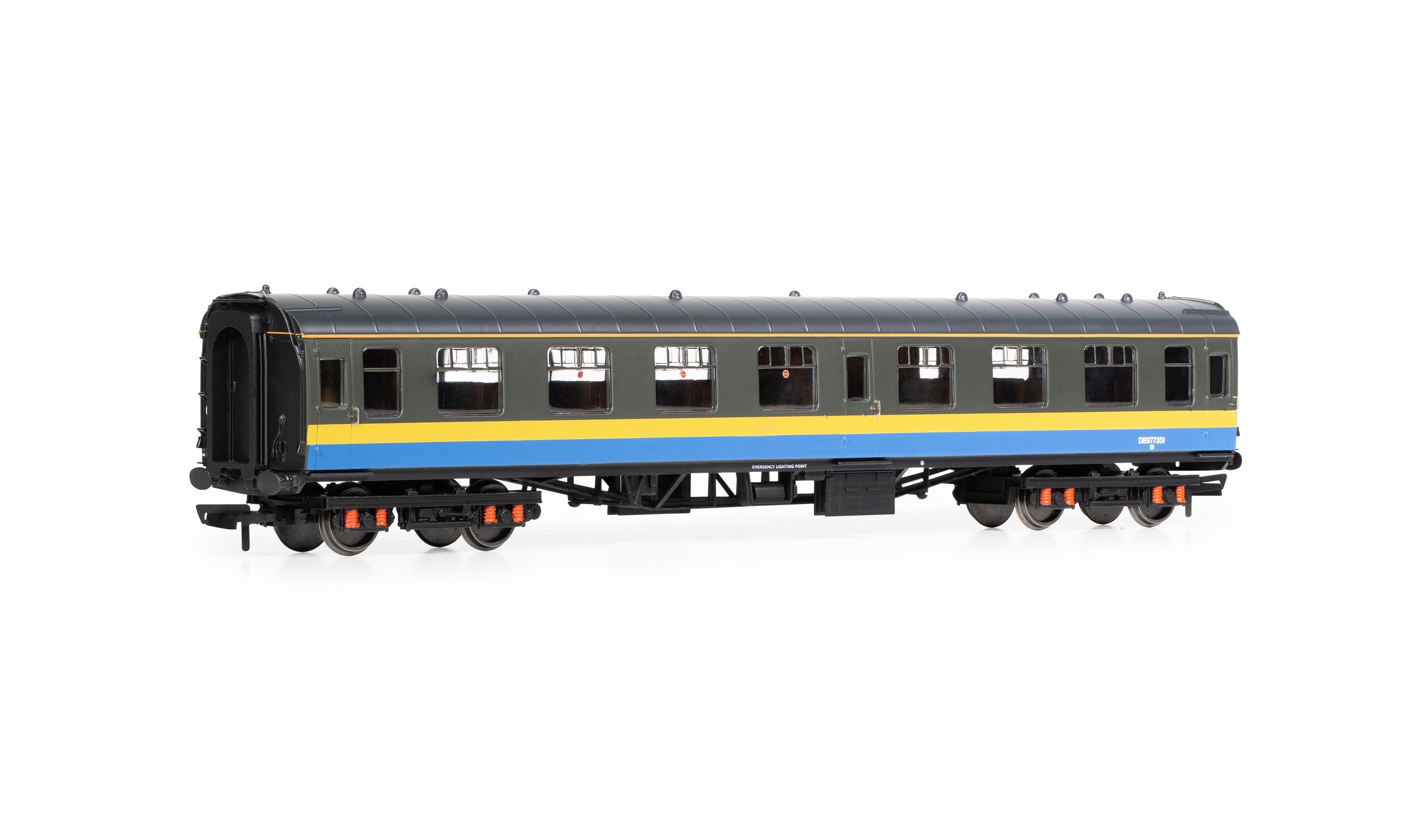
39-354Mk2 TSO Tourist Second Open WCRC Maroon
British Rail's second generation of Standard Coach design is known as the Mark 2. Design and construction followed on from the universal and ubiquitous Mk1 family of coaching stock, with the prototype example built in 1963. Series production continued until 1975 at Derby Carriage Works. They were of steel construction, and of a more monocoque design than the Mk1, which added to their safety and integrity in event of collision or mishap.
As passenger expectations and railway operations had moved on since the vast Mk1 range was conceived, and because there was still much life left in the Mk1s by the mid-sixties, a much reduced number of vehicle types were built. The basic Mk2 types included First and Second class accommodation, with corridors and compartments only available to First Class passengers, all Second Class coaches were conceived as open saloons. First and Second class Brake coaches were built, but no full brakes, catering cars, restaurants, buffets or sleeping cars were included, Mark 1 coaches fulfilling these needs until Mark 3s came along in the late seventies.
The Mark 2 family underwent a number of tweaks and improvements during the 12 years construction period. The principal visual differences included air braking from Mk2A, removal of the central bodyside doors and vestibule (Mk2B), introduction of wrap-around corner doors and provision of one WC at each end in lieu of two at one end (Mk2B), air conditioning - so no opening windows in the saloon area (Mk2D), no side corridor First Class compartment vehicles (from Mk2E onwards), varying style and colours of end gangway doors.
Bachmann has produced early and late types of Mk2 vehicles, Mk2A with the characteristic early features of this widely-travelled type, and the final evolution of the Mk2, the Mk2F, including the popular Mk2F DBSO that was converted from the standard BSO for push-pull operation between Edinburgh and Glasgow in the late 1970s, with the dedicated Class 47/7 'shove duff' fleet, converted from members of Class 47/4. The Mk2Fs are available with DCC operated lighting, and the DBSO itself has DCC controlled cab and interior lighting. Bachmann also produces the Class 47 and Class 90 that have operated with the DBSO Mk2F.
Mk2s have carried a wide range of liveries including BR Blue & Grey, Inter-City, Swallow, Regional Railways, ScotRail, Virgin Trains, Anglia, Network SouthEast, Virgin CrossCountry, Arriva, and many current liveries with railtour and heritage operators including Locomotive Services Limited (LSL), West Coast Railway Company and more.
Mk2s have during their 50+ operating life formed many of the famous named trains including The Flying Scotsman, hauled by Class 55 Deltics, the Royal Scot, Caledonian, the Electric Scot, and many more. Regional Railways Class 37s were a long time favourite of enthusiasts, working with Mk2 coaching stock on rural routes especially in Scotland, Wales and more recently the Cumbrian Coast and Norfolk, and older enthusiasts will remember early Mk2s operating alongside steam in the North West during the well-liked and rich in modelling inspiration 'Transition Era' 1965-68.
371-679Class 220 4-Car DEMU 220009 Arriva Cross Country
The Class 220 Voyager is a class of diesel-electric high-speed multiple-unit trains built in Belgium by Bombardier Transportation in 2000 and 2001.
They were introduced in 2001 to replace the 20-year-old InterCity 125 and 30-year-old Class 47-hauled Mark 2 fleets operating on the Cross Country Route, initially for Virgin CrossCountry and since 2007 by CrossCountry, within the Arriva group (now owned by DB). The Class 220s operate in four-coach sets with a top speed of 125 mph (200 km/h) and a maximum range of approximately 1,350 miles between refuelling and servicing.
Because CrossCountry's network has such a wide geographic reach, Class 220 Voyagers can be seen from Aberdeen to Penzance, Manchester to Bournemouth and Newcastle to Reading. They are most common at Birmingham New Street, which is the hub of the CrossCountry network.
371-680Class 220 4-Car DEMU 220018 'Dorset Voyager' Virgin Trains (Revised)
The Class 220 Voyager is a class of diesel-electric high-speed multiple-unit trains built in Belgium by Bombardier Transportation in 2000 and 2001.
They were introduced in 2001 to replace the 20-year-old InterCity 125 and 30-year-old Class 47-hauled Mark 2 fleets operating on the Cross Country Route, initially for Virgin CrossCountry and since 2007 by CrossCountry, within the Arriva group (now owned by DB). The Class 220s operate in four-coach sets with a top speed of 125 mph (200 km/h) and a maximum range of approximately 1,350 miles between refuelling and servicing.
Because CrossCountry's network has such a wide geographic reach, Class 220 Voyagers can be seen from Aberdeen to Penzance, Manchester to Bournemouth and Newcastle to Reading. They are most common at Birmingham New Street, which is the hub of the CrossCountry network.
31-578SFWindhoff MPV 2-Car Set Network Rail Yellow With DCC Sound fitted
The Windhoff MPV (Multi Purpose Vehicle) is a purpose-built two-car engineering/infrastructure train designed to meet the demands of the modern rail network. Introduced in 1999, the MPVs were introduced to replace the ageing fleet of departmental vehicles, many of which had been adapted or repurposed to meet departmental needs rather than being designed for the role they would eventually serve.
The MPVs entered service with Railtrack and are now operated by Network Rail, making this Branchline model a must for anyone with an interest in modern rail operations in the UK. Offered in the Network Rail Yellow colour scheme for the first time, the Branchline model comprises two highly detailed vehicles each adorned with multiple modules which sit on the two decks. Produced with a full complement of seven modules – most are removable allowing you to run the model with your choice of modules, or even without most of the modules at all. Numerous parts and countless decorations processes are used to accurately capture the minute detail seen on both vehicles and each of the seven modules, resulting in this stunning model. Supplied complete with SOUND FITTED, this model will add that extra level of realism straight out of the box whether you’re running on DCC or Analogue control.
MODEL FEATURES:
Bachmann Branchline OO Scale
Era 9
Pristine Network Rail Yellow livery
Two Car Set Comprising Vehicle Nos. DR98923 and DR98973
Accessory Pack
NEM Coupling Pockets
Powerful 3 Pole Motor with Flywheel
Directional Lighting
SOUND FITTED - Fitted with a ESU Loksound V5DDC Sound Decoder – See below for the function list
Length 531mm
SOUNDS
F0 - Lights - On/Off (plus Light Switch Sound)
F1 - Sound On / Off/ Two Engine Start
F2* - Brake
F3** - Horn (Two-tone)
F4** - Horn (Single)
F5 - Heavy Load
F6 - Coasting
F7 - Maximum Revs
F8*** - On - Coupling Up / Off - Uncoupling
F9 - Flange Squeal (Speed Related)
F10 - Fan Noise
F11 - Leaf Removal Water Jet
F12 - De-Icing Scraper & Hot Liquid Anti-Icer Spray
F13 - Auxiliary Power Unit
F14 - Warning Siren
F15 - Auto Uncouple Cycle
F16 - AWS Horn
F17 - AWS Bell
F18 - On - Sound Fades Out / Off - Sound Fades In
F19 - Mute (Latch) / Volume Cycles 6 Levels (Trigger)
F20 - Car Horn
F21 - Spirax Valve
F22 - Station Announcement
F23 - On - Driver's Door Open / Off – Driver's Door Shut
F24 - Air Dump
F25 - Impact Wrench
F26 - Power Cutter
F27 - Chainsaw
F28 - Brushcutter
F29 - Air Compressor
* Alterative Brake sounds can be selected via CV changes
**Alternative Horn characteristics can be selected via CV changes
*** Alternative coupling sounds can be selected via CV changes
Analogue Users: Please note that normal load running sounds and any other automatic or randomised sounds will also operate when this model is used on analogue control (DC) straight from the box!
31-579SFWindhoff MPV 2-Car Set Network Rail Orange With DCC Sound fitted
The Windhoff MPV (Multi Purpose Vehicle) is a purpose-built two-car engineering/infrastructure train designed to meet the demands of the modern rail network. Introduced in 1999, the MPVs were introduced to replace the ageing fleet of departmental vehicles, many of which had been adapted or repurposed to meet departmental needs rather than being designed for the role they would eventually serve.
The MPVs entered service with Railtrack and are now operated by Network Rail, making this Branchline model a must for anyone with an interest in modern rail operations in the UK. Offered in the Network Rail Yellow colour scheme for the first time, the Branchline model comprises two highly detailed vehicles each adorned with multiple modules which sit on the two decks. Produced with a full complement of seven modules – most are removable allowing you to run the model with your choice of modules, or even without most of the modules at all. Numerous parts and countless decorations processes are used to accurately capture the minute detail seen on both vehicles and each of the seven modules, resulting in this stunning model. Supplied complete with SOUND FITTED, this model will add that extra level of realism straight out of the box whether you’re running on DCC or Analogue control.
MODEL FEATURES:
Bachmann Branchline OO Scale
Era 9
Pristine Network Rail Yellow livery
Two Car Set Comprising Vehicle Nos. DR98923 and DR98973
Accessory Pack
NEM Coupling Pockets
Powerful 3 Pole Motor with Flywheel
Directional Lighting
SOUND FITTED - Fitted with a ESU Loksound V5DDC Sound Decoder – See below for the function list
Length 531mm
SOUNDS
F0 - Lights - On/Off (plus Light Switch Sound)
F1 - Sound On / Off/ Two Engine Start
F2* - Brake
F3** - Horn (Two-tone)
F4** - Horn (Single)
F5 - Heavy Load
F6 - Coasting
F7 - Maximum Revs
F8*** - On - Coupling Up / Off - Uncoupling
F9 - Flange Squeal (Speed Related)
F10 - Fan Noise
F11 - Leaf Removal Water Jet
F12 - De-Icing Scraper & Hot Liquid Anti-Icer Spray
F13 - Auxiliary Power Unit
F14 - Warning Siren
F15 - Auto Uncouple Cycle
F16 - AWS Horn
F17 - AWS Bell
F18 - On - Sound Fades Out / Off - Sound Fades In
F19 - Mute (Latch) / Volume Cycles 6 Levels (Trigger)
F20 - Car Horn
F21 - Spirax Valve
F22 - Station Announcement
F23 - On - Driver's Door Open / Off – Driver's Door Shut
F24 - Air Dump
F25 - Impact Wrench
F26 - Power Cutter
F27 - Chainsaw
F28 - Brushcutter
F29 - Air Compressor
* Alterative Brake sounds can be selected via CV changes
**Alternative Horn characteristics can be selected via CV changes
*** Alternative coupling sounds can be selected via CV changes
Analogue Users: Please note that normal load running sounds and any other automatic or randomised sounds will also operate when this model is used on analogue control (DC) straight from the box!
31-579Windhoff MPV 2-Car Set Network Rail Orange
The Windhoff MPV (Multi Purpose Vehicle) is a purpose-built two-car engineering/infrastructure train designed to meet the demands of the modern rail network. Introduced in 1999, the MPVs were introduced to replace the ageing fleet of departmental vehicles, many of which had been adapted or repurposed to meet departmental needs rather than being designed for the role they would eventually serve.
The MPVs entered service with Railtrack and are now operated by Network Rail, making this Branchline model a must for anyone with an interest in modern rail operations in the UK. Offered in the Network Rail Orange colour scheme for the first time, the Branchline model comprises two highly detailed vehicles each adorned with multiple modules which sit on the two decks. Produced with a full complement of seven modules – most are removable allowing you to run the model with your choice of modules, or even without most of the modules at all. Numerous parts and countless decorations processes are used to accurately capture the minute detail seen on both vehicles and each of the seven modules, resulting in this stunning model
371-790Class 90/0 90042 Freightliner 'PowerHaul'
The Class 90 has been a mainstay of the British Rail electric locomotive fleet since the first examples were introduced in the late-1980s, and these popular locomotives are brought to life in N scale thanks to this all-new Graham Farish model. Still used by several operators today including Freightliner, this example depicts No. 90042 in the company’s ‘Powerhaul’ livery.
371-790SFClass 90/0 90042 Freightliner 'PowerHaul' with DCC Sound fitted
SOUNDS
F0 - Directional Lights - On/Off (plus Light Switch Sound)
F1 - Sound - On/Off (plus Battery Switch and Compressor Sounds)
F2 - Brake
F3 - Low Horn (Playable)
F4 - Two-Tone Horn
F5 - Parking Brake On/Off (Loco won’t move with Parking Brake On)
F6 - On - Pantograph Up / Off - Pantograph Down (Sounds only)
F7 - Flange Squeal (Speed Related)
F8 - Windscreen Wipers
F9 - Air Dump
F10 - On - Guard’s Whistle / Off - Driver’s Response
F11 - Spirax Valve
F12 - Station Announcement
F13 - AWS
F14 - Cab Light (non-Pantograph End) On/Off (plus Light Switch Sound)
F15 - Cab Light (Pantograph End) On/Off (plus Light Switch Sound)
F16 - Coupling Up
F17 - Uncoupling
F18 - On - Cab Door Open / Off - Cab Door Shut
F19 - Uncoupling Movement Cycle
F20 - Directional Lights Off (Non-Pantograph End) (plus Light Switch Sound)
F21 - Directional Lights Off (Pantograph End) (plus Light Switch Sound)
F22 - Fire Alarm Test
F23 - Volume Control (6 levels)
Analogue Users: Please note that any automated drive sounds will be played when this model is used on analogue control (DC) straight from the box!
32-852ABR Standard 9F with BR1F Tender 92069 BR Black (Early Emblem) [W]
STANDARD CLASS 9F HISTORY
The British Railways BR Standard Class 9F 2-10-0 was introduced from 1954, with a total of 251 built at BR’s Swindon Works (53) and Crewe Works (198). Designed by Robert Riddles, the 9F is just one of Riddles’ BR Standard designs, with different Classes designed for specific duties with the vision that such standardisation would bring improved efficiencies to BR operations. The Class was designed primarily to haul fast, heavy freight trains, but the 9Fs also found favour on passenger turns, in particular summer holiday specials when their lack of steam heating capabilities did not present a problem.
Impressive in both size and performance, the 9Fs’ lives were cut shockingly short with No. 92220 ‘Evening Star’ – the 999th BR Standard to be built and the final steam locomotive outshopped by British Railways – entering traffic in 1960, only 4 years before the first examples were withdrawn. ‘Evening Star’ itself did not fare much better and was withdrawn in March 1965 after just 60 months in traffic – thankfully the locomotive was saved for the National Collection.
Despite the early withdrawals, some 9Fs continued in traffic until the final months of steam on British Rail and the last was withdrawn in June 1968. In addition to ‘Evening Star’, eight further 9Fs were purchased by the preservation movement, mainly from the Woodham Brothers Scrapyard in Barry, but so far only six have been returned to serviceable condition in the preservation era.
32-852ASFBR Standard 9F with BR1F Tender 92069 BR Black (Early Emblem) [W] With DCC Sound Fitted
SOUNDS:
F1 - Sound On / Sound Off
F2 - Brake (Non-Latching)
F3 - Cylinder Drain Cocks
F4 - Whistle (Playable)
F5 - Normal Load / Heavy Load
F6 - On - Firebox Door Opening / Off - Firebox Door Closing
F7 - Injectors
F8 - Whistle
F9 - Flange Squeal (Speed Related)
F10 - Shovelling Coal (F6 must be On to activate this function)
F11 - Blower
F12 - Hand Brake (locomotive will not move with the Hand Brake applied)
F13 - Water Tank Filling
F14 - Coupling/un-Coupling Clank
F15 - Safety Valve
F16 - Guard’s Whistle & Driver’s Response Toot
F17 - Coasting
F18 - Sound Fades Out / Sound Fades In
F19 - Shunt Mode (Reduces Speed)
F20 - Acceleration/Deceleration inertia off
F21 - Volume Control (LATCH = Volume On/Off) or (TRIGGER = cycles 6 Volume Levels)
F22 - Rail Join Clatter
F23 - AWS
Analogue Users: Normal-load running sounds, acceleration steam chuff sounds and any other automatic and randomised sounds can be enjoyed when using this model on analogue control (DC) straight from the box - these sounds will play automatically when power is applied!
STANDARD CLASS 9F HISTORY
The British Railways BR Standard Class 9F 2-10-0 was introduced from 1954, with a total of 251 built at BR’s Swindon Works (53) and Crewe Works (198). Designed by Robert Riddles, the 9F is just one of Riddles’ BR Standard designs, with different Classes designed for specific duties with the vision that such standardisation would bring improved efficiencies to BR operations. The Class was designed primarily to haul fast, heavy freight trains, but the 9Fs also found favour on passenger turns, in particular summer holiday specials when their lack of steam heating capabilities did not present a problem.
Impressive in both size and performance, the 9Fs’ lives were cut shockingly short with No. 92220 ‘Evening Star’ – the 999th BR Standard to be built and the final steam locomotive outshopped by British Railways – entering traffic in 1960, only 4 years before the first examples were withdrawn. ‘Evening Star’ itself did not fare much better and was withdrawn in March 1965 after just 60 months in traffic – thankfully the locomotive was saved for the National Collection.
Despite the early withdrawals, some 9Fs continued in traffic until the final months of steam on British Rail and the last was withdrawn in June 1968. In addition to ‘Evening Star’, eight further 9Fs were purchased by the preservation movement, mainly from the Woodham Brothers Scrapyard in Barry, but so far only six have been returned to serviceable condition in the preservation era.
32-861ABR Standard 9F with BR1G Tender 92090 BR Black (Late Crest)
STANDARD CLASS 9F HISTORY
The British Railways BR Standard Class 9F 2-10-0 was introduced from 1954, with a total of 251 built at BR’s Swindon Works (53) and Crewe Works (198). Designed by Robert Riddles, the 9F is just one of Riddles’ BR Standard designs, with different Classes designed for specific duties with the vision that such standardisation would bring improved efficiencies to BR operations. The Class was designed primarily to haul fast, heavy freight trains, but the 9Fs also found favour on passenger turns, in particular summer holiday specials when their lack of steam heating capabilities did not present a problem.
Impressive in both size and performance, the 9Fs’ lives were cut shockingly short with No. 92220 ‘Evening Star’ – the 999th BR Standard to be built and the final steam locomotive outshopped by British Railways – entering traffic in 1960, only 4 years before the first examples were withdrawn. ‘Evening Star’ itself did not fare much better and was withdrawn in March 1965 after just 60 months in traffic – thankfully the locomotive was saved for the National Collection.
Despite the early withdrawals, some 9Fs continued in traffic until the final months of steam on British Rail and the last was withdrawn in June 1968. In addition to ‘Evening Star’, eight further 9Fs were purchased by the preservation movement, mainly from the Woodham Brothers Scrapyard in Barry, but so far only six have been returned to serviceable condition in the preservation era.
32-861ASFBR Standard 9F with BR1G Tender 92090 BR Black (Late Crest) With DCC Sound Fitted
SOUNDS:
F1 - Sound On / Sound Off
F2 - Brake (Non-Latching)
F3 - Cylinder Drain Cocks
F4 - Whistle (Playable)
F5 - Normal Load / Heavy Load
F6 - On - Firebox Door Opening / Off - Firebox Door Closing
F7 - Injectors
F8 - Whistle
F9 - Flange Squeal (Speed Related)
F10 - Shovelling Coal (F6 must be On to activate this function)
F11 - Blower
F12 - Hand Brake (locomotive will not move with the Hand Brake applied)
F13 - Water Tank Filling
F14 - Coupling/un-Coupling Clank
F15 - Safety Valve
F16 - Guard’s Whistle & Driver’s Response Toot
F17 - Coasting
F18 - Sound Fades Out / Sound Fades In
F19 - Shunt Mode (Reduces Speed)
F20 - Acceleration/Deceleration inertia off
F21 - Volume Control (LATCH = Volume On/Off) or (TRIGGER = cycles 6 Volume Levels)
F22 - Rail Join Clatter
F23 - AWS
Analogue Users: Normal-load running sounds, acceleration steam chuff sounds and any other automatic and randomised sounds can be enjoyed when using this model on analogue control (DC) straight from the box - these sounds will play automatically when power is applied!
STANDARD CLASS 9F HISTORY
The British Railways BR Standard Class 9F 2-10-0 was introduced from 1954, with a total of 251 built at BR’s Swindon Works (53) and Crewe Works (198). Designed by Robert Riddles, the 9F is just one of Riddles’ BR Standard designs, with different Classes designed for specific duties with the vision that such standardisation would bring improved efficiencies to BR operations. The Class was designed primarily to haul fast, heavy freight trains, but the 9Fs also found favour on passenger turns, in particular summer holiday specials when their lack of steam heating capabilities did not present a problem.
Impressive in both size and performance, the 9Fs’ lives were cut shockingly short with No. 92220 ‘Evening Star’ – the 999th BR Standard to be built and the final steam locomotive outshopped by British Railways – entering traffic in 1960, only 4 years before the first examples were withdrawn. ‘Evening Star’ itself did not fare much better and was withdrawn in March 1965 after just 60 months in traffic – thankfully the locomotive was saved for the National Collection.
Despite the early withdrawals, some 9Fs continued in traffic until the final months of steam on British Rail and the last was withdrawn in June 1968. In addition to ‘Evening Star’, eight further 9Fs were purchased by the preservation movement, mainly from the Woodham Brothers Scrapyard in Barry, but so far only six have been returned to serviceable condition in the preservation era.
34-725SR Bulleid Brake Third Semi-Open 10'' Vents SR Malachite Green
DETAIL VARIANTS SPECIFIC TO THIS MODEL:
10†Window Ventilators
Smooth Bodysides
Twin Vacuum Brakes Cylinders
Bulleid-pattern Battery Boxes, Mounted Centrally
Bulleid-pattern Dynamo
Long Footboards
Six-piece Bogie Steps at the Brake end
Twin Guard’s Door Handrails
Twin Luggage Door Handrails
Short Roof Tank
34-725ASR Bulleid Brake Third Semi-Open 10'' Vents SR Malachite Green
DETAIL VARIANTS SPECIFIC TO THIS MODEL:
10†Window Ventilators
Smooth Bodysides
Twin Vacuum Brakes Cylinders
Bulleid-pattern Battery Boxes, Mounted Centrally
Bulleid-pattern Dynamo
Long Footboards
Six-piece Bogie Steps at the Brake end
Twin Guard’s Door Handrails
Twin Luggage Door Handrails
Short Roof Tank
34-750SR Bulleid Composite Corridor 10'' Vents SR Malachite Green
DETAIL VARIANTS SPECIFIC TO THIS MODEL:
10†Window Ventilators
Smooth Bodysides
Twin Vacuum Brakes Cylinders
Bulleid-pattern Battery Boxes, Mounted Centrally
Bulleid-pattern Dynamo
Long Footboards
Short Roof Tank
373-925C30T 'Prawn' Bogie Bolster BR Gulf Red [WL]
373-925D30T 'Prawn' Bogie Bolster BR Gulf Red [WL]
373-926E30T 'Bogie Bolster C' Bogie Bolster BR Grey [WL]
373-926F 30T 30T 'Bogie Bolster C' Bogie Bolster BR Grey [WL]
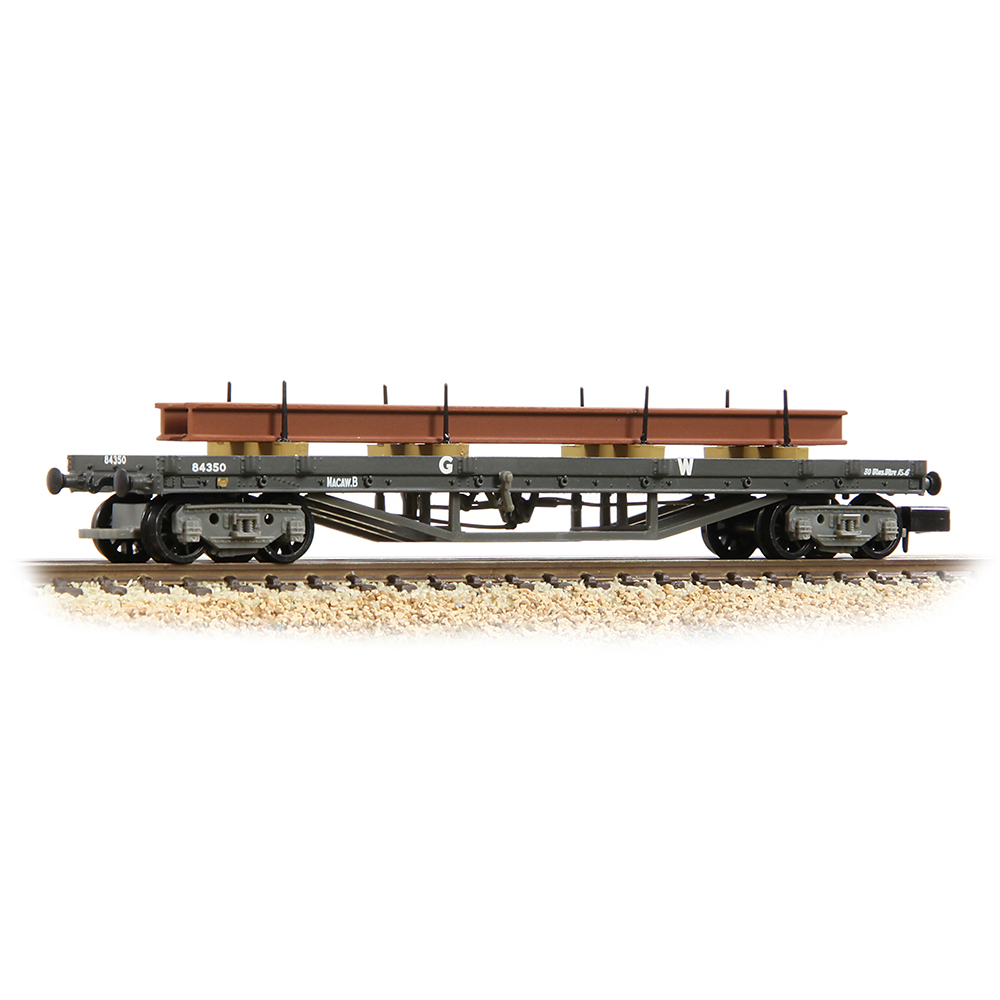
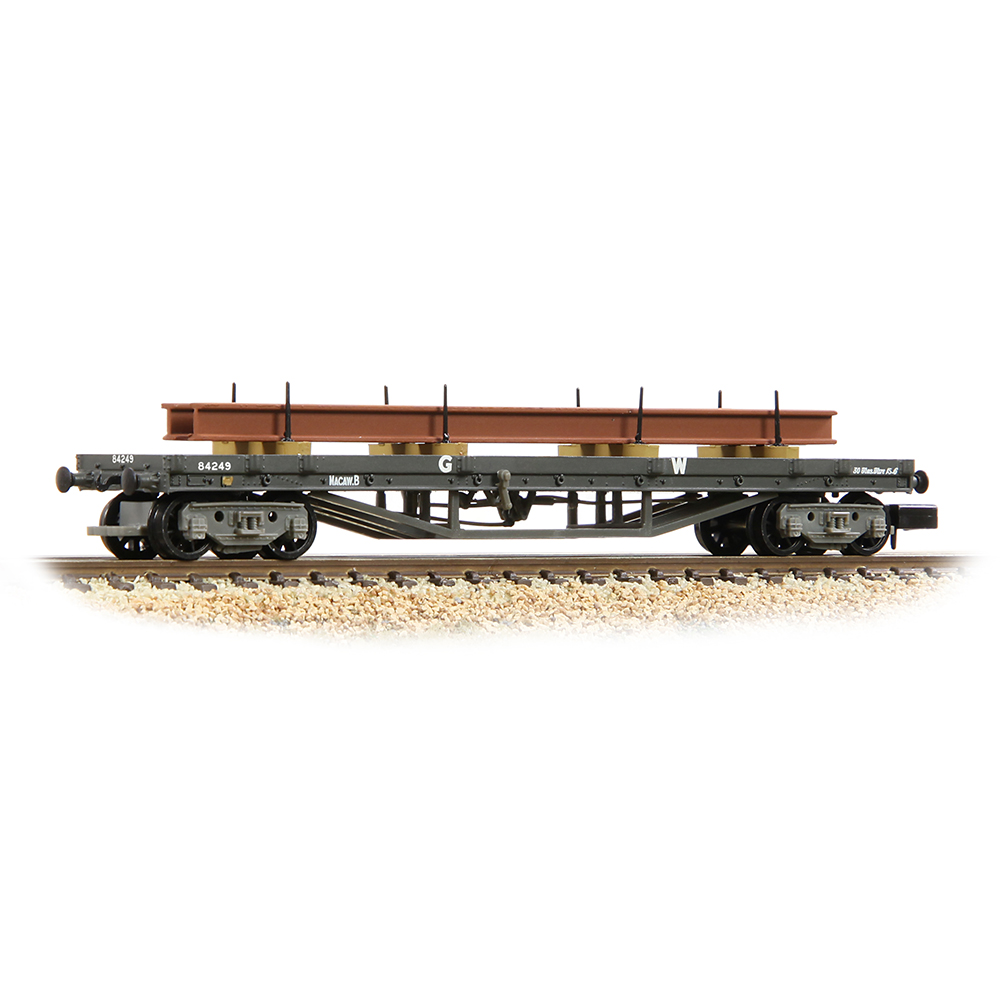
373-927C30T 'Macaw B' Bogie Bolster GWR Grey [WL]