
Search results
 R30071
ScotRail, Class 153, 153380
 'OO' Gauge
 Released: 22/05/23
 DCC Ready (8 Pin)
 Era 11
The origins of the Class 153 date back to 1990, when British Rail needed replacements for its ageing fleet of Class 121 and 122 'Bubble Car' diesel railcars for use on the quiet Cornish, Welsh, North-Western, Norfolk and Lincolnshire branch lines, as well as augmenting rural two car units.
Originally built as a two-car Class 155 'Super Sprinter' by British Leyland between 1987 and 1988, using a construction technique similar to that used in the Pacers, pre-formed panels were riveted together, creating a lightweight body on a welded floor assembly. Introduction was rapid, but teething troubles with the door mechanisms soon emerged, consequently the fleet was taken out of use and modified, with the Class 156 units taking over the duties. The conversion to Class 153 was carried out by Hunslet-Barclay at Kilmarnock between 1991 and 1992, with 70 vehicles being produced. The layout of the original non-cab ends was different from the original cab end, so the ends are noticeably distinct with the vehicles not being symmetrical.
Powered by a 285hp Cummins NT855-R5 Diesel, working through a Voith Hydraulic transmission, the maximum speed of a Class 153 is 75 mph, making it perfectly suited for small cross-country services. They are fitted with standard BSI auto-couplers, allowing them to work in tandem with other multiple units from the 14X and 15X Classes fitted with the same coupler, as well as newer units like the Class 170. In 2019/2020, five former GWR 153s moved from Northern to Abellio ScotRail for use on the West Highland Line attached to Class 156s as 'active travel' carriages. These units have had their interiors heavily modified to carry up to 20 bicycles, along with large bags and sports equipment.

Our Price:
£137.24
£137.24
R3872GWR, Class 800, Trainbow Train Pack
'OO' GaugeReleased: 26/05/23DCC Ready (8 Pin)Era 11Class 800/0 No. 800008 was delivered to Great Western Railway (GWR) on the 7th of June 2018. The train featured a specially designed livery featuring the Pride flag on both driving cars.The livery was introduced in-order to mark the summer of Pride events taking place across the UK and to celebrate the diverse communities across the GWR network.

Our Price:
£452.25
£452.25
R40346BR Departmental, exMk1 First Open, DB977351
'OO' GaugeReleased: 26/05/23Era 8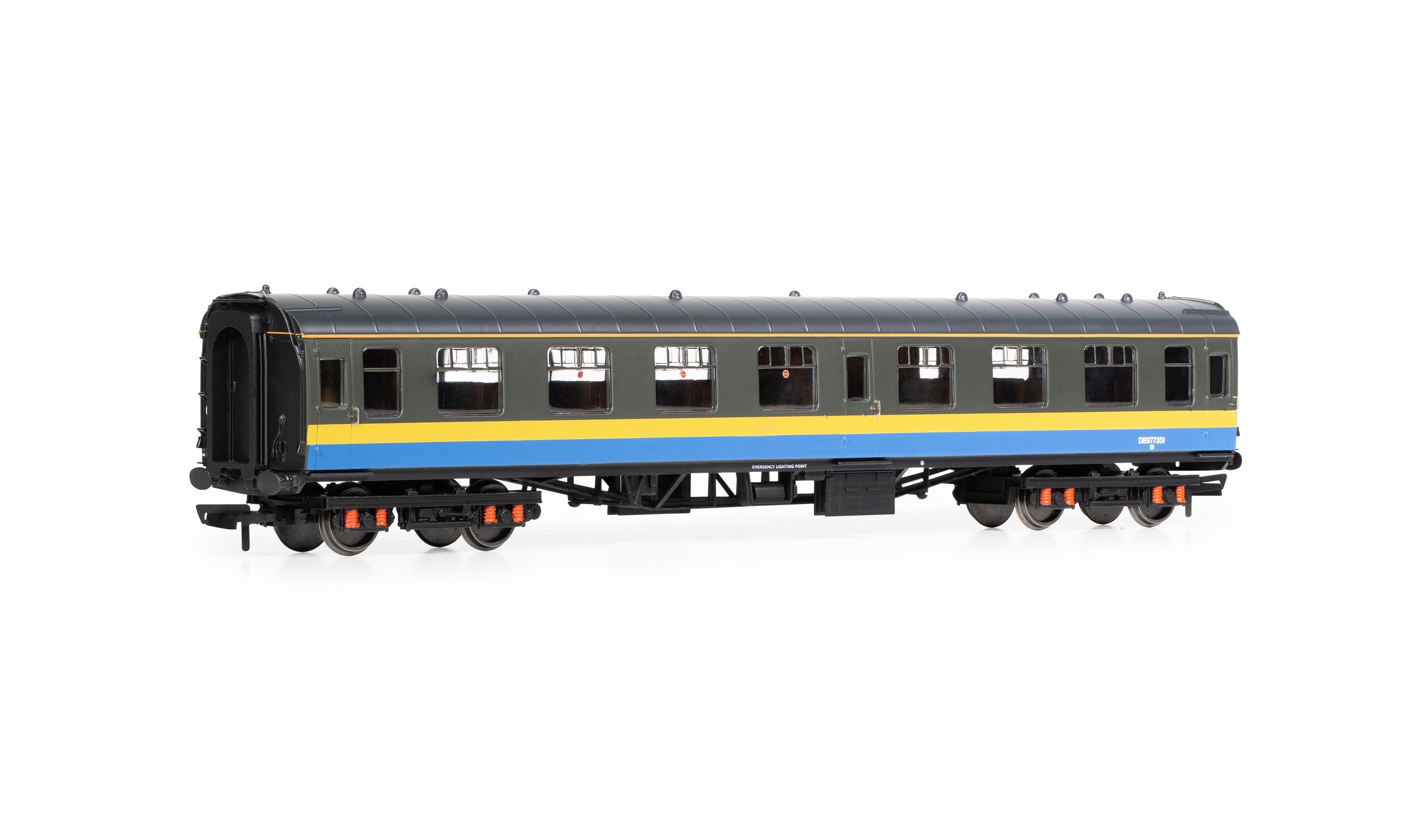
Our Price:
£40.49
£40.49
 ACC2410
Siphon G - Dia. O.33 - BR Carmine Red: W2977W
'OO' GaugeReleased: 05/06/23Era 5
Our Price:
£54.95
£54.95
ACC2411Siphon G - Dia. O.33 - BR Carmine Red: W2938W
'OO' GaugeReleased: 05/06/23Era 5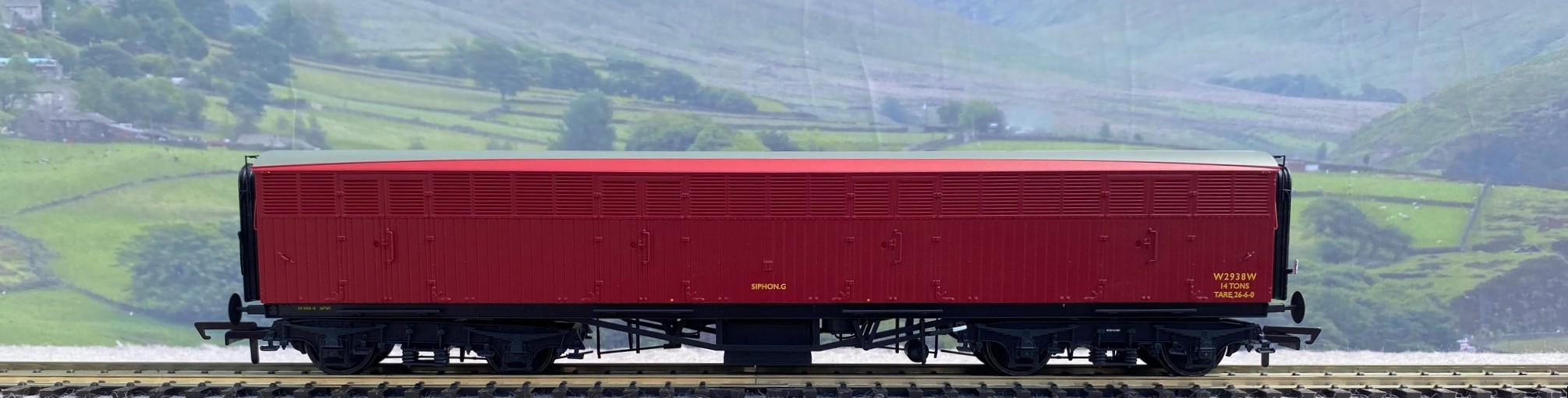
Our Price:
£54.95
£54.95
ACC2416Siphon G - Dia. O.59 - Transitional BR (in GWR Brown): W2780
'OO' GaugeReleased: 05/06/23Era 4
Our Price:
£54.95
£54.95
ACC2424Siphon G - Dia. M34 - BR Rail Blue: W2774W
'OO' GaugeReleased: 05/06/23Era 7
Our Price:
£54.95
£54.95
ACC2425Siphon G - Dia. M34 - BR Rail Blue: W2768W
'OO' GaugeReleased: 05/06/23Era 7
Our Price:
£54.95
£54.95
 377-276B
BR 27T Steel Tippler Wagon BR Grey 'Chalk'
'N' GaugeReleased: 06/06/23Era 4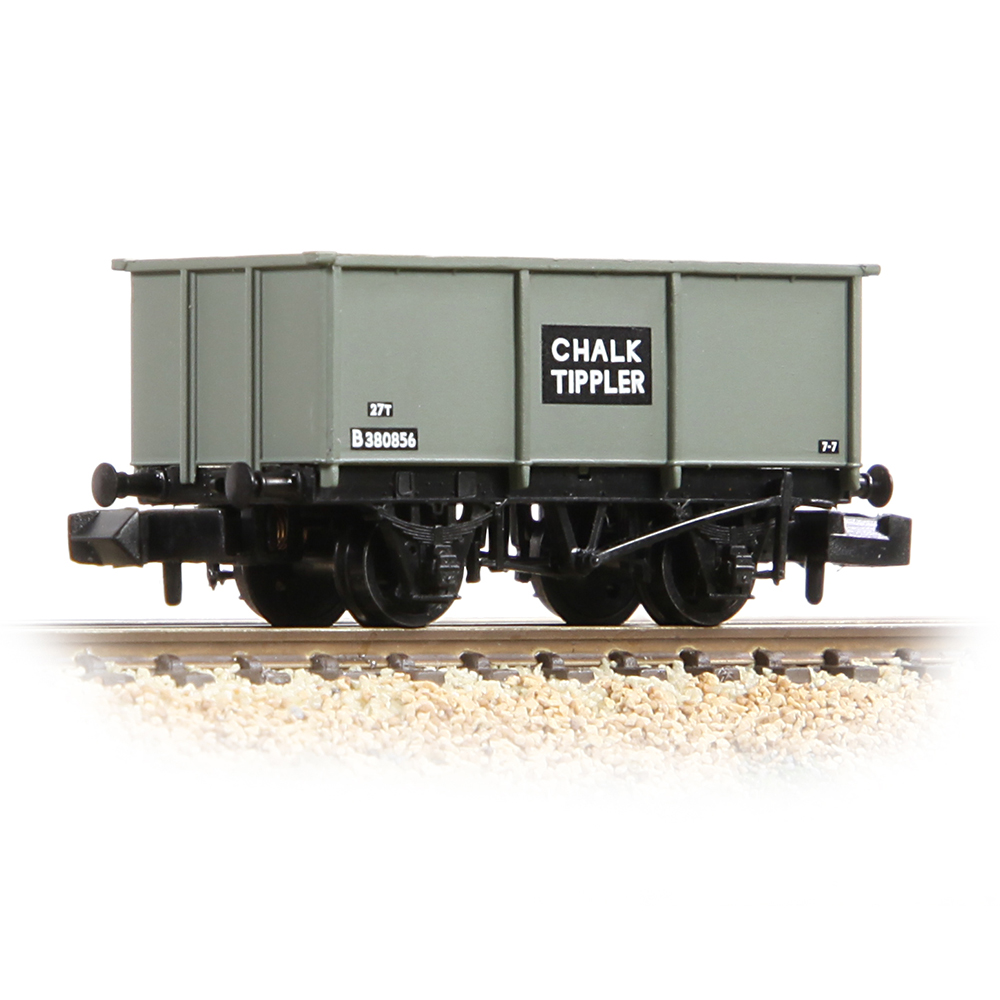
Our Price:
£18.85
£18.85
377-276CBR 27T Steel Tippler Wagon BR Grey 'Chalk'
'N' GaugeReleased: 06/06/23Era 4
Our Price:
£18.85
£18.85
377-278ABR 27T Steel Tippler Wagon BR Bauxite (TOPS) [WL]
'N' GaugeReleased: 06/06/23Era 7
Our Price:
£20.65
£20.65
377-278BBR 27T Steel Tippler Wagon BR Bauxite (TOPS) [WL]
'N' GaugeReleased: 06/06/23Era 7
Our Price:
£20.65
£20.65
377-282BR 27T Steel Tippler Wagon NCB Blue
'N' GaugeReleased: 06/06/23Era 7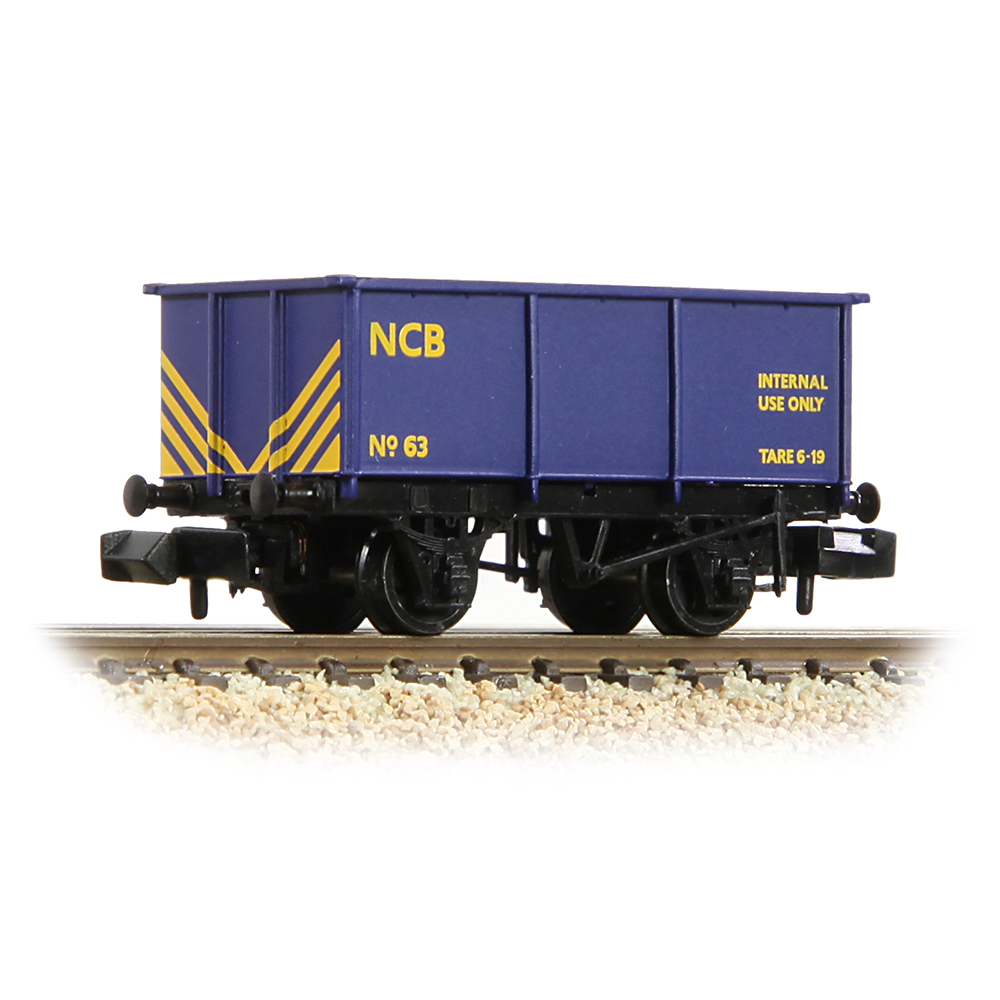
Our Price:
£18.85
£18.85
377-282ABR 27T Steel Tippler Wagon NCB Blue
'N' GaugeReleased: 06/06/23Era 7
Our Price:
£18.85
£18.85
 32-852B
BR Standard 9F with BR1F Tender 92010 BR Black (Early Emblem)
'OO' GaugeReleased: 06/06/23DCC Ready (PluX22)Era 4The British Railways BR Standard Class 9F 2-10-0 was introduced from 1954, with a total of 251 built at BR’s Swindon Works (53) and Crewe Works (198). Designed by Robert Riddles, the 9F is just one of Riddles’ BR Standard designs, with different Classes designed for specific duties with the vision that such standardisation would bring improved efficiencies to BR operations. The Class was designed primarily to haul fast, heavy freight trains, but the 9Fs also found favour on passenger turns, in particular summer holiday specials when their lack of steam heating capabilities did not present a problem.
Impressive in both size and performance, the 9Fs’ lives were cut shockingly short with No. 92220 ‘Evening Star’ – the 999th BR Standard to be built and the final steam locomotive outshopped by British Railways – entering traffic in 1960, only 4 years before the first examples were withdrawn. ‘Evening Star’ itself did not fare much better and was withdrawn in March 1965 after just 60 months in traffic – thankfully the locomotive was saved for the National Collection.
Despite the early withdrawals, some 9Fs continued in traffic until the final months of steam on British Rail and the last was withdrawn in June 1968. In addition to ‘Evening Star’, eight further 9Fs were purchased by the preservation movement, mainly from the Woodham Brothers Scrapyard in Barry, but so far only six have been returned to serviceable condition in the preservation era.

Our Price:
£195.45
£195.45
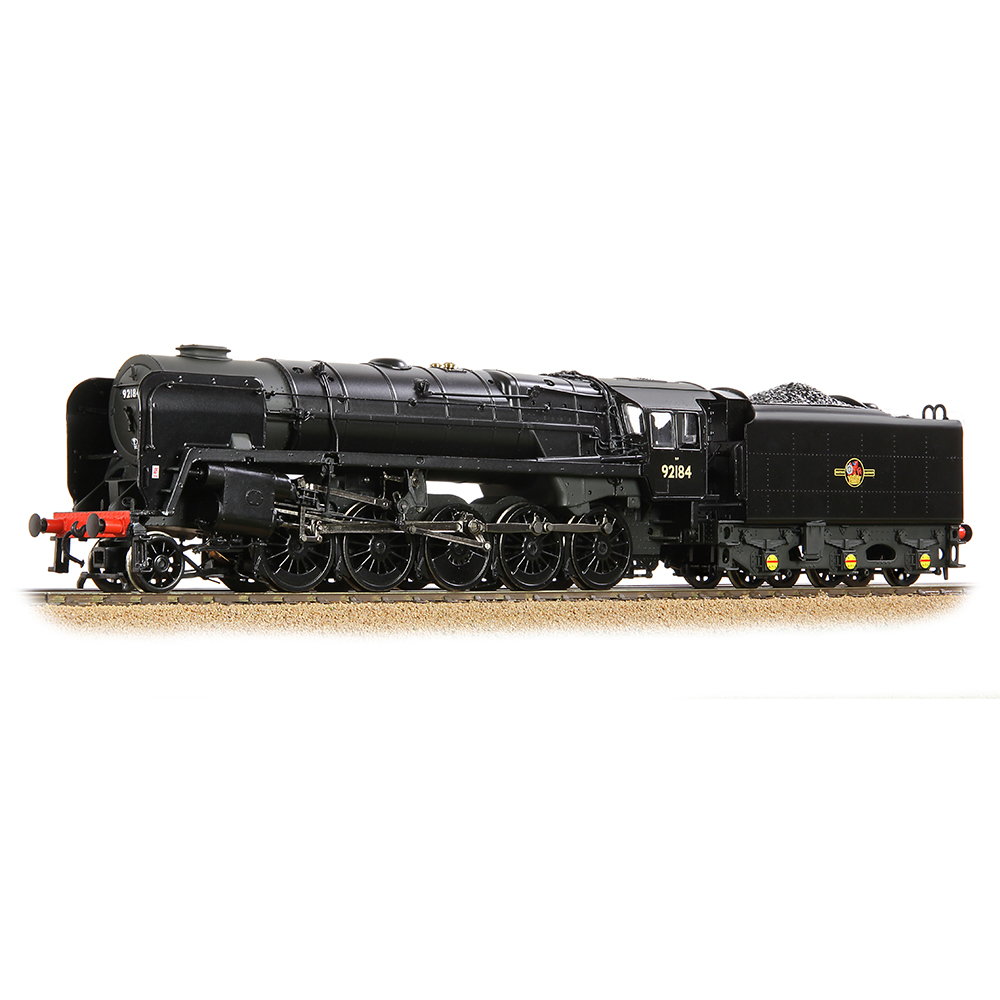
32-859BBR Standard 9F with BR1F Tender 92184 BR Black (Late Crest)
'OO' GaugeReleased: 06/06/23DCC Ready (PluX22)Era 5STANDARD CLASS 9F HISTORY
The British Railways BR Standard Class 9F 2-10-0 was introduced from 1954, with a total of 251 built at BR’s Swindon Works (53) and Crewe Works (198). Designed by Robert Riddles, the 9F is just one of Riddles’ BR Standard designs, with different Classes designed for specific duties with the vision that such standardisation would bring improved efficiencies to BR operations. The Class was designed primarily to haul fast, heavy freight trains, but the 9Fs also found favour on passenger turns, in particular summer holiday specials when their lack of steam heating capabilities did not present a problem.
Impressive in both size and performance, the 9Fs’ lives were cut shockingly short with No. 92220 ‘Evening Star’ – the 999th BR Standard to be built and the final steam locomotive outshopped by British Railways – entering traffic in 1960, only 4 years before the first examples were withdrawn. ‘Evening Star’ itself did not fare much better and was withdrawn in March 1965 after just 60 months in traffic – thankfully the locomotive was saved for the National Collection.
Despite the early withdrawals, some 9Fs continued in traffic until the final months of steam on British Rail and the last was withdrawn in June 1968. In addition to ‘Evening Star’, eight further 9Fs were purchased by the preservation movement, mainly from the Woodham Brothers Scrapyard in Barry, but so far only six have been returned to serviceable condition in the preservation era.
Our Price:
£195.45
£195.45
35-302SFClass 37/0 Split Headcode D6710 BR Green (Late Crest) With DCC Sound Fitted
'OO' GaugeReleased: 06/06/23DCC FittedDCC SoundEra 5SOUNDS
F0 - Directional Lights - On / Off (plus Light Switch Sound)
F1 - On - Warm Engine Start / On, Off - Failed Engine Start / On, Off, On, Off, On - Cold Engine Start
F2 - Brake
F3 - Single Horn (Playable)
F4 - Double Horn
F5 - Light Engine Mode
F6 - Coasting (Manual notch Down if F22 On)
F7 - Speed Lock
F8 - On - Sound Fade Out / Off - Sound Fade In
F9 - Flange Squeal (Speed Related)
F10* - Fan Noise
F11 - Buffer Up
F12 - Coupling
F13 - Stationary - Guard’s Whistle / Moving - Detonators
F14 - Wagon Snatching & Buffering (Speed Related)
F15 - High Intensity Light (If Fitted)
F16 - Red Tail Lights On Both Ends (Non Directional)
F17 - Marker Lights On Both Ends (Non Directional)
F18 - Cab Light On - No. 1 End (Fan)
F19 - Cab Light On - No. 2 End (non-Fan)
F20 - No. 1 End Directional Lights Off
F21 - No. 2 End Directional Lights Off
F22 - Compressor
F23 - Windscreen Wipers
F24 - Engine Room Lights
F25 - Spirax Valve
F26 - Shunt Mode
F27 - Volume Down
F28 - Volume Up
* Fan Sounds play as part of the Sound Project with F1 On. F10 allows you to override this and activate on demand (not applicable to Sound Project 1 - Class 37/0s as-built)
Analogue Users: Please note that normal load running sounds and any other automatic or randomised sounds will also operate when this model is used on analogue control (DC) straight from the box!

Our Price:
£297.45
£297.45
35-302SFXClass 37/0 Split Headcode D6710 BR Green (Late Crest) With DCC Sound & Working Fans
'OO' GaugeReleased: 06/06/23DCC FittedDCC SoundEra 5SOUNDS
F0 - Directional Lights - On / Off (plus Light Switch Sound)
F1 - On - Warm Engine Start / On, Off - Failed Engine Start / On, Off, On, Off, On - Cold Engine Start
F2 - Brake
F3 - Single Horn (Playable)
F4 - Double Horn
F5 - Light Engine Mode
F6 - Coasting (Manual notch Down if F22 On)
F7 - Speed Lock
F8 - On - Sound Fade Out / Off - Sound Fade In
F9 - Flange Squeal (Speed Related)
F10* - Fan Operation & Noise
F11 - Buffer Up
F12 - Coupling
F13 - Stationary - Guard’s Whistle / Moving - Detonators
F14 - Wagon Snatching & Buffering (Speed Related)
F15 - High Intensity Light (If Fitted)
F16 - Red Tail Lights On Both Ends (Non Directional)
F17 - Marker Lights On Both Ends (Non Directional)
F18 - Cab Light On - No. 1 End (Fan)
F19 - Cab Light On - No. 2 End (non-Fan)
F20 - No. 1 End Directional Lights Off
F21 - No. 2 End Directional Lights Off
F22 - Compressor
F23 - Windscreen Wipers
F24 - Engine Room Lights
F25 - Spirax Valve
F26 - Shunt Mode
F27 - Volume Down
F28 - Volume Up
* Fan Operation and Sounds are activated as part of the Sound Project with F1 On. F10 allows you to override this and activate on demand (not applicable to Sound Project 1 - Class 37/0s as-built)
Analogue Users: Please note that normal load running sounds and any other automatic or randomised sounds will also operate, along with fan operation and sounds (according to the particular Sound Project) when this model is used on analogue control (DC) straight from the box!

Our Price:
£322.95
£322.95
37-830MXA 'Lobster' Bogie Open Wagon DB Cargo
'OO' GaugeReleased: 06/06/23Era 9
Our Price:
£52.15
£52.15
37-830AMXA 'Lobster' Bogie Open Wagon DB Cargo
'OO' GaugeReleased: 06/06/23Era 9
Our Price:
£52.15
£52.15