
Search results
 377-278A
BR 27T Steel Tippler Wagon BR Bauxite (TOPS) [WL]
 'N' Gauge
 Released: 06/06/23
 Era 7
Era 7
Our Price:
£20.65
£20.65
377-278BBR 27T Steel Tippler Wagon BR Bauxite (TOPS) [WL]
'N' GaugeReleased: 06/06/23Era 7
Our Price:
£20.65
£20.65
377-282BR 27T Steel Tippler Wagon NCB Blue
'N' GaugeReleased: 06/06/23Era 7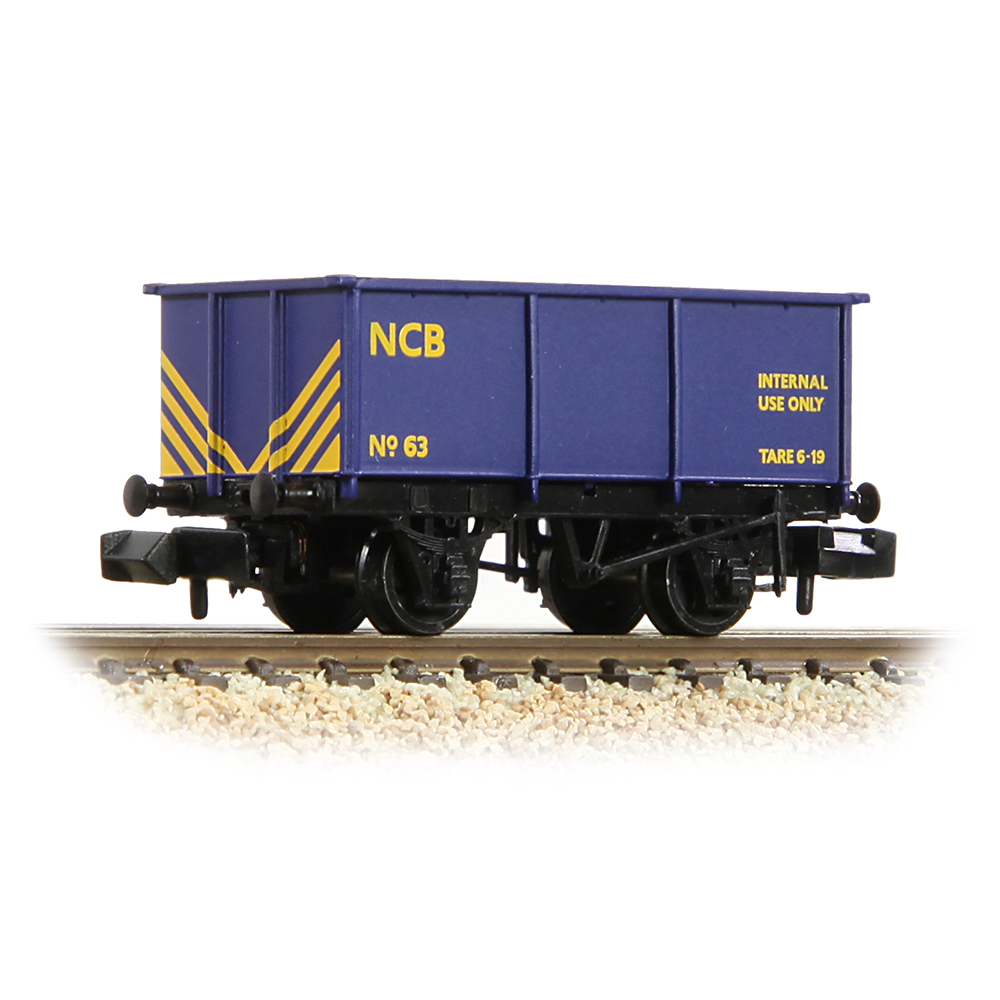
Our Price:
£18.85
£18.85
377-282ABR 27T Steel Tippler Wagon NCB Blue
'N' GaugeReleased: 06/06/23Era 7
Our Price:
£18.85
£18.85
 32-852B
BR Standard 9F with BR1F Tender 92010 BR Black (Early Emblem)
'OO' GaugeReleased: 06/06/23 DCC Ready (PluX22)Era 4
The British Railways BR Standard Class 9F 2-10-0 was introduced from 1954, with a total of 251 built at BR’s Swindon Works (53) and Crewe Works (198). Designed by Robert Riddles, the 9F is just one of Riddles’ BR Standard designs, with different Classes designed for specific duties with the vision that such standardisation would bring improved efficiencies to BR operations. The Class was designed primarily to haul fast, heavy freight trains, but the 9Fs also found favour on passenger turns, in particular summer holiday specials when their lack of steam heating capabilities did not present a problem.
Impressive in both size and performance, the 9Fs’ lives were cut shockingly short with No. 92220 ‘Evening Star’ – the 999th BR Standard to be built and the final steam locomotive outshopped by British Railways – entering traffic in 1960, only 4 years before the first examples were withdrawn. ‘Evening Star’ itself did not fare much better and was withdrawn in March 1965 after just 60 months in traffic – thankfully the locomotive was saved for the National Collection.
Despite the early withdrawals, some 9Fs continued in traffic until the final months of steam on British Rail and the last was withdrawn in June 1968. In addition to ‘Evening Star’, eight further 9Fs were purchased by the preservation movement, mainly from the Woodham Brothers Scrapyard in Barry, but so far only six have been returned to serviceable condition in the preservation era.

Our Price:
£195.45
£195.45
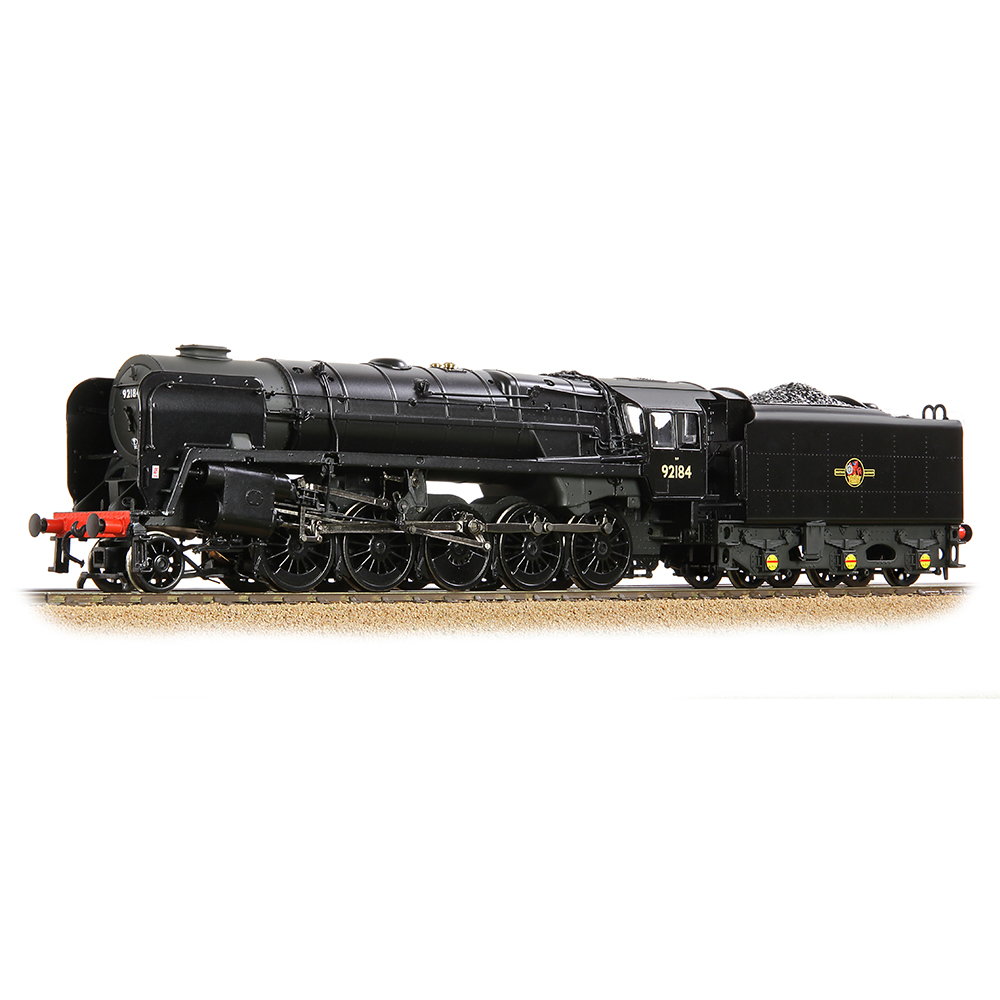
32-859BBR Standard 9F with BR1F Tender 92184 BR Black (Late Crest)
'OO' GaugeReleased: 06/06/23DCC Ready (PluX22)Era 5STANDARD CLASS 9F HISTORY
The British Railways BR Standard Class 9F 2-10-0 was introduced from 1954, with a total of 251 built at BR’s Swindon Works (53) and Crewe Works (198). Designed by Robert Riddles, the 9F is just one of Riddles’ BR Standard designs, with different Classes designed for specific duties with the vision that such standardisation would bring improved efficiencies to BR operations. The Class was designed primarily to haul fast, heavy freight trains, but the 9Fs also found favour on passenger turns, in particular summer holiday specials when their lack of steam heating capabilities did not present a problem.
Impressive in both size and performance, the 9Fs’ lives were cut shockingly short with No. 92220 ‘Evening Star’ – the 999th BR Standard to be built and the final steam locomotive outshopped by British Railways – entering traffic in 1960, only 4 years before the first examples were withdrawn. ‘Evening Star’ itself did not fare much better and was withdrawn in March 1965 after just 60 months in traffic – thankfully the locomotive was saved for the National Collection.
Despite the early withdrawals, some 9Fs continued in traffic until the final months of steam on British Rail and the last was withdrawn in June 1968. In addition to ‘Evening Star’, eight further 9Fs were purchased by the preservation movement, mainly from the Woodham Brothers Scrapyard in Barry, but so far only six have been returned to serviceable condition in the preservation era.
Our Price:
£195.45
£195.45
35-302SFClass 37/0 Split Headcode D6710 BR Green (Late Crest) With DCC Sound Fitted
'OO' GaugeReleased: 06/06/23DCC FittedDCC SoundEra 5SOUNDS
F0 - Directional Lights - On / Off (plus Light Switch Sound)
F1 - On - Warm Engine Start / On, Off - Failed Engine Start / On, Off, On, Off, On - Cold Engine Start
F2 - Brake
F3 - Single Horn (Playable)
F4 - Double Horn
F5 - Light Engine Mode
F6 - Coasting (Manual notch Down if F22 On)
F7 - Speed Lock
F8 - On - Sound Fade Out / Off - Sound Fade In
F9 - Flange Squeal (Speed Related)
F10* - Fan Noise
F11 - Buffer Up
F12 - Coupling
F13 - Stationary - Guard’s Whistle / Moving - Detonators
F14 - Wagon Snatching & Buffering (Speed Related)
F15 - High Intensity Light (If Fitted)
F16 - Red Tail Lights On Both Ends (Non Directional)
F17 - Marker Lights On Both Ends (Non Directional)
F18 - Cab Light On - No. 1 End (Fan)
F19 - Cab Light On - No. 2 End (non-Fan)
F20 - No. 1 End Directional Lights Off
F21 - No. 2 End Directional Lights Off
F22 - Compressor
F23 - Windscreen Wipers
F24 - Engine Room Lights
F25 - Spirax Valve
F26 - Shunt Mode
F27 - Volume Down
F28 - Volume Up
* Fan Sounds play as part of the Sound Project with F1 On. F10 allows you to override this and activate on demand (not applicable to Sound Project 1 - Class 37/0s as-built)
Analogue Users: Please note that normal load running sounds and any other automatic or randomised sounds will also operate when this model is used on analogue control (DC) straight from the box!

Our Price:
£297.45
£297.45
35-302SFXClass 37/0 Split Headcode D6710 BR Green (Late Crest) With DCC Sound & Working Fans
'OO' GaugeReleased: 06/06/23DCC FittedDCC SoundEra 5SOUNDS
F0 - Directional Lights - On / Off (plus Light Switch Sound)
F1 - On - Warm Engine Start / On, Off - Failed Engine Start / On, Off, On, Off, On - Cold Engine Start
F2 - Brake
F3 - Single Horn (Playable)
F4 - Double Horn
F5 - Light Engine Mode
F6 - Coasting (Manual notch Down if F22 On)
F7 - Speed Lock
F8 - On - Sound Fade Out / Off - Sound Fade In
F9 - Flange Squeal (Speed Related)
F10* - Fan Operation & Noise
F11 - Buffer Up
F12 - Coupling
F13 - Stationary - Guard’s Whistle / Moving - Detonators
F14 - Wagon Snatching & Buffering (Speed Related)
F15 - High Intensity Light (If Fitted)
F16 - Red Tail Lights On Both Ends (Non Directional)
F17 - Marker Lights On Both Ends (Non Directional)
F18 - Cab Light On - No. 1 End (Fan)
F19 - Cab Light On - No. 2 End (non-Fan)
F20 - No. 1 End Directional Lights Off
F21 - No. 2 End Directional Lights Off
F22 - Compressor
F23 - Windscreen Wipers
F24 - Engine Room Lights
F25 - Spirax Valve
F26 - Shunt Mode
F27 - Volume Down
F28 - Volume Up
* Fan Operation and Sounds are activated as part of the Sound Project with F1 On. F10 allows you to override this and activate on demand (not applicable to Sound Project 1 - Class 37/0s as-built)
Analogue Users: Please note that normal load running sounds and any other automatic or randomised sounds will also operate, along with fan operation and sounds (according to the particular Sound Project) when this model is used on analogue control (DC) straight from the box!

Our Price:
£322.95
£322.95
37-830MXA 'Lobster' Bogie Open Wagon DB Cargo
'OO' GaugeReleased: 06/06/23Era 9
Our Price:
£52.15
£52.15
37-830AMXA 'Lobster' Bogie Open Wagon DB Cargo
'OO' GaugeReleased: 06/06/23Era 9
Our Price:
£52.15
£52.15
373-811AHKA Bogie Hopper 'National Power' Blue
'N' GaugeReleased: 06/06/23Era 9
Our Price:
£46.75
£46.75
373-811BHKA Bogie Hopper 'National Power' Blue
'N' GaugeReleased: 06/06/23Era 9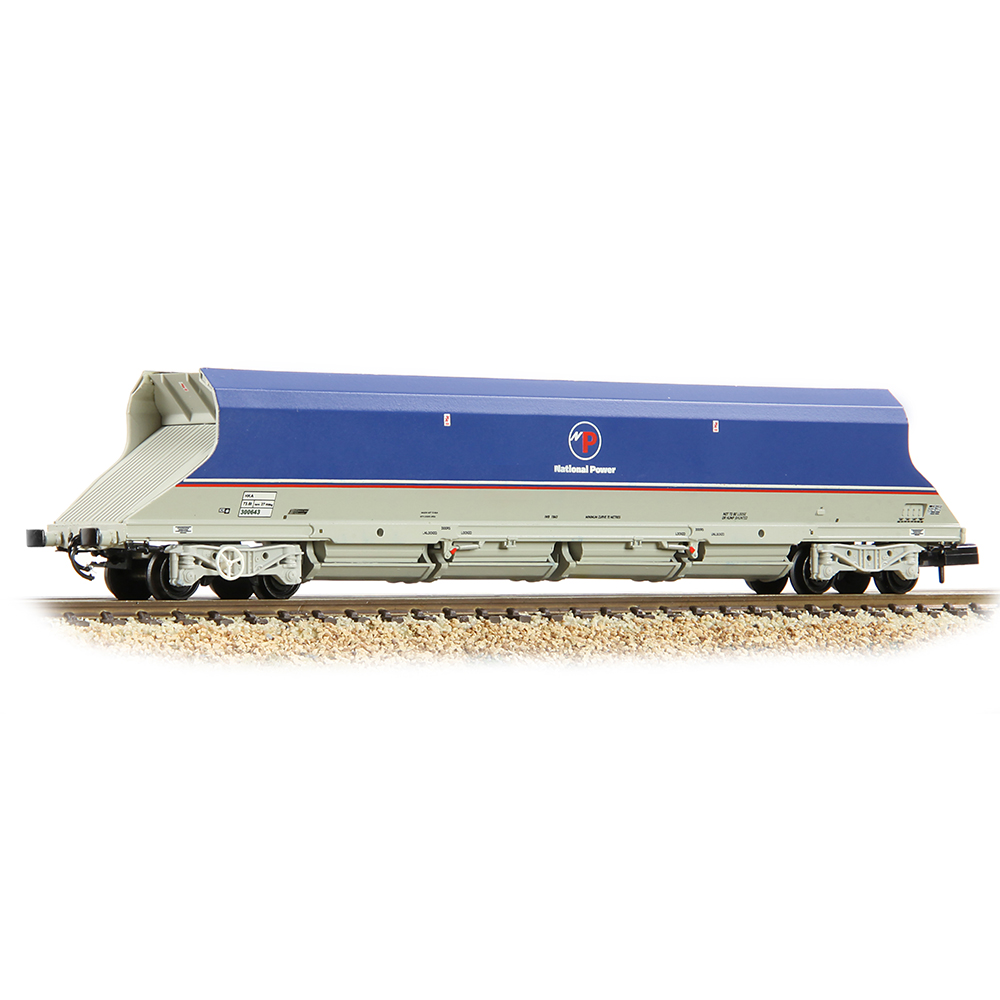
Our Price:
£46.00
£46.00
373-813AHKA Bogie Hopper DB Schenker
'N' GaugeReleased: 06/06/23Era 9
Our Price:
£46.75
£46.75
373-813BHKA Bogie Hopper DB Schenker
'N' GaugeReleased: 06/06/23Era 9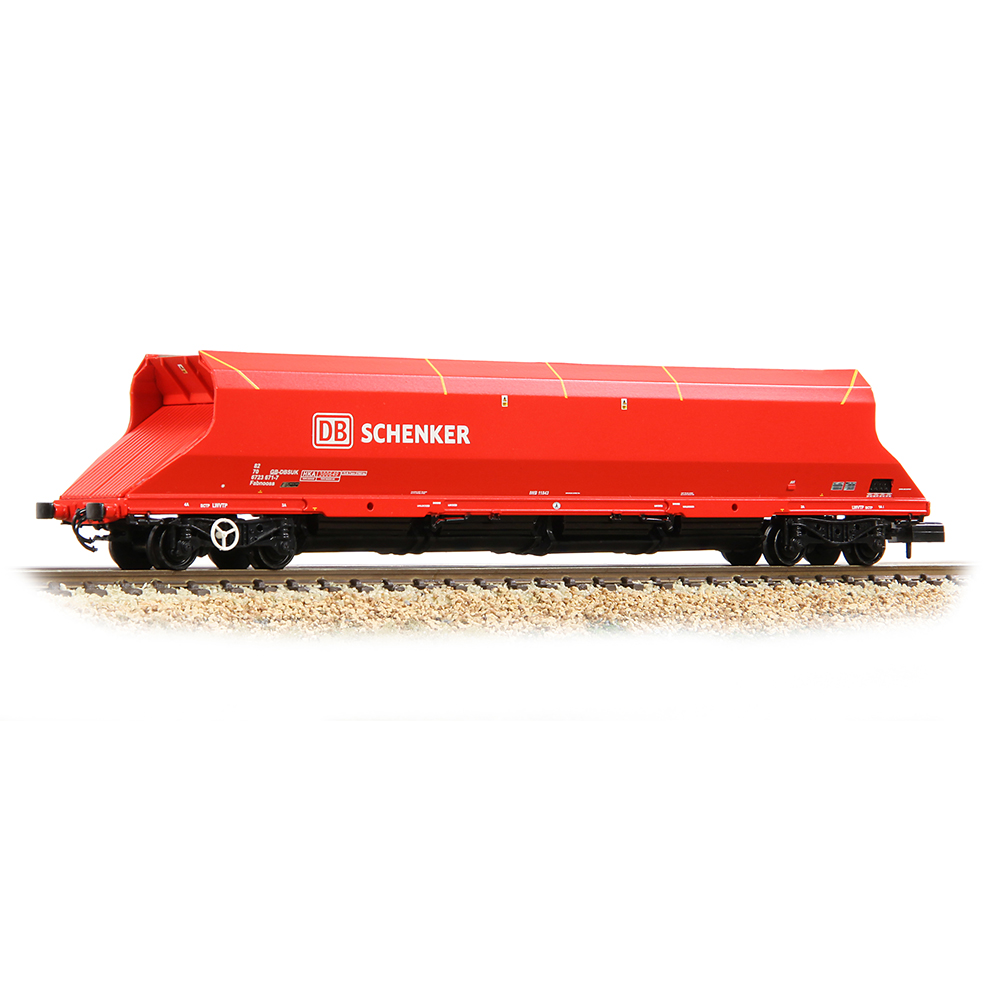
Our Price:
£46.75
£46.75
32-859ASFBR Standard 9F with BR1F Tender 92212 BR Black (Late Crest) With DCC Sound Fitted
'OO' GaugeReleased: 15/06/23DCC FittedDCC SoundEra 5SOUNDS:
F1 - Sound On / Sound Off
F2 - Brake (Non-Latching)
F3 - Cylinder Drain Cocks
F4 - Whistle (Playable)
F5 - Normal Load / Heavy Load
F6 - On - Firebox Door Opening / Off - Firebox Door Closing
F7 - Injectors
F8 - Whistle
F9 - Flange Squeal (Speed Related)
F10 - Shovelling Coal (F6 must be On to activate this function)
F11 - Blower
F12 - Hand Brake (locomotive will not move with the Hand Brake applied)
F13 - Water Tank Filling
F14 - Coupling/un-Coupling Clank
F15 - Safety Valve
F16 - Guard’s Whistle & Driver’s Response Toot
F17 - Coasting
F18 - Sound Fades Out / Sound Fades In
F19 - Shunt Mode (Reduces Speed)
F20 - Acceleration/Deceleration inertia off
F21 - Volume Control (LATCH = Volume On/Off) or (TRIGGER = cycles 6 Volume Levels)
F22 - Rail Join Clatter
F23 - AWS
Analogue Users: Normal-load running sounds, acceleration steam chuff sounds and any other automatic and randomised sounds can be enjoyed when using this model on analogue control (DC) straight from the box - these sounds will play automatically when power is applied!

Our Price:
£280.45
£280.45
32-861SFBR Standard 9F with BR1G Tender 92134 BR Black (Late Crest) With DCC Sound Fitted
'OO' GaugeReleased: 15/06/23DCC FittedDCC SoundEra 5SOUNDS:
F1 - Sound On / Sound Off
F2 - Brake (Non-Latching)
F3 - Cylinder Drain Cocks
F4 - Whistle (Playable)
F5 - Normal Load / Heavy Load
F6 - On - Firebox Door Opening / Off - Firebox Door Closing
F7 - Injectors
F8 - Whistle
F9 - Flange Squeal (Speed Related)
F10 - Shovelling Coal (F6 must be On to activate this function)
F11 - Blower
F12 - Hand Brake (locomotive will not move with the Hand Brake applied)
F13 - Water Tank Filling
F14 - Coupling/un-Coupling Clank
F15 - Safety Valve
F16 - Guard’s Whistle & Driver’s Response Toot
F17 - Coasting
F18 - Sound Fades Out / Sound Fades In
F19 - Shunt Mode (Reduces Speed)
F20 - Acceleration/Deceleration inertia off
F21 - Volume Control (LATCH = Volume On/Off) or (TRIGGER = cycles 6 Volume Levels)
F22 - Rail Join Clatter
F23 - AWS
Analogue Users: Normal-load running sounds, acceleration steam chuff sounds and any other automatic and randomised sounds can be enjoyed when using this model on analogue control (DC) straight from the box - these sounds will play automatically when power is applied!

Our Price:
£280.45
£280.45
35-303Class 37/0 Centre Headcode 37305 BR Blue
'OO' GaugeReleased: 15/06/23DCC Ready (PluX22)Era 7CLASS 37 HISTORY
The British Rail 1955 Modernisation Plan paved the way for the large-scale replacement of steam traction with diesel locomotives, and one of the most successful diesel locomotive designs to result from this was the English Electric Type 3. These 1,700hp Types 3 diesel-electric locomotives were built at English Electric’s Vulcan Foundry and by Robert Stephenson & Hawthorns between 1960 and 1965, with 309 examples produced in total. When TOPS was implemented the type was designated Class 37.
The class proved popular with railwaymen and so in 1985, a major refurbishment programme for the Class 37 locomotives was sanctioned to extend the working lives of 135 locomotives. Features of the refurbishment involved plating over the four-character head codes and sealing off the nose end communication doors. Dedicated freight locomotives received lower gearing to increase the tractive effort, and some were fitted with extra ballast or even more powerful engines. A new subclass was created for locomotives refurbished with Electric Train Heating (ETH) equipment, allowing their use on passenger trains the whole year-round.
With the sectorisation of British Rail taking hold in the early-1980s, the locomotives returned to traffic following refurbishment in a wide and diverse range of liveries. Passenger machines appeared in BR Blue Large Logo, InterCity and Regional Railways schemes to name just three, whilst freight engines received numerous varieties of Railfreight livery, Transrail, Mainline and Loadhaul. The Class continued to be widely used into the Privatisation-era, with examples operating for the likes of EWS, DRS, West Coast Railways and Colas, whilst others have received ‘retro’ heritage repaints.

Our Price:
£212.45
£212.45
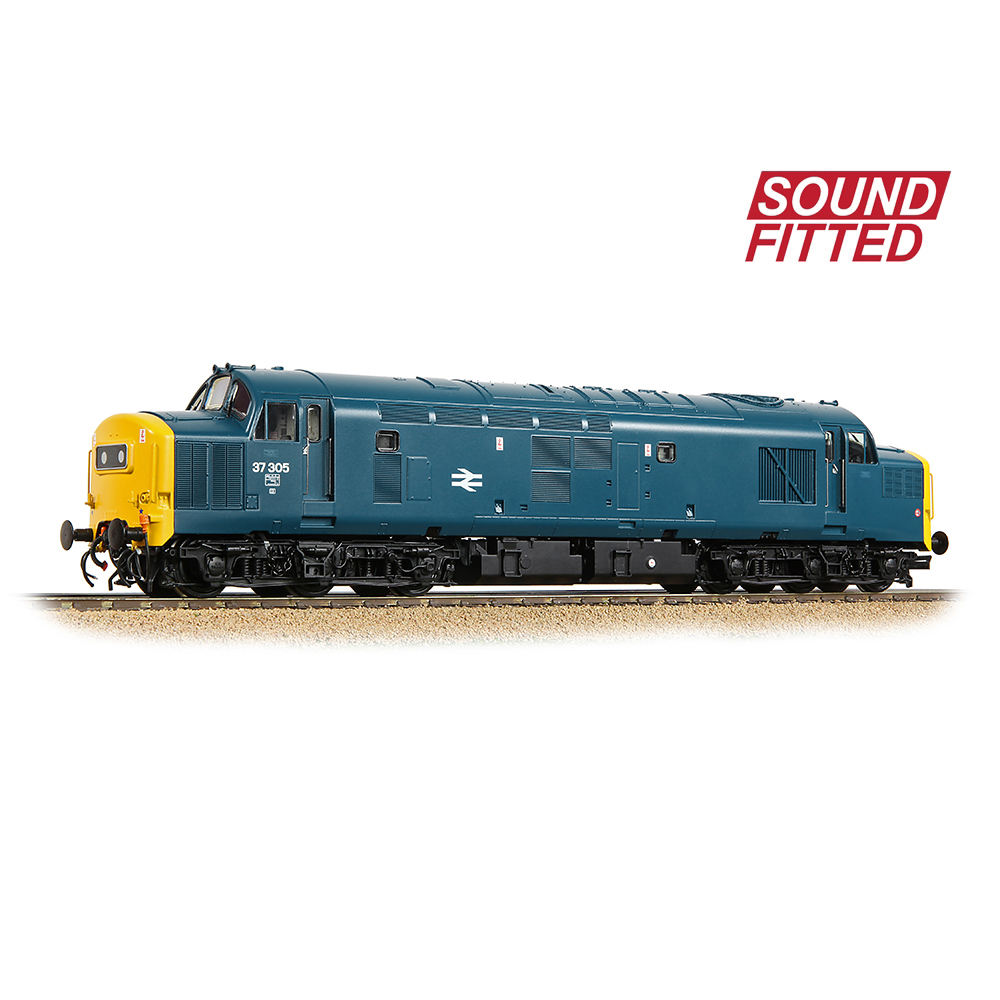
35-303SFClass 37/0 Centre Headcode 37305 BR Blue With DCC Sound
'OO' GaugeReleased: 15/06/23DCC FittedDCC SoundEra 7SOUNDS
F0 - Directional Lights - On / Off (plus Light Switch Sound)
F1 - On - Warm Engine Start / On, Off - Failed Engine Start / On, Off, On, Off, On - Cold Engine Start
F2 - Brake
F3 - Single Horn (Playable)
F4 - Double Horn
F5 - Light Engine Mode
F6 - Coasting (Manual notch Down if F22 On)
F7 - Speed Lock
F8 - On - Sound Fade Out / Off - Sound Fade In
F9 - Flange Squeal (Speed Related)
F10* - Fan Noise
F11 - Buffer Up
F12 - Coupling
F13 - Stationary - Guard’s Whistle / Moving - Detonators
F14 - Wagon Snatching & Buffering (Speed Related)
F15 - High Intensity Light (If Fitted)
F16 - Red Tail Lights On Both Ends (Non Directional)
F17 - Marker Lights On Both Ends (Non Directional)
F18 - Cab Light On - No. 1 End (Fan)
F19 - Cab Light On - No. 2 End (non-Fan)
F20 - No. 1 End Directional Lights Off
F21 - No. 2 End Directional Lights Off
F22 - Compressor
F23 - Windscreen Wipers
F24 - Engine Room Lights
F25 - Spirax Valve
F26 - Shunt Mode
F27 - Volume Down
F28 - Volume Up
* Fan Sounds play as part of the Sound Project with F1 On. F10 allows you to override this and activate on demand (not applicable to Sound Project 1 - Class 37/0s as-built)
Analogue Users: Please note that normal load running sounds and any other automatic or randomised sounds will also operate when this model is used on analogue control (DC) straight from the box!
Our Price:
£297.45
£297.45
35-308Class 37/0 Centre Headcode 37201 'St. Margaret' BR Eng. Grey & Yellow
'OO' GaugeReleased: 20/06/23DCC Ready (PluX22)Era 8CLASS 37 HISTORY
The British Rail 1955 Modernisation Plan paved the way for the large-scale replacement of steam traction with diesel locomotives, and one of the most successful diesel locomotive designs to result from this was the English Electric Type 3. These 1,700hp Types 3 diesel-electric locomotives were built at English Electric’s Vulcan Foundry and by Robert Stephenson & Hawthorns between 1960 and 1965, with 309 examples produced in total. When TOPS was implemented the type was designated Class 37.
The class proved popular with railwaymen and so in 1985, a major refurbishment programme for the Class 37 locomotives was sanctioned to extend the working lives of 135 locomotives. Features of the refurbishment involved plating over the four-character head codes and sealing off the nose end communication doors. Dedicated freight locomotives received lower gearing to increase the tractive effort, and some were fitted with extra ballast or even more powerful engines. A new subclass was created for locomotives refurbished with Electric Train Heating (ETH) equipment, allowing their use on passenger trains the whole year-round.
With the sectorisation of British Rail taking hold in the early-1980s, the locomotives returned to traffic following refurbishment in a wide and diverse range of liveries. Passenger machines appeared in BR Blue Large Logo, InterCity and Regional Railways schemes to name just three, whilst freight engines received numerous varieties of Railfreight livery, Transrail, Mainline and Loadhaul. The Class continued to be widely used into the Privatisation-era, with examples operating for the likes of EWS, DRS, West Coast Railways and Colas, whilst others have received ‘retro’ heritage repaints.

Our Price:
£212.45
£212.45
35-308SFClass 37/0 Centre Headcode 37201 'St. Margaret' BR Eng. Grey & Yellow With DCC Sound Fitted.
'OO' GaugeReleased: 20/06/23DCC FittedDCC SoundEra 8SOUNDS
F0 - Directional Lights - On / Off (plus Light Switch Sound)
F1 - On - Warm Engine Start / On, Off - Failed Engine Start / On, Off, On, Off, On - Cold Engine Start
F2 - Brake
F3 - Single Horn (Playable)
F4 - Double Horn
F5 - Light Engine Mode
F6 - Coasting (Manual notch Down if F22 On)
F7 - Speed Lock
F8 - On - Sound Fade Out / Off - Sound Fade In
F9 - Flange Squeal (Speed Related)
F10* - Fan Noise
F11 - Buffer Up
F12 - Coupling
F13 - Stationary - Guard’s Whistle / Moving - Detonators
F14 - Wagon Snatching & Buffering (Speed Related)
F15 - High Intensity Light (If Fitted)
F16 - Red Tail Lights On Both Ends (Non Directional)
F17 - Marker Lights On Both Ends (Non Directional)
F18 - Cab Light On - No. 1 End (Fan)
F19 - Cab Light On - No. 2 End (non-Fan)
F20 - No. 1 End Directional Lights Off
F21 - No. 2 End Directional Lights Off
F22 - Compressor
F23 - Windscreen Wipers
F24 - Engine Room Lights
F25 - Spirax Valve
F26 - Shunt Mode
F27 - Volume Down
F28 - Volume Up
* Fan Sounds play as part of the Sound Project with F1 On. F10 allows you to override this and activate on demand (not applicable to Sound Project 1 - Class 37/0s as-built)
Analogue Users: Please note that normal load running sounds and any other automatic or randomised sounds will also operate when this model is used on analogue control (DC) straight from the box!

Our Price:
£297.45
£297.45