Search results
 377-003
BR Bogie Hopper Wagon BR Departmental Black
 'N' Gauge
 Released: 05/07/23
 Era 4
Era 4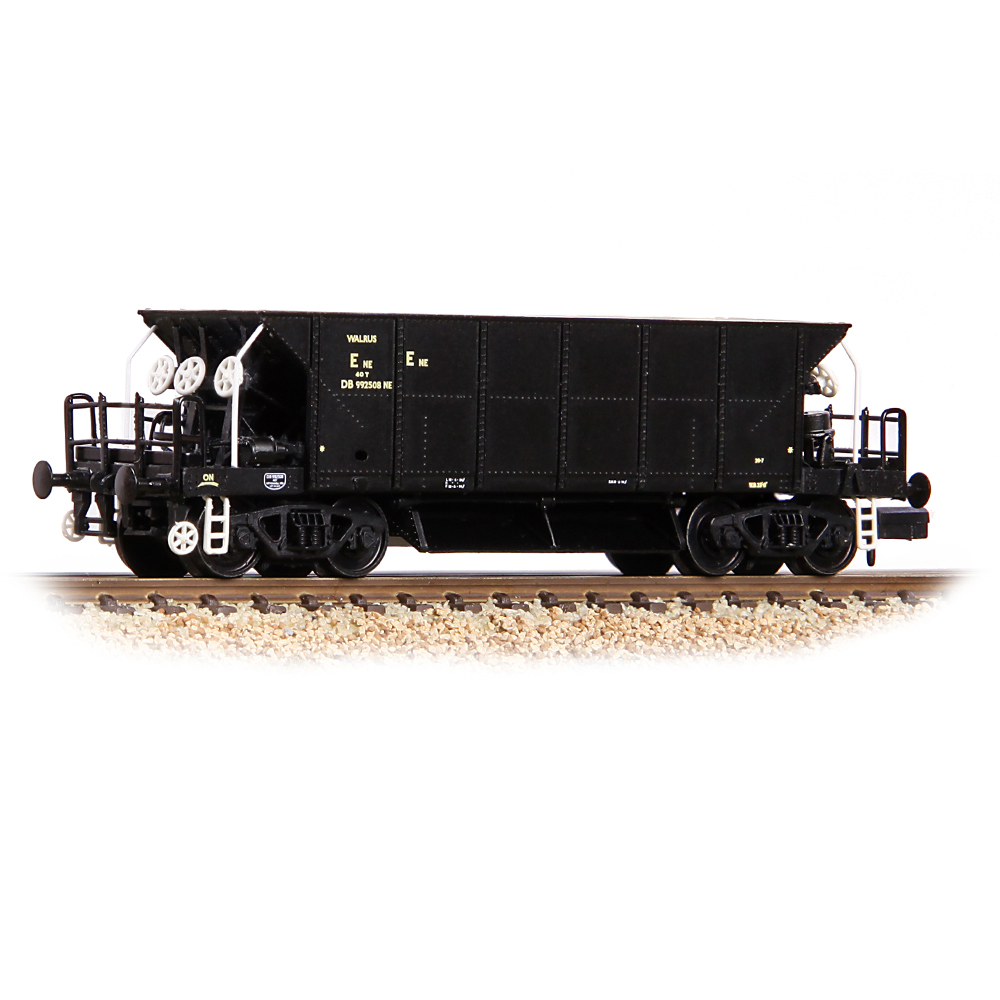
Our Price:
£53.95
£53.95
377-005BR YGB Bogie Hopper Wagon Mainline Blue
'N' GaugeReleased: 05/07/23Era 9
Our Price:
£53.95
£53.95
377-006BR YGB 'Stingray' Bogie Hopper Wagon Transrail Grey
'N' GaugeReleased: 05/07/23Era 9
Our Price:
£53.95
£53.95
 R30142
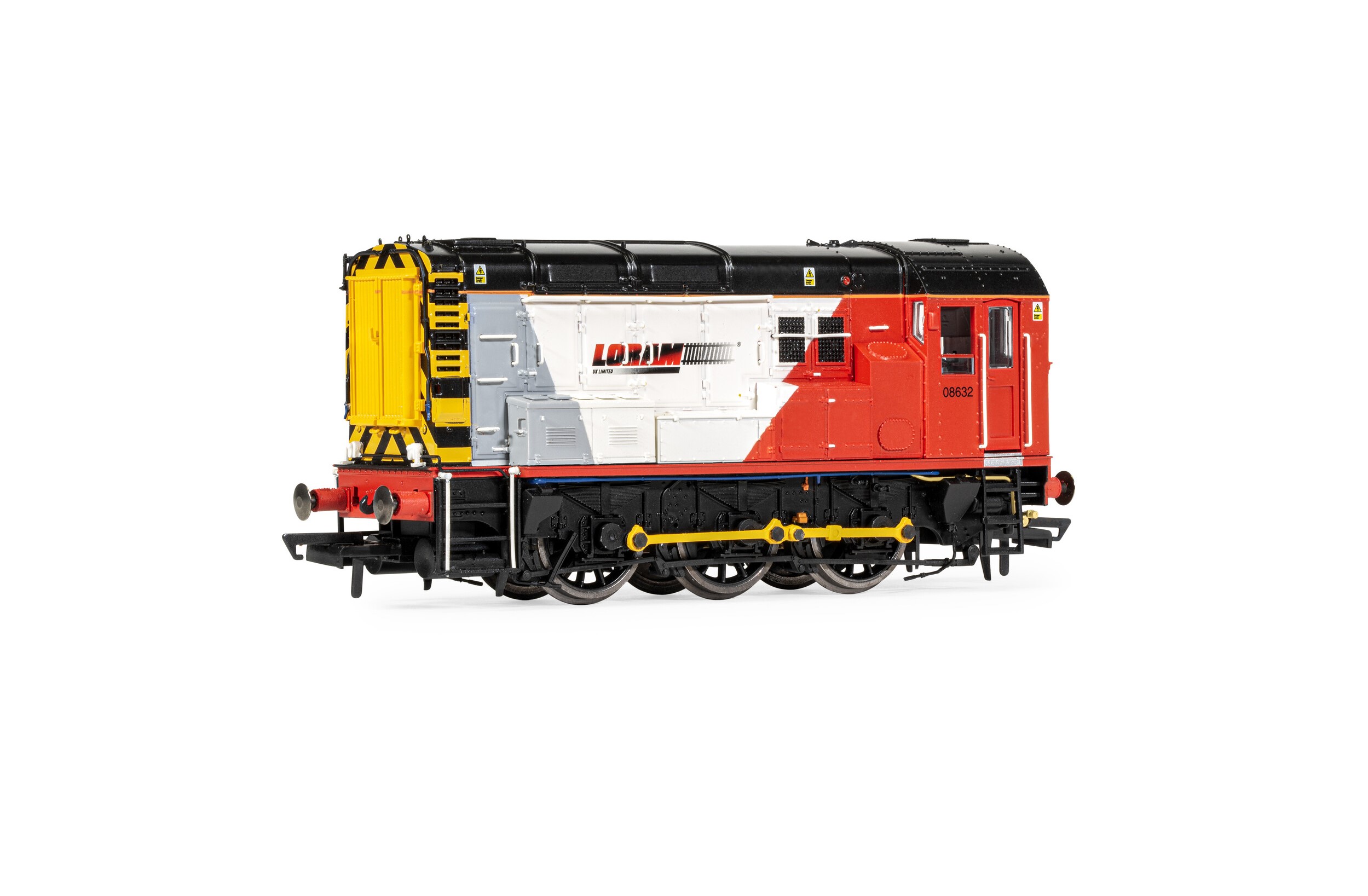
Loram, Class 08, 0-6-0, 08632
'OO' GaugeReleased: 11/07/23 DCC Ready (8 Pin)Era 11
Loram UK Ltd. offers a complete range of rolling stock engineering and restoration services as well as other track focused infrastructure operations with their Class 08 number 08632 being undoubtedly kept busy.
Our Price:
£167.39
£167.39
 35-338
Class 37/4 37414 'Cathays C&W Works 1846-1993' BR Regional Railways
'OO' GaugeReleased: 12/07/23DCC Ready (PluX22)Era 8The British Rail 1955 Modernisation Plan paved the way for the large-scale replacement of steam traction with diesel locomotives, and one of the most successful diesel locomotive designs to result from this was the English Electric Type 3. These 1,700hp Types 3 diesel-electric locomotives were built at English Electric’s Vulcan Foundry and by Robert Stephenson & Hawthorns between 1960 and 1965, with 309 examples produced in total. When TOPS was implemented the type was designated Class 37.
The class proved popular with railwaymen and so in 1985, a major refurbishment programme for the Class 37 locomotives was sanctioned to extend the working lives of 135 locomotives. Features of the refurbishment involved plating over the four-character head codes and sealing off the nose end communication doors. Dedicated freight locomotives received lower gearing to increase the tractive effort, and some were fitted with extra ballast or even more powerful engines. A new subclass was created for locomotives refurbished with Electric Train Heating (ETH) equipment, allowing their use on passenger trains the whole year-round.
With the sectorisation of British Rail taking hold in the early-1980s, the locomotives returned to traffic following refurbishment in a wide and diverse range of liveries. Passenger machines appeared in BR Blue Large Logo, InterCity and Regional Railways schemes to name just three, whilst freight engines received numerous varieties of Railfreight livery, Transrail, Mainline and Loadhaul. The Class continued to be widely used into the Privatisation-era, with examples operating for the likes of EWS, DRS, West Coast Railways and Colas, whilst others have received ‘retro’ heritage repaints.

Our Price:
£212.45
£212.45
35-338SFClass 37/4 37414 'Cathays C&W Works 1846-1993' BR Regional Railways With DCC Sound
'OO' GaugeReleased: 12/07/23DCC FittedDCC SoundEra 8SOUNDS
F0 - Directional Lights - On / Off (plus Light Switch Sound)
F1 - On - Warm Engine Start / On, Off - Failed Engine Start / On, Off, On, Off, On - Cold Engine Start
F2 - Brake
F3 - Single Horn (Playable)
F4 - Double Horn
F5 - Light Engine Mode
F6 - Coasting (Manual notch Down if F22 On)
F7 - Speed Lock
F8 - On - Sound Fade Out / Off - Sound Fade In
F9 - Flange Squeal (Speed Related)
F10* - Fan Noise
F11 - Buffer Up
F12 - Coupling
F13 - Stationary - Guard’s Whistle / Moving - Detonators
F14 - Wagon Snatching & Buffering (Speed Related)
F15 - High Intensity Light (If Fitted)
F16 - Red Tail Lights On Both Ends (Non Directional)
F17 - Marker Lights On Both Ends (Non Directional)
F18 - Cab Light On - No. 1 End (Fan)
F19 - Cab Light On - No. 2 End (non-Fan)
F20 - No. 1 End Directional Lights Off
F21 - No. 2 End Directional Lights Off
F22 - Compressor
F23 - Windscreen Wipers
F24 - Engine Room Lights
F25 - Spirax Valve
F26 - Shunt Mode
F27 - Volume Down
F28 - Volume Up
* Fan Sounds play as part of the Sound Project with F1 On. F10 allows you to override this and activate on demand (not applicable to Sound Project 1 - Class 37/0s as-built)
Analogue Users: Please note that normal load running sounds and any other automatic or randomised sounds will also operate when this model is used on analogue control (DC) straight from the box!

Our Price:
£297.45
£297.45
35-338SFXClass 37/4 37414 'Cathays C&W Works 1846-1993' BR Regional Railways With DCC Sound & Working Fans
'OO' GaugeReleased: 12/07/23DCC FittedDCC SoundEra 8SOUNDS
F0 - Directional Lights - On / Off (plus Light Switch Sound)
F1 - On - Warm Engine Start / On, Off - Failed Engine Start / On, Off, On, Off, On - Cold Engine Start
F2 - Brake
F3 - Single Horn (Playable)
F4 - Double Horn
F5 - Light Engine Mode
F6 - Coasting (Manual notch Down if F22 On)
F7 - Speed Lock
F8 - On - Sound Fade Out / Off - Sound Fade In
F9 - Flange Squeal (Speed Related)
F10* - Fan Noise
F11 - Buffer Up
F12 - Coupling
F13 - Stationary - Guard’s Whistle / Moving - Detonators
F14 - Wagon Snatching & Buffering (Speed Related)
F15 - High Intensity Light (If Fitted)
F16 - Red Tail Lights On Both Ends (Non Directional)
F17 - Marker Lights On Both Ends (Non Directional)
F18 - Cab Light On - No. 1 End (Fan)
F19 - Cab Light On - No. 2 End (non-Fan)
F20 - No. 1 End Directional Lights Off
F21 - No. 2 End Directional Lights Off
F22 - Compressor
F23 - Windscreen Wipers
F24 - Engine Room Lights
F25 - Spirax Valve
F26 - Shunt Mode
F27 - Volume Down
F28 - Volume Up
* Fan Sounds play as part of the Sound Project with F1 On. F10 allows you to override this and activate on demand (not applicable to Sound Project 1 - Class 37/0s as-built)
Analogue Users: Please note that normal load running sounds and any other automatic or randomised sounds will also operate when this model is used on analogue control (DC) straight from the box!

Our Price:
£322.95
£322.95
377-227FBR 16T Steel Mineral Wagon with Top Flap Doors BR Grey [W]
'N' GaugeReleased: 12/07/23Era 4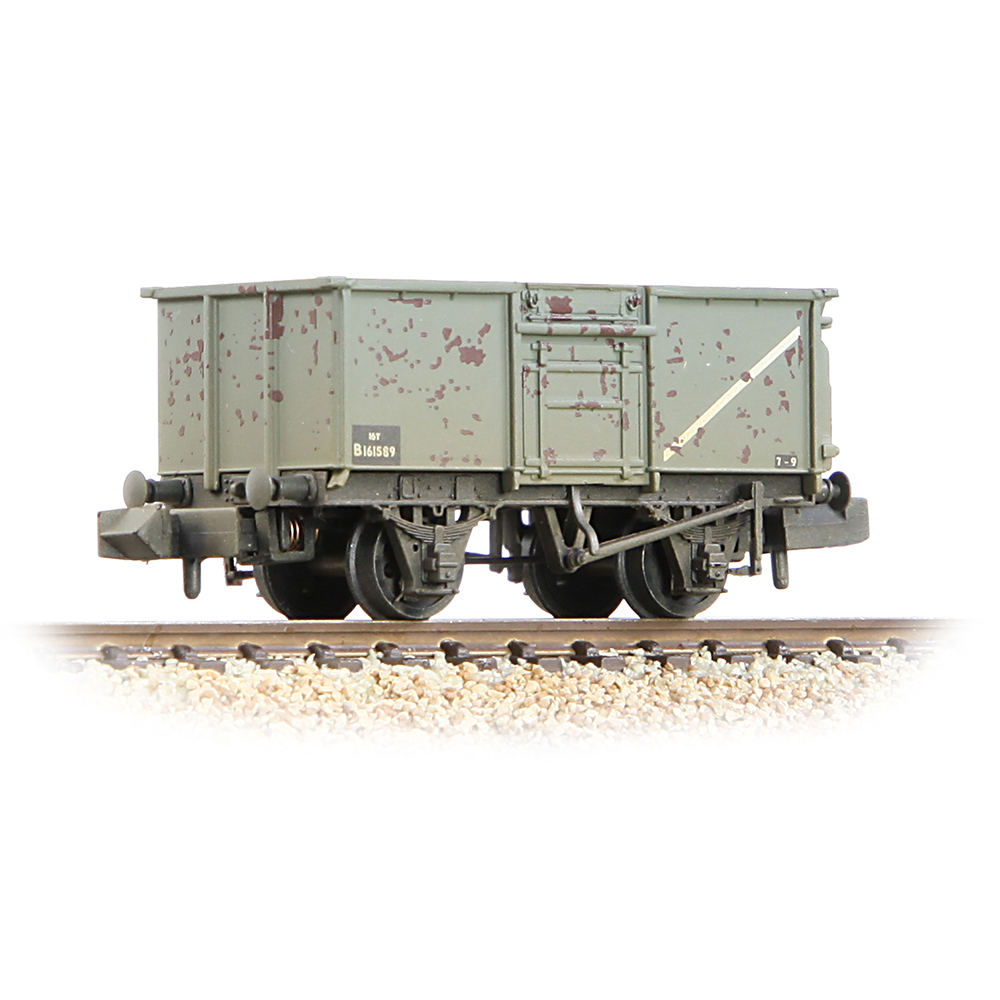
Our Price:
£20.65
£20.65
377-227GBR 16T Steel Mineral Wagon with Top Flap Doors BR Grey [W]
'N' GaugeReleased: 12/07/23Era 4
Our Price:
£20.65
£20.65
377-235BBR 16T Steel Mineral with Top Flap Doors 3-Wagon Pack BR Grey [WL] [W]
'N' GaugeReleased: 12/07/23Era 4
Our Price:
£58.45
£58.45
377-255BBR 16T Steel Mineral Wagon BR Grey (TOPS)
'N' GaugeReleased: 12/07/23Era 7
Our Price:
£19.75
£19.75
377-257BR 16T Steel Mineral Wagon BR Bauxite (TOPS)
'N' GaugeReleased: 12/07/23Era 7
Our Price:
£19.75
£19.75
377-257ABR 16T Steel Mineral Wagon BR Bauxite (TOPS)
'N' GaugeReleased: 12/07/23Era 7
Our Price:
£19.75
£19.75
35-306Class 37/0 Centre Headcode D6829 BR Green (Small Yellow Panels)
'OO' GaugeReleased: 18/07/23DCC Ready (PluX22)Era 5The British Rail 1955 Modernisation Plan paved the way for the large-scale replacement of steam traction with diesel locomotives, and one of the most successful diesel locomotive designs to result from this was the English Electric Type 3. These 1,700hp Types 3 diesel-electric locomotives were built at English Electric’s Vulcan Foundry and by Robert Stephenson & Hawthorns between 1960 and 1965, with 309 examples produced in total. When TOPS was implemented the type was designated Class 37.
The class proved popular with railwaymen and so in 1985, a major refurbishment programme for the Class 37 locomotives was sanctioned to extend the working lives of 135 locomotives. Features of the refurbishment involved plating over the four-character head codes and sealing off the nose end communication doors. Dedicated freight locomotives received lower gearing to increase the tractive effort, and some were fitted with extra ballast or even more powerful engines. A new subclass was created for locomotives refurbished with Electric Train Heating (ETH) equipment, allowing their use on passenger trains the whole year-round.
With the sectorisation of British Rail taking hold in the early-1980s, the locomotives returned to traffic following refurbishment in a wide and diverse range of liveries. Passenger machines appeared in BR Blue Large Logo, InterCity and Regional Railways schemes to name just three, whilst freight engines received numerous varieties of Railfreight livery, Transrail, Mainline and Loadhaul. The Class continued to be widely used into the Privatisation-era, with examples operating for the likes of EWS, DRS, West Coast Railways and Colas, whilst others have received ‘retro’ heritage repaints.

Our Price:
£212.45
£212.45
35-306SFXClass 37/0 Centre Headcode D6829 BR Green (Small Yellow Panels) With DCC Sound & Working Fans
'OO' GaugeReleased: 18/07/23DCC FittedDCC SoundEra 5SOUNDS
F0 - Directional Lights - On / Off (plus Light Switch Sound)
F1 - On - Warm Engine Start / On, Off - Failed Engine Start / On, Off, On, Off, On - Cold Engine Start
F2 - Brake
F3 - Single Horn (Playable)
F4 - Double Horn
F5 - Light Engine Mode
F6 - Coasting (Manual notch Down if F22 On)
F7 - Speed Lock
F8 - On - Sound Fade Out / Off - Sound Fade In
F9 - Flange Squeal (Speed Related)
F10* - Fan Noise
F11 - Buffer Up
F12 - Coupling
F13 - Stationary - Guard’s Whistle / Moving - Detonators
F14 - Wagon Snatching & Buffering (Speed Related)
F15 - High Intensity Light (If Fitted)
F16 - Red Tail Lights On Both Ends (Non Directional)
F17 - Marker Lights On Both Ends (Non Directional)
F18 - Cab Light On - No. 1 End (Fan)
F19 - Cab Light On - No. 2 End (non-Fan)
F20 - No. 1 End Directional Lights Off
F21 - No. 2 End Directional Lights Off
F22 - Compressor
F23 - Windscreen Wipers
F24 - Engine Room Lights
F25 - Spirax Valve
F26 - Shunt Mode
F27 - Volume Down
F28 - Volume Up
* Fan Sounds play as part of the Sound Project with F1 On. F10 allows you to override this and activate on demand (not applicable to Sound Project 1 - Class 37/0s as-built)
Analogue Users: Please note that normal load running sounds and any other automatic or randomised sounds will also operate when this model is used on analogue control (DC) straight from the box!

Our Price:
£322.95
£322.95
 913001
Liverpool & Manchester Railway ‘Lion’ (1930 condition)
'OO' GaugeReleased: 25/07/23DCC Ready (Next18)Era 3Built in 1837 at a cost of £1,100, Lion, along with its sister Tiger, was the first locomotive built by Todd, Kitson and Laird in Leeds. Designated a ‘luggage engine’, Lion was first used as a banking engine before resuming luggage duties for several years before finally working as a ballast engine. Lion was sold in 1859 to the Mersey Docks & Harbour Board where it was used around the docks before being turned into a stationary pumping engine. ‘Discovered’ by members of the Liverpool Engineering Society, Lion was presented to the society by the Dock Board in 1928. Society members then formed the Old Locomotive Committee, which continued to care for Lion for several decades.
The LMS created the shape of Lion as we know it today during its overhaul at Crewe works. It undertook a prominent role in the Liverpool & Manchester Railway’s centenary celebrations in 1930, where it hauled a train of specially built 1830s-style coaches. Lion was removed from its plinth at Liverpool Lime Street to make its film debut, in the 1937 film Victoria the Great. It left Liverpool again in 1938 for the centenary celebrations of the London & Birmingham Railway and again during the Second World War for the safety of the Crewe Works paintshop. Its next public appearance would really throw it into the public spotlight.
The producers at Ealing Studios need an antique locomotive to star in its new film about a local village that saves its branch line by running it themselves, with the help of an old engine from a museum. Lion was overhauled at Crewe and specially painted for its starring role, especially as this was the first Ealing Comedy to be shot in colour.
The Titfield Thunderbolt was released in 1953 and Lion went back into store. It made a brief appearance in 1961 for more filming, albeit the TV show Lookaround. Then, in 1967, Lion took up position in the City of Liverpool Museums’ new transport gallery. Due to its condition, it was cosmetically restored between 1968 and 1969. Lion was awakened from its slumbers in 1979 in order for it to take part in the 150th anniversary celebrations of the Rainhill Trials. It was overhauled by apprentices at Ruston Diesels in Newton-le-Willows and starred at the Rainhill Cavalcade in 1980. It continued to appear in steam until 1984 when it required repairs.
Lion’s final spell in traffic was between 1987 and 1988 when it celebrated its 150th birthday. Sadly, once the celebrations were over, it was decided to withdraw Lion permanently. After display in Liverpool and Manchester, Lion moved into its new home, the re-vamped Museum of Liverpool, which opened in 2011. Lion is still one of the museum’s star exhibits.

Our Price:
£152.95
£152.95
913501Liverpool & Manchester Railway ‘Lion’ (1930 condition) With DCC Sound Fitted
'OO' GaugeReleased: 25/07/23DCC FittedDCC SoundEra 3Built in 1837 at a cost of £1,100, Lion, along with its sister Tiger, was the first locomotive built by Todd, Kitson and Laird in Leeds. Designated a ‘luggage engine’, Lion was first used as a banking engine before resuming luggage duties for several years before finally working as a ballast engine. Lion was sold in 1859 to the Mersey Docks & Harbour Board where it was used around the docks before being turned into a stationary pumping engine. ‘Discovered’ by members of the Liverpool Engineering Society, Lion was presented to the society by the Dock Board in 1928. Society members then formed the Old Locomotive Committee, which continued to care for Lion for several decades.
The LMS created the shape of Lion as we know it today during its overhaul at Crewe works. It undertook a prominent role in the Liverpool & Manchester Railway’s centenary celebrations in 1930, where it hauled a train of specially built 1830s-style coaches. Lion was removed from its plinth at Liverpool Lime Street to make its film debut, in the 1937 film Victoria the Great. It left Liverpool again in 1938 for the centenary celebrations of the London & Birmingham Railway and again during the Second World War for the safety of the Crewe Works paintshop. Its next public appearance would really throw it into the public spotlight.
The producers at Ealing Studios need an antique locomotive to star in its new film about a local village that saves its branch line by running it themselves, with the help of an old engine from a museum. Lion was overhauled at Crewe and specially painted for its starring role, especially as this was the first Ealing Comedy to be shot in colour.
The Titfield Thunderbolt was released in 1953 and Lion went back into store. It made a brief appearance in 1961 for more filming, albeit the TV show Lookaround. Then, in 1967, Lion took up position in the City of Liverpool Museums’ new transport gallery. Due to its condition, it was cosmetically restored between 1968 and 1969. Lion was awakened from its slumbers in 1979 in order for it to take part in the 150th anniversary celebrations of the Rainhill Trials. It was overhauled by apprentices at Ruston Diesels in Newton-le-Willows and starred at the Rainhill Cavalcade in 1980. It continued to appear in steam until 1984 when it required repairs.
Lion’s final spell in traffic was between 1987 and 1988 when it celebrated its 150th birthday. Sadly, once the celebrations were over, it was decided to withdraw Lion permanently. After display in Liverpool and Manchester, Lion moved into its new home, the re-vamped Museum of Liverpool, which opened in 2011. Lion is still one of the museum’s star exhibits.

Our Price:
£237.95
£237.95
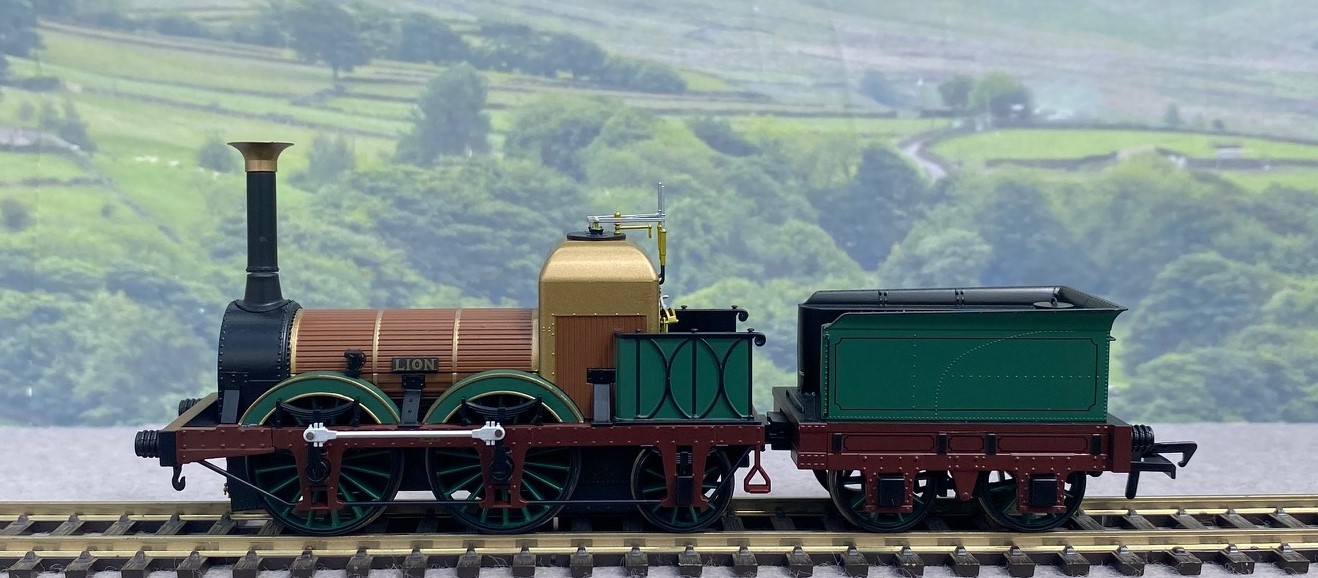
913002Liverpool & Manchester Railway ‘Lion’ (1980 condition)
'OO' GaugeReleased: 25/07/23DCC Ready (Next18)Era 6/7Built in 1837 at a cost of £1,100, Lion, along with its sister Tiger, was the first locomotive built by Todd, Kitson and Laird in Leeds. Designated a ‘luggage engine’, Lion was first used as a banking engine before resuming luggage duties for several years before finally working as a ballast engine. Lion was sold in 1859 to the Mersey Docks & Harbour Board where it was used around the docks before being turned into a stationary pumping engine. ‘Discovered’ by members of the Liverpool Engineering Society, Lion was presented to the society by the Dock Board in 1928. Society members then formed the Old Locomotive Committee, which continued to care for Lion for several decades.
The LMS created the shape of Lion as we know it today during its overhaul at Crewe works. It undertook a prominent role in the Liverpool & Manchester Railway’s centenary celebrations in 1930, where it hauled a train of specially built 1830s-style coaches. Lion was removed from its plinth at Liverpool Lime Street to make its film debut, in the 1937 film Victoria the Great. It left Liverpool again in 1938 for the centenary celebrations of the London & Birmingham Railway and again during the Second World War for the safety of the Crewe Works paintshop. Its next public appearance would really throw it into the public spotlight.
The producers at Ealing Studios need an antique locomotive to star in its new film about a local village that saves its branch line by running it themselves, with the help of an old engine from a museum. Lion was overhauled at Crewe and specially painted for its starring role, especially as this was the first Ealing Comedy to be shot in colour.
The Titfield Thunderbolt was released in 1953 and Lion went back into store. It made a brief appearance in 1961 for more filming, albeit the TV show Lookaround. Then, in 1967, Lion took up position in the City of Liverpool Museums’ new transport gallery. Due to its condition, it was cosmetically restored between 1968 and 1969. Lion was awakened from its slumbers in 1979 in order for it to take part in the 150th anniversary celebrations of the Rainhill Trials. It was overhauled by apprentices at Ruston Diesels in Newton-le-Willows and starred at the Rainhill Cavalcade in 1980. It continued to appear in steam until 1984 when it required repairs.
Lion’s final spell in traffic was between 1987 and 1988 when it celebrated its 150th birthday. Sadly, once the celebrations were over, it was decided to withdraw Lion permanently. After display in Liverpool and Manchester, Lion moved into its new home, the re-vamped Museum of Liverpool, which opened in 2011. Lion is still one of the museum’s star exhibits.
Our Price:
£152.95
£152.95
913502Liverpool & Manchester Railway ‘Lion’ (1980 condition) With DCC Sound Fitted
'OO' GaugeReleased: 25/07/23DCC FittedDCC SoundEra 6/7Built in 1837 at a cost of £1,100, Lion, along with its sister Tiger, was the first locomotive built by Todd, Kitson and Laird in Leeds. Designated a ‘luggage engine’, Lion was first used as a banking engine before resuming luggage duties for several years before finally working as a ballast engine. Lion was sold in 1859 to the Mersey Docks & Harbour Board where it was used around the docks before being turned into a stationary pumping engine. ‘Discovered’ by members of the Liverpool Engineering Society, Lion was presented to the society by the Dock Board in 1928. Society members then formed the Old Locomotive Committee, which continued to care for Lion for several decades.
The LMS created the shape of Lion as we know it today during its overhaul at Crewe works. It undertook a prominent role in the Liverpool & Manchester Railway’s centenary celebrations in 1930, where it hauled a train of specially built 1830s-style coaches. Lion was removed from its plinth at Liverpool Lime Street to make its film debut, in the 1937 film Victoria the Great. It left Liverpool again in 1938 for the centenary celebrations of the London & Birmingham Railway and again during the Second World War for the safety of the Crewe Works paintshop. Its next public appearance would really throw it into the public spotlight.
The producers at Ealing Studios need an antique locomotive to star in its new film about a local village that saves its branch line by running it themselves, with the help of an old engine from a museum. Lion was overhauled at Crewe and specially painted for its starring role, especially as this was the first Ealing Comedy to be shot in colour.
The Titfield Thunderbolt was released in 1953 and Lion went back into store. It made a brief appearance in 1961 for more filming, albeit the TV show Lookaround. Then, in 1967, Lion took up position in the City of Liverpool Museums’ new transport gallery. Due to its condition, it was cosmetically restored between 1968 and 1969. Lion was awakened from its slumbers in 1979 in order for it to take part in the 150th anniversary celebrations of the Rainhill Trials. It was overhauled by apprentices at Ruston Diesels in Newton-le-Willows and starred at the Rainhill Cavalcade in 1980. It continued to appear in steam until 1984 when it required repairs.
Lion’s final spell in traffic was between 1987 and 1988 when it celebrated its 150th birthday. Sadly, once the celebrations were over, it was decided to withdraw Lion permanently. After display in Liverpool and Manchester, Lion moved into its new home, the re-vamped Museum of Liverpool, which opened in 2011. Lion is still one of the museum’s star exhibits.

Our Price:
£237.95
£237.95
R30307Potter Logistics, Sentinel, 0-6-0, 'Pride of the Fens'
'OO' GaugeReleased: 26/07/23DCC Ready (6 Pin)Era 11Founded as Ally & MacLellan, Glasgow in 1875 and then later known as the Sentinel Waggon Works Ltd, the company went through various place and name changes until in 1957 Sentinel (Shrewsbury) Ltd was obtained by Rolls-Royce.
At that time Sentinel were producing steam locomotives and lorries, but the manufacturing of these vehicles ceased in 1958. In 1959, Sentinel produced a prototype diesel shunter which was operated on the military controlled Shropshire & Montgomeryshire Railway. In total 17 were produced and operated quite successfully during that year.
The 0-6-0 Sentinel was a larger version of their first 0-4-0 example. The first such 0-6-0 example was built in 1960, with full production beginning the following year with over 100 examples being built before the end of 1971. The locomotives were fitted with 8 cylinder 325 horsepower engines. So successful was the 0-6-0 design that the a further 36 examples were built in Lisbon by Sorefame, where they were designated the Class 1151.
Sentinel 10255, its works number, left the production line on the 25th May 1966, being delivered into NCB ownership shortly after at their Baddesley Colliery in the South Midlands. Curiously, and unlike most other NCB examples the locomotive would not receive a running number, and would be known either by a name or its works number for most of its life. In the modern era the locomotive has changed hands a few times, being owned by Potter Logistics as their striking yellow 'Pride of the Fens' and Ed Murray and Sons.

Our Price:
£98.09
£98.09