
Search results
 R30132
BR, Class 9F, 2-10-0, 92002
 'OO' Gauge
 Released: 25/09/23
 DCC Ready (21 Pin)
 Era 4
Era 4The British Railways Standard 9F Class was a 2-10-0 steam locomotive, the last of the standardised BR designs. The Robert Riddles design was intended as a long distance heavy express freight locomotive. In total 251 of the class were produced between January 1954 and March 1960, with the final locomotive No. 92220 'Evening Star' being the last steam locomotive built by British Railways.
The huge length of the 10 coupled driving wheels proved problematic when faced with tight curves, a situation that freight haulage would make inevitable. A solution was found by removing the flanges from the centre driving wheel and reducing the size on the flanges on the second and fourth driving axle's wheels.
Riddles had chosen the 2-10-0 wheel configuration in-order to spread the load of the boiler over a greater area. This meant that the boiler had to be raised considerably compared to other designs to allow the firebox to sit above the trailing driving wheels. As a result, the 9F features a distinctive void between the suspended boiler and the footplate.
In operation the class proved extremely versatile. Not only did the 9F excel as a freight locomotive, but when required it also succeeded as a passenger locomotive. Reports even suggest that when 92220 'Evening Star' was used to pull the Red Dragon express service between Cardiff and London it was forced to delay its arrival to allow the restaurant services to be completed, having outperformed the normal Britannia Class locomotives used on the service.
This was not the only time 9Fs had been recorded outperforming dedicated express locomotives and on such services the locomotives were capable of running at over 90mph. This combination of high speed, fast acceleration and powerful hauling capabilities mean that many consider the class to be pinnacle of British steam locomotive design.
Locomotive numbers 92165-92167 were built with a mechanical stoker. This system used a helical screw to move coal from the tender straight into the firebox. This meant that coal could be burnt a faster rate than a fireman could maintain otherwise.
Systems like this proved extremely useful on long distance American railways however in Britain it was rare for a locomotive to require such as high rate of coal delivery over a long period of time meaning that a good fireman could prove just as effective.
Locomotive 92002 was the third such locomotive to be constructed by BR, being built at Crewe in 1954. The locomotive was outshopped with the BR1G tender and in the usual BR black colour scheme. The locomotive would go on to be one of the 106 locomotives withdrawn in 1967, the locomotive would not be preserved.

Our Price:
£227.69
£227.69
R30133BR, Class 9F, 2-10-0, 92097 with Westinghouse Pumps
'OO' GaugeReleased: 25/09/23DCC Ready (21 Pin)Era 5The British Railways Standard 9F Class was a 2-10-0 steam locomotive, the last of the standardised BR designs. The Robert Riddles design was intended as a long distance heavy express freight locomotive. In total 251 of the class were produced between January 1954 and March 1960, with the final locomotive No. 92220 'Evening Star' being the last steam locomotive built by British Railways.
The huge length of the 10 coupled driving wheels proved problematic when faced with tight curves, a situation that freight haulage would make inevitable. A solution was found by removing the flanges from the centre driving wheel and reducing the size on the flanges on the second and fourth driving axle's wheels.
Riddles had chosen the 2-10-0 wheel configuration in-order to spread the load of the boiler over a greater area. This meant that the boiler had to be raised considerably compared to other designs to allow the firebox to sit above the trailing driving wheels. As a result, the 9F features a distinctive void between the suspended boiler and the footplate.
In operation the class proved extremely versatile. Not only did the 9F excel as a freight locomotive, but when required it also succeeded as a passenger locomotive. Reports even suggest that when 92220 'Evening Star' was used to pull the Red Dragon express service between Cardiff and London it was forced to delay its arrival to allow the restaurant services to be completed, having outperformed the normal Britannia Class locomotives used on the service.
This was not the only time 9Fs had been recorded outperforming dedicated express locomotives and on such services the locomotives were capable of running at over 90mph. This combination of high speed, fast acceleration and powerful hauling capabilities mean that many consider the class to be pinnacle of British steam locomotive design.
Locomotive numbers 92165-92167 were built with a mechanical stoker. This system used a helical screw to move coal from the tender straight into the firebox. This meant that coal could be burnt a faster rate than a fireman could maintain otherwise.
Systems like this proved extremely useful on long distance American railways however in Britain it was rare for a locomotive to require such as high rate of coal delivery over a long period of time meaning that a good fireman could prove just as effective.
Locomotive 92002 was the third such locomotive to be constructed by BR, being built at Crewe in 1954. The locomotive was outshopped with the BR1G tender and in the usual BR black colour scheme. The locomotive would go on to be one of the 106 locomotives withdrawn in 1967, the locomotive would not be preserved.

Our Price:
£227.69
£227.69
 372-626B
LMS Ivatt 2MT 46474 BR Lined Black (Early Emblem)
'N' GaugeReleased: 26/09/23DCC Ready (Next18)Era 4Designed by H. G. Ivatt for the London, Midland & Scottish Railway (LMS), 128 of these Class 2 Moguls were built for light freight and passenger duties. With construction commencing in 1946, just twenty examples were built by the LMS and the remaining 108 were outshopped by British Railways following Nationalisation in 1948. The construction programme was completed in 1952 and these Mixed Traffic locomotives would go on to operate on all the BR regions, with the exception of the Southern. Light axle loadings allowed the Ivatt 2MTs to be used on most routes including branch lines, where their almost enclosed cabs made them ideal for working tender first when no turning facilities existed. The design provided the basis for the BR Standard Class 2MT 2-6-0, and the two are very similar in appearance, with the Standard version having only a modified cab and tender profile to allow unrestricted route availability across the British network.
With BR progressively closing more and more branch lines, and rationalising others – often employing new diesel multiple units to provide a more economical passenger service – duties for small locomotives like the Ivatt 2MTs began to disappear and the decline of the class began in 1961 when the first example was withdrawn. The Mogul’s versatility and its relatively modern design however ensured that many examples were still in traffic until the mid-1960s, but by 1967 all had been withdrawn. Thankfully, seven Ivatt 2MT have been preserved and the type is an ideal source of motive power for many of the trains running on heritage railways today.

Our Price:
£140.20
£140.20
372-628ASFLMS Ivatt 2MT 46447 BR Lined Black (Late Crest) With DCC Sound Fitted
'N' GaugeReleased: 26/09/23DCC FittedDCC SoundEra 5SOUNDS
F1 - Sound On / Sound Off
F2 - Brake (Non-Latching)
F3 - Cylinder Drain Cocks
F4 - Single Whistle (Speed Related)
F5 - Reverser
F6 - Shovelling Coal
F7 - Injectors
F8 - Blower
F9 - Flange Squeal (Speed Related)
F10 - Safety Valve
F11 - Handbrake (locomotive will not move with the handbrake applied)
F12 - Water Tank Filling
F13 - Coupling Clank
F14 - Light Engine Mode
F15 - Fade All Sounds
F16 - Guard’s Whistle
F17 - Automatic Wagon Buffering
F18 - Unfitted Freight Mode
F19 - Pinned Brakes (F18 must be On)
F20 - Detonators
F21 - Short ‘Toot Toot’ Whistle
F22 - Long Duration Whistle
F23 - Short Duration Whistle
F24 - ‘Clear from the Guard’
F25 - 'Going under Charlie’
F26* - Guard to Driver Instructions
F27 - Volume Down
F28 - Volume Up
* A selection of different instructions can be selected via CV changes
Analogue Users: Normal-load running sounds, acceleration steam chuff sounds and any other automatic and randomised sounds can be enjoyed when using this model on analogue control (DC) straight from the box!

Our Price:
£225.20
£225.20
374-690ABR Mk2F BSO Brake Second Open BR Blue & Grey
'N' GaugeReleased: 26/09/23Era 7British Rail’s second generation of standard coach was designated the Mk2, following on from the highly successful Mk1 series. Unlike the Mk1s however, the Mk2s evolved through different build batches, and such were the changes that a letter suffix was attributed to identify each of the different variants. Fewer coach types were built, with construction concentrating on vehicles offering standard accommodation of both first- and second-class, plus coaches that made provision for the Guard and train crew. Specialist vehicles such as catering and sleeping cars were not included, instead BR Mk1 and earlier types continued to fulfil these requirements until Mk3s with similar facilities arrived in the late-1970s to replace them. Like the Mk1s, the Mk2s were of steel construction, but featured more of a monocoque design than the Mk1, which added to their safety and integrity in the event of a collision.
The Mk2Fs were the final evolution of the Mk2 family, and these coaches featured full air conditioning, interior panelling made of plastic, a new style of seating and tinted windows. Initially only three types were built, Tourist Second Opens, First Opens and Brake Second Opens, but some First Opens were later converted into Restaurant First Buffets, whilst several Brake Second Opens were fitted with a driving cab at one end, becoming Driving Brake Second Opens for push-pull use.

Our Price:
£49.45
£49.45
374-691BR Mk2F BSO Brake Second Open ScotRail Saltire
'N' GaugeReleased: 26/09/23Era 9British Rail’s second generation of standard coach was designated the Mk2, following on from the highly successful Mk1 series. Unlike the Mk1s however, the Mk2s evolved through different build batches, and such were the changes that a letter suffix was attributed to identify each of the different variants. Fewer coach types were built, with construction concentrating on vehicles offering standard accommodation of both first- and second-class, plus coaches that made provision for the Guard and train crew. Specialist vehicles such as catering and sleeping cars were not included, instead BR Mk1 and earlier types continued to fulfil these requirements until Mk3s with similar facilities arrived in the late-1970s to replace them. Like the Mk1s, the Mk2s were of steel construction, but featured more of a monocoque design than the Mk1, which added to their safety and integrity in the event of a collision.
The Mk2Fs were the final evolution of the Mk2 family, and these coaches featured full air conditioning, interior panelling made of plastic, a new style of seating and tinted windows. Initially only three types were built, Tourist Second Opens, First Opens and Brake Second Opens, but some First Opens were later converted into Restaurant First Buffets, whilst several Brake Second Opens were fitted with a driving cab at one end, becoming Driving Brake Second Opens for push-pull use.

Our Price:
£49.45
£49.45
374-691ABR Mk2F BSO Brake Second Open ScotRail Saltire
'N' GaugeReleased: 26/09/23Era 9British Rail’s second generation of standard coach was designated the Mk2, following on from the highly successful Mk1 series. Unlike the Mk1s however, the Mk2s evolved through different build batches, and such were the changes that a letter suffix was attributed to identify each of the different variants. Fewer coach types were built, with construction concentrating on vehicles offering standard accommodation of both first- and second-class, plus coaches that made provision for the Guard and train crew. Specialist vehicles such as catering and sleeping cars were not included, instead BR Mk1 and earlier types continued to fulfil these requirements until Mk3s with similar facilities arrived in the late-1970s to replace them. Like the Mk1s, the Mk2s were of steel construction, but featured more of a monocoque design than the Mk1, which added to their safety and integrity in the event of a collision.
The Mk2Fs were the final evolution of the Mk2 family, and these coaches featured full air conditioning, interior panelling made of plastic, a new style of seating and tinted windows. Initially only three types were built, Tourist Second Opens, First Opens and Brake Second Opens, but some First Opens were later converted into Restaurant First Buffets, whilst several Brake Second Opens were fitted with a driving cab at one end, becoming Driving Brake Second Opens for push-pull use.

Our Price:
£49.45
£49.45
374-693BR Mk2F BSO Brake Second Open BR InterCity (Swallow)
'N' GaugeReleased: 26/09/23Era 8British Rail’s second generation of standard coach was designated the Mk2, following on from the highly successful Mk1 series. Unlike the Mk1s however, the Mk2s evolved through different build batches, and such were the changes that a letter suffix was attributed to identify each of the different variants. Fewer coach types were built, with construction concentrating on vehicles offering standard accommodation of both first- and second-class, plus coaches that made provision for the Guard and train crew. Specialist vehicles such as catering and sleeping cars were not included, instead BR Mk1 and earlier types continued to fulfil these requirements until Mk3s with similar facilities arrived in the late-1970s to replace them. Like the Mk1s, the Mk2s were of steel construction, but featured more of a monocoque design than the Mk1, which added to their safety and integrity in the event of a collision.
The Mk2Fs were the final evolution of the Mk2 family, and these coaches featured full air conditioning, interior panelling made of plastic, a new style of seating and tinted windows. Initially only three types were built, Tourist Second Opens, First Opens and Brake Second Opens, but some First Opens were later converted into Restaurant First Buffets, whilst several Brake Second Opens were fitted with a driving cab at one end, becoming Driving Brake Second Opens for push-pull use.

Our Price:
£49.45
£49.45
374-693ABR Mk2F BSO Brake Second Open BR InterCity (Swallow)
'N' GaugeReleased: 26/09/23Era 8British Rail’s second generation of standard coach was designated the Mk2, following on from the highly successful Mk1 series. Unlike the Mk1s however, the Mk2s evolved through different build batches, and such were the changes that a letter suffix was attributed to identify each of the different variants. Fewer coach types were built, with construction concentrating on vehicles offering standard accommodation of both first- and second-class, plus coaches that made provision for the Guard and train crew. Specialist vehicles such as catering and sleeping cars were not included, instead BR Mk1 and earlier types continued to fulfil these requirements until Mk3s with similar facilities arrived in the late-1970s to replace them. Like the Mk1s, the Mk2s were of steel construction, but featured more of a monocoque design than the Mk1, which added to their safety and integrity in the event of a collision.
The Mk2Fs were the final evolution of the Mk2 family, and these coaches featured full air conditioning, interior panelling made of plastic, a new style of seating and tinted windows. Initially only three types were built, Tourist Second Opens, First Opens and Brake Second Opens, but some First Opens were later converted into Restaurant First Buffets, whilst several Brake Second Opens were fitted with a driving cab at one end, becoming Driving Brake Second Opens for push-pull use.

Our Price:
£49.45
£49.45
374-736BR Mk2F TSO Tourist Second Open ScotRail Saltire
'N' GaugeReleased: 26/09/23Era 9British Rail’s second generation of standard coach was designated the Mk2, following on from the highly successful Mk1 series. Unlike the Mk1s however, the Mk2s evolved through different build batches, and such were the changes that a letter suffix was attributed to identify each of the different variants. Fewer coach types were built, with construction concentrating on vehicles offering standard accommodation of both first- and second-class, plus coaches that made provision for the Guard and train crew. Specialist vehicles such as catering and sleeping cars were not included, instead BR Mk1 and earlier types continued to fulfil these requirements until Mk3s with similar facilities arrived in the late-1970s to replace them. Like the Mk1s, the Mk2s were of steel construction, but featured more of a monocoque design than the Mk1, which added to their safety and integrity in the event of a collision.
The Mk2Fs were the final evolution of the Mk2 family, and these coaches featured full air conditioning, interior panelling made of plastic, a new style of seating and tinted windows. Initially only three types were built, Tourist Second Opens, First Opens and Brake Second Opens, but some First Opens were later converted into Restaurant First Buffets, whilst several Brake Second Opens were fitted with a driving cab at one end, becoming Driving Brake Second Opens for push-pull use.

Our Price:
£49.45
£49.45
374-736ABR Mk2F TSO Tourist Second Open ScotRail Saltire
'N' GaugeReleased: 26/09/23Era 9British Rail’s second generation of standard coach was designated the Mk2, following on from the highly successful Mk1 series. Unlike the Mk1s however, the Mk2s evolved through different build batches, and such were the changes that a letter suffix was attributed to identify each of the different variants. Fewer coach types were built, with construction concentrating on vehicles offering standard accommodation of both first- and second-class, plus coaches that made provision for the Guard and train crew. Specialist vehicles such as catering and sleeping cars were not included, instead BR Mk1 and earlier types continued to fulfil these requirements until Mk3s with similar facilities arrived in the late-1970s to replace them. Like the Mk1s, the Mk2s were of steel construction, but featured more of a monocoque design than the Mk1, which added to their safety and integrity in the event of a collision.
The Mk2Fs were the final evolution of the Mk2 family, and these coaches featured full air conditioning, interior panelling made of plastic, a new style of seating and tinted windows. Initially only three types were built, Tourist Second Opens, First Opens and Brake Second Opens, but some First Opens were later converted into Restaurant First Buffets, whilst several Brake Second Opens were fitted with a driving cab at one end, becoming Driving Brake Second Opens for push-pull use.

Our Price:
£49.45
£49.45
374-738BR Mk2F TSO Tourist Second Open BR InterCity (Swallow)
'N' GaugeReleased: 26/09/23Era 8British Rail’s second generation of standard coach was designated the Mk2, following on from the highly successful Mk1 series. Unlike the Mk1s however, the Mk2s evolved through different build batches, and such were the changes that a letter suffix was attributed to identify each of the different variants. Fewer coach types were built, with construction concentrating on vehicles offering standard accommodation of both first- and second-class, plus coaches that made provision for the Guard and train crew. Specialist vehicles such as catering and sleeping cars were not included, instead BR Mk1 and earlier types continued to fulfil these requirements until Mk3s with similar facilities arrived in the late-1970s to replace them. Like the Mk1s, the Mk2s were of steel construction, but featured more of a monocoque design than the Mk1, which added to their safety and integrity in the event of a collision.
The Mk2Fs were the final evolution of the Mk2 family, and these coaches featured full air conditioning, interior panelling made of plastic, a new style of seating and tinted windows. Initially only three types were built, Tourist Second Opens, First Opens and Brake Second Opens, but some First Opens were later converted into Restaurant First Buffets, whilst several Brake Second Opens were fitted with a driving cab at one end, becoming Driving Brake Second Opens for push-pull use.

Our Price:
£49.45
£49.45
374-738ABR Mk2F TSO Tourist Second Open BR InterCity (Swallow)
'N' GaugeReleased: 26/09/23Era 8British Rail’s second generation of standard coach was designated the Mk2, following on from the highly successful Mk1 series. Unlike the Mk1s however, the Mk2s evolved through different build batches, and such were the changes that a letter suffix was attributed to identify each of the different variants. Fewer coach types were built, with construction concentrating on vehicles offering standard accommodation of both first- and second-class, plus coaches that made provision for the Guard and train crew. Specialist vehicles such as catering and sleeping cars were not included, instead BR Mk1 and earlier types continued to fulfil these requirements until Mk3s with similar facilities arrived in the late-1970s to replace them. Like the Mk1s, the Mk2s were of steel construction, but featured more of a monocoque design than the Mk1, which added to their safety and integrity in the event of a collision.
The Mk2Fs were the final evolution of the Mk2 family, and these coaches featured full air conditioning, interior panelling made of plastic, a new style of seating and tinted windows. Initially only three types were built, Tourist Second Opens, First Opens and Brake Second Opens, but some First Opens were later converted into Restaurant First Buffets, whilst several Brake Second Opens were fitted with a driving cab at one end, becoming Driving Brake Second Opens for push-pull use.

Our Price:
£49.45
£49.45
374-763BR Mk2F FO First Open BR InterCity (Swallow)
'N' GaugeReleased: 26/09/23Era 8British Rail’s second generation of standard coach was designated the Mk2, following on from the highly successful Mk1 series. Unlike the Mk1s however, the Mk2s evolved through different build batches, and such were the changes that a letter suffix was attributed to identify each of the different variants. Fewer coach types were built, with construction concentrating on vehicles offering standard accommodation of both first- and second-class, plus coaches that made provision for the Guard and train crew. Specialist vehicles such as catering and sleeping cars were not included, instead BR Mk1 and earlier types continued to fulfil these requirements until Mk3s with similar facilities arrived in the late-1970s to replace them. Like the Mk1s, the Mk2s were of steel construction, but featured more of a monocoque design than the Mk1, which added to their safety and integrity in the event of a collision.
The Mk2Fs were the final evolution of the Mk2 family, and these coaches featured full air conditioning, interior panelling made of plastic, a new style of seating and tinted windows. Initially only three types were built, Tourist Second Opens, First Opens and Brake Second Opens, but some First Opens were later converted into Restaurant First Buffets, whilst several Brake Second Opens were fitted with a driving cab at one end, becoming Driving Brake Second Opens for push-pull use.

Our Price:
£49.45
£49.45
R30134LMS, Princess Royal Class 'The Turbomotive', 4-6-2, 6202
'OO' GaugeReleased: 27/09/23DCC Ready (21 Pin)Era 3Stanier’s Turbomotive, often referred to as ‘The Turbo’ was an experimental non-condensing steam turbine locomotive inspired by similar Swedish Ljungström locomotives. No. 6202 was built as the third of the 'Princess Royal' Class by Stanier, an attempt to innovate steam locomotive technology with the advent of Dieselisation and Grouping upending the traditional notions of rail transport.

Our Price:
£239.84
£239.84
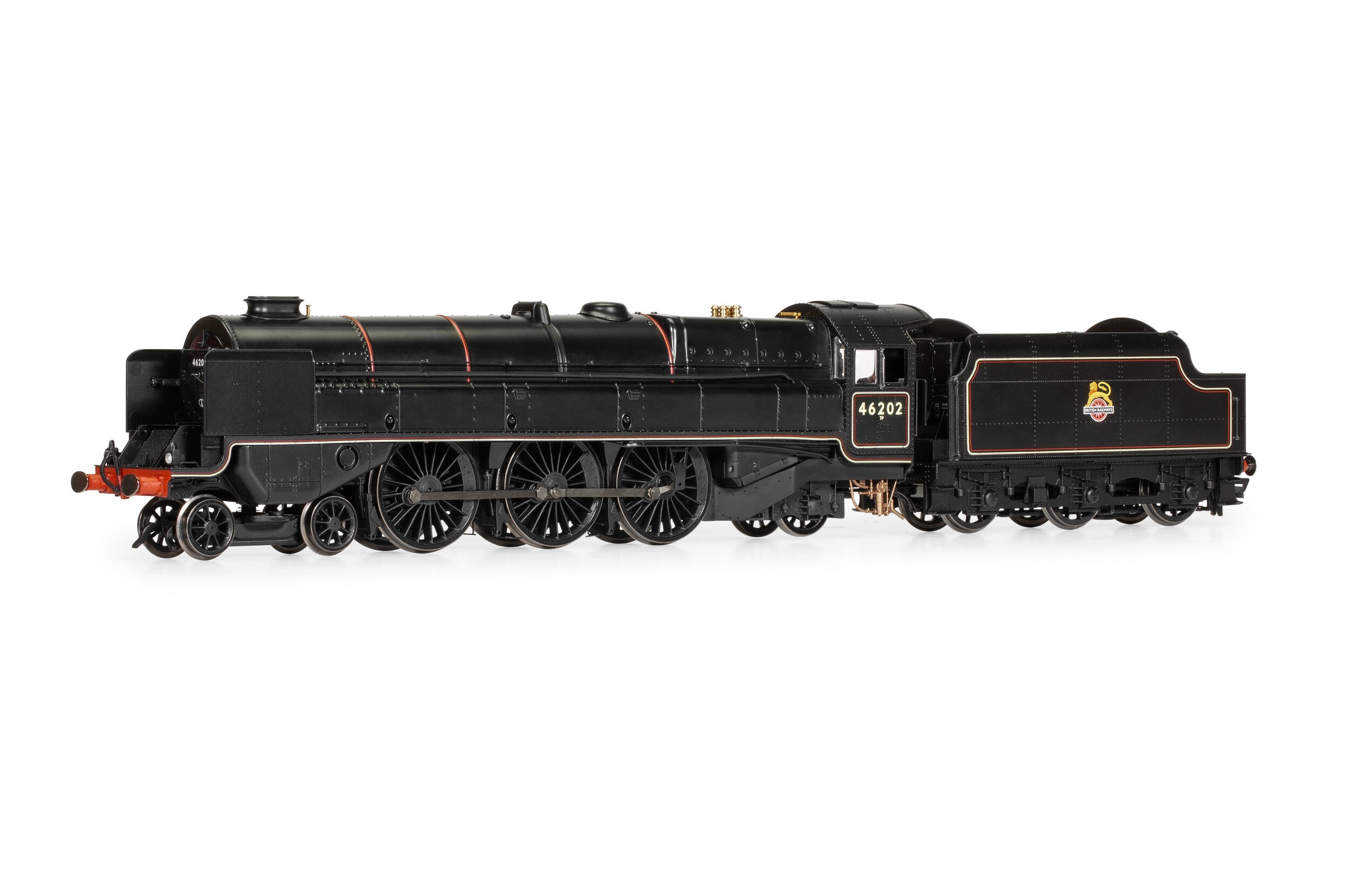
R30135BR, Princess Royal Class 'The Turbomotive', 4-6-2, 46202
'OO' GaugeReleased: 27/09/23DCC Ready (21 Pin)Era 4Stanier’s Turbomotive, often referred to as ‘The Turbo’ was an experimental non-condensing steam turbine locomotive inspired by similar Swedish Ljungström locomotives. No. 6202 was built as the third of the 'Princess Royal' Class by Stanier, an attempt to innovate steam locomotive technology with the advent of Dieselisation and Grouping upending the traditional notions of rail transport.
Our Price:
£239.84
£239.84
R30012GCR(N), Ruston & Hornsby 48DS, 0-4-0, No.1 'Qwag'
'OO' GaugeReleased: 27/09/23DCC Ready (6 Pin)Era 10'Qwag' or No. 371971 has had a long association with the Great Central Railway, having been the first locomotive to be based at the newly preserved railway in 1972. A refurbishment of 'Qwag' was completed around 2010 with the locomotive being returned to working condition.

Our Price:
£98.09
£98.09
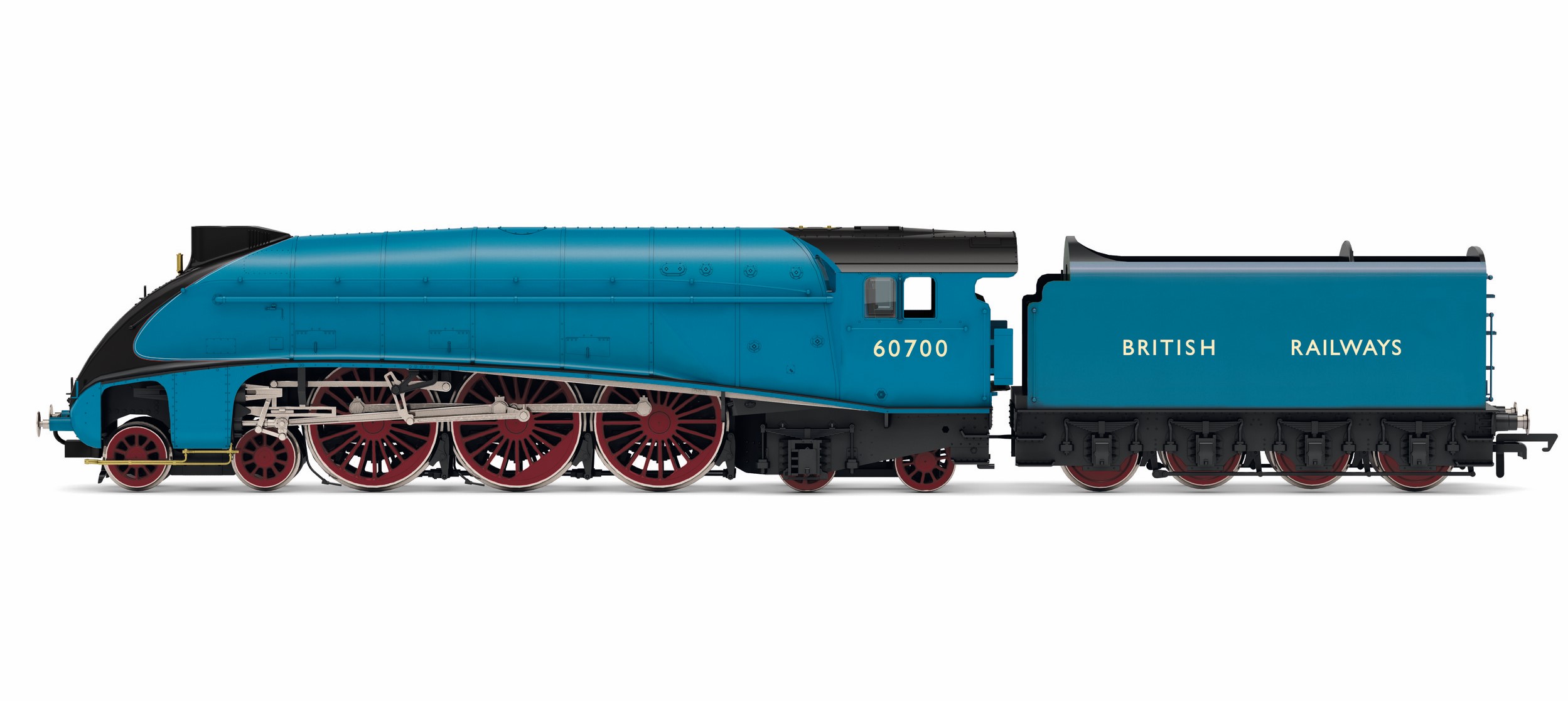
R30125BR, W1 Class 'Hush Hush' Streamlined, 4-6-4, 60700
'OO' GaugeReleased: 28/09/23DCC Ready (21 Pin)Era 4Having been rebuilt with a conventional boiler and A4 style streamlining in 1937, the W1 ‘Hush-Hush’ continued to serve with LNER and later British Railways. Under BR the locomotive was renumbered 60700 and used to operate regular services out of Kings Cross to Leeds and Cambridge, remaining with BR until scrapping in 1959.
Our Price:
£229.04
£229.04
 35-353
Class 20/0 Headcode Box D8133 BR Green (Small Yellow Panels)
'OO' GaugeReleased: 25/09/23DCC Ready (PluX22)Era 5The British Railways Board's (BRB) 1955 modernisation plan called for a change to alternative forms of traction and manufacturers were asked to produce trial or initial designs for evaluation. English Electric adapted an existing design based on an export model for a 1,000bhp diesel and 20 were built as a pilot scheme for assessment.
The first batch was built in 1957 and the diesels were assigned to work from Devon's Road depot, East London. The design was a success from the start and by 1962 a total of 127 had been built. Following assessment of all the Type 1 diesels, BRB placed a further order increasing the total to 228 by 1968 and the design became the BR standard for 1,000bhp diesel locomotives. With the introduction of TOPS the locomotives were designated Class 20 and renumbered 20001 to 20228. The locomotives were principally designed for freight work but also saw service on summer passenger trains where train heating was not required. The Class 20s worked over the Eastern, London Midland and Scottish regions as well as into Wales and were commonly associated with coal traffic. The only drawback the Class had was its single end cab, unlike modern designs that have a cab at each end. BR resolved this problem by regularly operating the Class 20s as pairs, nose to nose, and with the combined power of 2,000bhp they were able to haul the heavier block freight trains.
BR's decision to switch to Type 5 and in particular Class 60 diesels in the late 1980s started a gradual withdrawal of the fleet, with just 28 left by 1994. A tribute to the design is that after 45 years the Class is still in service with DRS on mainline duties following refurbishment, the resulting locomotives being designated Class 20/3s. At least 28 of the class are now preserved.
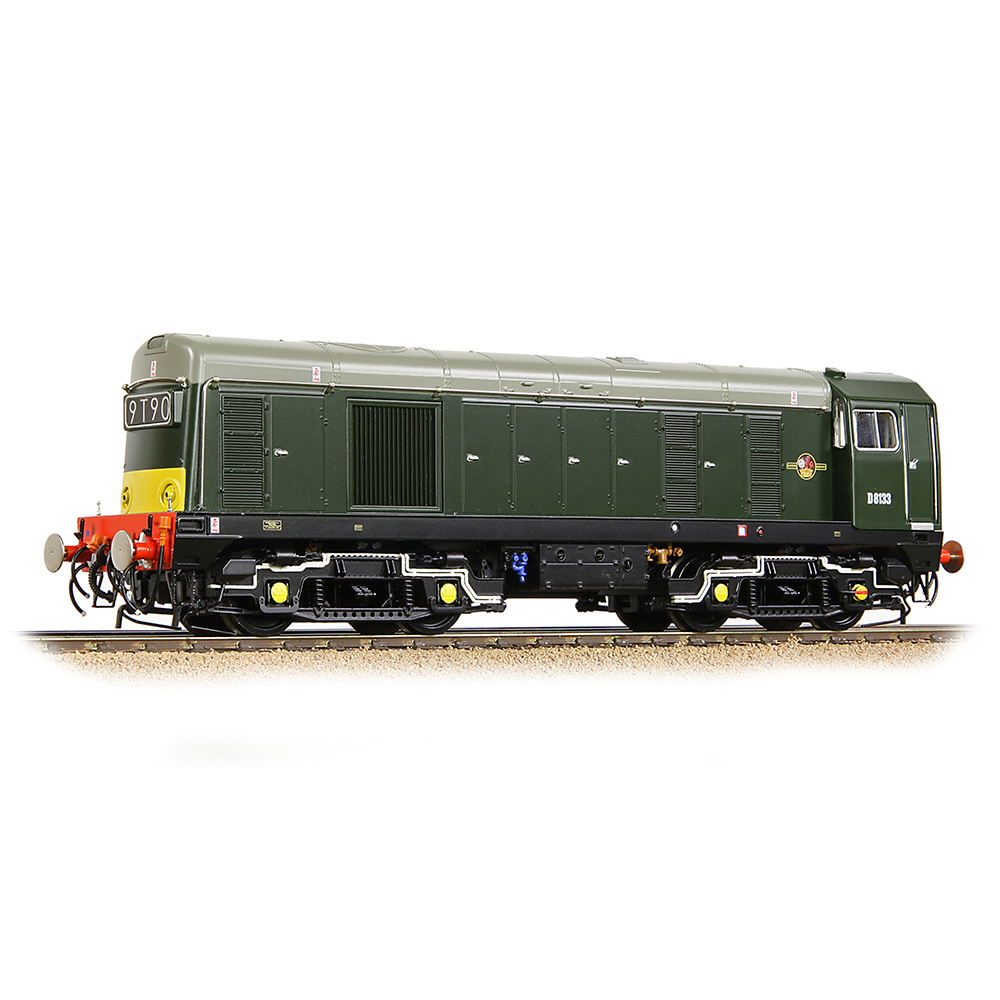
Our Price:
£191.20
£191.20
35-356Class 20/0 Disc Headcode 20072 BR Blue [W]
'OO' GaugeReleased: 25/09/23DCC Ready (PluX22)Era 8CLASS 20/0 HISTORY
The British Railways Board's (BRB) 1955 modernisation plan called for a change to alternative forms of traction and manufacturers were asked to produce trial or initial designs for evaluation. English Electric adapted an existing design based on an export model for a 1,000bhp diesel and 20 were built as a pilot scheme for assessment.
The first batch was built in 1957 and the diesels were assigned to work from Devon's Road depot, East London. The design was a success from the start and by 1962 a total of 127 had been built. Following assessment of all the Type 1 diesels, BRB placed a further order increasing the total to 228 by 1968 and the design became the BR standard for 1,000bhp diesel locomotives. With the introduction of TOPS the locomotives were designated Class 20 and renumbered 20001 to 20228. The locomotives were principally designed for freight work but also saw service on summer passenger trains where train heating was not required. The Class 20s worked over the Eastern, London Midland and Scottish regions as well as into Wales and were commonly associated with coal traffic. The only drawback the Class had was its single end cab, unlike modern designs that have a cab at each end. BR resolved this problem by regularly operating the Class 20s as pairs, nose to nose, and with the combined power of 2,000bhp they were able to haul the heavier block freight trains.
BR's decision to switch to Type 5 and in particular Class 60 diesels in the late 1980s started a gradual withdrawal of the fleet, with just 28 left by 1994. A tribute to the design is that after 45 years the Class is still in service with DRS on mainline duties following refurbishment, the resulting locomotives being designated Class 20/3s. At least 28 of the class are now preserved.

Our Price:
£199.70
£199.70