Search results
 R30135
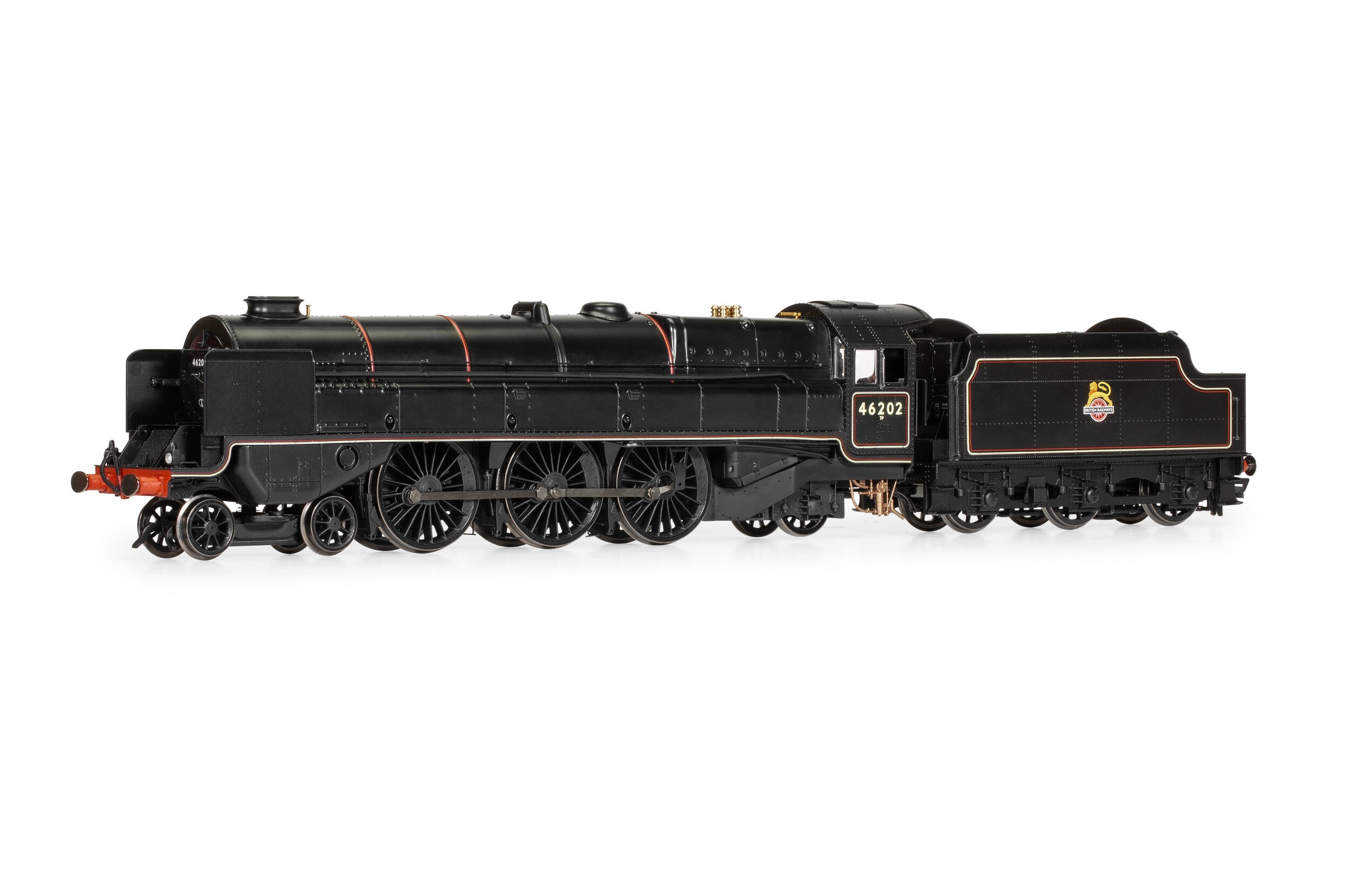
BR, Princess Royal Class 'The Turbomotive', 4-6-2, 46202
 'OO' Gauge
 Released: 27/09/23
 DCC Ready (21 Pin)
 Era 4
Era 4Stanier’s Turbomotive, often referred to as ‘The Turbo’ was an experimental non-condensing steam turbine locomotive inspired by similar Swedish Ljungström locomotives. No. 6202 was built as the third of the 'Princess Royal' Class by Stanier, an attempt to innovate steam locomotive technology with the advent of Dieselisation and Grouping upending the traditional notions of rail transport.
Our Price:
£239.84
£239.84
R30012GCR(N), Ruston & Hornsby 48DS, 0-4-0, No.1 'Qwag'
'OO' GaugeReleased: 27/09/23DCC Ready (6 Pin)Era 10'Qwag' or No. 371971 has had a long association with the Great Central Railway, having been the first locomotive to be based at the newly preserved railway in 1972. A refurbishment of 'Qwag' was completed around 2010 with the locomotive being returned to working condition.

Our Price:
£98.09
£98.09
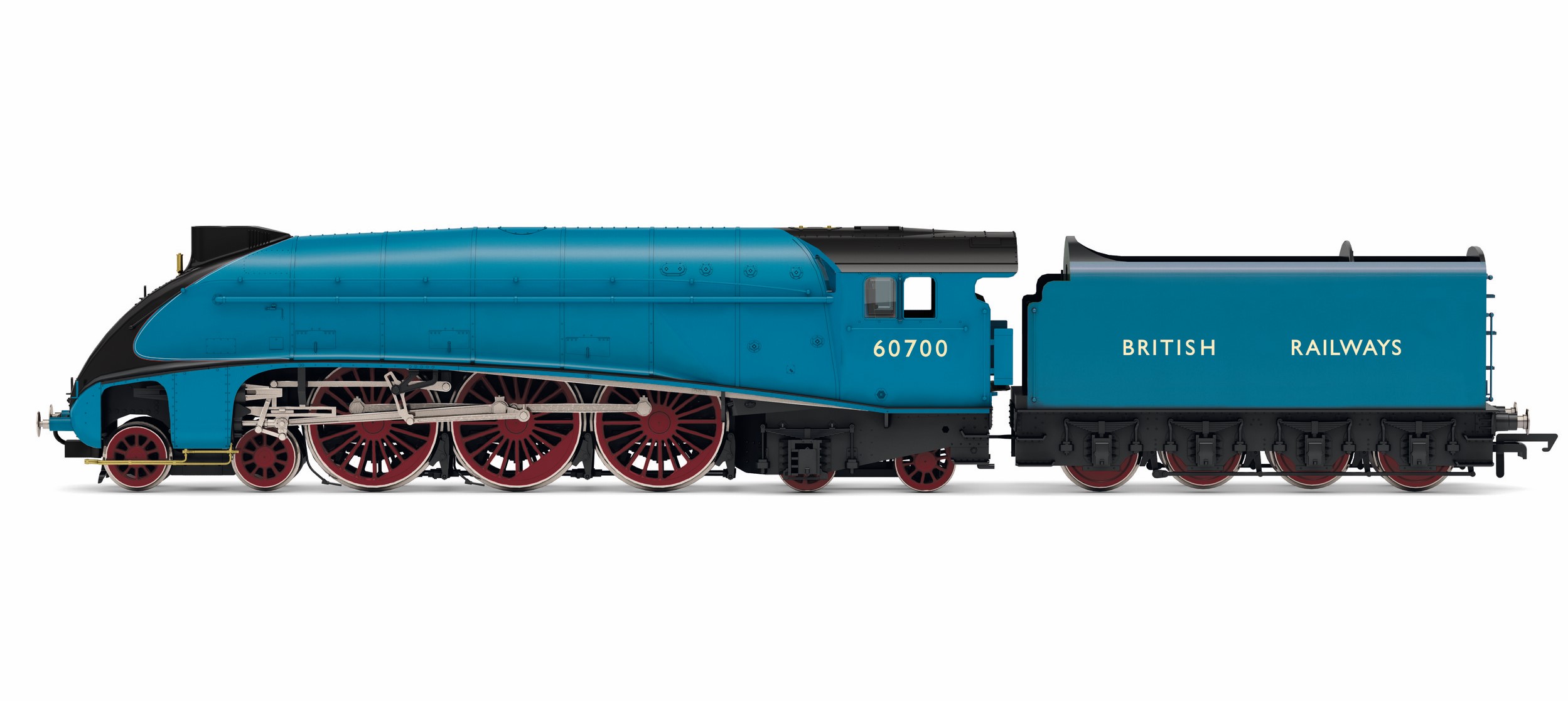
R30125BR, W1 Class 'Hush Hush' Streamlined, 4-6-4, 60700
'OO' GaugeReleased: 28/09/23DCC Ready (21 Pin)Era 4Having been rebuilt with a conventional boiler and A4 style streamlining in 1937, the W1 ‘Hush-Hush’ continued to serve with LNER and later British Railways. Under BR the locomotive was renumbered 60700 and used to operate regular services out of Kings Cross to Leeds and Cambridge, remaining with BR until scrapping in 1959.
Our Price:
£229.04
£229.04
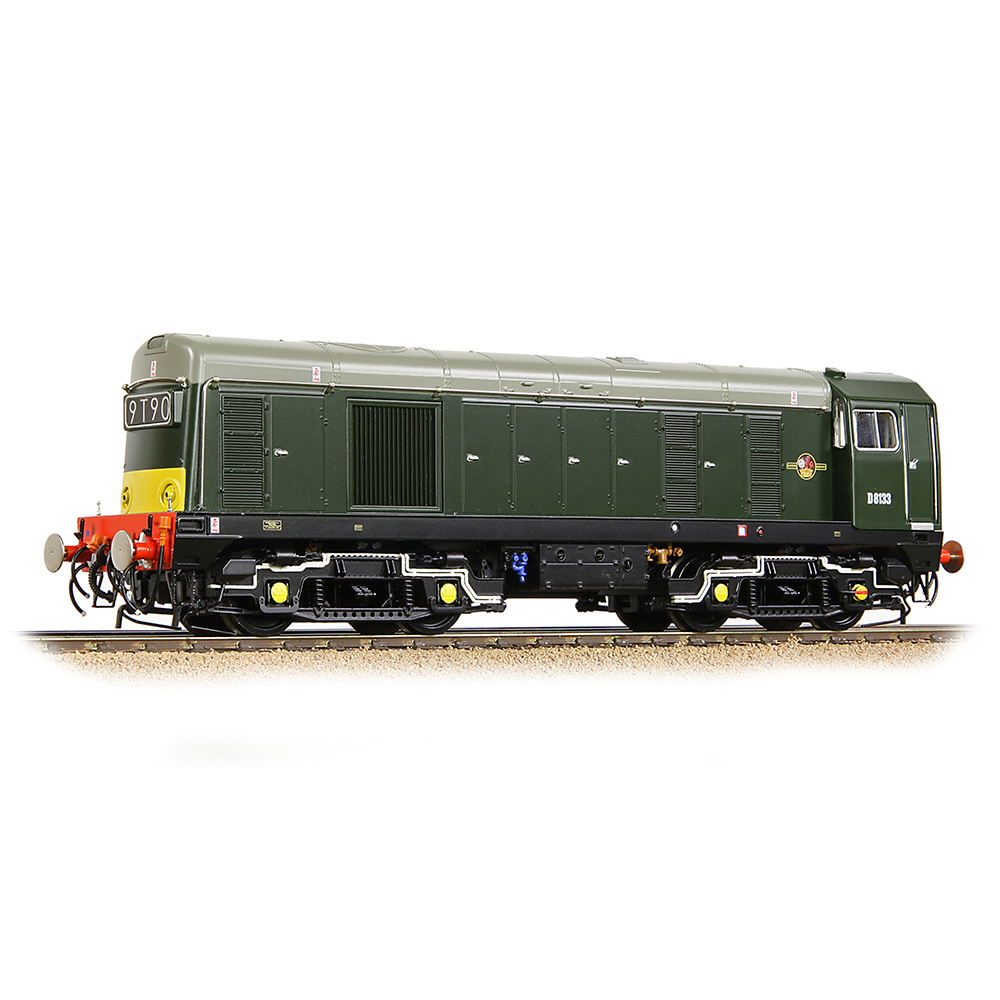
 35-353
Class 20/0 Headcode Box D8133 BR Green (Small Yellow Panels)
'OO' GaugeReleased: 25/09/23DCC Ready (PluX22)Era 5The British Railways Board's (BRB) 1955 modernisation plan called for a change to alternative forms of traction and manufacturers were asked to produce trial or initial designs for evaluation. English Electric adapted an existing design based on an export model for a 1,000bhp diesel and 20 were built as a pilot scheme for assessment.
The first batch was built in 1957 and the diesels were assigned to work from Devon's Road depot, East London. The design was a success from the start and by 1962 a total of 127 had been built. Following assessment of all the Type 1 diesels, BRB placed a further order increasing the total to 228 by 1968 and the design became the BR standard for 1,000bhp diesel locomotives. With the introduction of TOPS the locomotives were designated Class 20 and renumbered 20001 to 20228. The locomotives were principally designed for freight work but also saw service on summer passenger trains where train heating was not required. The Class 20s worked over the Eastern, London Midland and Scottish regions as well as into Wales and were commonly associated with coal traffic. The only drawback the Class had was its single end cab, unlike modern designs that have a cab at each end. BR resolved this problem by regularly operating the Class 20s as pairs, nose to nose, and with the combined power of 2,000bhp they were able to haul the heavier block freight trains.
BR's decision to switch to Type 5 and in particular Class 60 diesels in the late 1980s started a gradual withdrawal of the fleet, with just 28 left by 1994. A tribute to the design is that after 45 years the Class is still in service with DRS on mainline duties following refurbishment, the resulting locomotives being designated Class 20/3s. At least 28 of the class are now preserved.
Our Price:
£191.20
£191.20
35-356Class 20/0 Disc Headcode 20072 BR Blue [W]
'OO' GaugeReleased: 25/09/23DCC Ready (PluX22)Era 8CLASS 20/0 HISTORY
The British Railways Board's (BRB) 1955 modernisation plan called for a change to alternative forms of traction and manufacturers were asked to produce trial or initial designs for evaluation. English Electric adapted an existing design based on an export model for a 1,000bhp diesel and 20 were built as a pilot scheme for assessment.
The first batch was built in 1957 and the diesels were assigned to work from Devon's Road depot, East London. The design was a success from the start and by 1962 a total of 127 had been built. Following assessment of all the Type 1 diesels, BRB placed a further order increasing the total to 228 by 1968 and the design became the BR standard for 1,000bhp diesel locomotives. With the introduction of TOPS the locomotives were designated Class 20 and renumbered 20001 to 20228. The locomotives were principally designed for freight work but also saw service on summer passenger trains where train heating was not required. The Class 20s worked over the Eastern, London Midland and Scottish regions as well as into Wales and were commonly associated with coal traffic. The only drawback the Class had was its single end cab, unlike modern designs that have a cab at each end. BR resolved this problem by regularly operating the Class 20s as pairs, nose to nose, and with the combined power of 2,000bhp they were able to haul the heavier block freight trains.
BR's decision to switch to Type 5 and in particular Class 60 diesels in the late 1980s started a gradual withdrawal of the fleet, with just 28 left by 1994. A tribute to the design is that after 45 years the Class is still in service with DRS on mainline duties following refurbishment, the resulting locomotives being designated Class 20/3s. At least 28 of the class are now preserved.

Our Price:
£199.70
£199.70
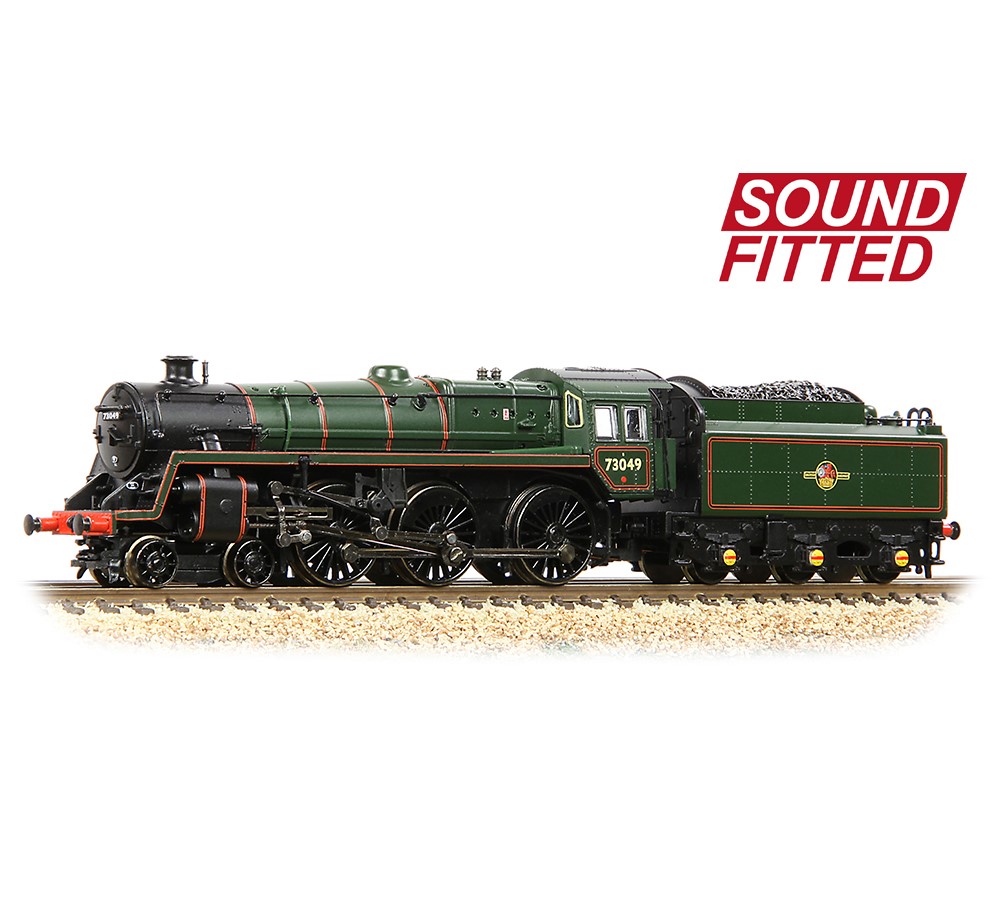
 372-728SF
BR Standard 5MT with BR1 Tender 73049 BR Lined Green (Late Crest) With DCC Sound
'N' GaugeReleased: 25/09/23DCC FittedDCC SoundEra 5SOUNDS
F1 - Sound On / Sound Off
F2 - Brake (Non-Latching)
F3 - Cylinder Drain Cocks
F4 - Single Whistle (Speed Related)
F5 - Reverser
F6 - Shovelling Coal
F7 - Injectors
F8 - Blower
F9 - Flange Squeal (Speed Related)
F10 - Safety Valve
F11 - Handbrake (locomotive will not move with the handbrake applied)
F12 - Water Tank Filling
F13 - Coupling Clank
F14 - Light Engine Mode
F15 - Fade All Sounds
F16 - Guard’s Whistle
F17 - Unfitted Freight Mode
F18 - Chime Whistle (Speed Related)
F19 - Long Duration Whistle
F20 - Short Duration Whistle
F21 - 'Going under Harry’
F22 - 'That’s an all clear from the Guard’
F23 - Guard to Driver - Freight
F24 - ‘Guard to Driver - Passenger
F25 - Volume Down
F26 - Volume Up
Analogue Users: Normal-load running sounds, acceleration steam chuff sounds and any other automatic and randomised sounds can be enjoyed when using this model on analogue control (DC) straight from the box!
Our Price:
£237.95
£237.95
374-081BBR Mk1 BCK Brake Composite Corridor BR Crimson & Cream
'N' GaugeReleased: 25/09/23Era 4
Our Price:
£43.15
£43.15
R30135TXSBR, Princess Royal Class 'The Turbomotive', 4-6-2, 46202 - Era 4 (Sound Fitted)
'OO' GaugeReleased: 13/10/23DCC FittedDCC SoundEra 4With the nationalisation of Britain’s railways, the ‘Princess Royal’ Class Turbomotive later shed its LMS insignia, to be replaced with the new emblem of British Rail and a black livery shortly after receiving its new crest. After a long period of general repair, Turbomotive returned to the main line in 1947 under the number 46202, continuing its function as a distinct and entirely uniquely designed steam turbine locomotive

Our Price:
£281.69
£281.69
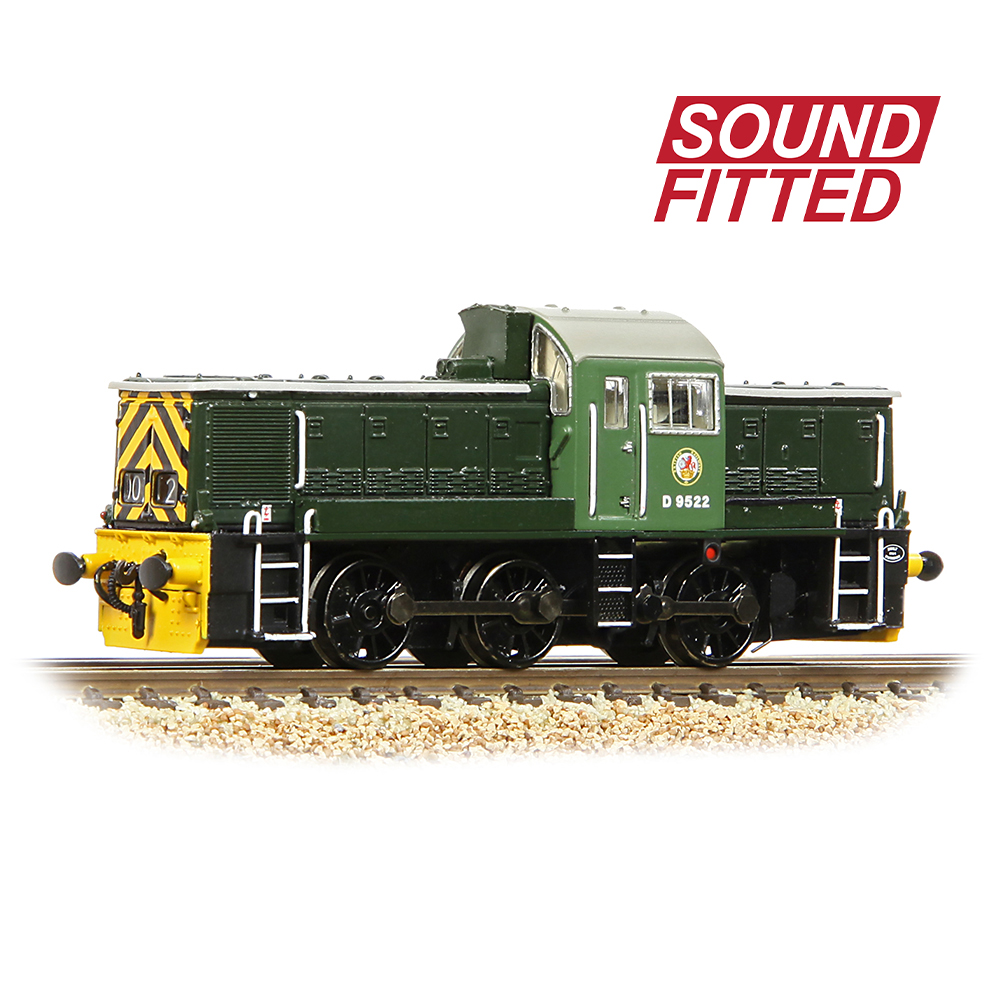
373-950ASFClass 14 D9522 BR Green (Wasp Stripes) With DCC Sound Fitted
'N' GaugeReleased: 30/10/23DCC FittedDCC SoundEra 5SOUNDS
F1 - Engine Start
F2 - Brake
F3 - Horn One (Speed & Direction Related)
F4 - Horn Two (Speed & Direction Related)
F5 - Light Engine
F6 - Engine Idle / Coasting
F7 - Speed Lock
F8 - Flange Squeal (Speed Related)
F9 - Guard’s Whistle
F10 - Buffering Up
F11 - Coupling Up
F12 - Compressor (random sound when stationary)
F13 - Sanding Valve
F14 - Handbrake (Loco will not move when used)
F15 - Priming Pump
F16 - On - Driver’s Door Opening / Off - Driver’s Door Closing
F17 - Fade All Sounds
F18 - Detonators (Speed Related)
F19 - Vocals - “6ft To Buffer Upâ€
F20 - Vocals - “Shunter to Driver Come In, Overâ€
F21 - Vocals - “Slow Down, Slow Downâ€
F22 - Windscreen Wipers
F23 - Station Ambience
F24 - Spirax Valve
F25 - Shunt Mode
F26 - Volume Down
F27 - Volume Up
Analogue Users: Basic Prime Mover (engine) sounds, which vary with speed, plus any other automated sounds, can be enjoyed when using this model on analogue control (DC) straight from the box!
Our Price:
£216.70
£216.70
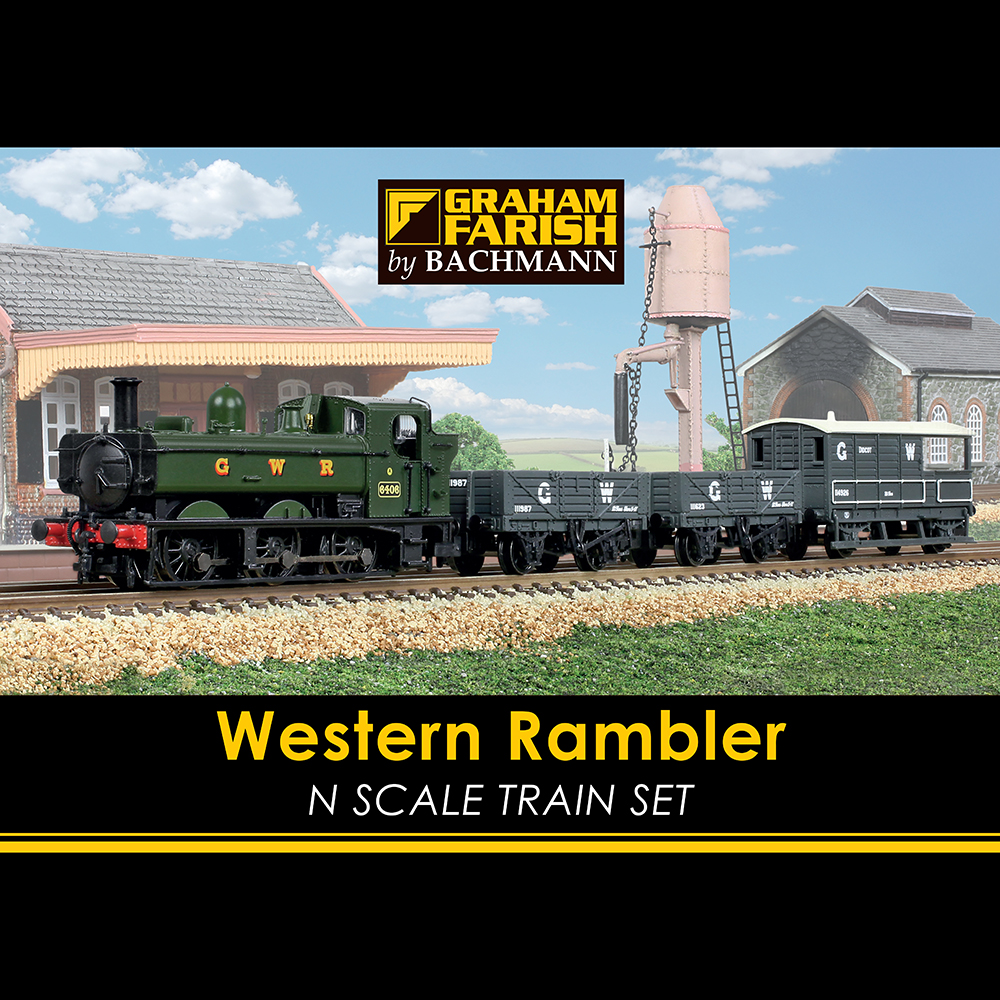
370-052Western Rambler Train Set
'N' GaugeReleased: 10/10/25DCC Ready (6 Pin)Era 3A Graham Farish Train Set is the perfect entry into the wonderful world of model railways. Each train set includes everything you need to get up and running so why not indulge today and start your journey towards building your own masterpiece in miniature.
Rail was the preferred method of transport for much of the twentieth century and each railway company developed locomotives and wagons to move many types of freight. For the Great Western Railway, few tank locomotives were more revered than the 0-6-0 Pannier Tanks, whilst the ‘Toad’ Brake Van was an essential vehicle to bring up the rear of any goods train. Our Western Rambler Train Set includes both of these iconic designs, along with two open goods wagons.
CONTENTS:
Class 64xx Pannier Tank No. 6406 GWR Green livery
2 x 5 Plank Open Wagons GWR Grey livery
GWR Toad Brake Van GWR Grey livery
Analogue Controller (decorated in black and yellow with Graham Farish logo)
Power Supply
Oval of Track
Power Clip
Our Price:
£161.45
£161.45
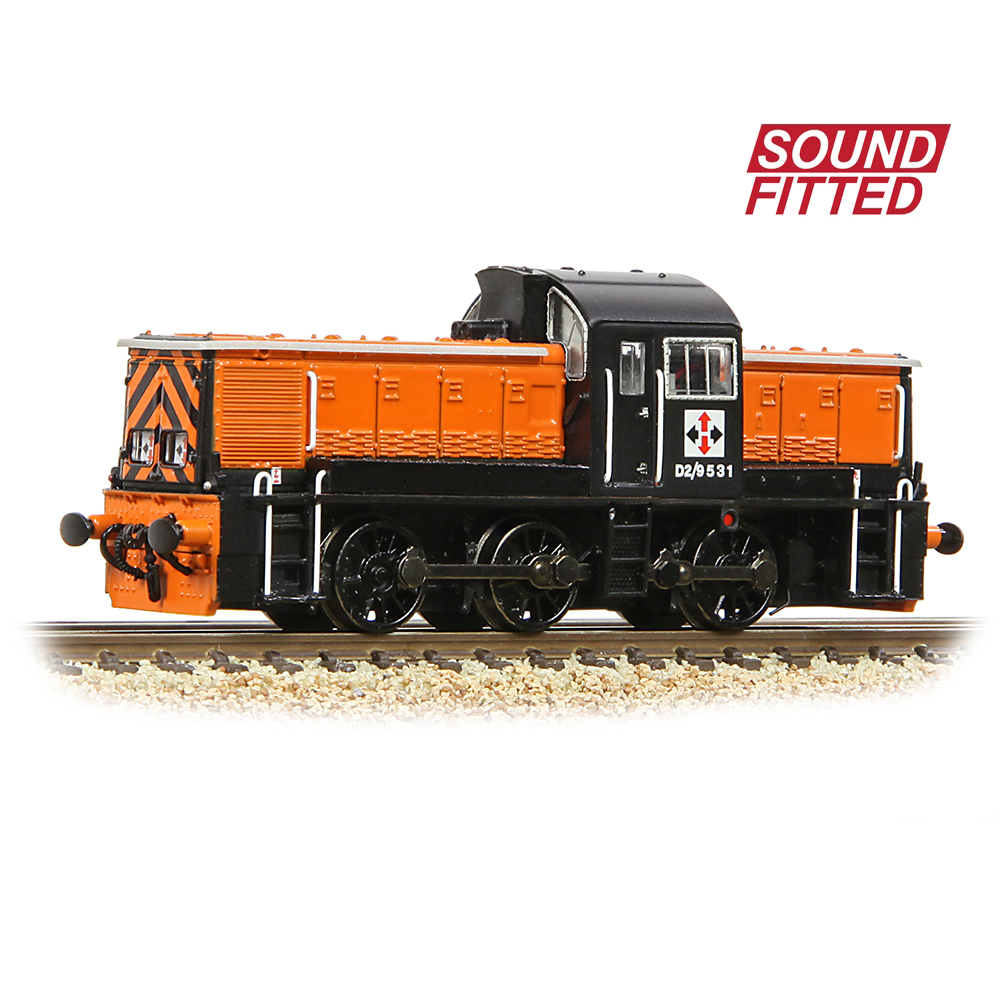
372-954 NCB Class 14 D2/9531 British Oak Orange & Black
'N' GaugeReleased: 30/10/23DCC Ready (Next18)Era 6/7The Class 14 0-6-0 diesel-hydraulic locomotives were built by BR at their Swindon Works during the 1960s. An initial order for 26 examples placed in January 1963 had already been increased before work had started on the first order and in total, 56 Class 14s were built. Expected to be employed on local trip workings and for short distance goods trains, the good all-around visibility from the cab and dual controls made them ideal for use on shunting duties too.
The class was numbered D9500-55 and later designated as Class 14 under TOPS by British Rail. The nickname 'Teddy Bears' came about following a comment by a Swindon Works foreman who commented "We've built The Great Bear, now we're going to build a 'Teddy Bear'". Originally, all were allocated to Western Region depots, but in January 1967 twenty were sent to Hull (Dairycoates) on BR’s Eastern Region (ER), followed by a further thirteen later the same year. At Hull, they were intended for work around the docks, but the tasks were beyond the capabilities of a single locomotive, and since two locomotives required two crews, they were not popular with the region. In 1968, all 33 ER locomotives were placed in store, and were subsequently withdrawn on 1st April that year, joining their Western compatriots that had been progressively sidelined during 1967-68.
The Class 14s, like many other early diesel types, had an extremely short life with British Railways. In this case it was not because of poor reliability but because many of the envisaged duties disappeared on the BR network a few years after they came into use. BR started to dispose of members of the class from mid-1968 and the entire class had been sold to industry or otherwise disposed of by the end of 1970.
In their new careers in industry many had a working life of two to three times greater than that with BR. The industries in which they were employed, such as coal mining, declined during the 1970s and the class again became surplus to requirements. Several have found a third lease of life on preserved lines where they are ideal for both light passenger work and the maintenance of permanent way. Some examples even found new uses during construction of the Channel Tunnel and High Speed One, some 3 decades after their conception! With such a versatile history, as it transpires, the Class 14 is a very useful and widely travelled loco type, universally popular with operators and enthusiasts alike.

Our Price:
£131.70
£131.70
372-954SFClass 14 D2/9531 NCB British Oak Orange & Black With DCC Sound Fitted
'N' GaugeReleased: 30/10/23DCC FittedDCC SoundEra 6/7SOUNDS
F1 - Engine Start
F2 - Brake
F3 - Horn One (Speed & Direction Related)
F4 - Horn Two (Speed & Direction Related)
F5 - Light Engine
F6 - Engine Idle / Coasting
F7 - Speed Lock
F8 - Flange Squeal (Speed Related)
F9 - Guard’s Whistle
F10 - Buffering Up
F11 - Coupling Up
F12 - Compressor (random sound when stationary)
F13 - Sanding Valve
F14 - Handbrake (Loco will not move when used)
F15 - Priming Pump
F16 - On - Driver’s Door Opening / Off - Driver’s Door Closing
F17 - Fade All Sounds
F18 - Detonators (Speed Related)
F19 - Vocals - “6ft To Buffer Upâ€
F20 - Vocals - “Shunter to Driver Come In, Overâ€
F21 - Vocals - “Slow Down, Slow Downâ€
F22 - Windscreen Wipers
F23 - Station Ambience
F24 - Spirax Valve
F25 - Shunt Mode
F26 - Volume Down
F27 - Volume Up
Analogue Users: Basic Prime Mover (engine) sounds, which vary with speed, plus any other automated sounds, can be enjoyed when using this model on analogue control (DC) straight from the box!
Our Price:
£216.70
£216.70
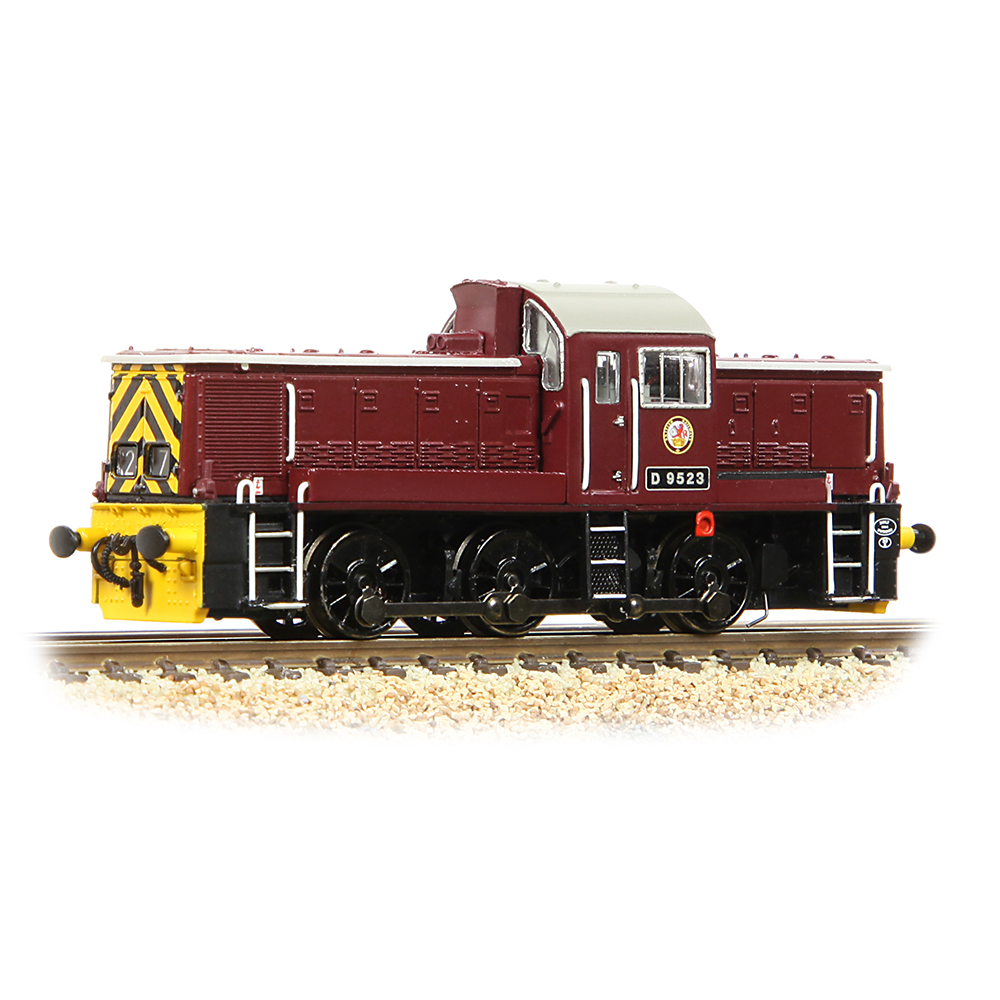
372-955BR Maroon Class 14 D9523 (Wasp Stripes)
'N' GaugeReleased: 30/10/23DCC Ready (Next18)Era 9The Class 14 0-6-0 diesel-hydraulic locomotives were built by BR at their Swindon Works during the 1960s. An initial order for 26 examples placed in January 1963 had already been increased before work had started on the first order and in total, 56 Class 14s were built. Expected to be employed on local trip workings and for short distance goods trains, the good all-around visibility from the cab and dual controls made them ideal for use on shunting duties too.
The class was numbered D9500-55 and later designated as Class 14 under TOPS by British Rail. The nickname 'Teddy Bears' came about following a comment by a Swindon Works foreman who commented "We've built The Great Bear, now we're going to build a 'Teddy Bear'". Originally, all were allocated to Western Region depots, but in January 1967 twenty were sent to Hull (Dairycoates) on BR’s Eastern Region (ER), followed by a further thirteen later the same year. At Hull, they were intended for work around the docks, but the tasks were beyond the capabilities of a single locomotive, and since two locomotives required two crews, they were not popular with the region. In 1968, all 33 ER locomotives were placed in store, and were subsequently withdrawn on 1st April that year, joining their Western compatriots that had been progressively sidelined during 1967-68.
The Class 14s, like many other early diesel types, had an extremely short life with British Railways. In this case it was not because of poor reliability but because many of the envisaged duties disappeared on the BR network a few years after they came into use. BR started to dispose of members of the class from mid-1968 and the entire class had been sold to industry or otherwise disposed of by the end of 1970.
In their new careers in industry many had a working life of two to three times greater than that with BR. The industries in which they were employed, such as coal mining, declined during the 1970s and the class again became surplus to requirements. Several have found a third lease of life on preserved lines where they are ideal for both light passenger work and the maintenance of permanent way. Some examples even found new uses during construction of the Channel Tunnel and High Speed One, some 3 decades after their conception! With such a versatile history, as it transpires, the Class 14 is a very useful and widely travelled loco type, universally popular with operators and enthusiasts alike.
Our Price:
£131.70
£131.70
372-955SFBR Maroon Class 14 D9523 (Wasp Stripes) With DCC Sound Fitted
'N' GaugeReleased: 30/10/23DCC FittedDCC SoundEra 9SOUNDS
F1 - Engine Start
F2 - Brake
F3 - Horn One (Speed & Direction Related)
F4 - Horn Two (Speed & Direction Related)
F5 - Light Engine
F6 - Engine Idle / Coasting
F7 - Speed Lock
F8 - Flange Squeal (Speed Related)
F9 - Guard’s Whistle
F10 - Buffering Up
F11 - Coupling Up
F12 - Compressor (random sound when stationary)
F13 - Sanding Valve
F14 - Handbrake (Loco will not move when used)
F15 - Priming Pump
F16 - On - Driver’s Door Opening / Off - Driver’s Door Closing
F17 - Fade All Sounds
F18 - Detonators (Speed Related)
F19 - Vocals - “6ft To Buffer Upâ€
F20 - Vocals - “Shunter to Driver Come In, Overâ€
F21 - Vocals - “Slow Down, Slow Downâ€
F22 - Windscreen Wipers
F23 - Station Ambience
F24 - Spirax Valve
F25 - Shunt Mode
F26 - Volume Down
F27 - Volume Up
Analogue Users: Basic Prime Mover (engine) sounds, which vary with speed, plus any other automated sounds, can be enjoyed when using this model on analogue control (DC) straight from the box!

Our Price:
£216.00
£216.00
374-694BR Mk2F BSO Brake Second Open Virgin Trains (Original)
'N' GaugeReleased: 30/10/23Era 9British Rail’s second generation of standard coach was designated the Mk2, following on from the highly successful Mk1 series. Unlike the Mk1s however, the Mk2s evolved through different build batches, and such were the changes that a letter suffix was attributed to identify each of the different variants. Fewer coach types were built, with construction concentrating on vehicles offering standard accommodation of both first- and second-class, plus coaches that made provision for the Guard and train crew. Specialist vehicles such as catering and sleeping cars were not included, instead BR Mk1 and earlier types continued to fulfil these requirements until Mk3s with similar facilities arrived in the late-1970s to replace them. Like the Mk1s, the Mk2s were of steel construction, but featured more of a monocoque design than the Mk1, which added to their safety and integrity in the event of a collision.
The Mk2Fs were the final evolution of the Mk2 family, and these coaches featured full air conditioning, interior panelling made of plastic, a new style of seating and tinted windows. Initially only three types were built, Tourist Second Opens, First Opens and Brake Second Opens, but some First Opens were later converted into Restaurant First Buffets, whilst several Brake Second Opens were fitted with a driving cab at one end, becoming Driving Brake Second Opens for push-pull use.

Our Price:
£49.45
£49.45
374-694ABR Mk2F BSO Brake Second Open Virgin Trains (Original)
'N' GaugeReleased: 30/10/23Era 9British Rail’s second generation of standard coach was designated the Mk2, following on from the highly successful Mk1 series. Unlike the Mk1s however, the Mk2s evolved through different build batches, and such were the changes that a letter suffix was attributed to identify each of the different variants. Fewer coach types were built, with construction concentrating on vehicles offering standard accommodation of both first- and second-class, plus coaches that made provision for the Guard and train crew. Specialist vehicles such as catering and sleeping cars were not included, instead BR Mk1 and earlier types continued to fulfil these requirements until Mk3s with similar facilities arrived in the late-1970s to replace them. Like the Mk1s, the Mk2s were of steel construction, but featured more of a monocoque design than the Mk1, which added to their safety and integrity in the event of a collision.
The Mk2Fs were the final evolution of the Mk2 family, and these coaches featured full air conditioning, interior panelling made of plastic, a new style of seating and tinted windows. Initially only three types were built, Tourist Second Opens, First Opens and Brake Second Opens, but some First Opens were later converted into Restaurant First Buffets, whilst several Brake Second Opens were fitted with a driving cab at one end, becoming Driving Brake Second Opens for push-pull use.

Our Price:
£49.45
£49.45
374-739 BR Mk2F TSO Tourist Second Open Virgin Trains (Original)
'N' GaugeReleased: 30/10/23Era 9British Rail’s second generation of standard coach was designated the Mk2, following on from the highly successful Mk1 series. Unlike the Mk1s however, the Mk2s evolved through different build batches, and such were the changes that a letter suffix was attributed to identify each of the different variants. Fewer coach types were built, with construction concentrating on vehicles offering standard accommodation of both first- and second-class, plus coaches that made provision for the Guard and train crew. Specialist vehicles such as catering and sleeping cars were not included, instead BR Mk1 and earlier types continued to fulfil these requirements until Mk3s with similar facilities arrived in the late-1970s to replace them. Like the Mk1s, the Mk2s were of steel construction, but featured more of a monocoque design than the Mk1, which added to their safety and integrity in the event of a collision.
The Mk2Fs were the final evolution of the Mk2 family, and these coaches featured full air conditioning, interior panelling made of plastic, a new style of seating and tinted windows. Initially only three types were built, Tourist Second Opens, First Opens and Brake Second Opens, but some First Opens were later converted into Restaurant First Buffets, whilst several Brake Second Opens were fitted with a driving cab at one end, becoming Driving Brake Second Opens for push-pull use.

Our Price:
£49.45
£49.45
374-739ABR Mk2F TSO Tourist Second Open Virgin Trains (Original)
'N' GaugeReleased: 30/10/23Era 9British Rail’s second generation of standard coach was designated the Mk2, following on from the highly successful Mk1 series. Unlike the Mk1s however, the Mk2s evolved through different build batches, and such were the changes that a letter suffix was attributed to identify each of the different variants. Fewer coach types were built, with construction concentrating on vehicles offering standard accommodation of both first- and second-class, plus coaches that made provision for the Guard and train crew. Specialist vehicles such as catering and sleeping cars were not included, instead BR Mk1 and earlier types continued to fulfil these requirements until Mk3s with similar facilities arrived in the late-1970s to replace them. Like the Mk1s, the Mk2s were of steel construction, but featured more of a monocoque design than the Mk1, which added to their safety and integrity in the event of a collision.
The Mk2Fs were the final evolution of the Mk2 family, and these coaches featured full air conditioning, interior panelling made of plastic, a new style of seating and tinted windows. Initially only three types were built, Tourist Second Opens, First Opens and Brake Second Opens, but some First Opens were later converted into Restaurant First Buffets, whilst several Brake Second Opens were fitted with a driving cab at one end, becoming Driving Brake Second Opens for push-pull use.

Our Price:
£49.45
£49.45
374-764BR Mk2F FO First Open Virgin Trains (Original)
'N' GaugeReleased: 30/10/23Era 9British Rail’s second generation of standard coach was designated the Mk2, following on from the highly successful Mk1 series. Unlike the Mk1s however, the Mk2s evolved through different build batches, and such were the changes that a letter suffix was attributed to identify each of the different variants. Fewer coach types were built, with construction concentrating on vehicles offering standard accommodation of both first- and second-class, plus coaches that made provision for the Guard and train crew. Specialist vehicles such as catering and sleeping cars were not included, instead BR Mk1 and earlier types continued to fulfil these requirements until Mk3s with similar facilities arrived in the late-1970s to replace them. Like the Mk1s, the Mk2s were of steel construction, but featured more of a monocoque design than the Mk1, which added to their safety and integrity in the event of a collision.
The Mk2Fs were the final evolution of the Mk2 family, and these coaches featured full air conditioning, interior panelling made of plastic, a new style of seating and tinted windows. Initially only three types were built, Tourist Second Opens, First Opens and Brake Second Opens, but some First Opens were later converted into Restaurant First Buffets, whilst several Brake Second Opens were fitted with a driving cab at one end, becoming Driving Brake Second Opens for push-pull use.

Our Price:
£49.45
£49.45
 908024
Lancashire & Yorkshire Railway Gunpowder Van 30897
'OO' GaugeReleased: 03/11/23Era 2
Our Price:
£29.65
£29.65