
Search results
 R3964
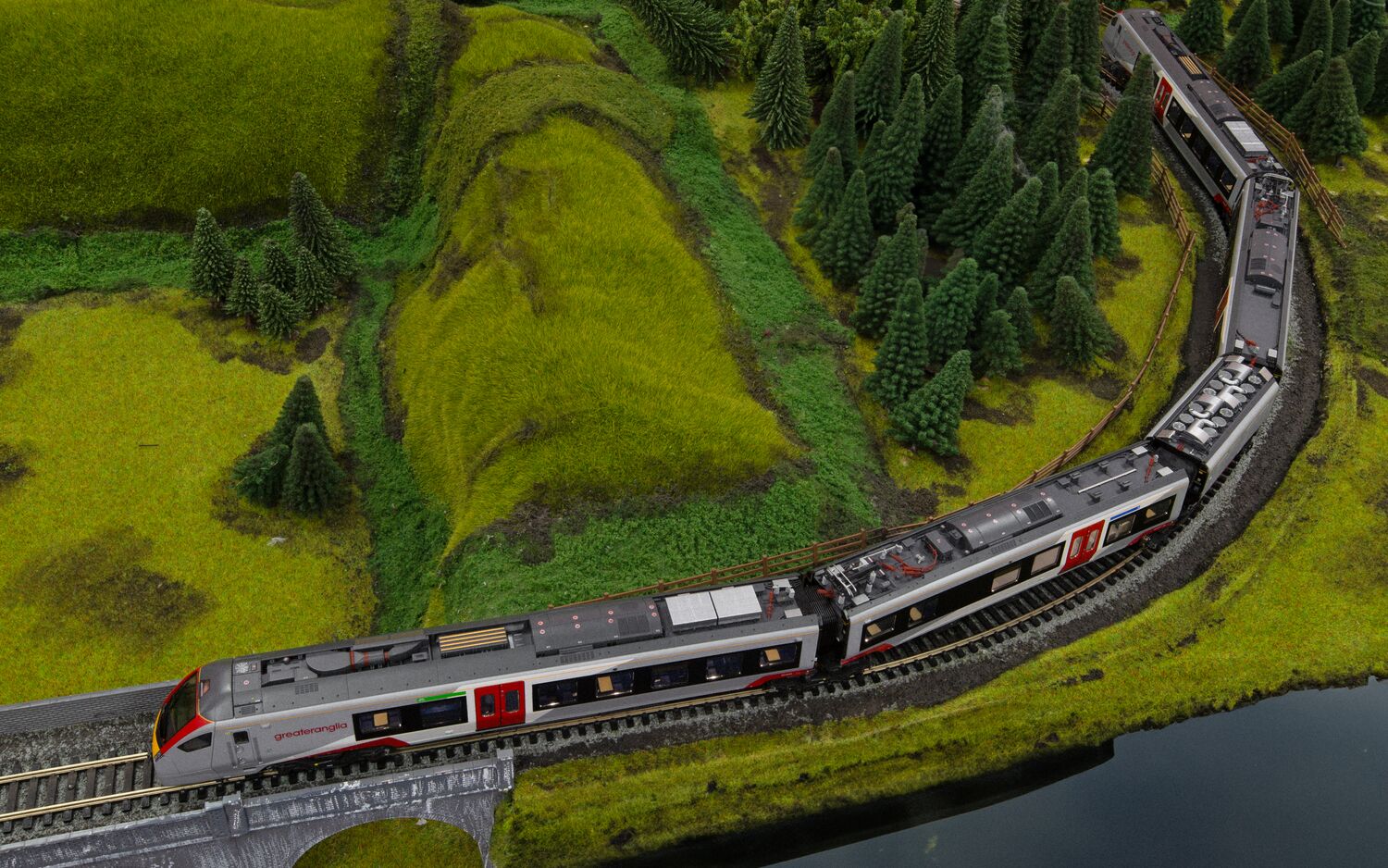
R3964Greater Anglia, Class 755/4 'FLIRT' 4 Car Train Pack
 'OO' Gauge
 Released: 03/04/25
 DCC Ready (21 Pin)
 Era 11
The Class 755 bi-mode multiple unit trains are built by Stadler Rail for Greater Anglia as one of five EMU’s for the UK, part of the highly configurable FLIRT modular train family and designed for greater capacity, the typical 25 kV 50 Hz AC overhead power supply, and comfort over long-distance journeys. The Class 755 entered service on the 29th of July 2019 having been delivered to Greater Anglia the previous November.
4-car unit
Set number ‘755406’
Destination boards show ‘Norwich’
With large bike and wheelchair symbols in the windows
Our Price:
£404.99
£404.99
R60176ADrax Biomass Wagon Pack, 83700698071-3 & 83700698009-3
'OO' GaugeReleased: 03/04/25Era 11In 2013, Drax unveiled the UK’s first purpose-built biomass rail freight wagon at the National Railway Museum in York. Developed by designers at Lloyd’s Register Rail and manufactured by WH Davis, it is the largest ever produced and pushes the boundaries of rail engineering.
This award-winning wagon transports sustainable biomass from the Ports of Tyne, Hull, and Immingham to Drax Power Station, near Selby for use in generating low carbon, cost effective, and reliable renewable electricity.
At 18.9m long with top doors stretching 18.2m and bottom doors of 3.7m, the supersize wagon has a capacity of 116 cubic metres allowing a biomass load weighing 71.6 tonnes. Its volume is almost 30 per cent bigger than any freight wagon currently used in the UK.
The Drax biomass wagon pack consists of two bright blue Drax Northern Powerhouse liveried wagons with their respective running numbers, 83700698071-3 and 83700698009-3. R60177A contains two biomass wagons with different decals as decoration on the livery compared to this pack.

Our Price:
£79.19
£79.19
R30102Lumo, Class 803, 803005 Five Car Train Pack
'OO' GaugeReleased: 03/04/25DCC Ready (21 Pin)Era 11The Class 803 AT300 is a new type of electric multiple unit passenger train built by Japanese rolling stock manufacturer Hitachi at their Newton Aycliffe factory in County Durham, based upon the Hitachi A-train design. While sharing a bodyshell with the previous UK A-train variants, the Class 803 differs in that it has no auxiliary diesel engines fitted. Batteries are fitted to power the on-board facilities in case of overhead line equipment failure.

Our Price:
£494.99
£494.99
R60177ADrax Biomass Wagon Pack, 83700698083-8 & 83700698158-8
'OO' GaugeReleased: 03/04/25Era 11In 2013, Drax unveiled the UK’s first purpose-built biomass rail freight wagon at the National Railway Museum in York. Developed by designers at Lloyd’s Register Rail and manufactured by WH Davis, it is the largest ever produced and pushes the boundaries of rail engineering.
This award-winning wagon transports sustainable biomass from the Ports of Tyne, Hull, and Immingham to Drax Power Station, near Selby for use in generating low carbon, cost effective, and reliable renewable electricity.
At 18.9m long with top doors stretching 18.2m and bottom doors of 3.7m, the supersize wagon has a capacity of 116 cubic metres allowing a biomass load weighing 71.6 tonnes. Its volume is almost 30 per cent bigger than any freight wagon currently used in the UK.

Our Price:
£79.19
£79.19
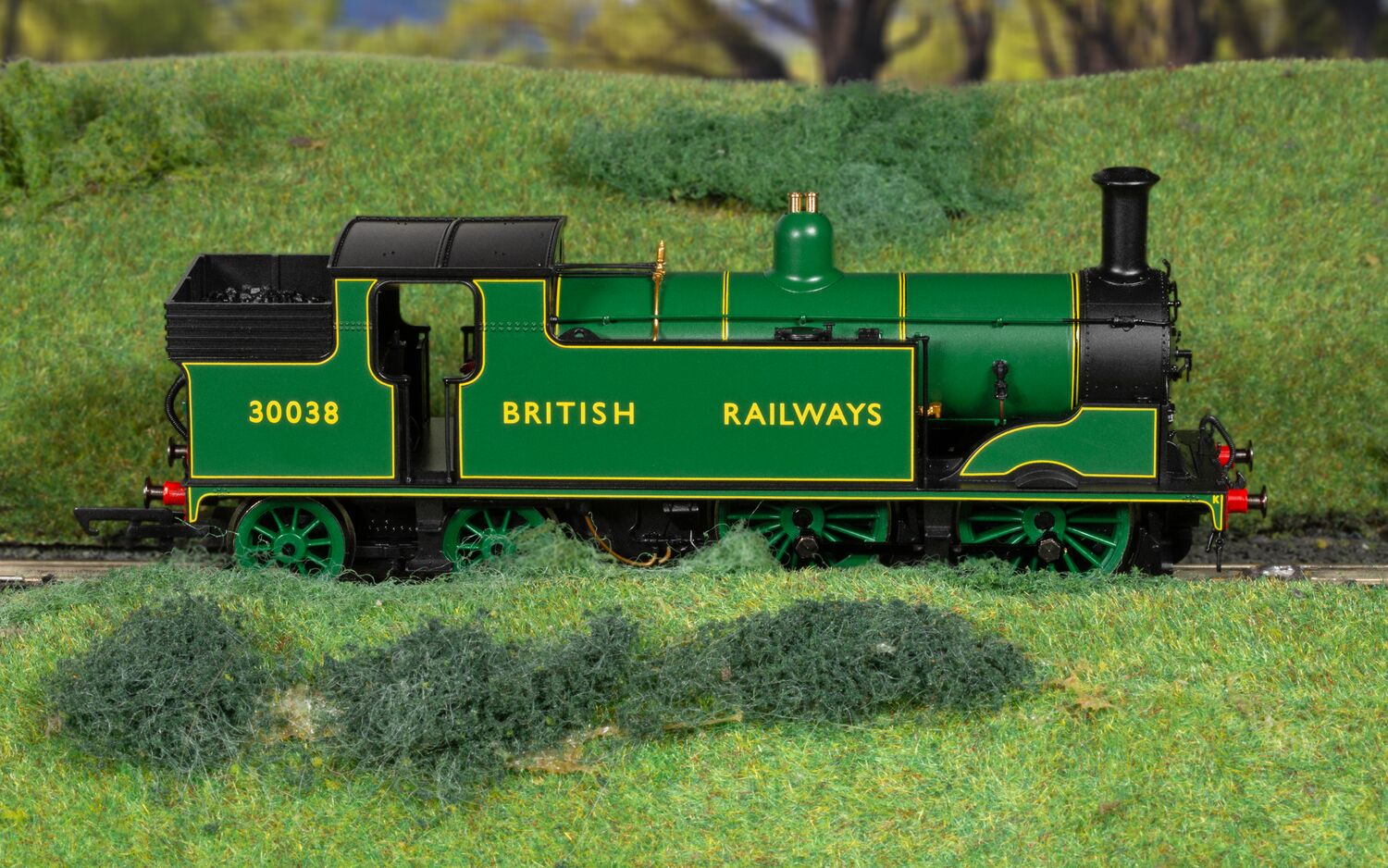
R30140BR, M7 Class, 0-4-4T, 30038
'OO' GaugeReleased: 07/04/25DCC Ready (8 Pin)Era 4Ideally suited to the demands of suburban workings with frequent station stops, the M7 possessed quick acceleration and good tractive power, equally at home on Branch line workings or acting as station pilots. Unfortunately, following a major derailment at Tavistock in 1898, the Class were withdrawn from fast passenger services, the 0-4-4 arrangement proving inherently unstable at continuous high speeds. While two M7s still exist in preservation, 30038 sadly is not among them.
Our Price:
£193.49
£193.49