
Search results
 R40472
BR - Collett Corridor Brake Third Class LH - 4936 - Coach
 'OO' Gauge
 Released: 01/12/25
 Era 4
Era 4Although introduced onto the GWR by Collett from 1925, many of these modern-for-their-time coaches lasted in service until the 1960s, with many examples passing into departmental use. Some retained their chocolate and cream livery after nationalisation of Britain’s railways in 1948 and others were painted in the new owner’s crimson and cream.
These wooden-framed, but steel-panelled ‘bow-ended’ coaches were also ‘handed’ in a throw-back to the days they were introduced, when coach sets were marshalled with the compartments to the south (sunny) side and the corridors alongside London Paddington’s Platform 1 for ease of loading/unloading. For example, a left-hand brake coach would have its corridor on the opposite side to a right-hand brake.

Our Price:
£55.79
£55.79
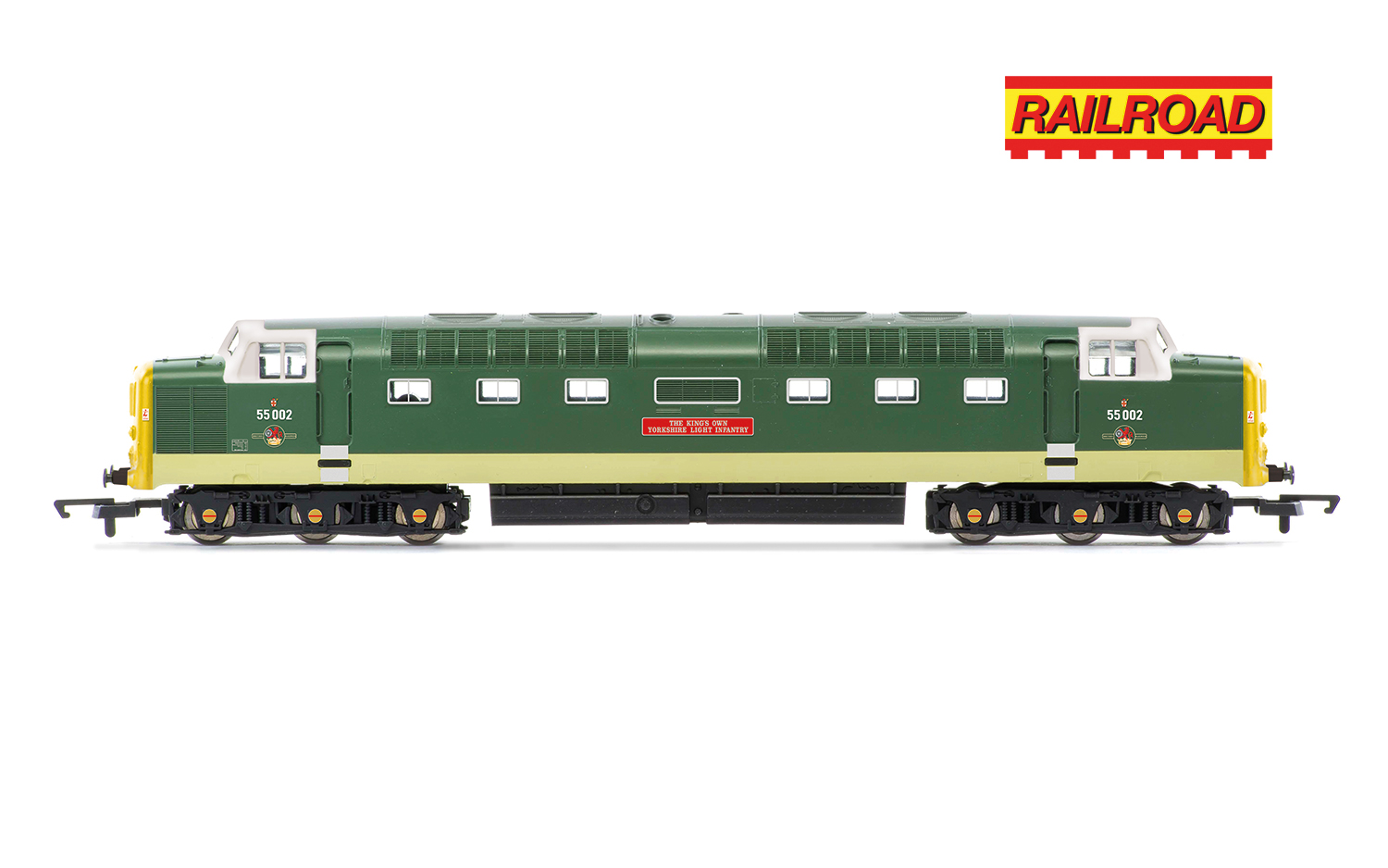
R40438RailRoad: Class 55 (Deltic) - BR - 55002 'The Kings own Yorkshire Light Infantry'
'OO' GaugeReleased: 10/12/25 DCC Ready (8 Pin)Era 6
The production ‘Deltics’ were a powerful Type 5 locomotive, designed for high-speed express passenger services on the East Coast Main Line. When introduced in 1961, these were the most powerful diesel locomotives in the world. Powered by two big Napier diesel engines, these locomotives – later known as Class 55s – were capable of speeds of up to 117mph (188km/h) and all were given names in the best tradition of East Coast express locomotives.
Known affectionately as ‘KOYLI’ by enthusiasts, 55002 is finished in a two-tone green livery, reminiscent of the early 1960s, but with full yellow ends and the classic white cab window surrounds.
Our Price:
£67.49
£67.49
R30438TXSRailRoad: Class 55 (Deltic) - BR - 55002 'The Kings own Yorkshire Light Infantry' (DCC Sound Fitted)
'OO' GaugeReleased: 10/12/25DCC FittedDCC SoundEra 6The production ‘Deltics’ were a powerful Type 5 locomotive, designed for high-speed express passenger services on the East Coast Main Line. When introduced in 1961, these were the most powerful diesel locomotives in the world. Powered by two big Napier diesel engines, these locomotives – later known as Class 55s – were capable of speeds of up to 117mph (188km/h) and all were given names in the best tradition of East Coast express locomotives.
Known affectionately as ‘KOYLI’ by enthusiasts, 55002 is finished in a two-tone green livery, reminiscent of the early 1960s, but with full yellow ends and the classic white cab window surrounds.

Our Price:
£116.99
£116.99
R40473BR - Collett Corridor Brake Third RH - 4937 - Coach
'OO' GaugeReleased: 01/12/25Era 4Although introduced onto the GWR by Collett from 1925, many of these modern-for-their-time coaches lasted in service until the 1960s, with many examples passing into departmental use. Some retained their chocolate and cream livery after nationalisation of Britain’s railways in 1948 and others were painted in the new owner’s crimson and cream.
These wooden-framed, but steel-panelled ‘bow-ended’ coaches were also ‘handed’ in a throw-back to the days they were introduced, when coach sets were marshalled with the compartments to the south (sunny) side and the corridors alongside London Paddington’s Platform 1 for ease of loading/unloading. For example, a left-hand brake coach would have its corridor on the opposite side to a right-hand brake.

Our Price:
£55.79
£55.79
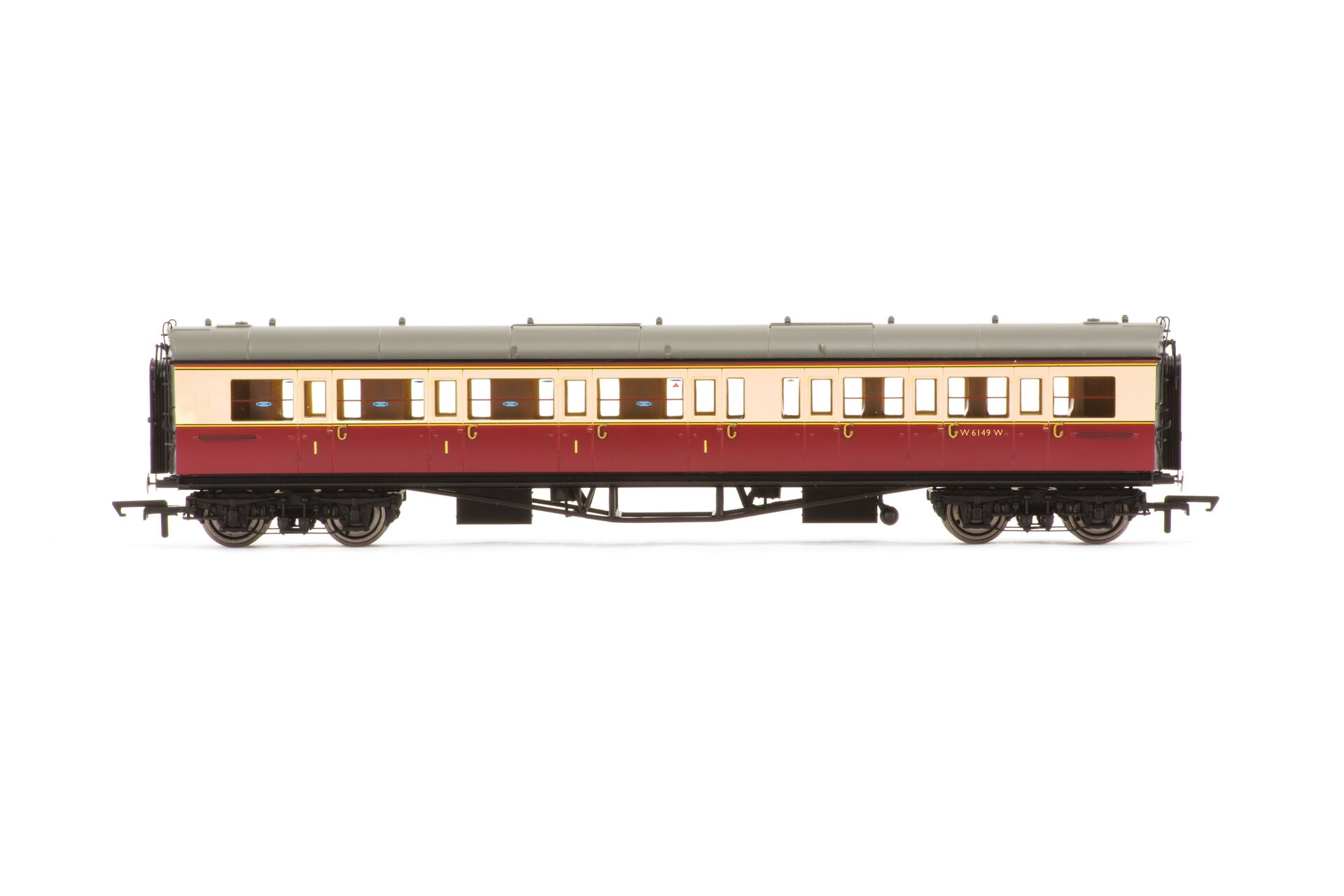
R40474BR - Collett Corridor Composite LH - 6149 - Coach
'OO' GaugeReleased: 01/12/25Era 4Although introduced onto the GWR by Collett from 1925, many of these modern-for-their-time coaches lasted in service until the 1960s, with many examples passing into departmental use. Some retained their chocolate and cream livery after nationalisation of Britain’s railways in 1948 and others were painted in the new owner’s crimson and cream.
These wooden-framed, but steel-panelled ‘bow-ended’ coaches were also ‘handed’ in a throw-back to the days they were introduced, when coach sets were marshalled with the compartments to the south (sunny) side and the corridors alongside London Paddington’s Platform 1 for ease of loading/unloading. For example, a left-hand brake coach would have its corridor on the opposite side to a right-hand brake.
Our Price:
£55.79
£55.79