Search results
 371-359
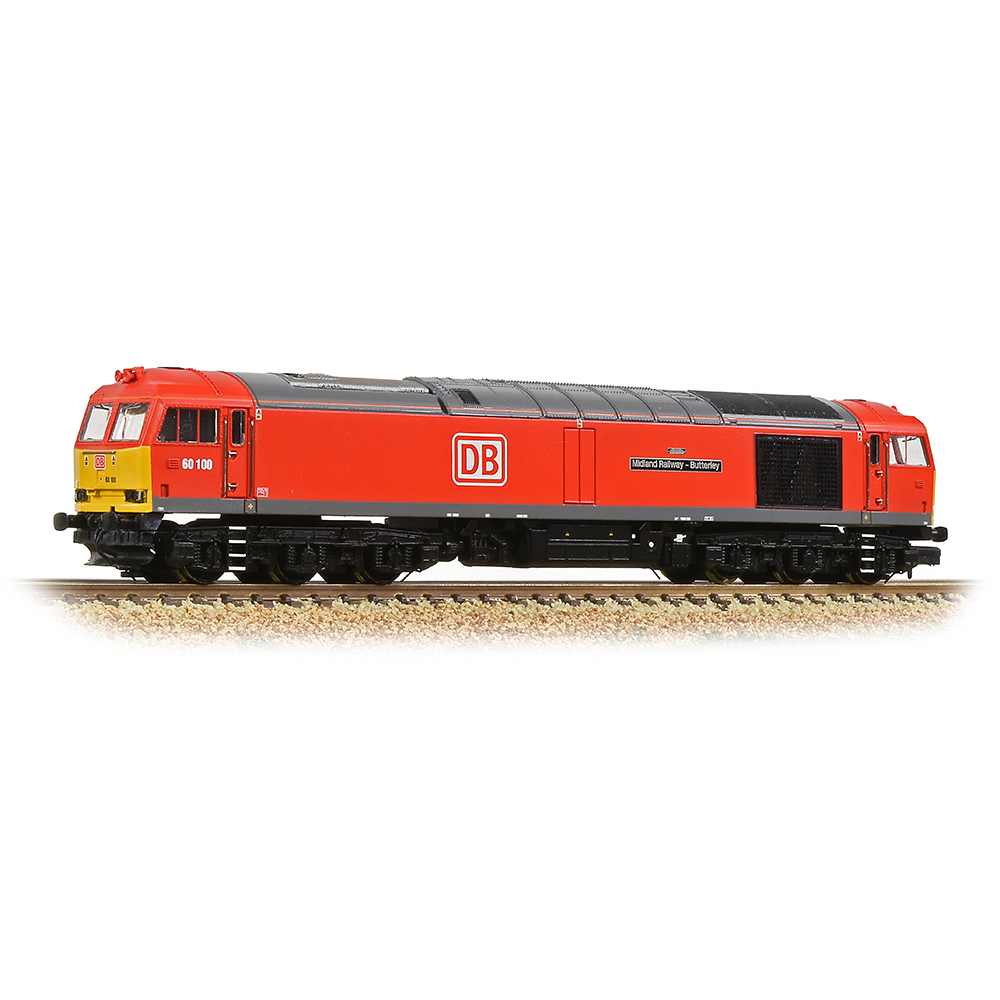
Class 60 60100 'Midland Railway - Butterley' DB Cargo
 'N' Gauge
 Released: 30/09/22
 DCC Ready (Next18)
 Era 9
Era 9CLASS 60 HISTORY
The British Rail Class 60 is a Class of Diesel-Electric Locomotive built by Brush Traction in Loughborough, Leicestershire between 1989 and 1993. Affectionately known as ‘Tugs’ by enthusiasts due to their Mirrlees marine-derived powerplant, 100 locomotives were built and the first entered service in late-1990 – more than a year after the first example had been ceremoniously handed over to BR – after various technical issues were uncovered during testing of the first locos. Designed for heavy freight trains, the Class 60s entered service at a time when BR’s Railfreight operations had been split into various sub-sectors and locomotives were assigned to the Coal, Metals, Construction and Petroleum divisions of BR Railfreight, with each carrying the triple-grey base livery with the addition of the relevant graphics for the sub-sector and depot plaques.
In 1994 and in the runup to the Privatisation of British Rail, the Class 60 fleet was split between three of the shadow freight operators – Loadhaul, Mainline and Transrail – that had been created to handle BR’s freight business. All three operators were purchased by EWS in 1996, resulting in the entire class falling under EWS ownership. With the introduction of the Class 66s at the end of the century and coupled with a decline in EWS heavy freight traffic, several Class 60s were put into store and the future of the fleet was uncertain at times. However, a number of locomotives were retained as the heaviest trains could not be hauled by a single Class 66 and instead required the superior power of a Class 60. EWS was acquired by DB Schenker in 2007 (later renamed DB Cargo) and the new owners put several Class 60s up for sale, however they also announced overhauls for some 60s, giving the class glimmers of hopes for the future.
In 2014 Colas Rail purchased ten Class 60s and these remained with the company until 2018 when they were replaced by Class 70s. These ten Class 60s were subsequently sold to GB Railfreight who still operate the fleet which includes No. 60002 that was named ‘Graham Farish – 50th Anniversary 1970 – 2020’ to mark 50th anniversary of production of British N scale models by the brand which is now owned by Bachmann Europe.
Despite their ups and downs, the Class 60s continue to serve DB Cargo, GB Railfreight and other private operators including DC Rail and the class remains a popular sight across the UK where they can be found hauling the heavy freight trains for which they were originally designed.
Our Price:
£135.95
£135.95
 34-726
SR Bulleid Brake Third Semi-Open 10'' Vents BR (SR) Green
'OO' GaugeReleased: 17/10/22Era 5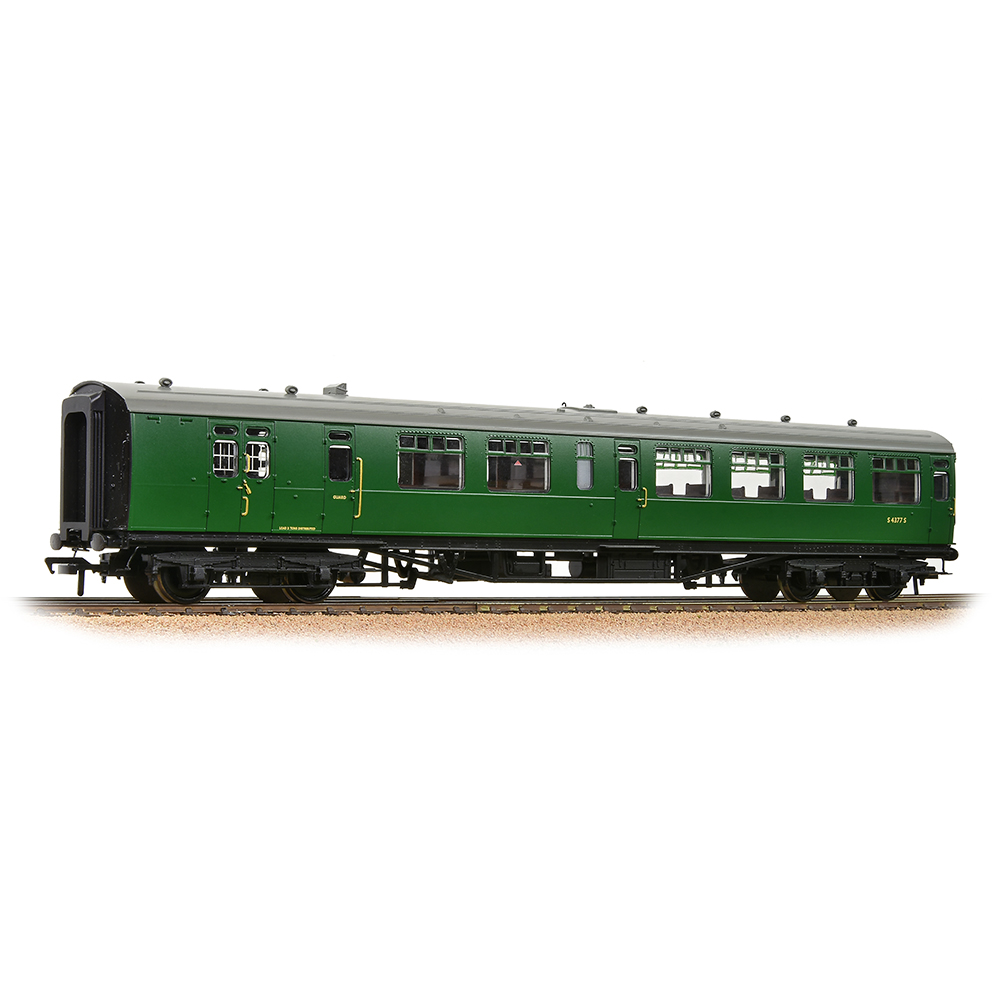
Our Price:
£67.45
£67.45
34-775SR Bulleid Third Corridor 10'' Vents BR (Ex-SR) Malachite Green
'OO' GaugeReleased: 17/10/22Era 4
Our Price:
£67.45
£67.45
34-800SR Bulleid Brake Composite 10'' Vents BR (SR) Green
'OO' GaugeReleased: 17/10/22Era 5
Our Price:
£67.45
£67.45
35-301Class 37/0 Split Headcode 37034 BR Blue
'OO' GaugeReleased: 17/10/22DCC Ready (PluX22)Era 7CLASS 37 HISTORY
The British Rail 1955 Modernisation Plan paved the way for the large-scale replacement of steam traction with diesel locomotives, and one of the most successful diesel locomotive designs to result from this was the English Electric Type 3. These 1,700hp Types 3 diesel-electric locomotives were built at English Electric’s Vulcan Foundry and by Robert Stephenson & Hawthorns between 1960 and 1965, with 309 examples produced in total. When TOPS was implemented the type was designated Class 37.
The class proved popular with railwaymen and so in 1985, a major refurbishment programme for the Class 37 locomotives was sanctioned to extend the working lives of 135 locomotives. Features of the refurbishment involved plating over the four-character head codes and sealing off the nose end communication doors. Dedicated freight locomotives received lower gearing to increase the tractive effort, and some were fitted with extra ballast or even more powerful engines. A new subclass was created for locomotives refurbished with Electric Train Heating (ETH) equipment, allowing their use on passenger trains the whole year-round.
With the sectorisation of British Rail taking hold in the early-1980s, the locomotives returned to traffic following refurbishment in a wide and diverse range of liveries. Passenger machines appeared in BR Blue Large Logo, InterCity and Regional Railways schemes to name just three, whilst freight engines received numerous varieties of Railfreight livery, Transrail, Mainline and Loadhaul. The Class continued to be widely used into the Privatisation-era, with examples operating for the likes of EWS, DRS, West Coast Railways and Colas, whilst others have received ‘retro’ heritage repaints.

Our Price:
£208.20
£208.20